
Season Tile in Chinese Mahjong: Flowers, Winds & When to Play Them
Last updated: Nov 23, 2026
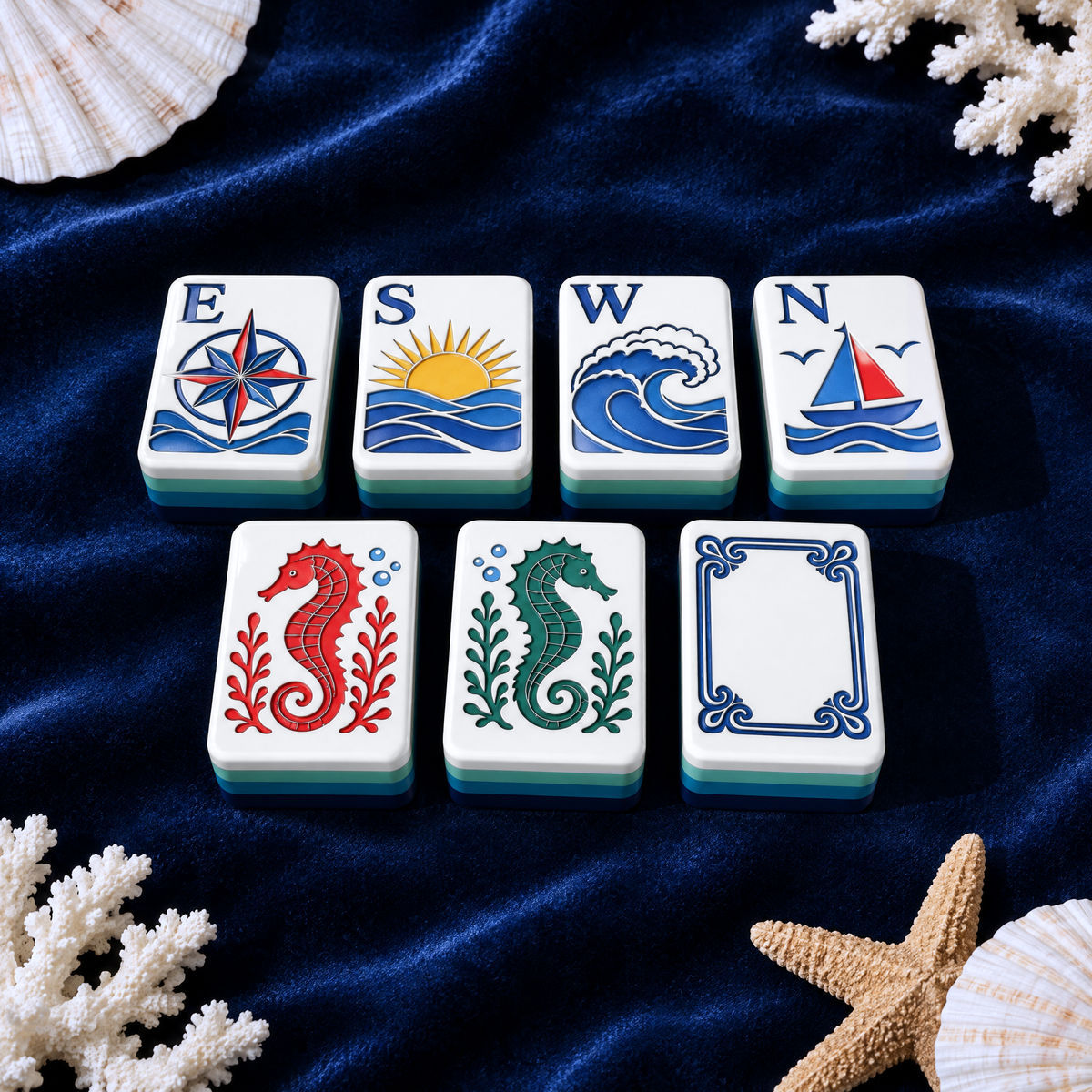
In Chinese mahjong, season tiles are one of the most misunderstood elements because their rules vary by region and ruleset. American players often assume they work the same way, then get confused when season tiles don't appear on the hand card. Here's how to tell them apart, why they matter, and what you're actually holding on your table.
What are season tiles in Chinese mahjong, and how do they work?
Season tiles are four bonus tiles—spring, summer, autumn, and winter—that sit outside the main hand. When you draw a season tile during play, you immediately place it face-up in front of you, then draw a replacement tile from the dead wall (a separate stack). You do not include the season tile in your hand for melds. At game end, if you've collected multiple season tiles or specific patterns (often all four seasons, or matching seasons in certain positions), you earn bonus points. The exact scoring and collection rules vary widely by region: some rulesets award points per tile, others reward only full sets, and some don't count them at all. This is why it's crucial to agree on rules before play.

Why don't American mahjong sets have season tiles in play?
American mahjong uses a single, standardized ruleset published annually by the National Mah Jongg League on the official hand card. That card dictates which tiles form legal melds—and season tiles are not part of it. Instead, the American set includes eight flower tiles that function as structural tiles within melds or occasionally as joker substitutes in non-standard house games. The flowers on an American set are purely decorative and thematic; they never award bonus points and are never drawn separately during play. This design keeps American mahjong simple and competitive: every hand is reproducible and auditable from the card, with no hidden bonus scoring to negotiate. If you're playing Chinese mahjong in Dallas, Houston, Austin, or San Antonio, you'll need a Chinese rulebook or a co-player who knows the local variant. If you're hosting an American game, our engraved sets make it easy to track hand numbers and rule variants without confusion.
🀄 Shop best-selling mahjong sets →
How do season tiles differ across Chinese variants and Hong Kong rules?
Chinese mahjong has dozens of regional variants, each with its own season-tile rules. In Cantonese (Hong Kong) mahjong, season and flower tiles are usually counted but not required for a winning hand—you simply earn bonus points if you hold them. In Taiwanese mahjong, seasons and flowers play a much bigger role in hand combinations and scoring multipliers. Riichi mahjong (the Japanese variant) does not use season tiles at all; instead, it uses honor tiles and a rigid tile-passing and claiming system. In some Korean and Singaporean variants, seasons are optional or scored differently depending on house rules. The key lesson: before sitting down to a Chinese game, ask explicitly whether seasons are active, how many bonus points they're worth, and whether they can be part of your winning pattern. Many Western players learn American mahjong first and then assume Chinese seasons work the same way—they don't. The season tile is a regional embellishment, not a universal rule.

Can you use season tiles as jokers or wild cards in American mahjong?
No. In American mahjong, the eight flower tiles are never wildcards; the 152-tile set includes exactly eight jokers for that role. Flowers are separate structural tiles used only within specific hand patterns listed on the current year's card. Most hands do not use flowers at all. If a hand does call for a flower, it must be an exact flower tile, never a joker as a substitute. This is a common mistake: a new player sees a hand that calls for "2 Flowers" and tries to use a joker—incorrect. Stick to the card definition word-for-word. If you're unsure whether jokers can fill a flower slot, do not play the hand. Ask the table to verify the card, or hold and wait for your next turn. Jokers have their own role; learn how jokers work before mixing them with flower tiles.
How many season tiles are in a set, and how do you recognize them?
A Chinese mahjong set typically includes four season tiles (one each of spring, summer, autumn, winter) and four flower tiles (plum, orchid, bamboo, chrysanthemum). They are usually printed with the Chinese character and an image: 春 (spring) shows a flower or bird, 夏 (summer) shows fire or leaves, 秋 (autumn) shows grain or chrysanthemum, 冬 (winter) shows snow or bamboo. American sets do not separate seasons and flowers by character; they simply include eight flower tiles, often printed with botanical illustrations or symbols. If you're shopping for a set and you see season tiles in the product photos, you're looking at a Chinese set. Mahstead's acrylic American sets do not include standalone season tiles because American mahjong does not use them. If you want a set that matches authentic Chinese or Hong Kong play, you'll need to source a Chinese-made set from a vendor specializing in Chinese variants—clarify the ruleset with the seller first.
Feature | American Mahjong | Chinese/Hong Kong Mahjong | Riichi Mahjong |
Season tiles | None; flowers only | 4 seasons + 4 flowers | None |
Seasons award points | N/A | Yes, varies by region | N/A |
Drawn separately | N/A | Yes | N/A |
Flowers used as wildcards | No | Rarely | No |
Flowers required in hands | Some hands only | Optional in most | N/A |
Total tiles in set | 160 (152 play + spares) | Often 144 or 152 | 136 |
🎁 See our most-loved mahjong sets & accessories →
What should you check before buying a set if you want season tiles?
Before purchasing, confirm the game variant you'll be playing. If you're hosting American mahjong nights, any standard American set from a reputable maker will work—season tiles are irrelevant. If you're joining a Chinese or Hong Kong game, ask the host or experienced players which ruleset they use, then seek out a set labeled for that region and ruleset. Look for product descriptions that explicitly name the variant (e.g., "Hong Kong Cantonese," "Taiwanese," "Riichi"). Check whether the set includes a rules guide or reference card in English; many Chinese sets sold online do not, and you'll rely on verbal teaching. Buy from a seller who lists tile counts accurately and includes close-up photos of all tile types—don't assume a set has seasons if they're not clearly photographed. If you're unsure, email the seller and ask how many season tiles and flower tiles are included, and whether bonus scoring rules are included in the box. Mahstead specializes in American mahjong sets with 160 tiles (152 for play), so if you're looking for a reliable, durable acrylic set for American-rules games, our best-selling collection is designed for that. If you need a set for a Chinese variant, consult a local mahjong club or community center in your area for vendor recommendations.
✨ Find your Mahstead set — free US shipping →

FAQ
Are season tiles the same as flower tiles?
No. Season tiles (spring, summer, autumn, winter) and flower tiles (plum, orchid, bamboo, chrysanthemum) are two separate sets in Chinese mahjong, each with four tiles. American mahjong uses only eight flower tiles and no season tiles at all.
Can I use a season tile as a joker in American mahjong?
No. American mahjong uses only the eight official jokers as wildcards. Flower tiles, if required in a hand, must be exact flower tiles, not jokers. Seasons do not exist in American play.
How many bonus points do season tiles earn?
It depends entirely on the Chinese ruleset and house rules. Some variants award 1–4 points per season tile, others only score a bonus if you collect all four, and some regions don't count them at all. Always agree on season-tile scoring before the game begins.
Do I need a special set if I want to play with season tiles?
Yes. If you're playing Chinese, Hong Kong, or Taiwanese mahjong with active season tiles, you need a set made for that variant. American sets do not include season tiles. Specify the ruleset when shopping so the seller can match you to the right set.
What do I do if I draw a season tile during Chinese mahjong play?
Place it face-up in front of you immediately, then draw a replacement tile from the dead wall. Season tiles are never added to your hand; they are displayed separately and scored at game end if applicable per your ruleset.
Why is my American mahjong set missing season tiles?
Because American mahjong doesn't use them. The National Mah Jongg League ruleset includes only the eight flowers as decorative structural tiles. If you're playing American rules, season tiles are not part of the game.


View More
View More
View More
