
Riichi Mahjong How to Count Points: Full Scoring Guide
Last updated: Nov 23, 2026
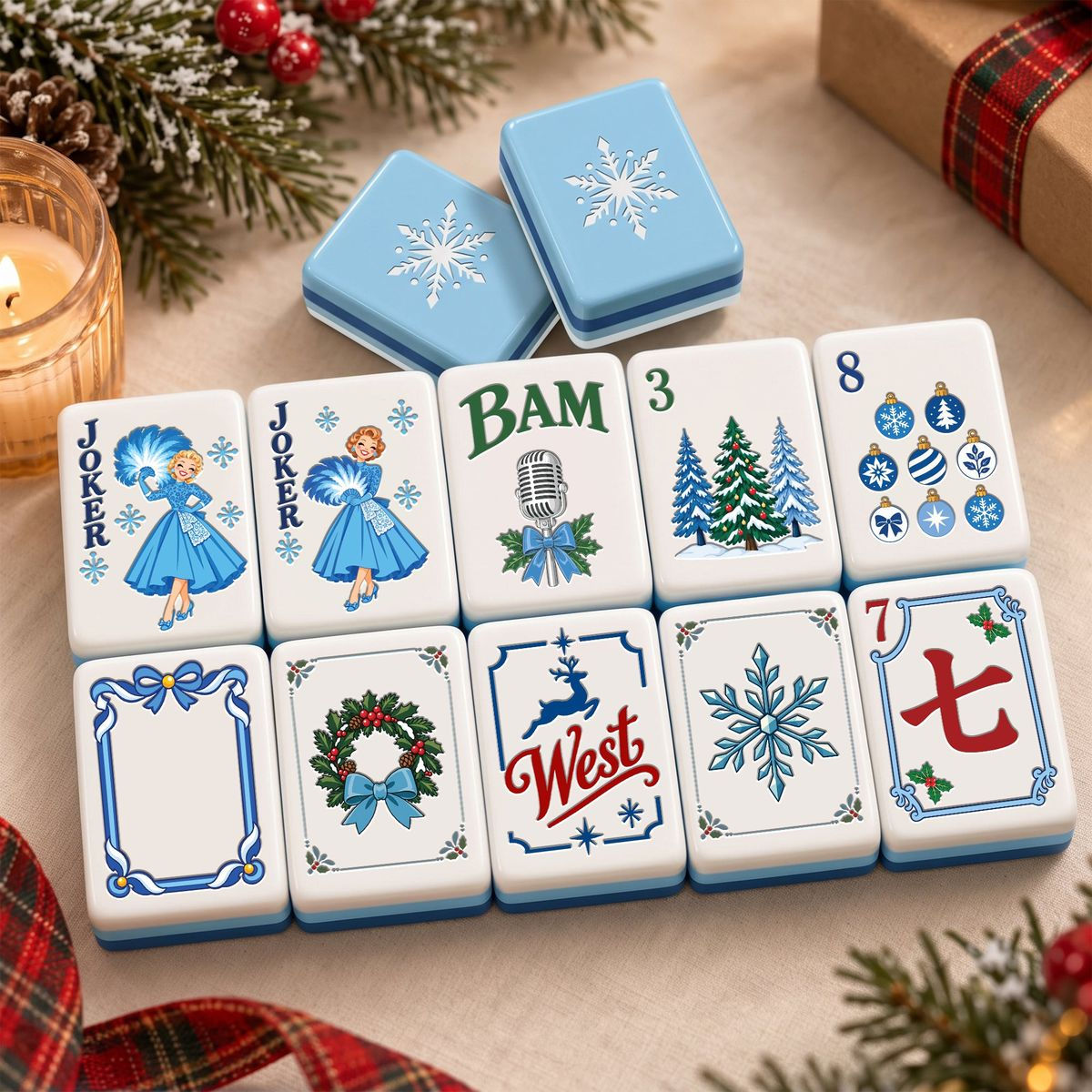
Riichi (Japanese) mahjong scoring uses a fan-and-dora system: a winning hand earns points based on how many "fan" it contains—a measure of pattern difficulty—plus bonus multipliers from dora (special indicator tiles). Unlike American mahjong's fixed hand list, riichi scoring is fluid: a 1-fan hand (mangan minimum in some rulesets) scores around 1,000–2,000 points depending on who won and who paid; a 5-fan hand (mangan) guarantees 8,000 points; 6+ fan (haneman and above) scales upward. Payments flow from losers to the winner and dealer based on position. You'll need to memorize basic yaku (winning patterns like tanyao, all simples), track dora carefully, and know when to apply doubling rules—this is why experienced players carry a scoring reference or play with scoresheets. Our best-selling acrylic sets include clear tile markings that help newer riichi players read hands faster, though scoring itself requires study and practice with players who know the variant.
Riichi mahjong scoring differs entirely from how American mahjong is scored. American mahjong uses a fixed list of winning hands on the annual League card; each hand has a point value written down. Riichi mahjong, by contrast, builds score from the ground up: every winning hand must contain at least one yaku (a recognized winning pattern), and the final score depends on how many fan that hand earns, how many dora are in it, and which player won it. This means two seemingly similar hands can score completely differently based on their yaku content and dora count. Riichi is faster-paced and more pattern-focused than American play, and scoring requires real-time math at the table.
🀄 Shop best-selling mahjong sets →
What are fan, and how do you count them?
Fan are layers of hand complexity or special conditions. A winning hand begins at 1 fan (the minimum yaku) and can stack up to 13 fan (yakuman, an instant max score). Each yaku—such as all simples (tanyao), all one suit (chiitoi), or a dealer win on self-draw (tsumo)—counts as 1 or more fan. Typical beginner patterns are 1–2 fan; 3–5 fan hands score mid-range; 6+ fan are premium. You count all applicable yaku in a single hand and add them together; if your winning hand has three yaku (e.g., tanyao + no terminals/honors + self-draw), that's 3 fan before dora. The more fan, the higher the base score—this is the skeleton of riichi scoring.

What are dora and how do they multiply points?
Dora are bonus tiles designated by indicator cards flipped by the dealer. If the indicator is a 5 Dot, then every 6 Dot in your winning hand is worth an extra dora. Red fives are always dora (one per suit by default in most rulesets). Ura-dora (hidden dora) are revealed only if someone won on a riichi declaration. Each dora tile in your hand adds 1 dora to your count; five dora can nearly double a low-fan hand's value. Dora do not change your fan count—they are a separate multiplier. A 2-fan hand with zero dora scores less than a 2-fan hand with three dora. This is why tile tracking and pattern awareness matter: spotting which dora are still in play and how many you've drawn can swing the round.
How do you calculate the base and final payout?
Riichi scoring uses a lookup table (or formula) based on fan count and whether the winner was the dealer or non-dealer. For example, a non-dealer 1-fan hand is worth roughly 1,000 points; a 3-fan non-dealer hand jumps to 6,000. A dealer hand scores higher: a dealer 1-fan is ~1,500; a dealer 3-fan is ~9,000. Once you know the base score, you multiply by the number of dora (each dora adds a fixed bonus, typically 100 points per dora per loser). Then you apply the payment flow: non-dealer players who did not win typically pay the winner directly; if a dealer won, all three non-dealers pay the dealer the full amount. If a non-dealer won from a dealer's discard, the dealer pays double; if from another non-dealer's discard, that player pays the full amount and the other two pay half. A scoresheet is almost essential at first; most riichi tables use them to avoid disputes. Unlike American mahjong's instant hand-list lookup, riichi counting can take 30 seconds for complex hands and is part of the skill ceiling.
🎁 See our most-loved mahjong sets & accessories →
What yaku should beginners learn first?
Start with the most common 1-fan yaku: tanyao (no terminals or honors), all simples; pin-fu (a special hand shape with no melded sets and no doubled wind/dragon pair); and tsumo (winning on your own draw). Learn 2-fan yaku next: chanta (one terminal or honor in every set), toitoi (all melded sets are triplets, no sequences), and yakuhai (wind or dragon pair). Once you recognize these patterns mid-game, you can quickly estimate fan. Most hands are 1–3 fan; learning these covers ~70% of real play. Advanced yaku like suuankou (four hidden triplets) or daisangen (all three dragons) are rare and score higher (3+ fan each). Build your pattern library by playing regularly and noting which hands win; after 20 games, you'll spot these patterns faster and calculate scores with less hesitation.

What mistakes do new riichi players make when counting?
Mistake 1: Forgetting to add dora before looking up the table. Many new players count fan, find the score on a chart, and forget that dora multiply that base—leading to underpayment.
Mistake 2: Mixing up dealer and non-dealer scoring. Dealer wins pay out nearly double compared to the same fan hand won by a non-dealer. Always confirm position before scoring.
Mistake 3: Miscounting fan. It's easy to claim a yaku you don't have or to miss a second yaku in a hand. Experienced players will call you out; before paying, recount aloud with the winner.
Mistake 4: Not tracking visible dora. If you see the indicator and know which tiles are dora, you can plan discards to avoid feeding dangerous hands. New players discard dora freely, thinking only about their own hand.
Mistake 5: Ignoring payment flow rules. A non-dealer's win from a dealer's discard means the dealer pays the full score, not split. Get this wrong and you'll pay twice.
Use a scoresheet for your first 30 games and ask an experienced player to verify your score before paying—there's no penalty for double-checking and learning the right way.
Scenario | Winner Type | Base Fan | Dora Count | Who Pays | Typical Total |
Self-draw, non-dealer | Non-dealer | 2 | 2 | All three losers equally | ~3,200 total |
Discard win, non-dealer | Non-dealer | 3 | 0 | Discarder only | ~6,000 |
Self-draw, dealer | Dealer | 2 | 1 | All three non-dealers | ~3,900 each |
Discard win, dealer from discarder | Dealer | 2 | 1 | Discarder pays double | ~7,800 |
Discard win, dealer from non-discarder | Dealer | 2 | 1 | Other two pay half, discarder pays full | ~6,500 total |
✨ Find your Mahstead set — free US shipping →
How does riichi mahjong differ from American mahjong scoring?
American mahjong uses a hand list that changes every year; you look up your winning combination and find the point value printed on the card. Points are typically in the 40–70 range, and the game usually plays to a target (first to 500 points wins the match). Riichi scoring is open-ended: there's no fixed list, only yaku rules and a scoring table. A single riichi hand can be worth hundreds or thousands of points depending on fan and dora. Riichi games are usually played as single rounds with immediate payment; whoever has the most chips at the end wins. Riichi is faster paced and more about speed and tile reading; American is more methodical and group-focused on the annual card. Many players love American mahjong for its clear structure; riichi players appreciate the puzzle of finding patterns and the real-time pressure of calculation.
How do you read a riichi scoring chart quickly?
A standard riichi scoring chart has fan down the left (1, 2, 3, 4, 5+) and columns for dealer and non-dealer, mangan (guaranteed minimum score), haneman, baiman, and sanbaiman. Once you know your fan count and whether you're dealer or non-dealer, you find the row and column and read the base score. Most charts show 100-point increments; round up per house rules. For dora, you add a fixed bonus per dora (often 100 points) per loser—so if a non-dealer won with 2 dora, add 200 points to the base. Memorize the first five rows (1–5 fan) and you'll cover 95% of rounds. Keep a chart on your phone or a laminated card at the table; professional play always has one visible. After 50 games, you'll remember key scores (1-fan non-dealer ≈ 1,000, 2-fan dealer ≈ 3,900) and can estimate quickly before consulting the chart.
What to check before you buy a riichi set
If you're building a riichi-specific collection, ensure tiles are marked clearly (Arabic numerals or large suit symbols help new scorers read hands faster). Choose acrylic or bone over unlabeled wood if you're learning—speed matters. Get a scoring reference (chart or phone app) and a scoresheet (printed or digital). A quality rack with pushers keeps your hand organized and makes dora spotting easier. A study mat with printed rules is invaluable for group learning. Play with experienced riichi players first; don't rely only on YouTube—live correction is irreplaceable.

FAQ
Is riichi mahjong harder to score than American mahjong?
Yes. Riichi requires learning 20+ yaku patterns, tracking dora, calculating fan in real time, and applying payment rules. American mahjong is one fixed list per year. Riichi is faster and demands more mental math; American is more leisurely and rule-predictable. Both have a steep initial learning curve, but riichi scoring never stops evolving.
Can I use an app to calculate riichi scores?
Many players do, especially in tournaments. Apps are fast and error-free, but learning manual calculation first builds real understanding and speeds up live play. Once you're confident, apps are a convenience, not a crutch. Most casual riichi groups accept apps at the table.
What's the difference between mangan and haneman?
Mangan is a guaranteed 8,000-point hand (non-dealer) or 12,000 (dealer), regardless of fan count above 5—a scoring ceiling to simplify high-fan hands. Haneman is 6–7 fan: 12,000 (non-dealer) or 18,000 (dealer). Baiman is 8–10 fan: 16,000 or 24,000. These names prevent endless chart lookups for very complex hands.
Do I have to declare riichi before I win?
No. Riichi is optional; it's a declaration that locks your hand (no tile changes), adds a riichi yaku (1 fan), and triggers ura-dora if you win. You can win without riichi. Riichi is a strategic bet: you gain an extra fan and dora, but you're committed to your hand and risk discard penalties if you don't win.
How many dora can be in play at once?
Typically three: one in the initial discard indicator, one hidden (ura-dora) if riichi was declared, and one kan dora if someone melded a set of four. Red fives (one per suit) are always dora by default, so realistically 4–6 dora tiles are active each round. Track them visually to plan your discards safely.
What happens if nobody wins a round?
It's a draw (ryuukyoku). The dealer stays dealer and the next round begins. If draws happen repeatedly, some groups rotate the dealer or add bonus points to the next winner.


View More
View More
View More
