
Riichi Mahjong House Rules: What Changes from Formal Play
Last updated: Nov 23, 2026
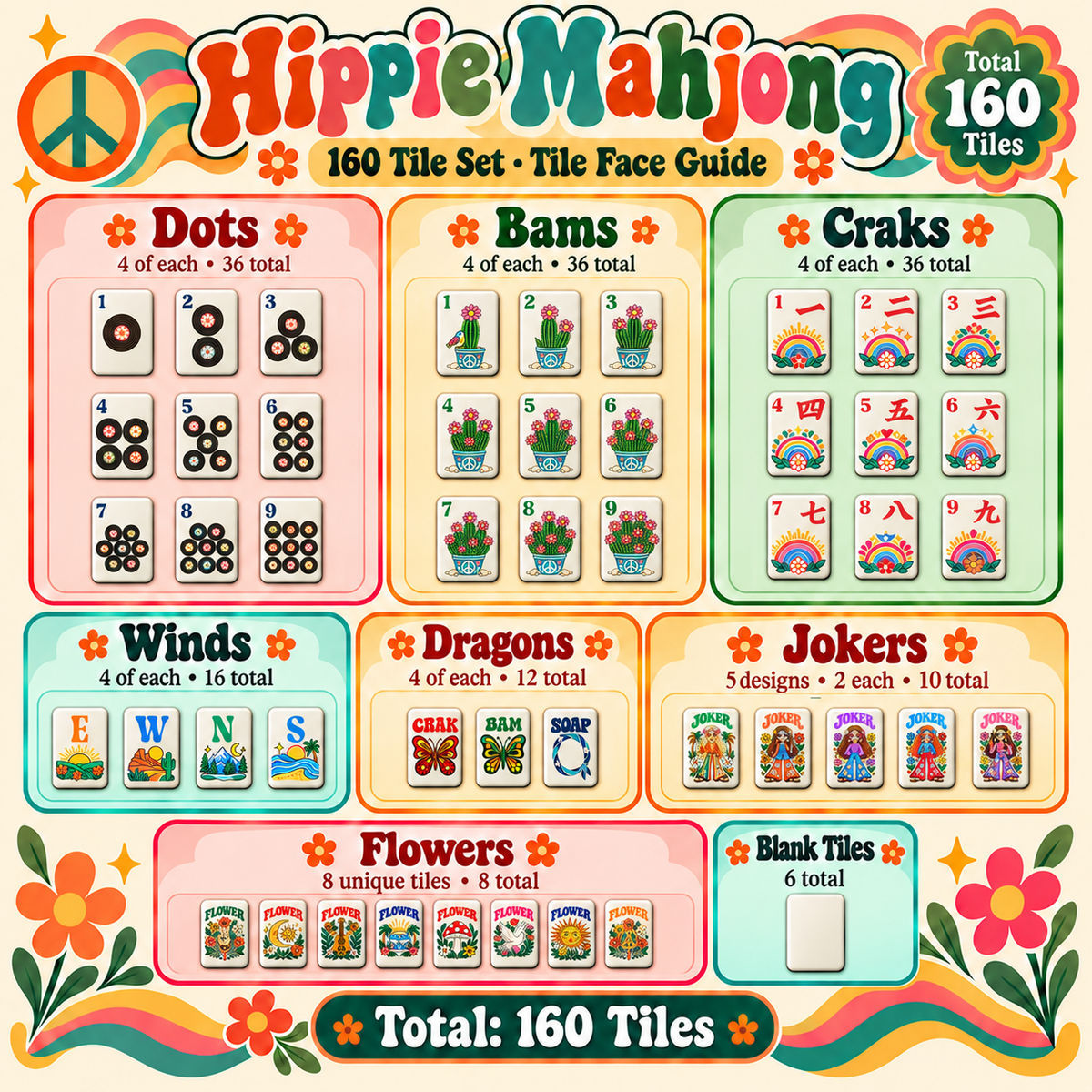
Riichi mahjong house rules are informal modifications to tournament play—typically used in casual home games—that speed up rounds, reduce complexity, or accommodate different skill levels. Common changes include allowing self-drawn winning hands in beginner games, relaxing ready-hand (tenpai) declarations, increasing or removing payment caps, and permitting simpler melds. Unlike the official Japanese Riichi Mahjong Association (RMA) ruleset used in tournaments, house variants prioritize fun over uniformity. Before adopting any house rule, your table must agree in writing and decide if they apply only to beginners or all players. Groups hosting weekly games find that documenting rules prevents disputes and lets new players join without confusion.
Riichi mahjong house rules emerge because formal tournament play—governed by strict RMA standards since the 1980s—can feel rigid or inaccessible for home players. If you've played American mahjong, you know how groups develop local customs. Riichi play does the same, but the stakes and complexity run higher. We'll walk you through the most practical house rules, when each makes sense, and how to run a fair table without compromising the game's core strategy.
What are the top three house rules beginners request?
The most commonly adopted house rules for new players are: one-draw hands allowed (permitting a player to win off their own draw in their first hand, easing early luck); no meld restriction in hand composition (allowing more open melds early, reducing complexity); and tenpai declaration waived or optional (eliminating the formal "ready hand" announcement that confuses newcomers). Many groups keep these for the first two rounds only, then revert to strict tournament rules. Establish this timeline with your table in advance so everyone knows when strictness resumes and no one feels blindsided.

How do payment caps change house play versus tournament rules?
Tournament riichi uses fixed payment schedules (e.g., mangan = 8,000 points for discarder in a four-player game). House rules often remove caps entirely, allowing massive hands to pay unlimited points, or introduce "house maxes" (e.g., "any hand over 6,000 points pays 6,000 max to keep the game social"). Some groups cap only specific hand types—for example, "no cap on self-drawn winning hands, but discard wins max at 5,000 points." This flexibility suits casual tables but creates accounting headaches. Write your payment rule on a card and keep it visible. If your group rotates dealers or plays across multiple evenings, this prevents arguments when a big hand appears.
Can house rules allow fewer or more meld types than formal riichi?
Yes, but carefully. Formal riichi recognizes pungs (triplets: identical tiles), kans (quads: four identical or three identical plus a joker), chows (sequences: three consecutive suit tiles), and pairs (two identical). House rules sometimes allow simpler melds only—for example, pungs and pairs only, banning chows entirely—to speed play for absolute beginners or translate riichi concepts to players experienced with American mahjong only. Conversely, some groups allow bonus melds: flowers, seasons, or dragons that auto-score when drawn (common in certain Hong Kong variants). Never blend these without agreement; players tracking legal melds will miscount. The safest approach: run a "practice round" before adopting a meld rule, so everyone rehearses what wins and what doesn't.
What house modifications help groups with mixed skill levels?
A pragmatic mixed-skill setup uses graduated hand difficulty: beginners play one round with relaxed rules (no tenpai calls, one-draw hands allowed), intermediates play one round with standard tournament rules, and advanced players play one elimination round with strict rules plus a "concealed hand" bonus (winning without exposing a single meld pays double). This lets everyone feel engaged and gives newcomers a learning round before facing competitive pressure. Another effective rule is "no yakuhai penalties for one hand" per player per session (yakuhai = dragon/wind honor tiles that trigger scoring bonuses; removing the penalty early reduces bad luck for new players). Document the skill level required for each round at the start of the session.
House Rule | Typical Use | Effect on Play | Risk |
One-draw hands allowed | Beginner round only | Increases luck, reduces skill gap | May frustrate skilled players |
No tenpai declaration required | All rounds, mixed skill | Faster play, less mental strain | Hides table information, harder to read position |
Payment cap (e.g., 5,000 max) | Casual social play | Reduces swing, keeps scores close | May feel anticlimactic for big hands |
Chows banned | American mahjong players learning riichi | Simpler meld recognition | Limits hand variety, shortens game depth |
Flowers/seasons auto-score | Hong Kong-influenced groups | Adds luck element, visual diversity | Complicates scoring, varies wildly by region |
Concealed hand bonus (double score) | Advanced players | Rewards strategy, raises stakes | Slows down play, requires experienced scorer |
How do house rules around discards and calling change the pace?
In tournament riichi, a player can call a discard only on the turn immediately after it's played; missing that window closes it forever. House rules often extend the calling window to one full rotation (four turns) or allow "dead man's hand" calling (pulling from a discard after the original turn-winner passes). This slows play but gives unlucky players a second chance. Conversely, some groups ban dead man's calling entirely to speed the game and increase tension. The difference is significant: a one-meld hand has maybe a 15% chance of appearing in the original window, but a 60% chance within one rotation. Decide this rule before the first hand; it alters hand frequency and scoring dramatically. If your table plays for money or points that carry over sessions, announce the calling window rule when inviting players.
🀄 Shop best-selling mahjong sets →

What house rules help prevent disputes at the scoring table?
The clearest house rules for scoring are: score all hands before paying (no settling mid-round); winner announces their hand type before anyone calculates (e.g., "tanyao / all simples"); keep a running score sheet visible so every player audits totals in real time; and allow one recalculation per hand if requested, no penalty. Many groups appoint a "score keeper" (often the player with the clearest handwriting or strongest math confidence) and rotate the role each session. If payment disputes arise, the house rule should state: "If a hand's score is questioned after settlement, the hand stands unless three of four players agree it's wrong—in which case, rescore and adjust." This prevents endless arguments while maintaining fairness. For groups using riichi-scoring apps or point sticks (score markers), test the tool or the stick notation before the session so no one spends ten minutes decoding notation.
Can American mahjong and riichi players mix house rules at the same table?
Not without major friction. The games are fundamentally different: American mahjong uses only pungs, kongs, and quints from a fixed annual card; riichi uses chows, pungs, and kans with infinite hand combinations. American mahjong has no tenpai, tsumo (self-drawn), or honor-tile bonuses in the same way. If your table includes both game types, the honest answer is to play them in separate sessions or pick one game for the evening. If you must mix, treat them as distinct games with separate rounds and rules—never try to merge them into a hybrid. The cognitive load and dispute rate skyrocket when players toggle between different meld rules, payment logic, and hand rankings. We recommend picking one variant per hosting night.
How many house rules should a casual table adopt before it stops being riichi?
A safe threshold is three core-rule modifications maximum. Beyond that, you're building a custom game that may not be recognizable to other riichi communities or transferable to a new table. For example: (1) one-draw hands allowed for the first two rounds, (2) payment cap of 8,000 points, (3) tenpai declaration optional—these three are widely used and won't confuse visiting players. But (1) + (2) + (3) + (4) ban chows + (5) auto-score flowers + (6) concealed-hand bonus is a custom ruleset that isolates your group. If your goal is to learn riichi and eventually join a tournament or travel to play with other groups, keep house rules minimal and stay close to RMA standards. If your goal is pure fun with a fixed friend group, custom rules are fine—just document them so new members know what they're joining.
🎁 See our most-loved mahjong sets & accessories →
What to check before you buy a riichi set for a house-rules group
If your group is adopting house rules, you'll want a set that handles flexible play without wearing out. Look for riichi mahjong sets with durable tiles—thick acrylic or resin, not thin plastic—that survive repeated games and frequent handling. Sets with jokers built in (not sold separately) are essential if you're allowing hand variants that use wildcards; a standard 144-tile riichi set has no jokers, so confirm you have a set designed for house-rule flexibility. A quality rack with pushers prevents accidental reveals when players expose melds, which matters more in house-rule games where players are less practiced at table discipline. Choose a mat with clear scoring zones if your house rules change payment or calling windows—visible dealer position and hand positions reduce confusion.
✨ Find your Mahstead set — free US shipping →

FAQ
Is adopting house rules considered cheating in official riichi circles?
No. Tournament players recognize that casual play uses house rules and consider them a learning tool. Cheating is misrepresenting your hand or sneaking forbidden tiles, not agreeing to house modifications before play starts.
How do I teach new players riichi without overwhelming them with formal rules first?
Start with simplified meld rules (pungs and pairs only, no chows), allow one-draw hands, and waive tenpai declarations for the first round. Then layer formal rules in subsequent rounds so players build confidence gradually.
Can I use American mahjong tiles to play riichi with house rules?
Not reliably. American mahjong tiles have different suits (Bams, Craks, Dots) but no standard notation for terminal/honor distinction that riichi requires. You need tiles explicitly labeled for riichi play.
What happens if a visiting player objects to our house rules mid-game?
Stop, explain the agreed rules (show the written list), and ask if they want to join under those terms or sit out. Never enforce a rule that wasn't announced in advance. If disputes recur, play with strict RMA rules for mixed groups.
Should I cap scoring to keep games social, or remove caps to reward good play?
Social play (caps at 5,000–8,000) suits mixed-skill groups and keeps friendship intact. Uncapped play suits competitive friends who enjoy high variance. Decide this based on your group's goal, not in the middle of a hand.
How do I score a hand if I'm unsure whether our house rule applies?
Ask the other three players before settling. Write down the disputed rule and what you decided, so the same situation in future games is consistent. Consistency matters more than perfection.


View More
View More
View More
