
How Many Tiles in Japanese Mahjong: A Clear Guide
Last updated: Nov 23, 2026
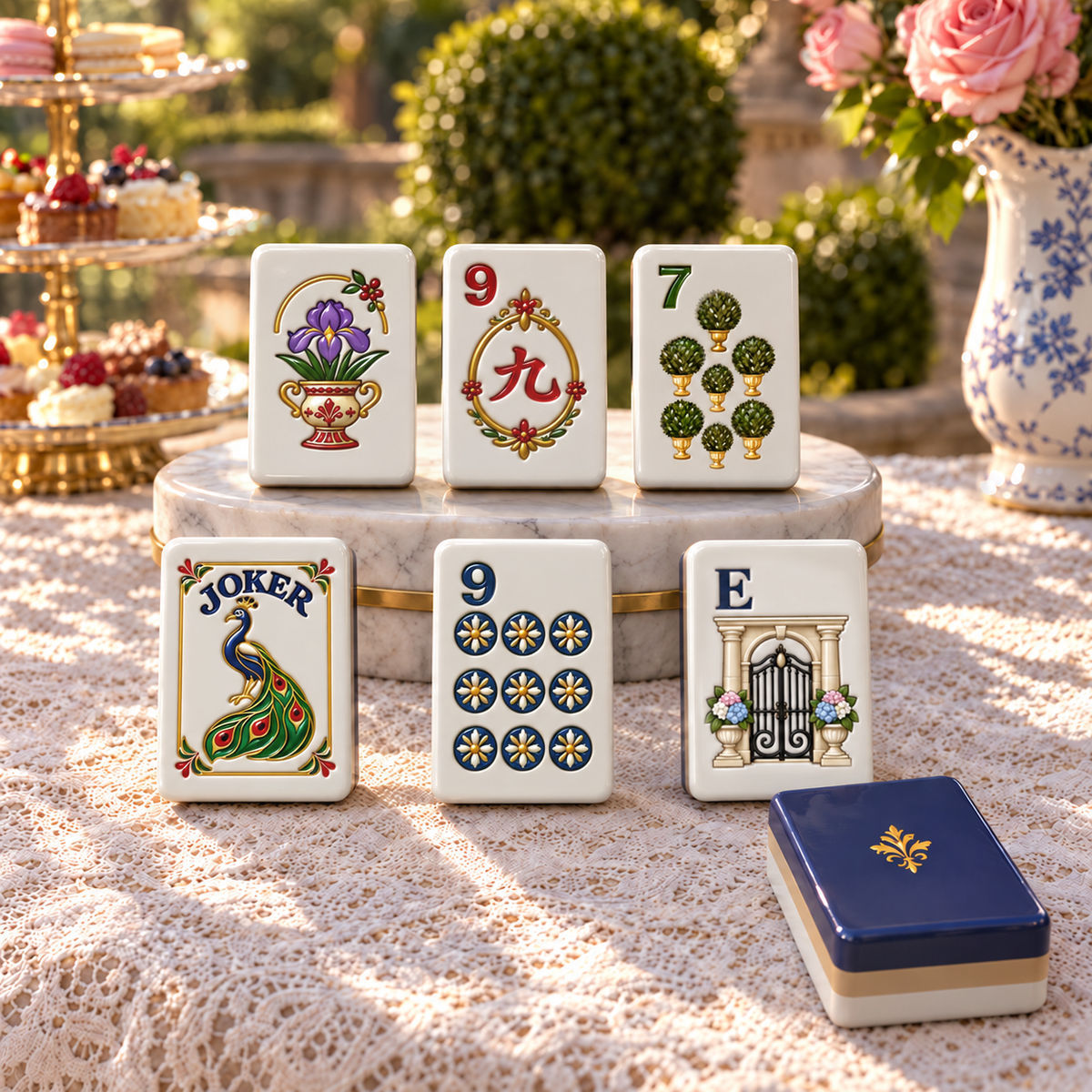
Japanese mahjong (Riichi mahjong) uses exactly 136 tiles, while American mahjong uses 152. This 16-tile gap reflects two completely different strategic philosophies: Japanese play favors hidden hands and precise discard calculation, whereas American mahjong celebrates exposed melds and joker flexibility. Understanding the tile count—and why it matters—is your first step to playing either game correctly.
What exactly is in a 136-tile Japanese mahjong set?
A Japanese mahjong set contains three numbered suits (Bamboo, Pin, Character) in numbers 1 through 9, with four copies of each number per suit, totaling 108 tiles. Add 16 winds (four North, four East, four South, four West), 12 dragons (four White, four Green, four Red), four flower tiles (typically Spring, Summer, Autumn, Winter), and four season tiles (also 1–4), and you reach exactly 136 playing tiles. No jokers exist in Japanese mahjong; every tile is finite and counted. When you buy a Japanese set, you get all 136 tiles and nothing more—there are no spares. This differs radically from American sets: we include 152 tiles for play plus 8 or more spare jokers and blanks to replace lost or damaged pieces over years of weekly games.

How does Japanese tile count compare to American mahjong?
American mahjong uses 152 tiles split into three numbered suits (Bamboo, Crank, Dot) with four copies each (108 tiles), 16 winds, 12 dragons, 8 flowers (not 4), and 8 jokers (not 0). That's 16 extra tiles: eight jokers plus four extra flowers. Japanese mahjong has no jokers—a critical rule difference that changes hand strategy entirely. In American play, jokers can substitute for any tile in a meld, and you often expose melds mid-game; in Japanese Riichi mahjong, your hand stays hidden until you win or discard, and substitution is forbidden. The tile count reflects this: American sets are built for dynamic, exposed play with backup jokers for replacements; Japanese sets assume every tile stays in play and none are destroyed.
Variant | Numbered Suits | Winds | Dragons | Flowers | Jokers | Total |
Japanese (Riichi) | 108 | 16 | 12 | 4 | 0 | 136 |
American | 108 | 16 | 12 | 8 | 8 | 152 |
Why does Japanese mahjong have fewer tiles than American?
Historical and strategic reasons explain the tile count gap. Japanese Riichi mahjong evolved from traditional Chinese play and emphasizes concealment, calculated waiting patterns, and honor through discard discipline. Because hands stay hidden and no exposed melds reduce tile availability mid-round, fewer flowers and zero jokers keep the probability tight. American mahjong, standardized by the National Mah Jongg League in the 1920s–1930s, was designed for Western social play: hands are visible on racks, melds are exposed face-up, and jokers enable flexible play for newer or casual players. The extra 16 tiles (eight jokers plus four extra flowers) create more meld options and reduce dead-hand risk. In Japanese play, hand failure is common and honorable; in American play, "no hand" feels like a hosting failure, so jokers provide insurance. Different cultures, different games.
Can you play Japanese mahjong with an American 152-tile set?
Technically, you could set aside 16 tiles and play with 136, but this is not recommended. American and Japanese tiles often differ in design and sizing—American tiles are typically larger acrylic rectangles with Latin suit names (Bam, Crak, Dot), while Japanese tiles are smaller and traditionally bone or bamboo with Kanji characters. Mixing sets creates confusion during fast play. More importantly, American jokers have no role in Japanese rules; removing them mid-game breaks scoring calculation and hand recognition. If you want to play Japanese Riichi mahjong seriously, buy a dedicated 136-tile Japanese set or join a local Japanese mahjong club where sets are provided. If you're hosting both games regularly, keep both sets separate. Trying to hybrid-play will frustrate everyone at the table.

What's the practical impact of tile count on how you host a game?
Tile count affects setup, hand closure, and game pacing. With 136 tiles, the dealer draws 14, each player draws 13, and 8 tiles remain in the wall (a smaller buffer than American play). Hands fill faster and tile scarcity is real: a single lost tile ends the game. With 152 tiles, you have 8 jokers acting as wildcards and safety net, plus extra flowers creating more valid hands per the League card. This means American games are more forgiving—newer players make fewer "dead hand" mistakes. Japanese games punish loose strategy. Practically: if you host Japanese mahjong weekly, invest in a proper 136-tile Japanese set stored in a secure case, count tiles before and after each session, and keep a written log of any missing pieces. For American play, our best-selling acrylic sets come with spare jokers for exactly this reason.
🀄 Shop best-selling mahjong sets →
Should you switch from American to Japanese mahjong based on tile count alone?
No. Tile count is just one surface difference; rule complexity is the real hurdle. Japanese Riichi mahjong demands months of study: you must master waits (tanki, penchan, ryanmen), honor groups, and the point system (based on fan and fu, not the League card). American mahjong is simpler—learn the current year's League card, understand the Charleston, recognize pung/kong/quint shapes, and you can play. Switching between variants is like learning a new language, not swapping dialogs. If you're curious about Japanese play, visit a local Japanese community center, library, or university club to try before committing. Many players enjoy both but rarely play them interchangeably. Choose based on the community you want to join, not the tile number.
🎁 See our most-loved mahjong sets & accessories →
What to check before you buy a mahjong set for a specific variant
Confirm the tile count on the product page: 136 = Japanese Riichi only; 152+ = American or hybrid play.
Check tile face style: Kanji characters = Japanese; Latin suit names + bird on 1 Bamboo = American.
Verify tile size and material: Japanese tiles are typically smaller (27–30 mm); American acrylic tiles are larger (28–32 mm) and heavier.
Read the rule booklet included with the set to confirm which game it's designed for.
Test with your group before hosting: bring the set to a friend's game or ask to borrow theirs first.
Store properly: use a mahjong bag or case to keep tiles organized and prevent loss.

FAQ
Does a 144-tile mahjong set exist, and how does it compare to 136 and 152?
Yes—144-tile sets are used in some Hong Kong and Taiwanese variants. These typically remove one or two flower/season suits or adjust dragon/wind counts. They fall between Japanese (136) and American (152) in complexity and are regionally specific; most Western players never encounter them.
Can I use American jokers in Japanese mahjong if I run out of regular tiles?
No. Japanese Riichi mahjong prohibits jokers entirely—they change hand calculation and validity. If a tile is missing, the game ends and is noted in the log. Never substitute.
Why do American mahjong sets sometimes say "160 tiles" or "166 tiles" if the game only needs 152?
The extra 8–14 tiles are spare jokers and blanks to replace worn or lost pieces over years of play. They are never added to the active game.
If I learn American mahjong first, can I easily switch to Japanese?
No. The hand-reading, discard strategy, wait types, and scoring are fundamentally different. Most players who learn one well struggle with the other initially. Plan for 2–3 months of practice to switch comfortably.
Where can I find a Japanese mahjong set in the US if I don't live near a Japanese community?
Online retailers specializing in Japanese imports, Japanese cultural centers' gift shops, and some board game cafés stock them. Ask local mahjong clubs (often advertised at community centers or libraries) where members buy sets.


View More
View More
View More
