
Riichi Mahjong Haneman Rules: Scoring Patterns & Play
Last updated: Nov 23, 2026
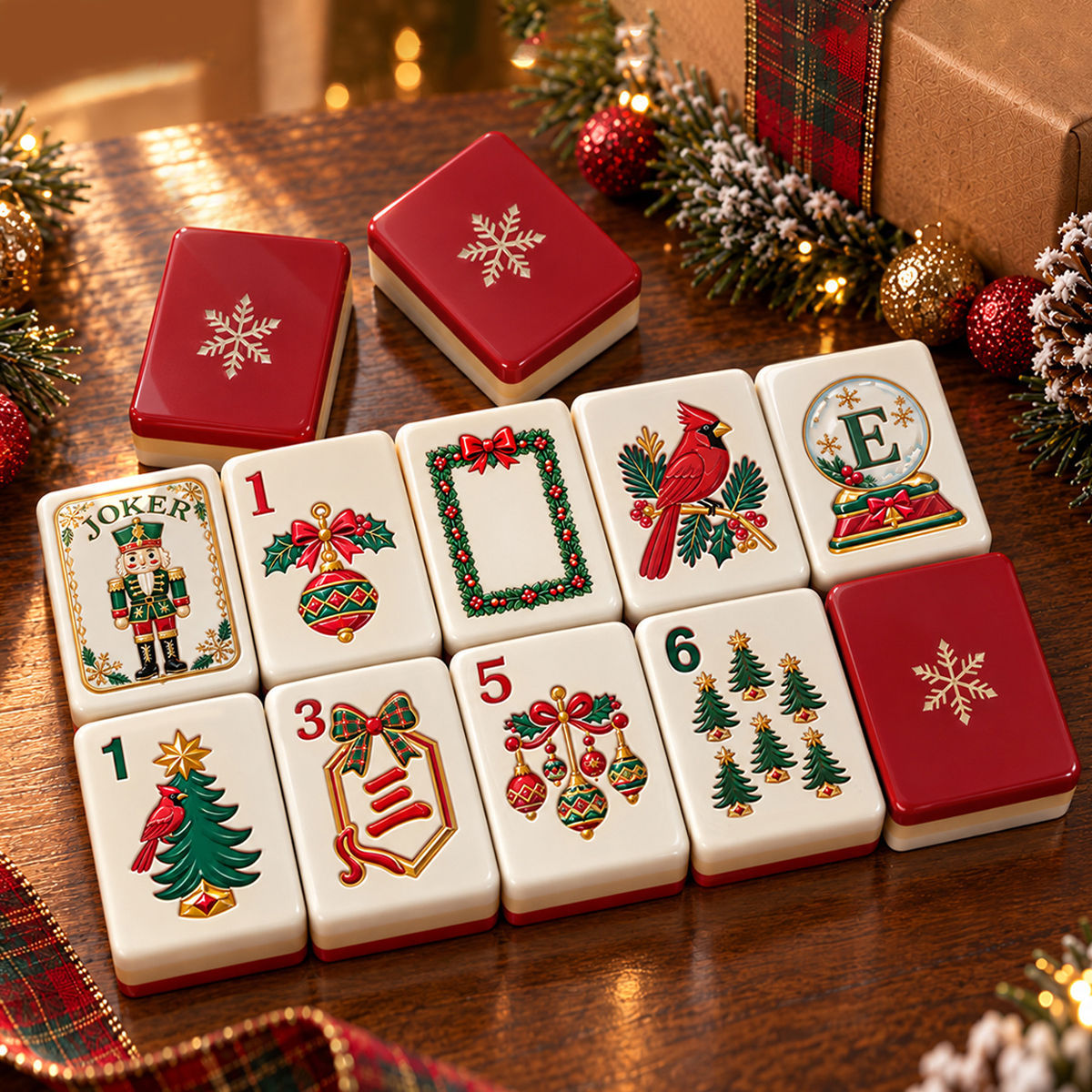
Haneman (跳満, "jump full") in riichi mahjong is a hand worth 8,000 points for the discarder or 16,000 total (dealer pays 8,000). It ranks between mangan (2,000-base limit) and baiman (3,000-base limit) in Japanese scoring. Haneman requires specific combinations: typically 6+ han (doubles) at any fu (minipoints) value, or 5 han with 40+ fu, or a hand with specific yaku combinations that collectively reach the threshold. Unlike American mahjong—which uses a flat card-based hand list and jokers—riichi mahjong builds scores from counting han and fu, with no sequences allowed in some variants and strict tile-call rules. Haneman appears frequently in tournament play because many common yaku patterns (like three pung/kongs plus terminals, or sequences plus triplet honor) naturally reach 6 han; understanding when your hand crosses this threshold is essential for deciding whether to declare, push for a bigger hand, or fold. #
Haneman in riichi mahjong is a mid-range hand worth double the base limit hand. It ranks between mangan (2,000-base limit) and baiman (3,000-base limit) in Japanese scoring. Haneman requires specific combinations: typically 6+ han (doubles) at any fu (minipoints) value, or 5 han with 40+ fu, or a hand with specific yaku combinations that collectively reach the threshold. Unlike American mahjong—which uses a flat card-based hand list and jokers—riichi mahjong builds scores from counting han and fu, with no sequences allowed in some variants and strict tile-call rules. Haneman appears frequently in tournament play because many common yaku patterns (like three pung/kongs plus terminals, or sequences plus triplet honor) naturally reach 6 han; understanding when your hand crosses this threshold is essential for deciding whether to declare, push for a bigger hand, or fold.
🀄 Shop best-selling mahjong sets →
What exactly triggers a haneman in riichi play?
A haneman triggers when your winning hand scores 6 han (doubled) at any fu, or 5 han at 40+ fu. Han are multipliers earned by specific yaku patterns—one yaku = one han, two independent yaku = two han, and so on. The most common haneman routes: three pung/kongs (three han) plus one honor triplet (one han) plus a terminal/honor wait (one han) = six han; or a hand with double pung (two han) + honor triplet (one han) + three colors (one han) + all chow if variants allow (one han) = five han at minimal fu, which meets the threshold at fu ≥40. Fu accumulates from hand shape: pair = two fu, triplet = four fu (eight if terminal/honor), opened triplet = two fu (four if terminal/honor), and wait bonuses. The key: count your completed hand's yaku before claiming win; if you reach six han, you're guaranteed haneman payout regardless of fu.

How does haneman differ from American mahjong scoring?
American mahjong players study a single printed card each year: every legal hand is explicitly listed, jokers substitute freely, and payment is flat per hand type (no scaling). Riichi mahjong has no card—you build scores by counting han and fu math, jokers do not exist, and sequences (chow: 1-2-3, 2-3-4, etc.) are called and exposed like triplets. American scoring also forbids sequence calls entirely; riichi allows them but applies stricter rules on what makes a yaku. A riichi hand worth haneman pays the same across a season because the rule is formulaic; an American haneman-equivalent hand appears once per card-year and pays a fixed amount. Neither system is "easier"—American requires card memory, riichi requires arithmetic and yaku recognition in real time. If you play both, expect 10–15 seconds per hand calculation in riichi until the yaku categories become reflex.
What are the most common yaku that lead to haneman?
The clearest haneman builders: three pung/kongs (three han, the most frequent route), honor triplet (one han if not part of a larger pattern), terminal or honor pair (no han, but blocks other yaku and affects fu), and all simples (one han: no terminals or honors). Add three colors (one han: one pung/kong in each suit) or all chow (variants-dependent), and you hit five or six han quickly. In closed (concealed) hands, riichi itself counts as one han—so a riichi declaration plus three pung locks in at least four han with one safe yaku, meaning the fifth or sixth often comes from hand shape alone. Pair of dragons does not count as haneman in isolation but stacks: two dragons (no han direct) plus two triplets (two han) plus one yaku = three han, then shape fu pushes you toward mangan if fu ≥50. Study your table's official rule sheet (JMJA, EMA, or local variant) because some yaku (like seven pairs, nine terminals) carry extra han or exclude other patterns. Most groups play with a sheet visible; cross-reference before every new hand.
How do you calculate fu at haneman threshold?
Fu is the "base points" layer; han is the multiplier. Fu count begins at 20 (the base for any hand), then adds: 2 fu per pair, 4 fu per triplet (8 if terminal/honor), 2 fu per opened triplet (4 if terminal/honor), and 2–4 fu for your winning wait type (edge wait, side wait = 2 fu each; single tile wait = 2 fu; pair wait = 0 fu). A closed hand also adds 10 fu (tsumo win only) if not riichi. Example: riichi hand, won on your draw (tsumo), with one triplet of 5 Dots (four fu), one triplet of East Wind (eight fu), one pung of 2 Craks (four fu), no bonus: 20 (base) + 4 + 8 + 4 + 10 (tsumo closed) = 46 fu. At five han, 46 fu easily clears the mangan threshold (3,000 base), so you score baiman. At four han, 46 fu = mangan (2,000 base). The shortcut: if you hit six han, fu does not matter—haneman is guaranteed. If you're at five han, fu ≥40 triggers haneman; under 40 fu, five han = mangan. Track fu on a small pad during play so you can declare with confidence.
Hand Pattern | Han Count | Fu Minimum | Result | Dealer Payout |
Three pung + honor triplet + terminal wait | 5 | 30 | Haneman if fu ≥ 40 | 8,000 |
Three pung + honor triplet + simple wait | 5 | 25 | Mangan (under 40 fu) | 5,000–8,000 |
Three colors + all chow + riichi | 5 | 35 | Haneman if fu ≥ 40 | 8,000 |
Double pung + honor triplet + three colors | 5 | 30 | Haneman if fu ≥ 40 | 8,000 |
Three pung + honor triplet + all simples | 6 | Any | Haneman guaranteed | 8,000 |
All pung (no chow) + riichi | 4–5 | 30+ | Mangan or haneman | 5,000–8,000 |
A haneman-eligible hand usually scores 8,000 to the discarder (or 4,000 × 3 non-dealers) when dealer wins; non-dealer haneman = 4,000 from discarder, 2,000 from each other player.
🎁 See our most-loved mahjong sets & accessories →

When should you push for haneman instead of settling for mangan?
The push-or-fold decision hinges on risk, hand progress, and discards. If you have four han at 30 fu (already mangan), pushing for a fifth han (riichi territory) requires both a yaku and clean discards: you need the table to not read your hand early and discard your trap tiles. A safe rule: if two suits are built, honor triplets are visible, and discard flow shows buried dragons, settle for mangan—your hand is already safe money and three-player risk is high. Push only if the hand is young (fewer than six tiles drawn), your yaku chain is hidden (no triplets exposed yet), and your target tile has zero appearances on the table. Haneman push typically nets +4,000 over mangan per hand but costs the hand frequency—a failed push often means ron (loss) or tsumo block from the tile you needed. Conservative players lock haneman at five han + 40 fu and declare; aggressive players hold four-han-at-35-fu hoping for the fifth but eat more losses. A middle path: declare haneman-safe at six han regardless of fu, push for baiman (three-thousand-base) only if you have two clean tiles and riichi is declared.
What if you're playing Hong Kong or Taiwanese variant—does haneman apply?
Hong Kong mahjong (HK-syle) uses a different scoring system: "fan" replaces han, and point levels are 2-fan (mangan equivalent), 3-fan (haneman-like), and 5-fan (baiman). The word "haneman" does not officially exist in HK rules—you'd reference "3-fan" instead. Taiwanese variants also build from yaku-count systems but often cap at seven ranks; haneman as a named threshold does not apply. However, the principle is identical: a mid-range winning hand that scores roughly double a basic limit hand. If you learn riichi haneman, the fan/point concepts in HK mahjong transfer directly. American mahjong, by contrast, uses no han or fan system—every hand is a unique permutation on the annual card. If you're splitting time between riichi and HK play, use your variants' official sheet to map the scoring levels to each other; otherwise confusion on payouts will derail the table. Many casual groups use simplified rules, so always clarify scoring before tiles touch the table.
What common mistakes kill your haneman claim at the table?
Miscounting han: You thought three pung (three han) + honor pair (one han, incorrect—pairs do not create han, only triplets do) = four han, but it's actually three han. Declaring at four han feels haneman but pays mangan. Always verify each yaku is independent and real per your rulebook.
Confusing fu with han: New players count fu (base points) and assume han (yaku multiples) arrives automatically. A hand with 50 fu and three han = mangan, not haneman. Fu alone never triggers a payout level; han does.
Exposing yaku tiles too early: If you open a triplet of 5 Bams (obvious terminal pung), savvy opponents discard pairs of other suits to trap your three-color ambitions. Your haneman potential collapses mid-hand. Riichi (declaring closed and closed-draw-only) hides your shape.
Forgetting riichi lock: Once you declare riichi, you cannot change your hand shape or discard strategy. A riichi declaration at three han assumes you'll pick up one yaku from the wall. If three han turns into a dead hand (safe-tile only), you lose 1,000 points minimum and cannot win.
Miscalculating terminal wait: A terminal pung (1s, 9s) provides two fu for certain waits, but a pair of 5s provides zero. Many players add fu for a pair they should subtract. Recount before claiming.
What to check before you buy a mahjong set for riichi play: Riichi tournaments and serious home groups require a specific tile count (136 in some variants, occasionally 144 in others) and precise sizing. Standard best-selling acrylic sets from Mahstead are engineered for American mahjong (160 tiles with jokers, no blanks used). If you're serious about riichi, confirm your group's tile count and suit markings—riichi sets often use different Crak symbols or lack English numerals. Acrylic sets are durable for frequent play; bamboo sets age faster. Mats and racks with pushers help organize hand shape and speed play—essential if you're calculating fu across three pung and two kongs at tournament tempo. A travel bag protects tiles during transport to casual groups or clubs. Ask your local riichi club which tile count and format they use before investing; American-format sets work for casual cross-variant play but riichi tournaments enforce specific tile specs.
✨ Find your Mahstead set — free US shipping →
#

FAQ
Is haneman the same as a double-limit hand in all riichi variants?
Haneman is the riichi-specific term for 6+ han at any fu (or 5 han at 40+ fu). East Asian variants use similar tier names—Hong Kong calls it 3-fan, Taiwanese may reference point level 4—but the payout is consistent: approximately 8,000 to the discarder (non-dealer). Haneman is never a "double" of something; it's a fixed threshold. American mahjong has no haneman concept; scoring is flat per hand type on the card.
Can you score haneman if you're not the dealer (East)?
Yes, absolutely. Any player can win a haneman hand. A non-dealer discarder pays 8,000 to the non-dealer winner; each non-dealer pays 4,000 if the winner drew from the wall (tsumo). A dealer who wins haneman receives 8,000 from the discarder or 4,000 × 3 from all players. The payout is fixed; only the distribution changes based on who won and how.
What's the fastest way to reach haneman without riichi declaration?
Open two triplets (two han) immediately, grab an honor triplet (one han) or all-simples (one han), and wait on edge or side (shape fu). At three han and 30 fu, you're already halfway to haneman via fu stacking. Add one more yaku from your hand shape or winning tile, and you hit five han + 40 fu = haneman. No riichi needed—slower but safer if the table is aggressive.
If I declare riichi and win with four han at 30 fu, do I get haneman or mangan?
Mangan. Riichi adds one han, so four han (from yaku) + one (from riichi) = five han. Five han at 30 fu is mangan (threshold is five han 40+ fu for haneman). You'd need five han from yaku alone, plus riichi (six han total) to guarantee haneman, or five han and 40+ fu without riichi.
Does haneman haneman payout change if the tile wall runs out before someone wins?
No. Haneman is scored only if a winning hand is declared. If the wall is exhausted (draw or tie), no one scores and the hand is replayed. Haneman payouts apply only to completed, declared hands—never to theoretical or unwinnable scenarios.


View More
View More
View More
