
Mahjong Symbolism of Dragons: Meaning & Play
Last updated: Nov 23, 2026
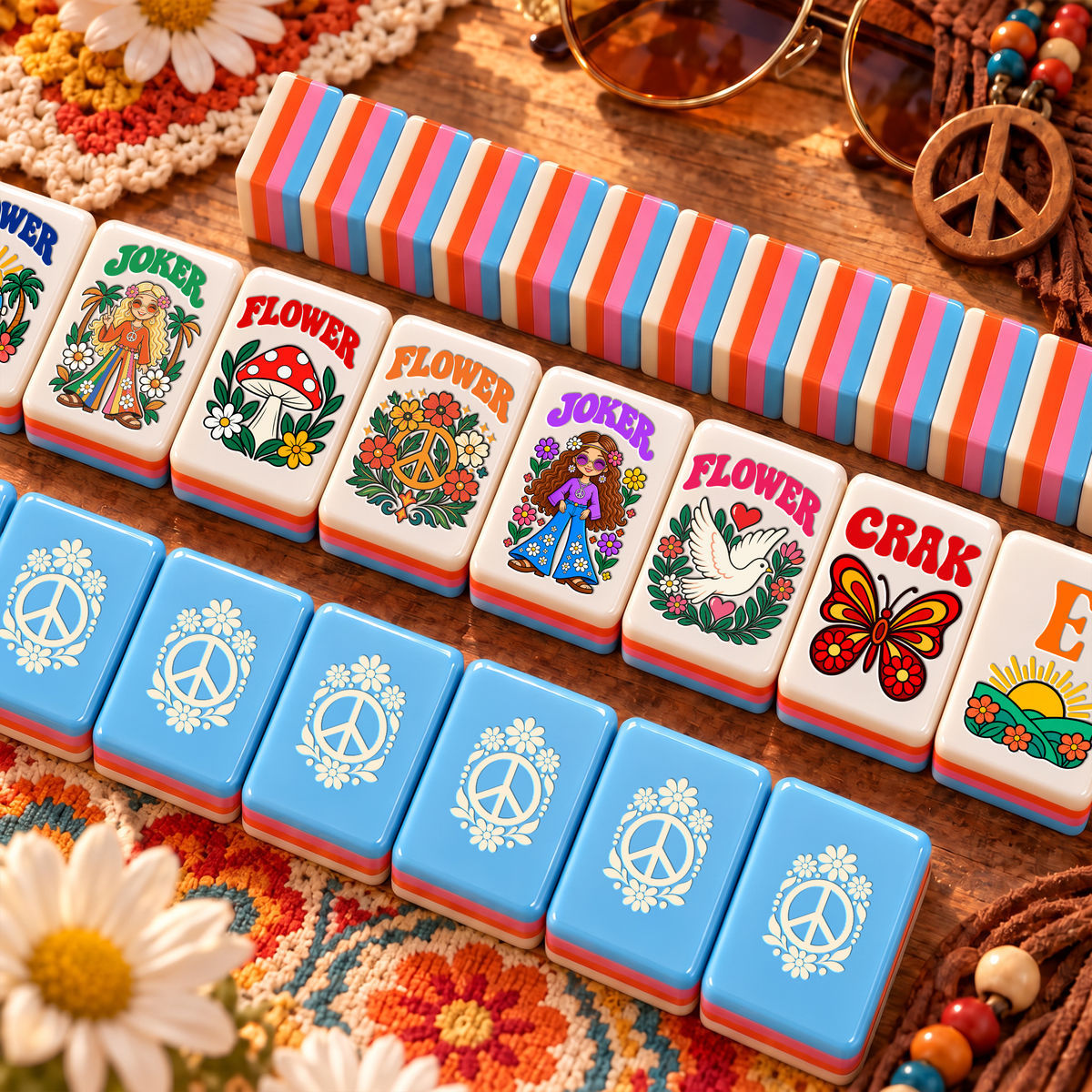
In American mahjong, there are three dragon tiles—Red (goes with Craks), Green (goes with Bams), and White, called "Soap" (goes with Dots and serves as zero). Each dragon is an honor tile, not part of a numbered sequence; you hold four identical copies of each dragon in every standard set. Dragons appear on the current year's National Mah Jongg League card as components of pungs, kongs, quints, or sextets—you cannot use a single dragon or a pair of dragons alone to win. In Chinese and Hong Kong mahjong, the three dragons (typically called Zhong, Fa, Bai—Red, Green, White) carry fortune-bringing symbolism and are scored separately in many hands. The dragon's role differs slightly across variants: in Riichi mahjong, dragons are wind-adjacent honor tiles scored for triplets; in American mahjong, they're pure hand-building tools tied to their suit. Understanding dragons' suit affinity and exposure rules is fundamental to reading winning hands and planning your discards strategically.
In American mahjong, dragons carry both practical function and deep cultural symbolism. We've played thousands of hands, and mastering dragons transforms how you read the card, plan exposures, and spot winning patterns before other players.
Why do dragons matter in American mahjong?
Dragons are honor tiles—they hold no numeric value and cannot form a sequence (chow) with numbered tiles. In American play, dragons appear frequently in hand patterns because they pair naturally with their suit (Red with Craks, Green with Bams, White with Dots). When you study how to read a mahjong card, you'll notice dragons often anchor quints, sextets, or mixed honor-and-suit combinations. Unlike numbered tiles, which must appear in specific numeric order, dragons work as repeatable elements—three Red Dragons, four Red Dragons, five Red Dragons—giving you flexibility. Spotting dragon patterns early helps you discard safely and recognize when an opponent is building toward a dragon-heavy hand.

What do the three dragons represent symbolically?
The Red Dragon (Zhong in Mandarin, associated with Craks) traditionally symbolizes prosperity and good fortune in Chinese culture. The Green Dragon (Fa, associated with Bams) represents growth, fertility, and renewal. The White Dragon (Bai, also called "Soap," associated with Dots) carries the meaning of purity, honesty, and serving as a neutral or "blank" force. In older Chinese variants, players earned bonus points for collecting "dragon triplets"—hands containing all three dragons in sets. American mahjong doesn't award automatic bonuses for dragons alone, but understanding their cultural roots enriches the game and connects you to mahjong's thousand-year history. Many players choose engraved American mahjong sets featuring traditional dragon art to honor this symbolism at their table.
🀄 Shop best-selling mahjong sets →
How do dragons function in winning hands?
Dragons appear in American winning hands as components of melds—always in groups of three or more identical dragons. A pung (triplet) of Red Dragons counts as a single exposed meld; a kong (four Red Dragons) counts as a pung plus one more. You cannot win with a single dragon or a pair; the card never permits it. When reading the League card, you'll see dragons listed alongside winds, flowers, and numbered suits. A hand might require "Red Dragon pung + Craks sequence + Dots sequence + Winds pair," for example. Because dragons are tied to their suit, a hand calling for Red Dragons almost always appears in sections where Craks combinations dominate. Memorizing which dragon pairs with which suit prevents costly discards. We recommend studying the card sections methodically to see how often dragons appear—you'll spot them in roughly 30–40% of published patterns on any given year's card.

What's the difference between American and Asian dragon rules?
In Hong Kong mahjong, the three dragons function much like American dragons but score differently. A player completing a hand with a dragon triplet earns a "dragon bonus" (an extra point multiplier). Chinese classical mahjong uses similar rules but with different scoring tables and hand structures. Riichi mahjong (Japanese) treats dragons as honor tiles similar to winds; they form triplets and count toward specific "yaku" (hand patterns) such as "All Honors" (Honroutou) or "Little Three Dragons." Taiwanese mahjong adds complexity: some variants use four dragon types or score dragons based on concealment (hidden vs. exposed). American mahjong strips away scoring multipliers and focuses dragons purely on hand-matching—you win by exposing melds that match the card, and dragons are simply one component. The National Mah Jongg League card changes yearly, and new players often mistake dragon symbols between variants; if you switch between games, reference the rule sheet first.
🎁 See our most-loved mahjong sets & accessories →
How do you avoid costly dragon mistakes at the table?
Common mistake 1: Discarding a dragon because you think it's "high" or "dangerous." In American mahjong, dragons have no rank—they're simply tiles. Discarding a dragon is risky only if an opponent is visibly building toward a dragon pung or kong. Watch their exposures, not the tile itself.
Common mistake 2: Holding three dragons waiting for a fourth. Unless the card explicitly calls for a kong (four), holding three dragons without knowing what hand you're chasing wastes space and forces dead discards. Always reference the card before committing tiles.
Common mistake 3: Confusing dragon suit affinity during the Charleston. The Charleston—the tile-passing ritual before play—is when many new players accidentally pass a Green Dragon thinking it's a Dot or Bam. Remember: Red = Craks, Green = Bams, White = Dots. If you're unsure during the pass, ask the table; it's clearer than a misplay later.
Common mistake 4: Failing to recognize when an opponent has called a dragon expose. If someone exposes three Red Dragons, note it immediately. It signals their hand pattern and narrows your safe discard options. Write down exposures if the game allows note-taking.
Strategy tip: Use mahjong racks with pushers to organize your hand by suit and honor type. Racks let you sort dragons visually at a glance, reducing mental load and speeding up your decisions. Clear organization prevents the fumbling that leads to mistakes.
Scenario | Dragon Type | Suit It Pairs With | Action |
Hand calls for "Red pung + Crak sequence" | Red Dragon | Craks | Keep Red Dragons if you have Crak 7-8-9 or similar |
Opponent exposes Green Dragon kong | Green Dragon | Bams | Avoid discarding isolated Bam tiles; they may fill their hand |
You draw a White Dragon, no hand yet | White Dragon | Dots (acts as zero) | Hold temporarily; White is useful in mixed sequences |
Card shows "Winds + Dragons" hand | Any dragon | Its suit | Study that specific hand section before the round |
✨ Find your Mahstead set — free US shipping →
What to check before you buy a new set
When you order a 160-tile acrylic American mahjong set from Mahstead, verify that all three dragons are present and undamaged. Acrylic tiles resist wear better than bamboo, especially if you host weekly games. Check that the dragon imagery (especially White "Soap") is clear and doesn't fade with handling. If you play in variable light (home, club, venue), choose a color contrast you can read easily—some sets use subtle shading for White Dragons that may blur under fluorescent light. Consider a padded mahjong bag or case if you transport your set; dragons and other honor tiles can crack if the set shifts during travel. For tables that use multiple games per week, a durable mahjong mat protects tiles from splinters and reduces noise. Mahstead sets ship free across the US, so no hidden transport costs—only the tile quality and your setup choices matter.

FAQ
Can I use a dragon as a pair in American mahjong?
No. A pair must be two identical tiles, and dragons cannot form a winning pair alone. The card never calls for a dragon pair without additional melds.
If the card says "Winds + Dragons," can I mix Red, Green, and White?
No. A meld must contain three or more identical tiles. If the hand requires both winds and dragons, you'll see separate melds listed—one for winds (three East, four West, etc.) and one for a specific dragon triplet or higher.
What does White Dragon "Soap" actually mean?
In mahjong tradition, the White Dragon is sometimes called "Soap" because it's blank or neutral—it has no distinguishing mark like Red (symbol) or Green (symbol). In American play, it counts as zero when paired with Dots. The term is slang; official League calls it the White Dragon.
Why does Red Dragon go with Craks?
This pairing comes from classical Chinese mahjong symbolism. Red represents prosperity (Craks are often depicted as Chinese currency or treasures). Green (growth) pairs with Bams (plants/wood), and White (purity/neutrality) pairs with Dots (order/cycles). The suits and dragons are inseparable culturally.
If someone exposes three dragons, can I tell what hand they're building?
Partially. A three-dragon expose (pung) narrows possibilities, but you need to see their other exposures and discards. If they've also exposed a Crak sequence, they're likely building a hand that calls for a Red Dragon pung plus Craks. Cross-reference the card with their pattern.
Do dragons score differently in American mahjong?
No. American scoring is based on hand difficulty (double, triple, etc.) and bonus points for concealed melds or last-tile wins. Dragons have no separate scoring bonus; they're valued only as tile components of a valid hand pattern.


View More
View More
View More
