
Riichi Mahjong Betaori Rules: When to Fold Safe
Last updated: Nov 23, 2026
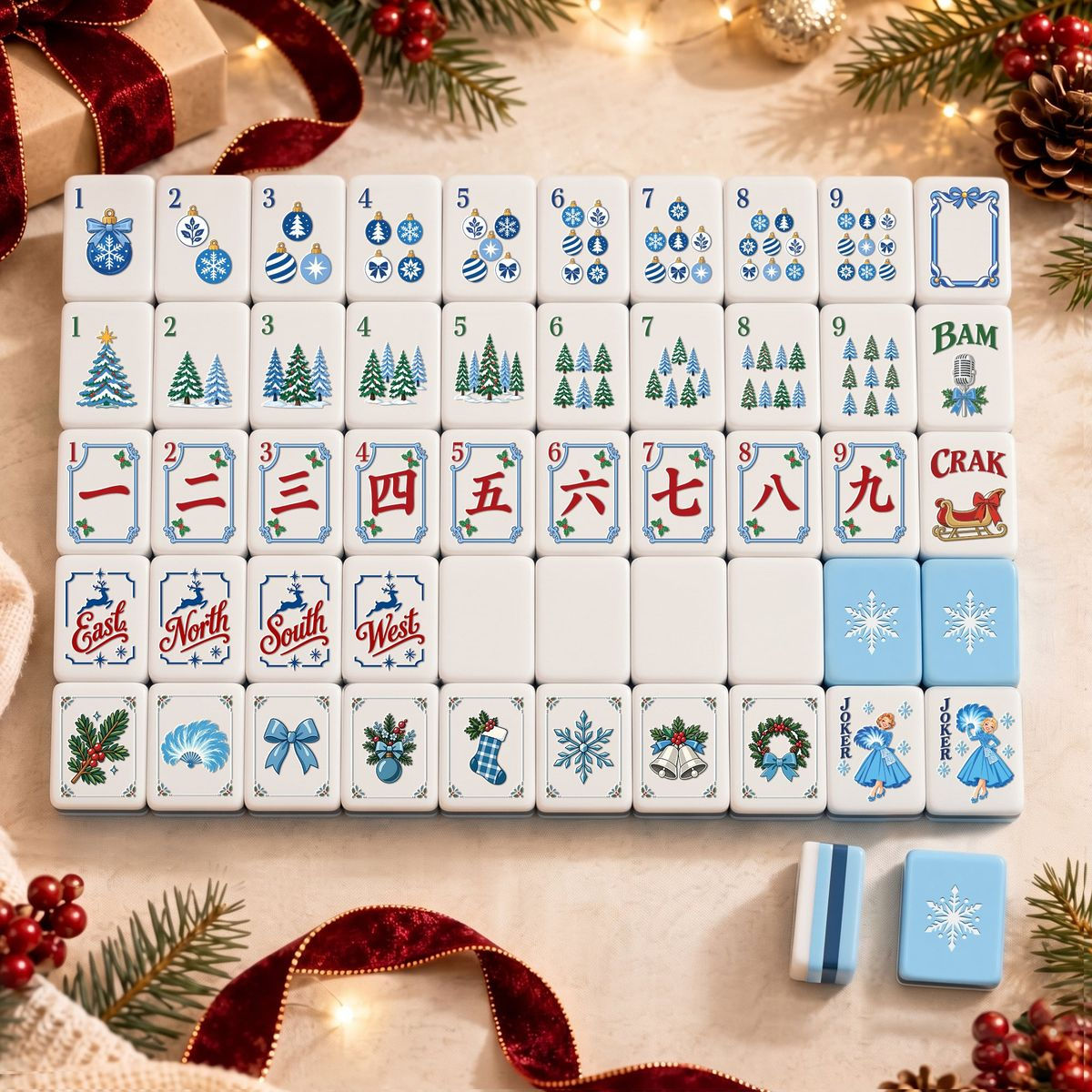
Betaori (打て折り, "break and fold") in riichi mahjong is a defensive strategy where you voluntarily abandon your winning hand and discard safe, low-value tiles to avoid absorbing damage from an opponent's win. Unlike American mahjong—which has no defensive play beyond your own closed hand—riichi mahjong exposes melds, allowing opponents to read your strategy. Betaori kicks in when one player is clearly chasing a high-scoring hand (signaled by declaring "riichi") and you judge the cost of losing to them outweighs your own winning odds. You'll discard tiles that can't be called for melds, prioritize unpaired honor tiles, and study the discard pile to read which numbers and suits are safest. It's a mid- to late-game call that separates casual players from competitive ones; the decision relies on hand value, round position, and point totals, not fixed rules. Played in competitive riichi, casual Japanese clubs, and online platforms—not in American mahjong, which forbids reading opponent hands this way.
Riichi mahjong and American mahjong are fundamentally different games. American mahjong relies on a published hand list updated every spring, closed hands until the final meld, and no direct opponent interaction beyond tile drawing. Riichi mahjong, by contrast, lets players expose melds, declare "riichi" (a bet that you're one tile away from winning), and read the discard pile like an open book. Betaori exists only in riichi because you can see what opponents are chasing. It's a calculated retreat: you trade your own win for a loss that costs you fewer points than the one you'd suffer if you stayed aggressive and lost to someone else's high hand.
🀄 Shop best-selling mahjong sets →
What exactly is betaori, and when do you use it?
Betaori is the act of playing a completely defensive hand—discarding tiles with zero intention of winning. You're not trying to make a hand; you're trying to survive the round with minimal damage. Use it when: (1) an opponent has declared riichi and is one tile away from victory; (2) the hand value they're targeting is significantly higher than yours would be; (3) you're already far behind in score and losing would cripple your comeback. Betaori isn't cowardice—it's math. In a three-player round where Player A is riichi, you're at 25,000 points, and Player A is at 35,000, the damage from losing to Player A's 7700-point hand plus the riichi stick is too high. Fold. Play safe tiles, drain the round, and reset.

How do you identify a safe tile in riichi mahjong?
Safe tiles fall into three categories: (1) Honors (winds and dragons) that have appeared in the discard pile or are clearly not in anyone's open melds; (2) terminal and near-terminal numbers (1 and 9) that are harder to use in sequences because they need a 2 or 8 adjacent; (3) tiles from suits that an opponent has already discarded heavily—if three 4 Bams are on the table, a 4 Bam is safer than a 5. The riskiest tiles are mid-numbers (4–6) in any suit, because they fit the most melds. Watch the discard pile ruthlessly. If Player A has thrown two 2 Craks and a 3 Crak, they're unlikely to be waiting on a 1-2-3 sequence in Craks, so a 2 Crak is relatively safe to throw. Unsafe tiles are those that complete common waiting patterns: 2-3-4, 3-4-5, sequences with pairs. Never discard a tile that matches both a tile an opponent has called and a tile in their open melds unless you're certain they're not waiting on it.
What's the difference between betaori and just playing normal defense?
Normal riichi mahjong defense means keeping your hand open and discarding moderately safe tiles while you try to win. Betaori means abandoning hope of winning—you throw away high-value tiles, prioritize absolute safety over hand shape, and accept that you'll likely finish second or third. Normal defense says, "I'll play safe and stay ready to win if a good tile comes." Betaori says, "I'm giving up. Survival is the only goal." The shift happens in your discard logic. In normal defense, you might keep a 5 Dot because it could build a pung or a sequence later, even though it's slightly risky. In betaori, you discard that 5 Dot immediately because the risk of a one-tile loss to an opponent's high hand is unacceptable. Betaori players also watch for "suji" (safe numbers)—tiles mathematically less likely to complete a waiting hand based on what's been discarded—but with even stricter criteria than normal defense. The turning point is psychological: once you commit to betaori, you stop hoping to win and start calculating only the cost of losing.
🎁 See our most-loved mahjong sets & accessories →
When does betaori backfire, and how do you avoid it?
Betaori backfires when: (1) the opponent you're scared of doesn't actually win, and you've discarded tiles that could have won you the round; (2) you misjudge the hand value and fold for a loss that wasn't as catastrophic as you feared; (3) you read the discard pile incorrectly and throw a "safe" tile that someone is actually waiting on. To avoid these traps: compare the opponent's declared riichi to the open melds on the table—if they've called a pon (pung) of 1 Bams and a sequence of 3-4-5 Craks, they're not waiting on 2 Bams or 6 Craks; (2) use your score difference as a hard rule—if you're ahead and the riichi bet is small, betaori is overkill; (3) count the discards obsessively—if you're unsure a tile is safe, it probably isn't. The biggest mistake is panicking into betaori too early, before an opponent has shown real hand strength. A single riichi declaration doesn't guarantee a high hand; wait one or two more rounds to see if they draw good tiles. If they start throwing away their discards after riichi—a sign of "dead" hands—you can relax and resume normal play.

How does betaori fit into long-term riichi strategy?
Betaori is a survival tactic that can shift an entire game if you're already losing. In a multi-round session (typically four rounds), your total score matters more than any single hand. If you're at 10,000 points and your opponent is at 35,000, you can afford to lose a small hand in the first round to stay healthy for the remaining three. If you lose 8,000 points to a riichi hand and drop to 2,000, you're functionally out of the game. Competitive riichi players build a betaori decision tree: at what score gaps do you fold? How does your hand value compare? How many rounds are left? Some players use a simple rule: "If I'm more than 15,000 points behind and someone riichi, I betaori." Others play hand-by-hand. The key is consistency. If you always betaori against riichi, opponents learn that pattern and become more aggressive when riichi against you. If you never betaori, you'll bleed points. The art is mixing strategies—occasionally fold, occasionally stay aggressive—so opponents can't predict you. Over a season of weekly games, players who understand betaori consistently outperform those who treat every hand as a solo win attempt.
Strategy | When to Use | Cost of Mistake | Skill Level |
Normal Defense | Standard midgame; small point gaps | Moderate loss if opponent wins | Beginner |
Betaori | Opponent riichi + high hand value; you're behind | Small loss; opponent doesn't win | Intermediate |
Aggressive Stay | You're ahead; opponent riichi is weak | Large loss if opponent wins | Advanced |
✨ Find your Mahstead set — free US shipping →
How does betaori differ from American mahjong play?
American mahjong forbids the discard pile reading that makes betaori possible. Your hand is closed until you declare "mahjong" (win), so no one knows what you're building. You can't adjust your play based on an opponent's exposed strategy because there is none—everyone locks in their hand shape based on the yearly National Mah Jongg League card before play begins. Defensive play in American mahjong means holding jokers safely, not throwing unneeded tiles early, and sometimes not declaring a win that breaks your hand. Riichi mahjong, by contrast, encourages constant information gathering: watch discards, memorize what's been thrown, predict what others need, and adjust your own strategy live. Betaori is the ultimate expression of this adaptive thinking. If you're learning riichi mahjong for the first time after playing American mahjong for years, expect this adjustment: in American, you plan your hand in silence; in riichi, you read the table like a poker game and change your mind ten times per round. Betaori feels almost reckless to American players until you realize it's actually the most rational move in that moment.
What to check before you play betaori
Count the discards: Know what each opponent threw; if uncertain about a tile's safety, don't throw it.
Track open melds: Write down which sequences and pungs are visible; use them to eliminate waiting patterns.
Compare scores: Use a score difference threshold (e.g., −15,000 points) as your trigger for betaori consideration.
Watch for dead hands: After an opponent riichi, if they throw away their next two draws, they're likely stuck; relax betaori.
Separate betaori from tilt: Don't fold in anger; make the decision before emotion takes over.
Practice suji: Learn the mathematical safe numbers; they differ by how many tiles of a given number have been discarded.
Learning and hosting riichi games
If you're new to riichi mahjong, find a local club or meetup through community centers, libraries, or Japanese cultural associations in your area—most host casual sessions where veterans teach. Online platforms offer faster feedback and endless opponents. Once you understand the basics of how to play American mahjong and tile values, the leap to riichi defensive play becomes clearer because you already know point differences and hand rankings.
For hosting a riichi group, you'll need a comfortable mat that supports four players and fast tile movement. Our mahjong mats are sized for standard tables and include a cord to keep tiles organized. Racks with pushers help newer players manage their tiles without broadcasting their thinking—keeping your hand hidden is critical when you're deciding whether to betaori. As your group grows, consider travel bags to move sets and mats between homes or venues. Consistent players benefit most from a dedicated mat and organized storage; casual groups often start with a borrowed set and build over time.

FAQ
Is betaori ever used in American mahjong?
No. American mahjong hands are closed and locked to the yearly card, so no opponent information is available until someone wins. Defensive play in American mahjong focuses on joker management and hand selection, not reading opponents or sacrificing your win.
What's the difference between betaori and "all terminals" (a low-value hand)?
Betaori is a strategy (folding your hand to minimize loss); "all terminals" is a hand shape with only 1s and 9s. You can play all terminals while also doing betaori—discarding terminal tiles because they're often safe. A player pursuing all terminals as a win is not betaori; a player throwing terminals to avoid a riichi loss is.
Can you betaori if you've already declared riichi yourself?
Technically yes, but it's uncommon and risky. Once you riichi, you signal you're one tile away from winning; opponents expect you to win or at least try. Throwing away winning tiles after riichi looks strange and wastes the riichi bet. Betaori is usually a response to someone else's riichi, not your own.
How many tiles should you check in the discard pile before deciding a tile is safe?
Check all discards thrown since the hand began (typically 10–20 tiles per round). The full discard history matters because older discards show which suits an opponent has already exhausted. If 1 Bams was thrown in round 2 and 2 Bams in round 3, a 1 Bam is safer now than a 5 Bam, which hasn't appeared.
If I'm learning riichi mahjong and don't understand hand values yet, should I even attempt betaori?
Wait until you know scoring before relying on betaori. Play normal defense (discard mid-numbers, keep honors safe) for your first 20 rounds. Once you can quickly estimate hand values, add betaori to your toolkit. Rushing into betaori without scoring knowledge will cost you more points than it saves.
Does betaori work online, or is it too hard to track discards on screen?
Both work, but online is faster because the game logs all discards and highlights safe numbers. Many online platforms show suji markers automatically. In person, you must write or memorize; this trains better discipline. Start online to learn the pattern, then transition to in-person play where you have no AI helper.


View More
View More
View More
