
Luxury Mahjong Set: What to Choose for Your Game
Last updated: Nov 23, 2026
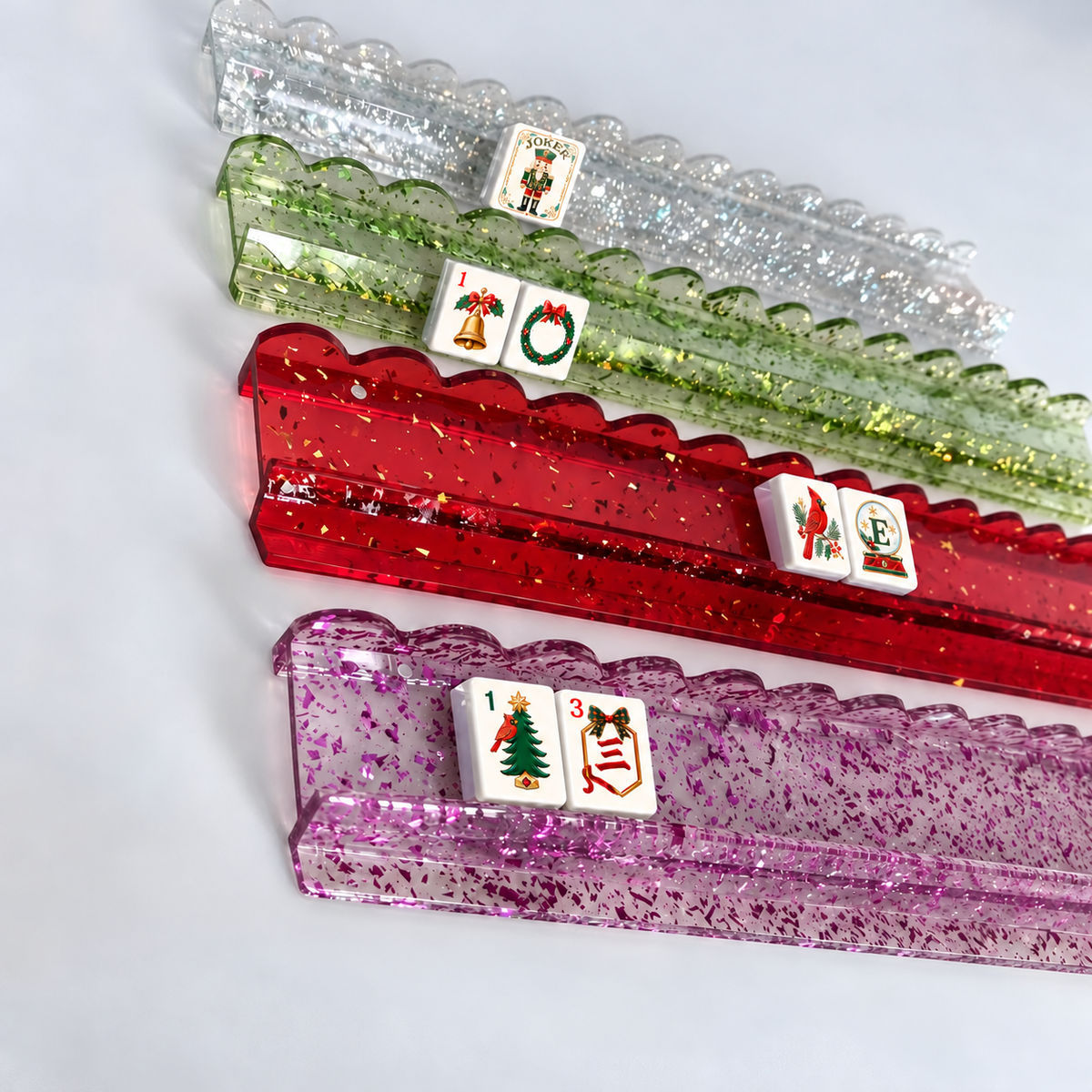
A luxury mahjong set combines hand-selected materials, thoughtful engraving or custom artwork, and refined tile weight with genuine play durability. In American mahjong, you need exactly 160 tiles (152 playing + spares) plus matching racks, a mat, and dice. Luxury often means acrylic tiles with crisp engraving, custom colors, or personalized details like names, dates, or group logos. At Mahstead, we design sets starting from acrylic with custom engraving—see current price on the product page. What matters: tile thickness (thicker = longer-lasting), color fastness, and whether the set ships with a mat and racks or you buy those separately. Avoid sets mixing thick and thin tiles or ones claiming "all wood" when acrylic offers better durability for weekly play.
A luxury mahjong set is less about flashy materials and more about intentional craftsmanship. We play American mahjong weekly—two-hour games, year-round—and we've learned the hard way: a "pretty" set that chips after six months costs more in heartache than one thoughtfully built from the start. The best-selling mahjong sets combine acrylic durability with engraved detail, functional accessories, and free US shipping. This guide walks you through what "luxury" actually means, how to compare your options, and which set fits your group's needs and budget.
What makes a mahjong set "luxury" instead of just expensive?
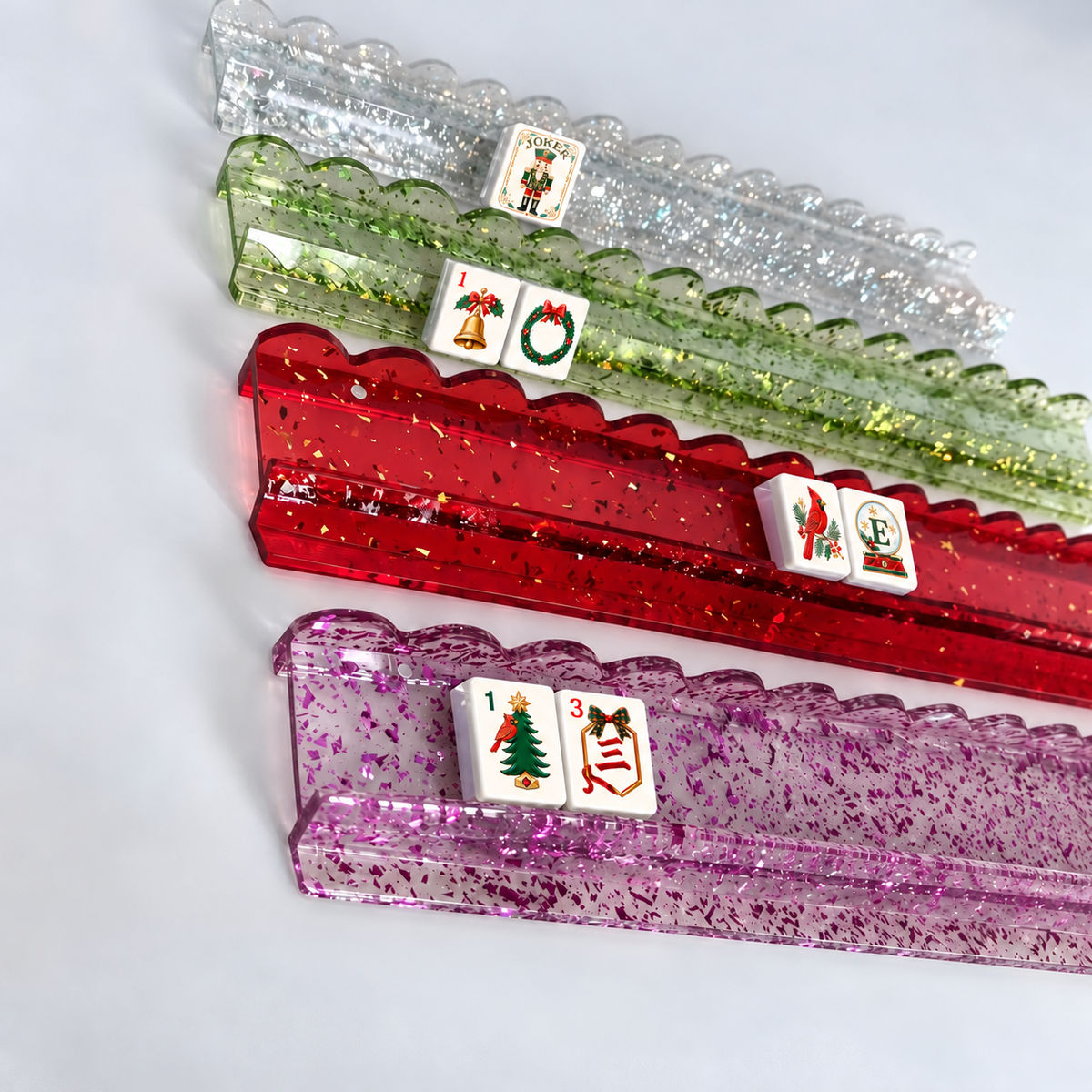
True luxury in a mahjong set isn't about gold leaf or exotic wood—it's about durability meeting intention. A luxury set uses thick acrylic or composite tiles that survive hundreds of plays without chipping; engraving that won't fade; racks and mats that stay flat and stable; and a design that either reflects your group's identity or simply feels timeless. The difference between a luxury set and a standard one often comes down to tile thickness, color saturation, and whether accessories ship included or bundled as upgrades. At Mahstead, we design every set with weekly players in mind, not collectors—meaning durability and playability rank above novelty.
Who should buy a luxury set rather than a starter?
If you host regular games, play with the same group, or want the set to last five years or more, a luxury set pays for itself in durability and peace of mind. Casual players who borrow sets or play once a month can start simpler. Groups that play twice weekly or compete in league settings almost always upgrade to a luxury set within a year—better tiles feel better in hand, mats stay put, racks don't wobble, and the whole experience is smoother. Families who want heirloom pieces often choose engraved sets with names or dates, which become keepsakes rather than just game equipment.
🀄 Shop best-selling mahjong sets →
What's the difference between engraved, custom-art, and standard luxury tiles?
Style | What it is | Who it's for | Durability | When to choose it |
Engraved | Engraved American mahjong sets with names, dates, club logos | Groups with shared identity | 5+ years | You want the set to feel like yours |
Custom artwork | Hand-drawn or designed tile faces, non-standard colors | Players valuing uniqueness | 3–5 years | You've commissioned an artist or designer |
Standard luxury | Crisp printing on quality acrylic, classic color palette | Weekly game groups | 5+ years | You want timeless appeal and reliability |
Engraved sets let you personalize without replacing the tile base—tiles remain functional and consistent. Custom-art sets can vary in durability if colors aren't UV-sealed; ask the maker. Standard luxury sets often outperform custom ones over time because manufacturers test them in production; one-off pieces can have weak spots. We recommend engraving for groups that will play together for years, and standard luxury for new or rotating groups.
How do you evaluate tile quality before ordering?
Ask the maker: (1) Is the tile material acrylic or composite, and how thick? (2) Are suits and numbers printed or engraved? (3) Do tiles feel uniform in weight—no light or heavy outliers? (4) Are spare jokers included and of the same quality? (5) Does the seller replace chipped tiles, and for how long? Thick acrylic (3mm or more) outlasts thin by 2–3 years in weekly play. Engraved details stay legible longer than printed ones. Uniform weight matters because a light tile throws off the shuffle feel and can accidentally separate during play. When you order, ask to see a sample tile if possible, or request photos of a random tile from the batch.
🎁 See our most-loved mahjong sets & accessories →

What accessories turn a good set into a complete luxury setup?
A luxury set includes or pairs with: a mat that keeps tiles from sliding (see our mahjong mats collection), racks with pushers that hold tiles upright and organized (our racks with pushers guide explains the difference), a carrying bag or case for protection and portability, and quality dice. Many luxury sets ship without a mat; buying them separately costs 30–40% more and risks mismatches in color or feel. Mahstead designs sets where the mat, racks, and bag coordinate, so your whole setup feels cohesive—and everything ships together. This is where most buyers regret shortcuts: a beautiful set on a flimsy mat or with rickety racks diminishes the experience. Budget for racks, a mat, and a protective bag as core to your luxury investment, not add-ons.
How do you avoid common luxury-set buyer mistakes?
Mistake | Why it happens | How to avoid it |
Buying a set without a mat or racks | They're often sold separately; buyers think they'll buy later | Ask upfront: does the set include mat and racks, or is there a bundle? |
Choosing based on looks alone | Beautiful doesn't mean durable; photos don't show tile weight | Check tile thickness, material type, and ask for warranty details |
Ordering tiles without spares | Breakage happens; one chipped tile can ruin a hand in league play | Confirm the set ships with 8 spare jokers + extra blanks as backups |
Mixing old and new tiles mid-game | Older sets fade; color mismatch is visible and distracting | If upgrading an existing set, buy a complete replacement, not just new tiles |
Assuming all "acrylic" is equal | Acrylic varies in thickness, clarity, and brittleness | Ask for thickness in millimeters; 3mm or thicker is standard luxury |
The most honest mistake we see: buyers order a beautiful set, love it for two months, then realize the mat is cheap and the racks wiggle. Allocate 60% of budget to tiles and 40% to supporting gear. You'll play better and keep the set longer.
Checklist: What to verify before you buy a luxury set
Material & thickness: Is the tile acrylic or composite? Thickness 3mm minimum?
Engraving or print: Engraved detail lasts longer; printed can fade after 2–3 years of weekly play.
Included accessories: Does the order include a mat, racks, pushers, and carrying bag, or are they extra?
Spare tiles: Does it ship with 8 spare jokers and blanks for replacements?
Color consistency: Request a sample photo or video of shuffled tiles to confirm no color drift.
Warranty or replacement policy: What happens if a tile chips in month 1, month 6, or month 18?
Shipping timeline: For weekly games, factor in a 1–2 week lead time before first play.
Compatibility: If you already own racks or a mat, confirm new set tiles match them visually and dimensionally.
✨ Find your Mahstead set — free US shipping →

FAQ
What's the actual price difference between a luxury set and a starter set?
Luxury sets usually cost 2–3× more—see current price on the product page. The gap reflects tile thickness, engraving, included accessories (mat, racks, bag), and durability testing. A starter set may break even after 12–18 months of weekly play; a luxury set justifies itself over 3–5 years.
Can I add engraving to a set I already own?
Some makers offer re-engraving or decal replacement, but it's not standard. It's often cheaper to buy a new engraved set than retrofit an old one. Ask the seller before buying if future engraving is an option.
Does "luxury" mean the tiles are heavier or thicker?
Yes. Luxury acrylic tiles are typically 3mm or thicker; budget tiles are often 2mm or less. Thicker tiles feel better in hand, shuffle more predictably, and resist chipping. Weight per tile should be uniform; if some feel light, don't buy.
How long does a luxury set last if I play twice a week?
A well-made acrylic set with proper storage lasts 5–7 years at twice-weekly play. Tile damage is rare if stored flat and dry; mats and racks may need replacing after 4–5 years of daily use. Engraved detail remains legible for the life of the tile.
Should I buy a luxury set as a gift even if the recipient is new to mahjong?
Only if they're joining an existing weekly group or you know they want to host games. A beginner who plays casually should start with our mahjong for beginners collection guidance first; if they love the game after a few weeks, upgrade them to luxury as a "level up" gift.
What's the difference between luxury and tournament-grade sets?
Tournament sets follow strict National Mah Jongg League tile dimensions and materials; luxury sets prioritize aesthetics and personal identity alongside play. Most weekly game groups use luxury sets; league players sometimes use tournament-certified ones. For casual play, luxury is more than enough.


View More
View More
View More
