
Hand Painted Mahjong Tiles: Pros and Cons for Your Game
Last updated: Nov 23, 2026
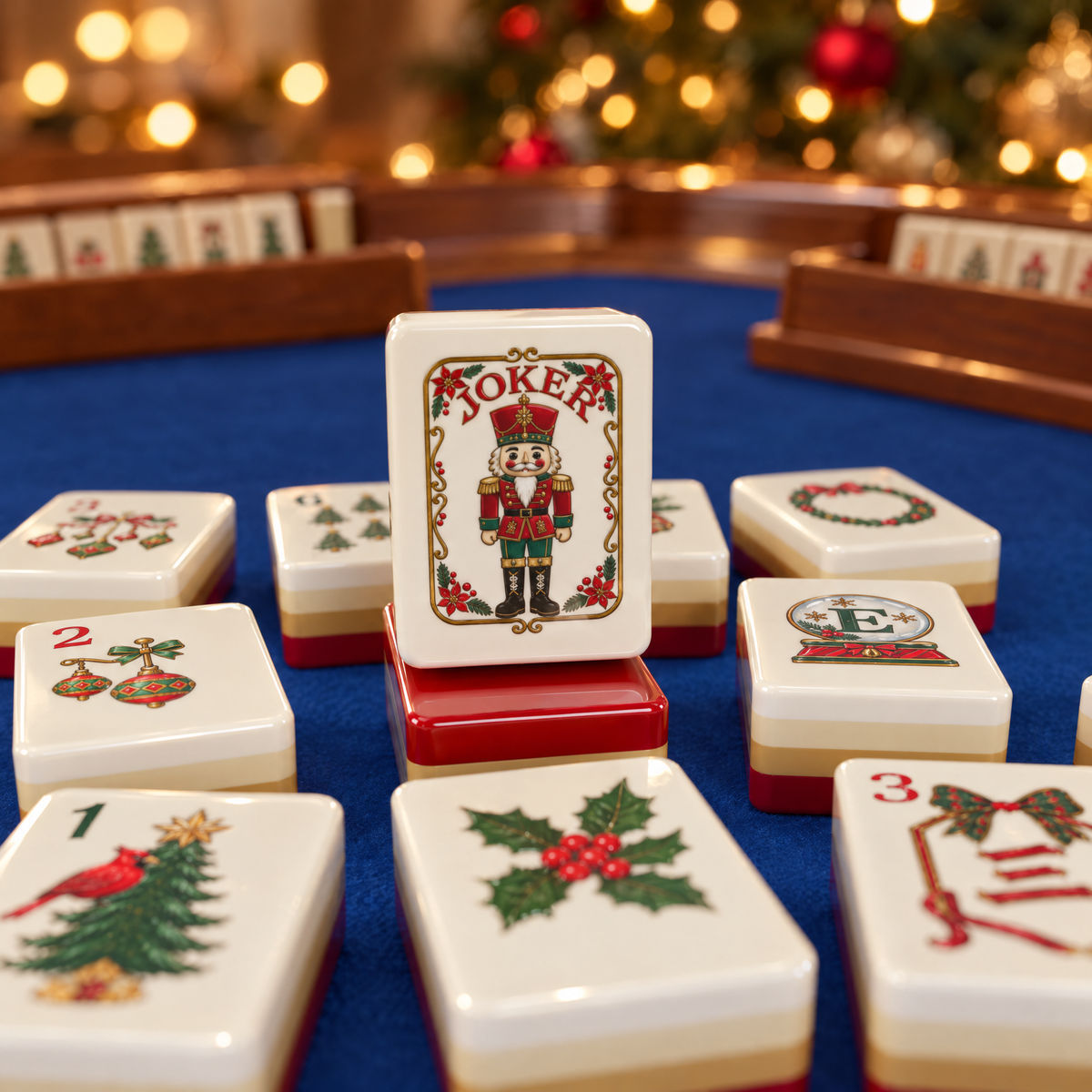
Hand-painted mahjong tiles are individually decorated tiles where artisans apply designs, characters, and colors by hand—or with hand-finishing details—onto acrylic or bone blanks. They excel at visual warmth, character detail, and one-of-a-kind appeal; players love them for casual games and display. The tradeoff: paint wears faster than printed graphics, humidity and heat can soften adhesive, tiles cost more upfront, and uniform tile weight becomes harder to control (which matters for fair draws and handling). Mahstead's engraved American mahjong sets use precision engraving instead—durability and consistency without the maintenance burden. Choose hand-painted if aesthetics and artistry matter more than longevity; choose engraved if you host weekly games and want tiles that survive years of shuffle and discard.
Does hand-painted paint actually wear off during play?
Yes. Hand-painted tiles lose detail faster than machine-printed or engraved tiles because paint sits on the surface rather than being fused into acrylic or carved permanently. After 50–100 games of regular shuffling, discards, and wall-building, painted edges and corners show thinning. Characters fade slightly. After 2–3 years of weekly play, distinguishing similar-looking tiles (especially Dragons or Winds) becomes harder. Engraved tiles show no such wear because the design is carved into the acrylic itself—the pattern remains legible for decades.

What humidity and heat problems should you actually expect?
Hand-painted tiles often use water-based or solvent-based paints bonded with adhesive. Humid environments (50–70% relative humidity) and warm rooms (above 75°F) soften the adhesive layer, causing paint to peel or bubble. Leaving tiles in a car during summer, storing them in a damp basement, or playing outdoors on a hot day accelerates this. We've heard from players whose hand-painted sets developed visible lifting within one season in Texas humidity. Machine-printed and engraved tiles are unaffected by these conditions because the design is not glued—it's either printed directly or carved into the material.
How much more do hand-painted tiles actually cost?
Hand-painted sets typically cost 40–60% more than standard printed or engraved acrylic sets because each tile requires skilled hand labor. A single artisan decorates 5–8 tiles per hour (depending on complexity), versus printed tiles manufactured at hundreds per hour. Engraved tiles occupy a middle ground: faster than hand-painting but slower than printing, so they cost 15–25% more than basic printed sets. If your budget is fixed, hand-painted means fewer sets, smaller size options, or fewer accessories (mat, racks, case). Browse our best-selling mahjong sets to compare price and durability side-by-side.
Why does tile weight uniformity matter for fair play?
American mahjong depends on random tile draws—the East player draws first from the wall, each draw should be unpredictable. If painted tiles vary in weight (because paint application is uneven or adhesive adds mass inconsistently), heavier tiles naturally settle to the bottom of the wall. Experienced players can exploit this subconsciously: draws become slightly less random. Engraved tiles maintain weight uniformity because the material and carving are consistent across the set. For casual play this matters little; for league-level or money games, it matters enough that many formal players avoid hand-painted sets.

When should you actually choose hand-painted over alternatives?
Hand-painted tiles shine in three scenarios: (1) you display your set as home décor and rarely play, (2) you host occasional casual games and prioritize visual impact over durability, or (3) you collect multiple sets and rotate them to reduce wear. A hand-painted set you play with monthly and store carefully indoors can last 5–7 years. They're also excellent gifts for retired players or collectors who value artistry. However, if you host weekly games, travel with your set, or live in humid climates, engraved American mahjong sets deliver the beauty and reliability we rely on for years of consistent play.
Choice | Best For | Durability | Maintenance | Initial Cost |
Hand-painted | Display, rare play, gifts | 5–7 years | High (climate-sensitive) | 40–60% premium |
Engraved | Weekly play, travel, leagues | 10+ years | Minimal | 15–25% premium |
Printed acrylic | Budget players, beginners | 3–5 years | Low | Baseline |
What to check before you buy hand-painted tiles
Storage setup: Do you have a dry, temperature-stable place (50–60% humidity, 65–72°F)?
Play frequency: Will you use these weekly, monthly, or a few times per year?
Climate: Do you live in a humid region or have air conditioning that dries the air?
League play: Will these tiles ever be used in formal NMJL games? (Most hand-painted sets aren't balanced for league play.)
Budget for replacement: If paint degrades after 2–3 years, is buying another set acceptable?
If you answered "no" to the first three questions or "yes" to league play, hand-painted tiles are a risk. Engraved tiles eliminate these concerns entirely.
🀄 Shop best-selling mahjong sets →
The practical comparison: what we actually recommend
We host a weekly game with four players rotating through two sets—one hand-painted (a gift), one engraved. After two years, the painted set shows slight fading on the green Dragons and white tile edges; the engraved set looks identical to day one. The painted set lives in our climate-controlled living room now; the engraved set travels in a bag and case to different players' homes. For a single investment, we'd choose engraved every time. For a collector or someone who loves the artisan look and can afford two sets, hand-painted first (for beauty) and a backup engraved set (for actual play) is the smart move.
🎁 See our most-loved mahjong sets & accessories →
Hand-painted tiles are a legitimate choice if you prioritize artistry, display appeal, and occasional play over durability and consistency. But they're not the default for weekly players, humid climates, or league-level games. Most of us settle on engraved tiles because they age invisibly while hand-painted tiles age visibly—and after years of weekly shuffles, that difference becomes the deciding factor.
✨ Find your Mahstead set — free US shipping →

FAQ
Can you restore hand-painted tiles if the paint chips?
Professional restoration exists but costs 30–50% of a new set and never fully matches the original finish. Prevention (proper storage, low humidity) is far cheaper than repair.
Do hand-painted tiles meet American mahjong league standards?
No formal ban exists, but most hand-painted sets fail balance and consistency checks. We recommend checking with your local league before using them in official play.
Is the paint on hand-painted tiles food-safe or toxic?
Quality artisan sets use non-toxic acrylics, but contact varies by maker. If children or pets handle your tiles, ask the seller explicitly—don't assume.
How do you store hand-painted tiles to prevent damage?
Keep them in a sealed case or bag indoors at 50–60% humidity and 65–72°F. Avoid attics, garages, basements, and direct sunlight. A dry closet or bedroom shelf is ideal.
What's the difference between hand-painted and hand-finished tiles?
Hand-painted means an artisan paints the entire design. Hand-finished means a machine prints the base and an artisan adds details or highlights by hand. Hand-finished tiles wear faster than fully printed but not as fast as fully hand-painted.


View More
View More
View More
