
Hong Kong Mahjong Scoring: How to Count Points Fast
Last updated: Nov 23, 2026
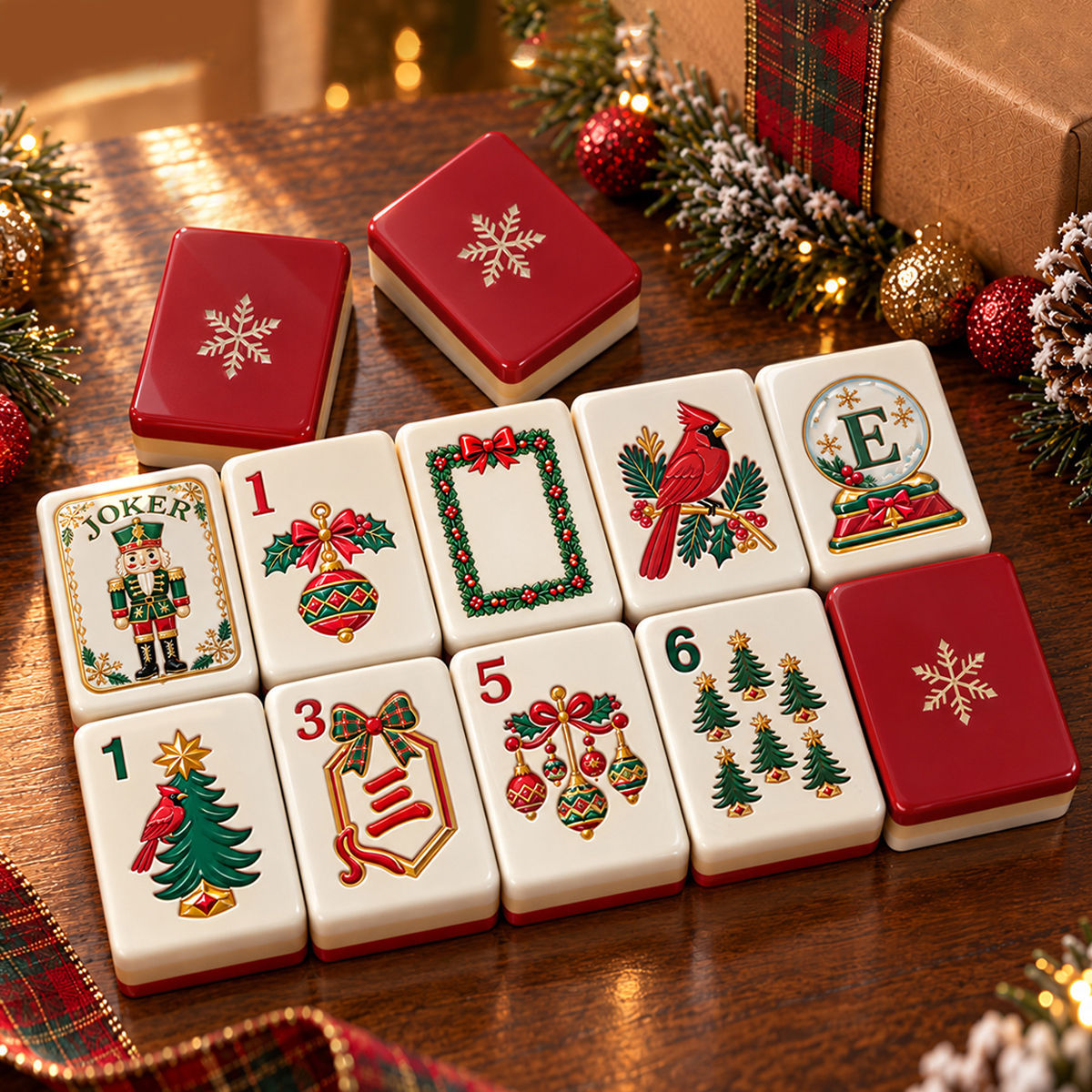
In Hong Kong mahjong, points depend on hand fan (multiplier levels, roughly 1–13) and the base score, doubled or tripled by winning condition. Unlike American mahjong, there's no official card; players follow regional rules or a printed score sheet. A basic winning hand (pung of simples, no bonuses) is 1 fan; adding melds, honors, or winning off the wall pushes it higher. Payment is typically split among the three losers. The system rewards speed—no lookup table, just pattern recognition. Most serious players memorize the first 6 fan levels and apply them within seconds. We've hosted hundreds of games across variants, and this one keeps the table moving: fewer interruptions, faster rounds, more hands per night. Best-selling sets designed for quick play include clearly marked tiles that make spotting patterns easier under pressure.
What is fan in Hong Kong mahjong, and how does it work?
Fan is a multiplier that stacks. Each bonus element—a pung of dragons, a straight run, winning off another player's discard—adds one fan. A hand with 1 fan pays base points × 2; 2 fan = base × 4; 3 fan = base × 8. Unlike American scoring (which uses a rigid list), Hong Kong's fan system is fluid and regional. Most games cap at 13 fan (a hand of all honors or all ones/nines). The key: count your bonuses, apply the multiplier, divide the total among losers. No memorization of a 40-line card required.
🀄 Shop best-selling mahjong sets →

What are the main scoring categories in Hong Kong mahjong?
The major bonus categories are:
Melds: Pung = 1 fan; kong = 1–2 fan (open or closed).
Winning method: Off discard = 1 fan; off wall = 1 fan; self-drawn = 1 fan (robbing the kong is 2–3 fan).
Hand type: All one suit = 1–2 fan; all terminals/honors = 2–3 fan; all simple numbers = 1 fan.
Special combos: Pair of dragons = 1 fan; mixed straight = 1 fan; fully mixed = 2 fan.
Seat wind or prevalent wind: 1 fan each if your hand includes them.
Regional variants add or drop categories, but these ten cover 80% of games. The critical insight: you're looking for pattern recognition, not arithmetic. Once you see "three pungs + all one suit," you know it's at least 2–3 fan before any winning bonus.
How do you calculate the actual point payout?
Step one: identify all fan in your hand. Step two: find your base score (usually 20 or 25 points, per house rules). Step three: multiply base × (2 ^ fan). Example: 2 fan, base 20 = 20 × 4 = 80 points from each loser. A self-drawn 3-fan hand on base 25 = 25 × 8 = 200 from each of three players = 600 total to the winner.
Here's the shortcut: memorize the doubles. 1 fan = ×2, 2 fan = ×4, 3 fan = ×8, 4 fan = ×16, 5 fan = ×32. Beyond 5, many players round or cap the hand. The trick most of us use: count fan first, then multiply. Don't try to calculate fan and points at once—you'll lose count.
Scenario | Fan | Base | Per loser | Why it matters |
Pung + one suit + off discard | 3 | 20 | 160 | Bread-and-butter hand |
Kong (concealed) + seat wind + terminals | 4 | 25 | 400 | High-value but rare |
All honors (no sequences, all melds) | 6+ | 25 | 1,600+ | Winning hand; often capped |
Self-drawn, mixed straight, no bonuses | 2 | 20 | 80 | Quick rounds reward early closes |
How does the winning method affect the score?
Three winning paths exist: off discard (calling a tile another player just threw), off the wall (drawing your own tile), or special win (robbing a kong or wall claim). Off discard is the baseline (1 fan, standard multiplier). Drawing off the wall is also 1 fan—you're not penalized for self-draw; you're rewarded equally. Robbing the kong (taking a tile someone just added to their kong) is 2–3 fan, depending on region. The twist: these aren't bonuses on top of your hand fan; they are part of the fan count. So a 2-fan hand becomes 3 fan if you win by robbing the kong. This shifts payouts dramatically. A player winning off a wall with a modest hand often pays the same as someone winning off a discard—speed and luck are neutral. The real money is in pattern recognition, not in how you win.

What common mistakes do Hong Kong players make when counting?
Mistake 1: Forgetting the winning tile. Your winning tile adds 1 fan only in certain regions or rulebooks. Check house rules before the game starts; it can shift a 2-fan to a 3-fan overnight.
Mistake 2: Double-counting melds. A kong is NOT a pung + a bonus. It's one meld worth 1–2 fan (concealed kongs often score higher). If you've already counted it as a kong, don't add it again as "three of a kind."
Mistake 3: Mixing American and Hong Kong rules. American mahjong has no fan; it's hand-from-card only. Hong Kong has infinite hands because it's pattern-based. Bringing NMJL scoring into HK play confuses the table. Know which variant you're playing before shuffling tiles.
Mistake 4: Rounding too early. Don't say "that's about 3 fan." Count precisely. A mis-stated fan level can swing 200–400 points per player.
Mistake 5: Forgetting regional caps. Some games cap "all honors" at 10 fan or offer a flat 2,000-point payout instead of calculation. Agree on caps and special hands before the first draw.
The fastest way to avoid these: write the house rules on a slip and leave it face-up at the table. A two-minute rule check saves ten minutes of argument post-hand.
🎁 See our most-loved mahjong sets & accessories →
How do Hong Kong and American mahjong scoring differ?
Aspect | Hong Kong | American |
Basis | Fan (multiplier) + base score | Official League card hand name + point value |
Infinite hands? | Yes, any pattern can win if it has fan | No, hand must be on current-year card |
Speed | 5–15 seconds | 30–60 seconds (reference card) |
Chart needed | Optional (house score sheet helpful) | Mandatory (NMJL card) |
Judgment calls | Many (regional rules vary) | Minimal (card is law) |
Winning tile bonus | Sometimes, per region | Never (not in American variant) |
American mahjong is bureaucratic; Hong Kong is intuitive. If you prize speed and social play, Hong Kong wins. If you want standardized, fair, court-proof rules, American is unbeatable. Most of us play both: American in leagues and tournaments, Hong Kong at home for casual nights. The skills overlap—spotting pairs, calling melds, reading opponents—but the scoring logic is completely different. Don't assume you can play one flawlessly and instantly switch to the other.
How to choose equipment for Hong Kong play
If you're hosting Hong Kong games regularly, you'll want clear, durable tiles and a mat that keeps the fast pace manageable. Acrylic sets stay visible and don't slide around when counted quickly. A good mat with a money slot (for tracking payments) and an organized rack keep play flowing. For a household or weekly game group, a best-selling set with a protective mat is a no-brainer—acrylic tiles last decades, mats reduce table wear, and racks with pushers keep your hand clean and your discard pile straight. If you're traveling to a regular game night, a padded bag with a carry handle saves your set and makes you look like a serious player.
What to check before you buy a Hong Kong mahjong set
Tile visibility: Are numerals and symbols large enough to spot fan patterns in seconds? Acrylic tiles with printed or engraved markings beat bamboo or plastic in low light.
Weight and feel: Hong Kong games move fast; lighter tiles aren't wrong, but heavier resin or acrylic sets feel more stable when stacking melds quickly.
Tile count: Standard is 144 tiles (36 × 4 per suit + 16 winds + 12 dragons + 8 flowers); many sets include extra jokers. Verify the set comes with 144 standard tiles, not 160 (which is American).
Included score sheet: Does it come with a printed fan chart or house-rules card? Not essential, but a time-saver.
Mat and racks: Many sets sell as bundles. A mat keeps the table clean; racks help you organize your hand faster, cutting scoring delays.
✨ Find your Mahstead set — free US shipping →

FAQ
Do I need to memorize all 13 fan levels to play Hong Kong mahjong?
No. Most casual and social games never reach 8 fan; memorizing 1–6 fan covers 95% of hands you'll see. After one or two seasons, the math becomes automatic—you'll glance at a hand and know its fan count in seconds without counting on your fingers.
What if we play with house rules and they're not written down?
Before the first tile is drawn, ask the most experienced player at the table to state the rules: Is a winning tile worth fan? Are kongs concealed = 2 fan or 1? Is there a cap on all-honor hands? Write it down or take a photo. This five-minute investment prevents 20 minutes of post-hand arguing and preserves friendships.
Can I use an American mahjong set to play Hong Kong mahjong?
Yes, if the American set has 144 tiles (the base deck). American sets typically sell with extra jokers and blanks (160 tiles total). Use only the 144 standard tiles for Hong Kong play; set aside jokers and blanks. Avoid confusion by keeping two sets if you play both variants regularly.
Is there a universal Hong Kong mahjong scoring standard?
No. Scoring varies by region (Singapore, Hong Kong, Taiwan, Malaysia), family, and club. Even within one city, rules shift. Always clarify house rules with your host before sitting down. Most groups follow one of three major standards, but minor tweaks are common.
How do I count faster at the table without slowing the game?
Practice the fan multiplication offline. Spend ten minutes drilling 1 fan = ×2, 2 fan = ×4, up to 5 fan = ×32. At the table, count fan first, state it aloud ("That's 3 fan"), multiply, announce the payout, and move on. Talking through your count prevents second-guessing and keeps the game flowing—most tables respect a fast, confident announcement. --- Playing Hong Kong mahjong is a skill built on pattern recognition and quick arithmetic, not on memorizing a chart. The fan system rewards players who can spot bonuses and calculate payouts in seconds. Whether you're playing socially or in a regular group, the rules are simpler than American mahjong—but they demand confidence and consistency. Set clear house rules, practice your fan-to-payout math offline, and you'll be scoring faster than the table expects.


View More
View More
View More
