
Play Cantonese Mahjong Online: Rules, Platforms & Setup
Last updated: Nov 23, 2026
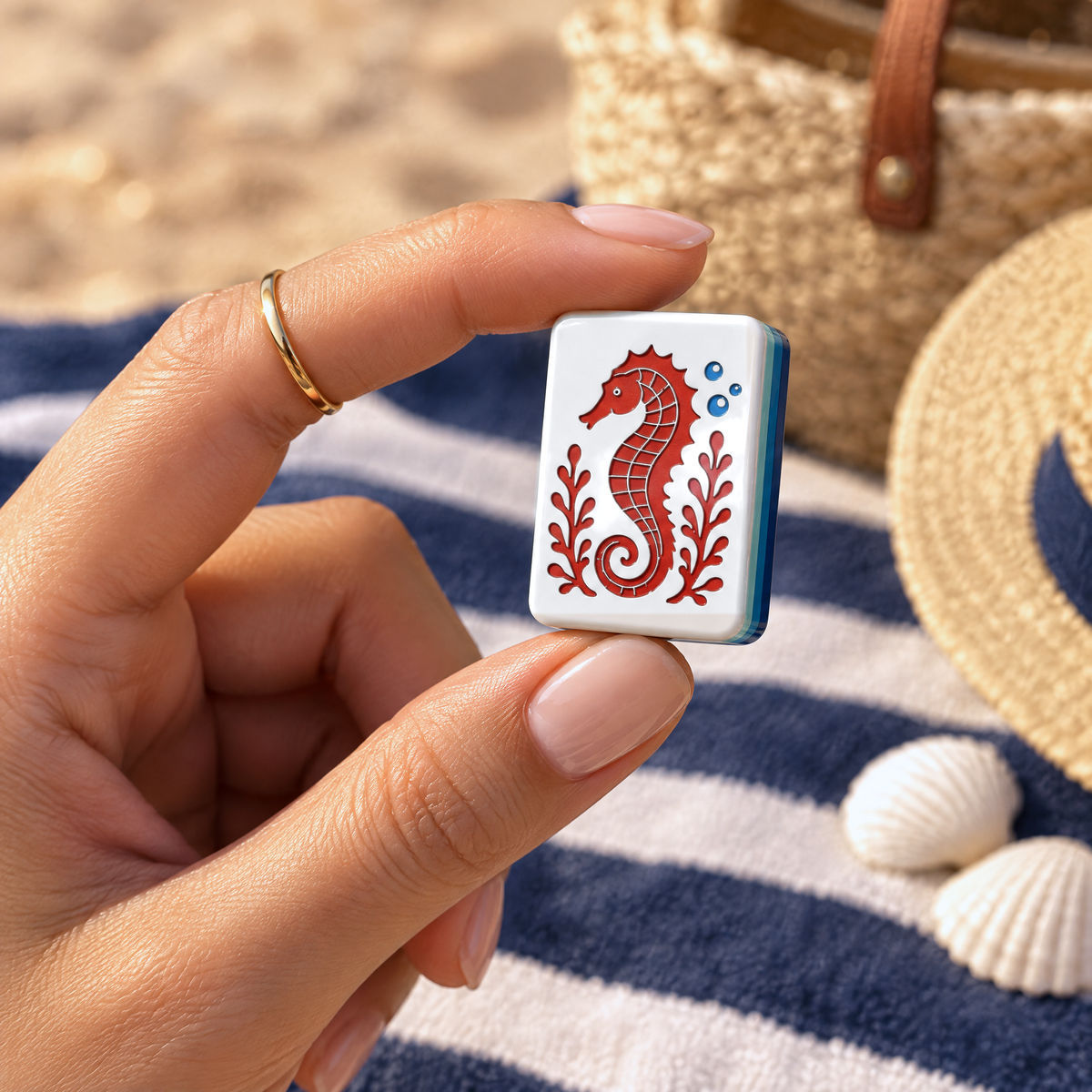
Cantonese mahjong online is played on dedicated platforms (Mahjong Soul, Longevity Mahjong, WeChat mini-games, and regional apps) where players draw 13 tiles and build melds in real time, calling chows (sequences), pungs (triplets), kongs (quads), and eyes (pairs) as they go—no fixed hand card like American mahjong uses. Unlike American play, Cantonese allows sequences and exposed melds on any turn. Games run 15–30 minutes per round. Most platforms are free to download; some offer optional cosmetics or premium features. You'll need a smartphone or computer, an internet connection, and basic Cantonese mahjong rules knowledge (point scoring, wind-order, winning conditions vary by app and regional ruleset). Serious players often pair online practice with best-selling mahjong sets to learn tile recognition and speed before sitting at a physical table.
Cantonese mahjong online plays faster than American variants and uses 13-tile melds instead of hands from a fixed card. We explain where to play, what to expect, and how to adapt if you're switching from American rules.
What's the difference between Cantonese and American mahjong rules?
Cantonese mahjong is freeform: you draw 13 tiles and build your own winning hand by calling chows (1-2-3, 4-5-6, etc.), pungs (three identical tiles), kongs (four identical), and eyes (a pair). American mahjong is locked to the current year's National Mah Jongg League card—you memorize or look up pre-set hands and can only expose pungs, kongs, and special patterns (no chows or sequences). American sets have 152 playing tiles; Cantonese uses the standard 136-tile set (plus scoring chips). American games take 45–90 minutes; Cantonese rounds finish in 15–30 minutes online because there's no Charleston (tile-passing ritual) and no hand card lookup lag. Winning in Cantonese depends on hand pattern (simple, mixed, all honors, etc.) and multipliers; American scoring is point-based and printed on the card.

Which online platforms let you play Cantonese mahjong right now?
Mahjong Soul (iOS, Android, PC, free) is the largest English-friendly platform: 136 tiles, ranked ladder, three rulesets (Hong Kong standard, Cantonese, Taiwan—you choose before each game). It's well-designed, has a 10-minute tutorial, and matches you by skill level.
Longevity Mahjong (iOS, Android, free) focuses on Cantonese and Chinese variants; slightly steeper learning curve but loyal player base.
WeChat mini-games (China region; requires WeChat account) include dozens of regional variants at zero cost. Interface is in Simplified Chinese.
Reach Mahjong and Tenhou (Japanese Riichi mahjong, different rules entirely) play online but are not Cantonese.
Start with Mahjong Soul if you're new; it has the gentlest onboarding and English explanation of hand patterns. Regional players swear by WeChat if you read Chinese.
How do you win at Cantonese mahjong online?
You win by declaring a complete hand: one pair (eyes) plus four melds (chows, pungs, or kongs). A meld must be valid—three consecutive numbers (1-2-3) or three/four identical tiles. Your hand pattern and multipliers determine points; knocking (declaring "ready") locks your hand and disables draws, so you win only if someone discards your winning tile. If all four players pass 14 draws without a win, the round ends as a draw (no winner, typically retaken). Bonus points apply for special hands: all pungs, all honors, all simples, mixed, etc. Each platform's ruleset defines multiplier caps and whether bonus hands stack. Study your chosen app's ruleset before ranking; a "simple" hand in Hong Kong rules may be worth 1× in Cantonese rules and 2× in Taiwan rules. Don't memorize—screenshot the payout table the first time you launch; every platform highlights it during tutorials.
What beginner mistakes trip up new Cantonese online players?
Calling too early. New players call "ready" after one meld, then sit stuck for five turns waiting. Experienced players hold four melds and call "ready" only when the fifth tile is nearly certain (80%+ draw probability). Online, discard speed is fast; hesitation costs you.
Confusing chow direction. A chow 5-6-7 is valid. Calling 6-7-8 when you held 5-6-7 is an illegal skip; online apps auto-reject this, but live play penalizes it. Practice chow direction daily on Mahjong Soul's tutorial until it's automatic.
Ignoring the discard pile. On the app, the discard wall is tiny; players miss crucial info (what's already gone, what the east player's discarding pattern means). Train your eyes to scan discards during your draw.
Betting on the wrong ruleset. Mahjong Soul's Hong Kong rules rank games as "HK Standard." A Cantonese ruleset is labeled separately. Check the ruleset name before ranking.
Playing without a strategy. You can't just wait for good tiles. Decide your hand target—simple, mixed, or all pungs—in the first five draws. Discard according to plan. Online players who shift targets mid-hand almost always lose.
Should you use apps or websites to play Cantonese mahjong online?
Platform Type | Best For | Speed | Cost | Connection Quality |
Mobile app (iOS/Android) | Casual, commute play | Fast, optimized | Free, optional cosmetics | Stable on WiFi and cellular |
PC browser (Mahjong Soul, etc.) | Study, recording, longer sessions | Standard | Free | Best on desktop during ranked |
WeChat mini-game | Regional players, Chinese speakers | Instant, no download | Free | Depends on user's WeChat region |
Casual web portal | Learning basics only | Slow, ads | Free | Often laggy; not for ranked |
Apps are faster because they cache graphics and run natively; browsers lag on chat and animations. If you're serious about learning, use the app on your phone at least 10 hours before trying a web browser. Most ranked ladders are app-only anyway.
🀄 Shop best-selling mahjong sets →

How does online scoring work, and is it the same as live Cantonese play?
Online platforms automate scoring: you declare a complete hand, the app calculates multipliers and base points, and deducts from losers' accounts instantly. No chip-counting, no negotiation. Most apps use Hong Kong scoring: a simple hand (mixed) pays 1×; all pungs pays 2×; all honors pays up to 8×; limits cap payouts at 8 points per hand (exceptions for all-green, all-red, thirteen unique orphans). Taiwan rules and Cantonese regional rules differ slightly; always check the ruleset label before queuing. Live play uses chips, so you physically count and pay—mistakes happen, pots can be miscalculated. Online removes that friction but sometimes feels less "real" because no money visibly changes hands. If you move from online to a cash game, reconcile the house ruleset with what you've learned; house rules (no limit, eight-double cap, bonus for quints, etc.) can override standard scoring.
What's the fastest way to learn Cantonese mahjong online if you've only played American before?
Unlearn American patterns. Sequences and chows are legal and common in Cantonese. Jokers don't exist. Hands are freeform, not locked to a card. Spend 10 minutes repeating this aloud.
Download Mahjong Soul, play 5 tutorial rounds on HK Standard. Don't rank yet. Learn the meld buttons, discard UI, and what "ready" means by clicking it at the wrong time (the app will reject invalid calls).
Memorize one hand pattern: all pungs. Three identical tiles (⭐ 1-1-1-2-2-2-3-3-3-4-4-4-5-5). Slot this into muscle memory during your first 20 casual games.
Watch one expert stream (search "Mahjong Soul ranked" on video platforms). Mute if you don't speak Chinese; watch discard timing, hand-building tempo, and when they call "ready." 3 minutes is enough.
Play 30 casual games, tracking your win rate and top-scoring hand type. Notice which patterns earn the most points; build toward those.
Play ranked only after 50 casual games. You'll still lose, but your tiles-per-second recognition will be fast enough not to timeout.
If you're serious, pair online learning with a physical best-selling mahjong set. Shuffling real tiles while watching an app clip trains hand speed and tile-face memory faster than screen-only practice.
What should you check before downloading a Cantonese mahjong app?
Ruleset clarity. Does the app name its ruleset (Hong Kong, Cantonese, Taiwan, local)? Is there a payout table in the help section? If the ruleset is unlabeled or hidden, skip it.
Language support. Can you read the UI? Mahjong Soul has English; most WeChat games don't. If you don't read Chinese, be cautious.
Player base. Is the ranked queue active (< 30-second wait)? Apps with 10-minute queues are dead.
Update frequency. Was the app updated in the last 6 months? Old apps often lose server support or crash on new phones.
No cash gambling. Some regional apps blur the line between play-money and real-money betting. Avoid apps that ask for payment methods upfront or promise "real cash payouts."
Tutorial included. A good app teaches the rules; a bad one expects you to know them. Test the tutorial before committing to ranked.
Most serious players use Mahjong Soul because it ticks all these boxes; WeChat is faster socially if your friends already play there.
🎁 See our most-loved mahjong sets & accessories →
Can you play Cantonese mahjong online with friends privately, or only in ranked matchmaking?
Most apps let you create a private room and invite friends via link or QR code. Mahjong Soul's "Casual" and "Table Room" modes both support private play; friends join by room number. You set the ruleset, round count, and (usually) play-money stakes. Some apps cap room creation to paid members, so check your app's feature list first. Private rooms are ideal for learning because there's no timer pressure and no ranking consequences for bad plays. The trade-off: private rooms can't generate new partners, so if your friend group dwindles, the room dies. Ranked matchmaking pairs you with strangers constantly, so you'll always find opponents but can't control skill level or chat language. Most learners start private with one friend, then move to casual ranked after 20 games.
What happens when you switch between Cantonese online and American mahjong at the table?
Your tile recognition will be instant (both use the same tile faces), but your instincts will feel backwards. In American play, you're hunting for a specific hand pattern on the card; in Cantonese, you're building any valid meld set. Your hand-building speed will be slow for the first 5 games because you're scanning for patterns instead of calling chows on reflex. Scoring is completely different: American is points-per-hand from the card; Cantonese is multiplier-based payouts. Most players who switch back and forth keep a 15-minute mental reset between games—don't try to play both variants in one evening if you're new. Many Texas and California mahjong groups offer both American and Cantonese nights; attend the Cantonese session online first, then join the in-person table when you've won a few casual games.
✨ Find your Mahstead set — free US shipping →

FAQ
Is Cantonese mahjong online legal to play for real money?
Legality depends on your location (US, China, etc.) and local gambling law. Most public apps like Mahjong Soul use play-money only. WeChat mini-games and regional apps sometimes allow optional real-money stakes, but this sits in a legal gray zone in many jurisdictions. Play for fun using play-money on mainstream platforms if you're unsure.
How long does a ranked game take on Mahjong Soul?
One round (east, south, west, north winds as dealer) typically runs 8–12 minutes if all players are active. Best-of-three matches take 20–35 minutes. If someone times out repeatedly, the match can drag. Casual play has no timer, so friends can play at any speed.
Can I learn Cantonese mahjong online without knowing any Chinese?
Yes. Mahjong Soul's English interface teaches you tile names (1 Bam, 2 Crak, etc.) and hand patterns. WeChat and regional apps assume Chinese-reading fluency. Start with Mahjong Soul, then branch to Chinese platforms once you've won 50 casual games.
What's the difference between Hong Kong and Cantonese rulesets online?
"Hong Kong Standard" and "Cantonese" are often used interchangeably on apps, but some platforms distinguish them by bonus multipliers or hand limits. Check the payout table in your app's ruleset menu before ranking. They're 95% identical for a beginner.
Do I need to buy anything to play Cantonese mahjong online?
No. All major apps are free to download and play. Some offer cosmetics (custom tiles, skins) for purchase, but you don't need them to win. Mahjong Soul's paid cosmetics have zero gameplay benefit.
If I get good at online Cantonese mahjong, will I be good at live play?
Mostly yes—tile recognition, hand patterns, and scoring logic transfer directly. Live play is slower and noisier, so your first few games at a table will feel choppy. Hand speed and chip-counting are new skills you'll learn in person. Online wins don't guarantee live wins, but they're a solid foundation.


View More
View More
View More
