
Mahjong Scoring Sticks for Beginners: What to Buy
Last updated: Nov 23, 2026
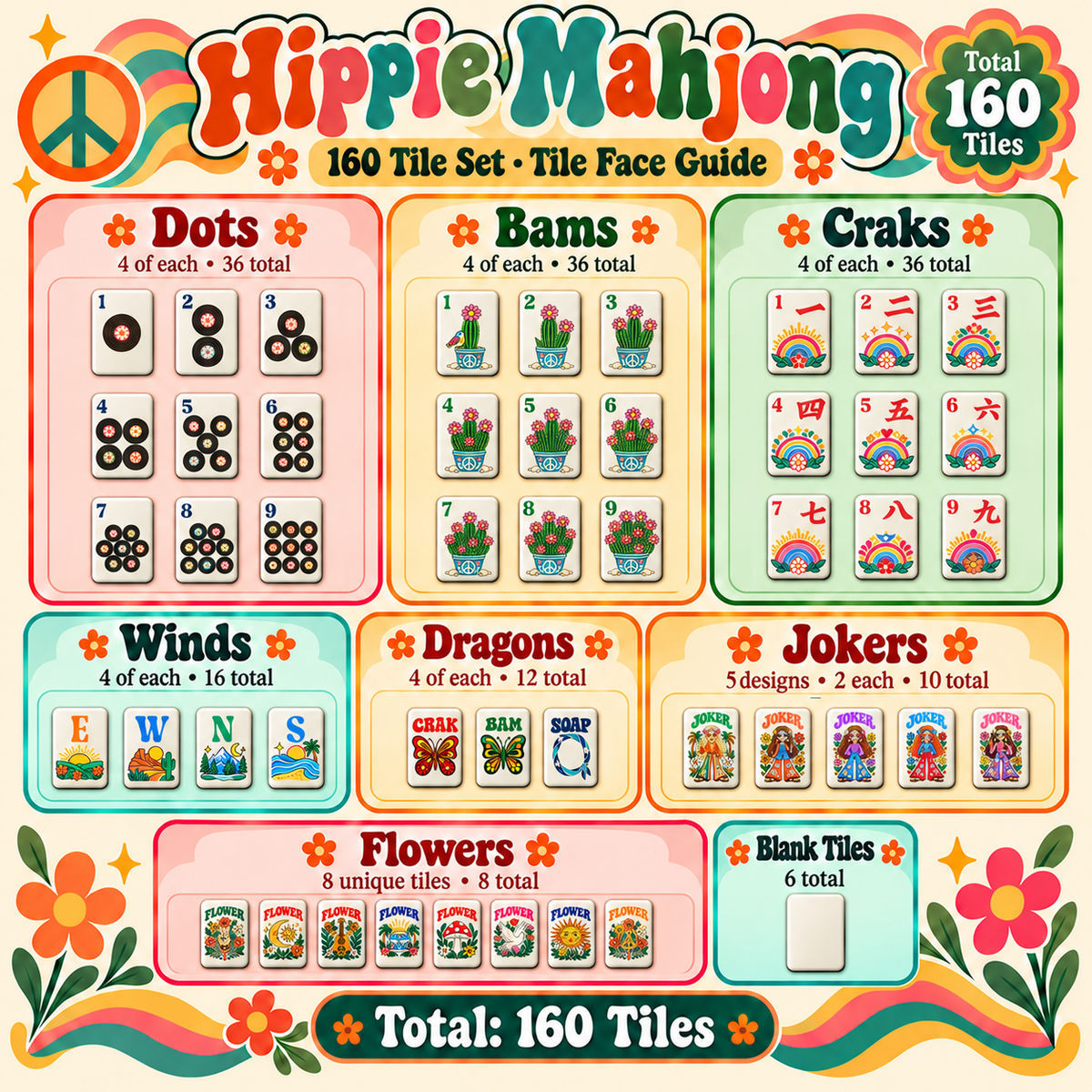
Scoring sticks (also called racks, counters, or scoring chips) are small bamboo or acrylic rods that players use to track and display their points after each hand in American mahjong. A standard set contains four colors—one per player—with sticks denominated to represent different point values (typically 5, 10, and 100-point sticks). During play, each player pulls sticks from their rack as they pay out losses; at the end, the sticks remaining equal the points they've kept. Beginners often buy sticks sold with complete mahjong sets or purchase them separately from retailers like Mahstead. Standalone sticks range widely depending on material and denominations; check that your sticks match your game's scoring system before ordering. Avoid mixing unmarked sticks or sets without clear labeling—ambiguity kills games. Look for our best-selling mahjong sets if you're buying sticks bundled with tiles and accessories for a complete first-time setup.
Do you actually need scoring sticks as a beginner?
Yes—sticks are mandatory in American mahjong, not optional. Without them, you cannot settle payments or track who owes whom at the table. A pencil-and-paper scoreboard works in a pinch for casual play, but sticks are the universal standard at organized clubs and weekly games. Buy a proper set now rather than improvise later; borrowing sticks every time you play builds bad habits. Scoring sticks live in your mahjong bag or set case between games, so one purchase lasts years.

What do the different denominations actually mean?
American mahjong sticks come in three denominations: 5-point, 10-point, and 100-point. The 5-point stick is smallest and thinnest; the 10-point is medium; the 100-point (called a "stick" or "honor") is thicker and longer. Players combine these to display their score after each round—for example, one 100-point stick + one 10-point stick + one 5-point stick = 115 points owed. Each player arranges their sticks in a wooden or acrylic rack in front of them so all four players see who has paid what. Bamboo sticks have color-coded bands or engravings to distinguish denominations; acrylic sticks often use shape (thicker shafts for higher values) and color. Always confirm your set's system before play so you don't misread the values.
What material should a beginner choose: bamboo or acrylic?
Bamboo sticks: Traditional, lighter weight, slightly warmer feel in hand. Bamboo has a matte finish and can show wear after many games (bands fade, ends split if dropped). Bamboo is cheaper upfront and popular at home games. Downside: harder to clean, can absorb odor from storage, less durable over five+ years of weekly play.
Acrylic sticks: Durable, colorfast, easy to wipe clean. Acrylic is heavier and more durable for frequent players or events. Downside: slightly higher cost and a more "plastic" feel, though modern acrylic finishes can mimic bamboo texture. Acrylic never warps or splinters.
For beginners playing one or two games a week at home, bamboo is adequate and keeps your initial buy-in lower. If you plan to play weekly at clubs or events, or you own a best-selling mahjong set with premium tiles, invest in acrylic sticks to match the quality—they'll outlast the first two years and feel consistent.
🀄 Shop best-selling mahjong sets →
How many sticks do you need per player, and what's the cost range?
A standard set includes four racks (one per player), each holding roughly 100–120 sticks total (breakdowns: typically 30–40 five-point, 20–30 ten-point, and 3–5 hundred-point sticks per rack). This is enough for a full evening of mahjong without restocking mid-game. Most complete beginner mahjong sets bundled with tiles include scoring sticks at no extra cost. Standalone stick sets purchased separately vary widely based on material and engraving; see current pricing on the product page for individual racks or full sets.
If you're buying tiles alone and need sticks separately, factor sticks into your total equipment cost. A beginner's total mahjong setup (tiles, mat, sticks, bag) typically requires a larger purchase; compare engraved American mahjong sets and best-selling bundles to see what's included before you buy à la carte.
What should you check before ordering scoring sticks?
Stick count per denomination: Confirm your set has at least 30 five-point, 20 ten-point, and 4 hundred-point sticks per player. Short sets run out mid-game and force awkward math or IOUs.
Color separation: Each of the four player colors (typically red, green, white, bamboo/natural) must be instantly recognizable, especially under table lighting. If two colors look similar, you'll misidentify ownership.
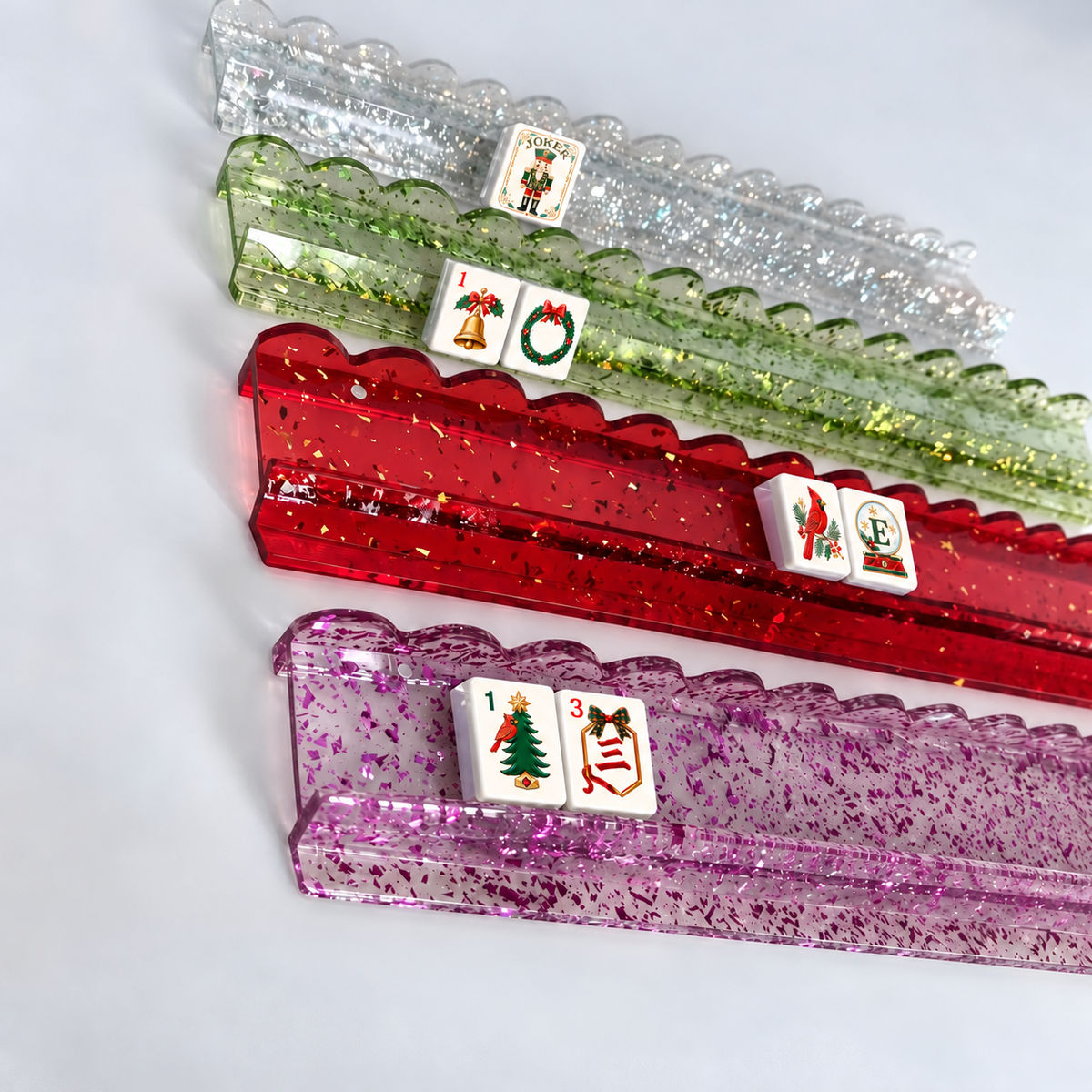
Rack stability: Racks must hold sticks upright without tipping. Test the base weight and slot spacing; acrylic racks are usually steadier than lightweight bamboo.
Denomination clarity: Check if your sticks use banding, engravings, or size to show value. Don't buy unmarked sticks—you'll waste time mid-game asking "which is the 10?" every time.
Compatibility with your mat: If you own a mahjong mat with rack spaces cut into it, measure your racks before ordering so they fit the cutouts. Some mats accommodate standard racks; custom mats may require custom or smaller racks.
Spare stick availability: Ask the seller if replacement sticks are sold separately. If a stick breaks or splits, you want to buy a replacement without buying a whole new set.
🎁 See our most-loved mahjong sets & accessories →
How do beginners actually use sticks during a game?
Here's the step-by-step:
Before the round: Each player starts with a full rack of sticks in front of them (the "bank").
During play: No sticks move. Players focus on building their hand.
After a hand is declared: The winner (or discarder) and losers calculate points per the hand card and scoring rules.
Settlement: Each loser pulls sticks from their rack equal to the points they owe and places them in the winner's rack. For example, if you owe 30 points, you pull one 10-point stick + one 20-point equivalent (two 10-point sticks or one ten + two five), hand them to the winner, and keep the rest in your rack.
Visible score: Sticks remaining in each rack show cumulative points kept after each round. At the end of the session (usually four rounds), the player with the most sticks wins.
Common beginner mistake: forgetting to move sticks after a hand and playing the next hand without settling. Always settle before drawing new tiles. Another mistake: mixing up whose stick is whose—keep colors segregated and racks clearly spaced.
Comparison: buying sticks bundled vs. standalone
Setup type | Who it's for | Cost basis | Why it works |
Complete mahjong set + sticks | First-time buyers; weekly home games | Single purchase, matched components | Everything arrives together; sticks fit your tiles and mat |
Standalone sticks (bamboo) | Replacing worn sticks; casual players | Lower per-set cost | Quick add-on; budget-friendly if you already own tiles |
Standalone sticks (acrylic) | Frequent players; club regulars | Higher per-set cost | Durability; professional look; color-fast after years |
Premium engraved set + sticks | Gifts; serious collectors | Higher total investment | Custom designs; heirloom quality; sticks matched to tile art |
Most beginners should buy a bundled best-selling set that includes sticks, mat, and a bag. You'll save money and know everything works together.
What if your sticks get damaged or worn?
Bamboo sticks split, crack, or lose their color bands after heavy use or storage in dry conditions. Acrylic sticks can lose color at stress points (the slot edge inside racks) but rarely split. If a stick cracks, do not glue it; discard it and replace it. Faded sticks are still playable but look unprofessional and confuse new players. If your entire set fades evenly, keep using it; if half the set has faded bands, buy a new set for consistency.
Store sticks in a cool, dry place (like a mahjong bag or case) away from direct sunlight and humidity. Never leave sticks in a hot car or near a radiator. Wipe bamboo sticks with a dry cloth before storing; do not wash them. Acrylic sticks can be gently wiped with a slightly damp cloth if needed.
✨ Find your Mahstead set — free US shipping →
What to check before you buy
Count: Does the set include at least 30 five-point sticks per player?
Colors: Can you instantly tell the four player colors apart under table light?
Denominations: Are the 5-, 10-, and 100-point sticks clearly marked (band, size, engraving)?
Racks: Do they hold sticks upright and fit your mat's rack spaces (if applicable)?
Material: Bamboo for casual play; acrylic for weekly or club games.
Replacements: Can you buy spare sticks if one breaks, or must you rebuy the whole set?

FAQ
Can I use any small objects as scoring sticks (poker chips, coins, etc.)?
No—standard mahjong requires three denominations. Poker chips or coins lack the denomination separation and slow down settlement. Always use proper sticks. Most clubs won't allow substitutes.
How often do beginners need to replace their sticks?
Bamboo sticks last 2–4 years with weekly play; acrylic lasts 5+ years. Casual home players (one or two games per month) can keep the same sticks for 10+ years if stored properly. Damage from drops or moisture happens sooner.
Do the sticks come with a rack, or do I buy the rack separately?
Complete mahjong sets include racks. Standalone sticks often come with racks included, but confirm before ordering. Never order sticks without checking if racks are part of the purchase.
What if my sticks don't match my mat's rack slots?
Measure both before ordering. Standard racks fit most mats; custom or compact mats may require smaller racks. Contact the seller to compare dimensions. A mat with rack cutouts sized for a specific rack style works best when bought together.
Do I need sticks for 2- or 3-player mahjong?
Yes—all American mahjong variants require sticks to settle points. The scoring rules differ for 2–3 players, but sticks work the same way. You'll need fewer sticks per player (smaller denominations or fewer total sticks) because fewer players mean smaller payouts.


View More
View More
View More
