
National Mah Jongg League Card: Rules Explained
Last updated: Nov 23, 2026
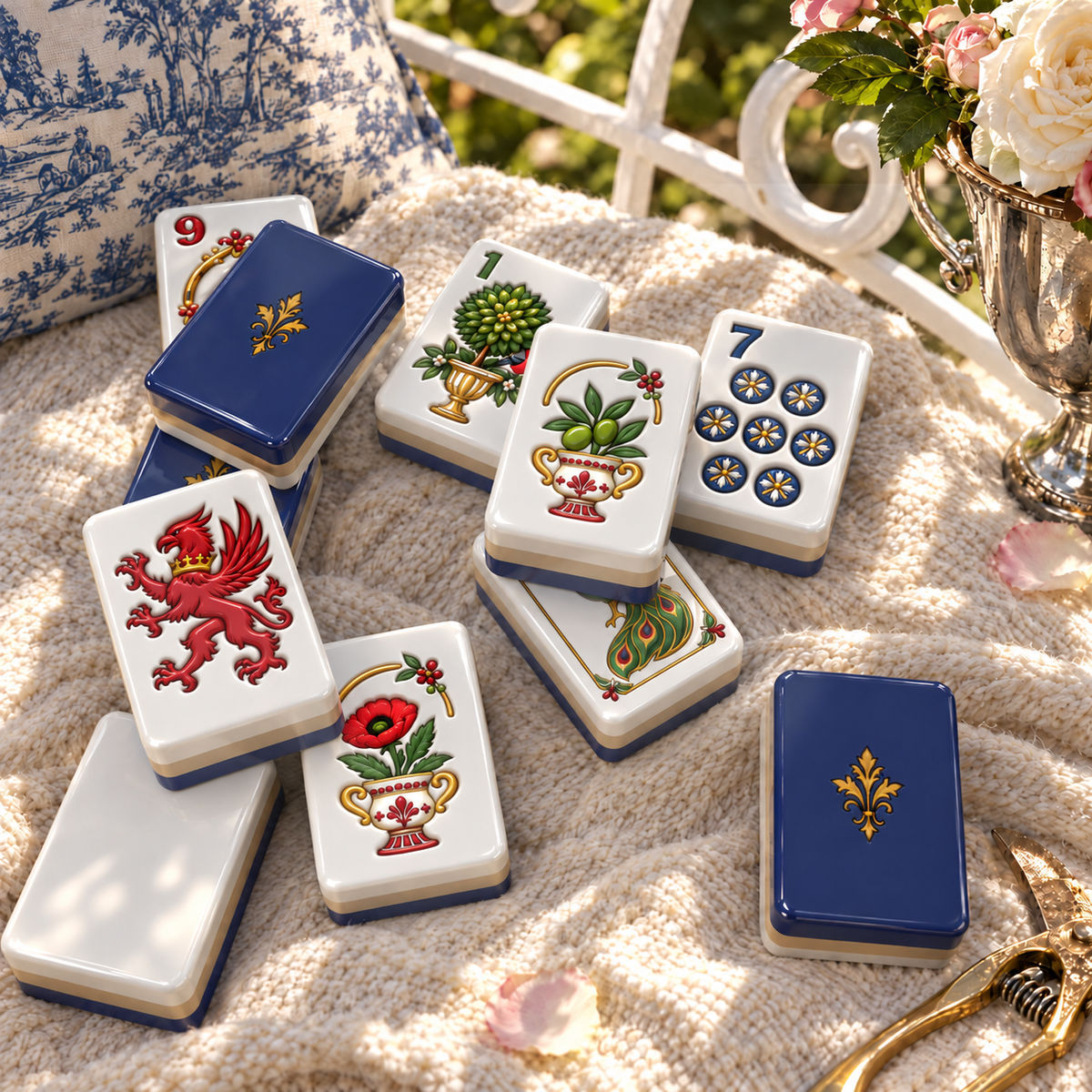
The National Mah Jongg League card is an annual printed guide listing all legal winning hand patterns for American mahjong that year. Issued in early spring, it dictates which tile combinations "go out" and count; no hand exists outside the card. The card shows sections for Pungs (identical triplets), Kongs (identical quads), Chows (sequences—American only), Pairs, Honors, and sometimes Dragons or Flowers. A complete hand is always 14 tiles: four melds (Pungs, Kongs, Chows, or Quints) plus one Pair. Jokers substitute freely for any tile except a single tile or a pair. Every table must use that year's card; hands from prior years don't qualify. The card costs little and lasts a season; most clubs order them in bulk or access a digital copy. Mahstead players host weekly games using the current card and keep a best-selling mahjong set close by for quick setup.
Why does the card change every year?
The National Mah Jongg League updates its card annually to balance the game, prevent dominant strategies, and keep veterans fresh. New patterns rotate in; others retire. Players compete on equal footing only when everyone studies the same card each spring.
This refresh prevents any single hand from becoming unbeatable and ensures beginners have the same chance as veterans in any season. The card-release date (early spring) marks the start of the competition year, so players who wait until mid-year still play by the same rules as those who started in March. Knowing the current year's card is your first responsibility before sitting down—playing by an old one invalidates every win.

What exactly is on the card?
The card is printed front and back on one sheet (or sometimes a booklet), divided into rows and columns. Each row is a hand pattern: typically three tiles per meld, shown as numbers (1–9), letters (Bam, Crak, Dot), and symbols (Wind, Dragon, Flower). Columns separate sections: Pungs, Kongs, Quints, Sextets, and Chows. A complete hand always occupies one row and includes four melds plus one Pair.
Hands are indexed by complexity and tiles used. For example, one section might show all-Pung hands (four triplets + pair); another, Chow-heavy patterns. The card also notes which hands require specific tiles (e.g., All Winds, or Dragons paired with only Dots). Jokers are always allowed in a meld as a wild tile, but never in a single tile or a pair—this rule never appears on the card itself because it is a core American mahjong law, not a hand-specific note.
🀄 Shop best-selling mahjong sets →
How do you find your hand on the card?
Players count their 14 tiles into four melds plus one Pair, then scan the card rows to find an exact match. The process takes 5–30 seconds for experienced players; beginners often take longer. Here's the method:
Step 1: Remove your pair and set it aside (one row, left side of the card). Step 2: Arrange your four melds in numerical order, left to right. Step 3: Scan the matching section (Pung, Kong, Chow, etc.) for your exact sequence. Step 4: Confirm the Pair matches one of the card's pair rows (bottom or right edge). Step 5: Call out the hand name or number and declare "Mahjong."
Common mistake: Forgetting that a meld must be identical tiles. Three 5-Dots form a Pung; a 3-4-5 is a Chow (sequence). American mahjong allows Chows only in specific hands listed on the card, unlike Chinese mahjong where Chows are always legal. If your hand contains a 3-4-5 pattern but the card doesn't list a matching hand with a Chow in that position, your hand is not valid.
Another trap: counting 14 tiles but having the wrong pair type. The card specifies which pair goes with each hand. For instance, one hand might require a pair of North Winds; another, a pair of 7-Dots. A mismatch—even if your 14 tiles are correct—means the hand is not on the card.

What are the core rules that never change?
Across all NMJL cards, three rules are constant. First, a legal hand is always exactly 14 tiles: four melds of three or four identical tiles (Pungs or Kongs) or three consecutive numbers in the same suit (Chows), plus one Pair of two identical tiles. Second, jokers can replace any tile inside a meld but never form a single tile, a pair, or a triplet by themselves. Third, the hand must appear on that year's card—no exceptions.
A fourth rule: you can expose (lay down face-up) Pungs, Kongs, Quints, and Sextets, but never a Chow or a Pair. If you expose a Chow, you have revealed your pair and cannot win that hand. Exposing is optional and often strategic; beginners expose to hint they're close to winning, but experienced players hide their melds to stay flexible.
These four rules have held steady across decades of American mahjong. The card is the only variable. Understanding this separation—fixed rules vs. card-specific hands—is the difference between a confused beginner and a confident player.
🎁 See our most-loved mahjong sets & accessories →
How does the card differ from Chinese or Riichi mahjong?
American mahjong is unique. Chinese and Riichi versions have no printed card; hands are defined by rule and memorized or looked up in a book. Sequences (Chows) are always legal in Chinese mahjong and can be called; in American mahjong, Chows appear only in specific hands on the card and cannot be called. Riichi mahjong uses a 136-tile set (not 152) and relies on complex scoring tables, not a hand list.
American's card system democratizes the game: any player can look up a hand instantly without memorizing thousands of patterns. It also levels the playing field between beginners and veterans in a single season. However, it requires players to own or access a current card and learn a new set each spring. If you play American mahjong, the card is non-negotiable; the other variants are wholly different games with separate rules, tile counts, and scoring.
For how to play American mahjong in full detail, including the Charleston tile-exchange and all mechanics, visit the complete guide. If you're learning mahjong for beginners, start with the card in hand and one season of practice before exploring other variants.
How to Read the Card: A Beginner's Checklist
Step | Action | Common Mistake |
1 | Count your 14 tiles | Forgetting jokers or miscounting |
2 | Separate your pair | Using wrong pair type for the hand |
3 | Arrange four melds numerically | Not grouping identical tiles |
4 | Scan the card section | Comparing to an old year's card |
5 | Match exactly (all 4 melds + pair) | Missing that one tile is off |
6 | Verify the pair row matches | Assuming any pair works |
7 | Call "Mahjong" | Declaring before you've verified |
What to check before you buy:
Confirm you have the current year's card (check the date printed on it).
Verify your best-selling mahjong set includes the full 152 tiles and 8 jokers (never play with fewer).
Check that all tiles are engraved or printed clearly; worn tiles confuse meld-matching.
Keep a card at the table, not in a bag; access takes seconds and prevents disputes.
Most clubs print or buy cards in batches each March. If you're hosting a game, order extras for guests who forget theirs. Digital cards (PDFs) work in a pinch but are slower to scan than printed ones, especially for players with vision challenges.
✨ Find your Mahstead set — free US shipping →

FAQ
Can I use last year's National Mah Jongg League card this year?
No. Only the current year's card is legal at any sanctioned table. If you use an old card and win, that win is not recognized. Always confirm the date on the card before play. Most players store old cards for reference but switch to the new one every spring.
What happens if I find a hand on the card but one tile is wrong?
The hand is invalid. Every hand on the card must match exactly: all four melds plus the pair. If one tile differs, you haven't won. This is the most common beginner error; recount your hand and the card row side-by-side before declaring.
Are Chows always legal in American mahjong?
No. Chows (sequences like 3-4-5) are legal only in specific hands listed on the card. You cannot call or expose a Chow. If your hand requires a Chow and the card lists it, that's fine—but many hands don't include Chows at all. Check the card before building a Chow-based strategy.
Can a joker replace a tile in a pair?
No. Jokers can substitute for any tile inside a meld (Pung, Kong, Chow, Quint, Sextet) but never form or replace a tile in a pair. A pair must be two identical tiles. This rule is absolute and never changes.
How do I know which section of the card to scan?
Identify the dominant meld type in your hand: if you have three Pungs and one Chow, scan the Chow sections. If all four are Pungs, scan the All-Pung sections. Most cards organize by meld mix, making it easier to narrow your search. Familiarity with the card layout speeds this up over a season.


View More
View More
View More
