
Mahjong Travel Set Buying Guide: What to Pack
Last updated: Nov 23, 2026
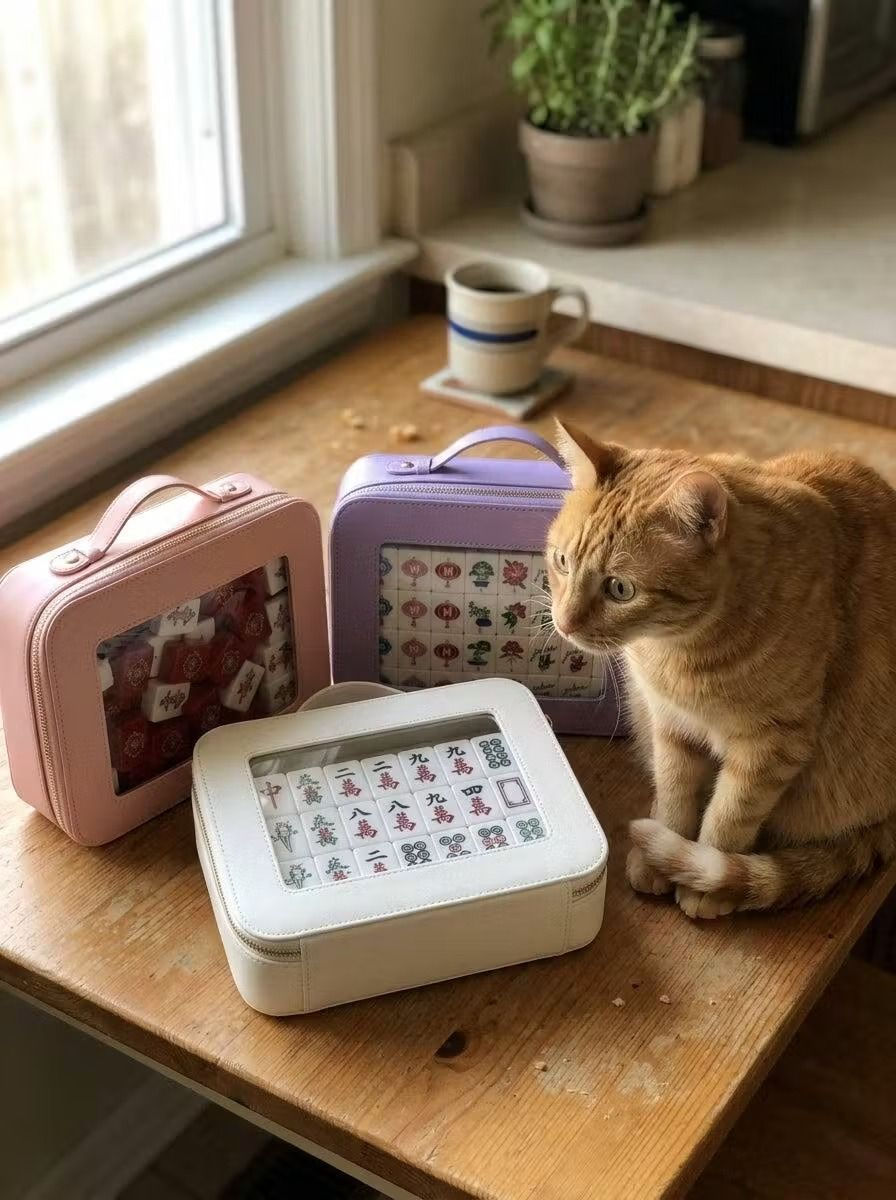
A mahjong travel set is a complete 160-tile game (152 playing tiles plus spares) designed to pack flat and light, paired with a carrying bag and often a portable mat. Most acrylic American mahjong sets weigh 2–4 pounds and fit inside a dedicated travel bag with compartments for tiles, racks, and dice. You'll pay based on customization: unadorned sets are affordable; engraved or themed sets cost more. The essential travel combination includes a 160-tile set, a well-padded bag with interior pockets, and optionally a compact mat. We recommend checking bag dimensions against your luggage before ordering, because travel bags range from small (fits airplane overhead) to large (best for car trips). Free shipping across the US makes it simple to order and test what works for your group's travel rhythm.
A traveling mahjong player faces one core question: how much of the full game experience can I realistically carry and set up outside my home? The answer has changed over the years. Early travelers had to compromise—lighter sets lost durability, flimsy bags split at seams, borrowed mats never quite fit the table. Today we have best-selling mahjong sets engineered to survive luggage handling, bags with reinforced pockets, and rollable mats that don't add weight. The trick is matching gear to your travel pattern: weekend guest games demand different gear than a once-yearly vacation tournament.
What makes a set travel-ready?
A travel set must survive compression, temperature swings, and repeated packing cycles. Acrylic tiles (not bone or bamboo) resist warping and chipping during air travel, and they weigh less than ceramic. A good travel set includes all 160 tiles—152 playing tiles plus spares—but is designed to nest compactly. The acrylic we use at Mahstead is molded to fit snugly in a bag without rattling, which means fewer chipped edges and no tiles coming loose mid-flight. Most travel sets are also easier to shuffle and read than heavier home sets, so they're faster to learn on. Check the bag dimensions before you order; some travel bags fit a car trunk but not overhead luggage, while others sacrifice tile comfort for ultra-portability.
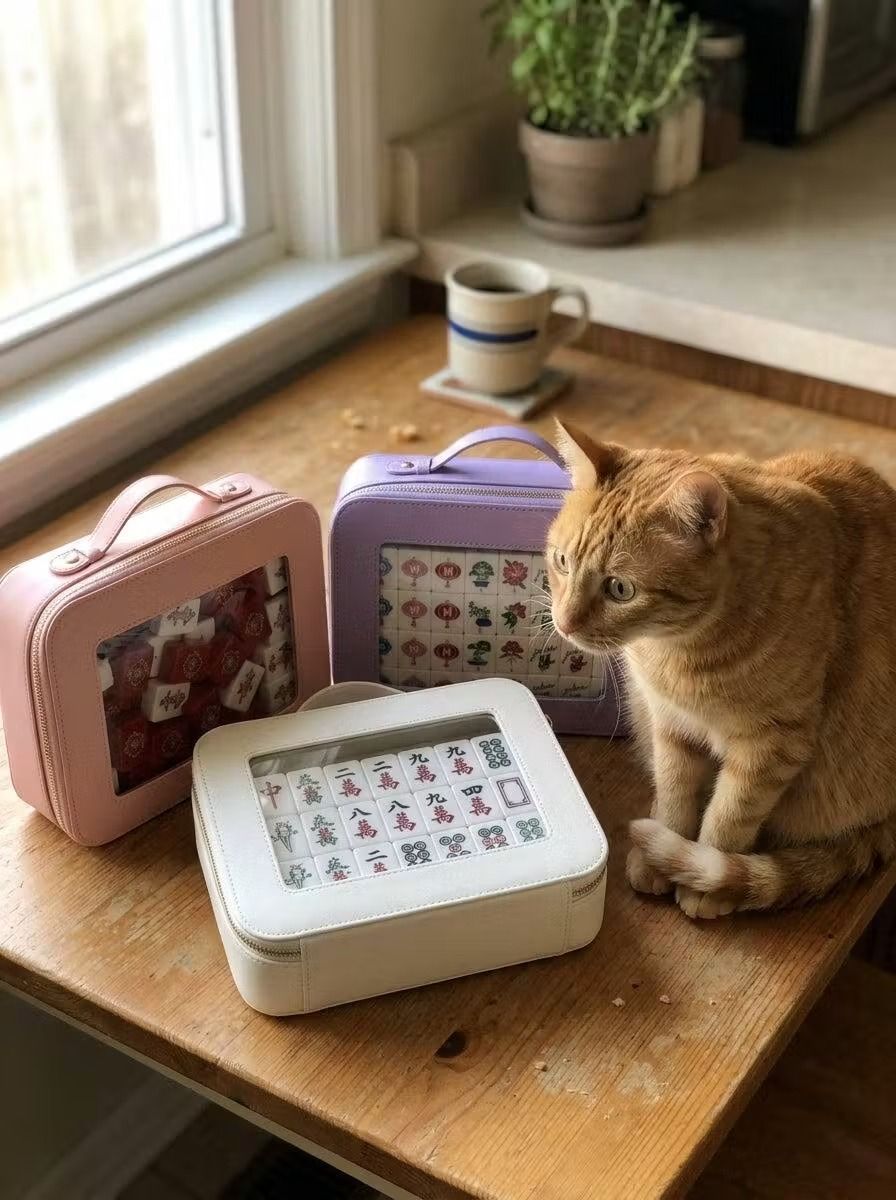
How do you choose between a small, medium, and large travel bag?
Bag size | Best for | Tile comfort | Travel mode |
Small (compact) | Solo player, 1–2 backup games, weekend trips | Tiles stacked higher, less organized | Airplane carry-on, backpack |
Medium (standard) | Weekly game group, 1 full set + mat + racks | Tiles flat, pockets for dice/cards | Car trips, weekend getaway |
Large (deluxe) | Hosting multiple tables, tournament backup, seasonal storage | Generous spacing, room to breathe | Home storage + car transport |
Small bags weigh 1–2 pounds and prioritize portability; they're ideal if you're the guest and space is tight. Medium bags (2–3 pounds) hold one full set plus a mat and racks, and they're built for weekly car commutes—most fit standard car cup holders and door pockets. Large bags (3–4 pounds) are best for hosts or road-trip groups who want to store extra jokers, dice, and backup tiles. The trade-off is obvious: smaller bags take up less luggage space but offer less padding and fewer compartments, so tiles shift more during transit. If you play every week at a different friend's house, a medium bag with interior dividers pays for itself in tile protection.
🀄 Shop best-selling mahjong sets →
Should you buy a set with an engraved design or a plain acrylic set?
Engraved sets (names, dates, or custom patterns carved into tile backs) are memorable gifts and conversation starters at games, but they add cost and weight—engraving fills tile pores, making them fractionally heavier. Plain acrylic sets are lighter, ship faster, and are ideal if you travel weekly and weight is critical, or if you host rotating games and want a neutral look. Engraved American mahjong sets are best reserved for home play or annual trips where you're willing to trade ounces for personality. For frequent travel, we suggest a plain set and a personalized travel bag instead—you get the custom touch without the weight penalty. If you're buying for a specific group or milestone, engraving can make the set itself a keepsake; ask yourself whether the set will move with the players or stay in one home.
What extras do you actually need for a travel game?
The essentials are tiles and a bag. Everything else is optional but useful. A compact mahjong mat (typically 2.5–4 feet when rolled) protects the host's dining table and makes the game feel official—it also helps newer players learn tile placement faster. Racks with pushers keep hands organized during long games and reduce table clutter; they're essential if anyone has arthritis or vision challenges. Dice are standard-issue (included with most sets); a backup pair costs little and eliminates disputes. A laminated card reference (showing the current year's winning hands) is weight-neutral and prevents rule confusion. Many travel players skip the mat on ultra-short trips but always carry racks and dice. We recommend asking your regular group what they value most—some players prefer speed and travel light; others want the full at-home feel even in a hotel room.
🎁 See our most-loved mahjong sets & accessories →

How do you pack a travel set to avoid damage?
Start by arranging tiles in the bag so they're flat, not standing on edge. Tiles stacked horizontally survive luggage compression better than tiles wedged vertically. Place heavier items (racks, dice, card) on the bottom and tiles on top, or use the bag's built-in dividers if it has them. Wrap the mat separately or roll it loosely around the set inside the bag—a tight roll can crack acrylic at stress points. Avoid overpacking; a bag bursting at the seams will lose padding and tiles will shift during transit. Before your first trip, do a test pack: put the set in the bag, carry it, jostle it gently, and listen for rattling. If you hear tiles moving, add bubble wrap or extra padding to interior pockets. Keep the bag's strap or handle clear of other luggage to reduce pinching. On long car drives, store the bag on a seat (not the trunk floor, where temperature swings are worst). After each trip, wipe tiles with a dry cloth to remove dust and check for cracks—acrylic is durable, but spotting wear early prevents bigger problems.
What should you check before ordering a travel set?
Bag dimensions vs. your luggage: Measure your carry-on or car compartment and compare it to the bag specs listed on the product page. A 18-inch bag won't fit a 17-inch space.
Tile size: Travel tiles are standard size (about 1 inch × 0.5 inch) and the same as home-game tiles, so they work with any mat or rack.
Weight limit: If you fly frequently, choose a set under 4 pounds total. Check airline carry-on weight limits (usually 7–10 pounds) and add the bag weight to the set weight.
Compartment count: A bag with 3+ interior pockets lets you separate tiles, racks, and dice; a single-compartment bag is simpler but tiles mingle.
Material durability: Acrylic is lighter and cheaper than ceramic but can become brittle in extreme cold; if you travel to very cold climates (below freezing), store the bag indoors the night before travel.
Zipper quality: Check reviews or product photos for heavy-duty zippers; cheap zippers fail on the second or third trip.
Return policy: Mahstead ships free across the US, but before ordering, confirm the return window if you need to swap sizes or styles.
✨ Find your Mahstead set — free US shipping →
Who should buy a travel set versus a home set?
Traveler type | Best option | Why |
Weekly guest player | Travel set + medium bag | Lightweight, durable, fits any venue |
Home host | Home set + storage | Larger, heavier, stays in one place |
Tournament player | Travel set + deluxe bag + backup tiles | Redundancy and weight don't matter; reliability does |
Casual vacationer | Rented set or borrowed set | Lower cost, zero risk of loss |
Snowbird or seasonal relocator | Two travel sets or a hybrid | One at each home; no packing cycles |
A weekly guest player benefits most from a travel set because it moves safely and repeatedly. A home host can use a heavier, more beautiful set that never leaves the dining room. A tournament player needs backups and doesn't budget for weight, so travel durability is secondary to redundancy. Casual vacationers might borrow from a local club rather than buy. Seasonal players sometimes buy two medium-weight sets to avoid the wear of constant packing—one stays at the primary home, one at the seasonal home.
We recommend browsing the travel bag collection to see which bags fit your routine, then pair it with a set from our best-selling collection that matches your weight and customization preferences. If you're shopping for a gift, a travel set bundle (set + bag + mat) is harder to get wrong than a home set, because the recipient can use it immediately.

FAQ
Can I use a home mahjong set for travel?
Yes, but home sets are often heavier and bulkier. Travel sets are engineered to pack flat and survive repeated handling. If you already own a home set, a travel bag can adapt it; if you're buying new, a purpose-built travel set is safer.
Do travel sets have fewer tiles than home sets?
No. Travel sets contain all 160 tiles (152 playing tiles plus spares), the same as home sets. They're identical in play; only the bag and packing design differ.
How much does a complete travel setup cost?
Prices vary by customization and bag size. See current pricing on the product page for individual sets and bags; buying them as a bundle often offers better value.
Will a travel set fit in an airplane carry-on?
Most compact travel bags do fit overhead bins. Always check your airline's carry-on dimensions (typically 22" × 14" × 9") before ordering, and measure the bag listed on the product page.
What's the difference between a travel bag and a storage bag?
Travel bags have reinforced handles and protective padding for frequent transit; storage bags are lighter and cheaper but designed for stationary use. Travel bags survive luggage compression; storage bags don't.
Can I use a regular luggage bag instead of a mahjong travel bag?
You can, but mahjong travel bags have tile-sized compartments and interior dividers that keep tiles organized and protected. Regular luggage often has loose interiors where tiles shift and break.
How long do travel sets last?
Acrylic sets last decades if cared for. The main wear is cosmetic (surface scuffs). Regular inspections after each trip catch loose tiles early. A well-packed set shows no damage after 100+ trips.


View More
View More
View More
