
Melded Kong in Mahjong: Meaning, Points & When to Declare
Last updated: Nov 23, 2026
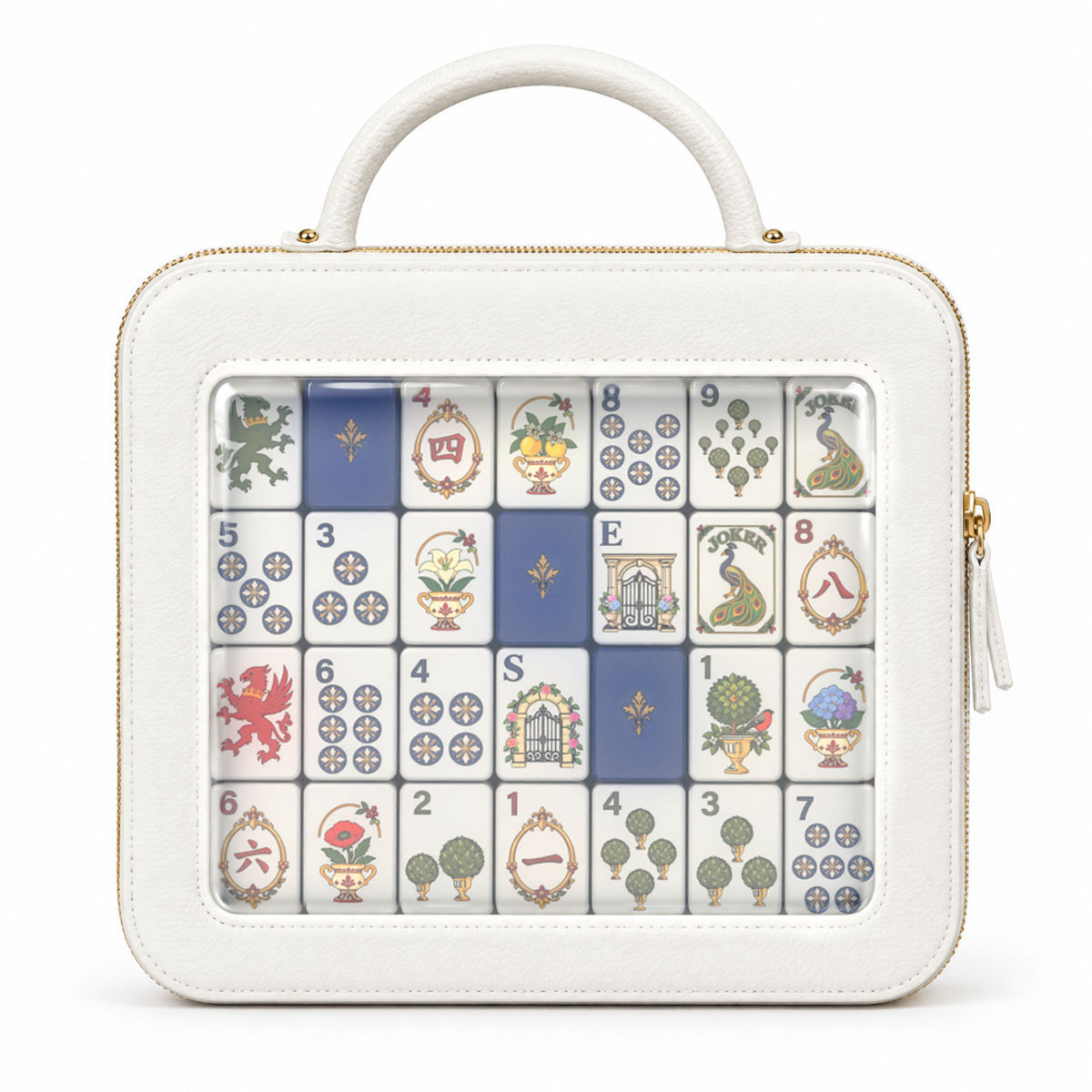
A melded kong in American mahjong is four identical tiles you expose on the table—either by adding a fourth tile to an existing exposed pung, or by declaring four matching tiles directly when it's legal. Kongs earn higher points than pungs (three identical tiles) and are worth 8 points per tile in most hands; jokers can never be part of a kong. You declare a kong only when you draw a tile that completes the set, and it must match a hand listed on the current National Mah Jongg League card. A kong occupies the center of your wall and pulls a replacement tile from the wall's end; this replacement can complete your hand immediately. Understanding when and how to meld a kong—and reading the card to know which hands allow kongs—separates casual players from those who score consistently. Mahstead's best-selling mahjong sets include everything you need to learn this mechanic at home or in a weekly game.
A melded kong is four identical tiles you expose on the table—either by adding a fourth tile to an existing exposed pung, or by declaring four matching tiles directly when it's legal. Kongs earn higher points than pungs (three identical tiles) and are worth 8 points per tile in most hands; jokers can never be part of a kong. You declare a kong only when you draw a tile that completes the set, and it must match a hand listed on the current National Mah Jongg League card. A kong occupies the center of your wall and pulls a replacement tile from the wall's end; this replacement can complete your hand immediately. Understanding when and how to meld a kong—and reading the card to know which hands allow kongs—separates casual players from those who score consistently.
What exactly is a melded kong, and how does it differ from a pung?
A pung is three identical tiles; a kong is four identical tiles. Both must be exposed (placed face-up on the table in front of you) during play. Pungs are worth 4 points per tile; kongs are worth 8 points per tile—double the value. You cannot add a joker to either: a pung must be three of the same tile, and a kong must be four of the same tile, all legitimate. This is the biggest difference from Chinese variants, where sequences (chows) can be called; American mahjong allows only pungs, kongs, quints, and sextets.

When can I declare a kong during play?
You declare a kong only when you draw or receive a tile that completes four identical tiles in your hand. If you already have an exposed pung and draw the fourth tile, you immediately announce "kong" and add it to the center of that pung. If you have four matching tiles in your concealed hand and draw a fifth, you can only meld four as a kong if your winning hand on the card calls for a kong—never expose kongs outside of a card hand. The legal moment is immediately after drawing; you cannot wait until later. Always check how to read the mahjong card before melding any exposed set, because the card dictates which hands are valid.
How do kong tiles and replacement draws work?
When you meld a kong, you take a replacement tile from the dead end of the wall (the end away from active play). This is different from a pung—after you expose a pung, you do not draw a replacement. After a kong, you draw one tile to bring your hand back to 14 tiles (or 13 if you're waiting). That replacement tile is drawn immediately and can complete your hand on the spot. If you meld a kong late in the game, you may draw the final tile on the wall. This replacement mechanic is one reason kongs are strategic: they refresh your hand and create a second chance to win.
What's the point value of a kong, and why does it matter?
A kong scores 8 points per tile in the four-tile set, meaning a single kong contributes 32 points to your hand's total. By contrast, a pung contributes 12 points. If a winning hand on the card includes a kong, the presence of that kong adds 20 extra points compared to if the same hand had a pung instead. Point values also depend on what tiles form the kong—dragons and winds often carry bonus points, while number tiles earn the base rate. Always reference the National Mah Jongg League card for the exact point value of the hand you're declaring; the card lists every legal combination and its point total. Understanding this scoring is why serious players study the card before each season.

What mistakes do players make with melding kongs?
Common errors:
Declaring a kong when the hand isn't on the card. You cannot meld a kong unless your complete winning hand is listed on the current card. Exposing four tiles just because you have them will invalidate your win.
Forgetting the joker rule. You cannot use a joker in a kong—or in any pung. A joker must be used in a quint (5 tiles) or sextet (6 tiles) only, or held in your hand as a wildcard. Many new players try to use a joker as the fourth tile in a kong and lose the hand.
Adding a tile to a pung out of turn. If someone else exposed a pung and you later draw the fourth tile, you cannot add it to make a kong. Only the player who owns the pung can do that, and only on their turn.
Melding a kong too early in the game when you don't yet have a winning hand in sight. Exposing sets reveals information to opponents and locks you into specific card hands. Always confirm you're aiming for a hand that includes that kong before melding.
Melding tiles with jokers incorrectly. A kong is always four identical base tiles. If your hand needs a quint (with a joker), do not try to meld it as a kong first; wait until you have the joker and complete the full quint.
🀄 Shop best-selling mahjong sets →
How do you read the card to know which hands allow kongs?
The current National Mah Jongg League card lists hundreds of valid hands organized by year and season. Each hand shows the exact combination of tiles and which are pungs, kongs, quints, or sextets. Some hands include multiple kongs; others include only one kong alongside pungs or quints. When you're holding tiles, scan the card sections relevant to your hand type (e.g., "Like Numbers" or "Consecutive Sets") and look for patterns that match what you have. If a hand requires a kong and you're only one tile away from completing it, meld the kong as soon as you draw that tile. If a hand lists a pung where you have four tiles, you still declare only a pung unless the card explicitly shows a kong—do not over-meld.
Scenario | What's legal | Points | Next step |
You have three 5 Craks exposed; draw the fourth 5 Crak | Add it as a kong; draw replacement tile | 32 pts for the kong | Check if replacement tile wins or extends your hand |
You have four 5 Craks in hand; need them for a winning hand | Meld exactly four as a kong if the card shows a kong; check the card first | 32 pts + hand bonus | Declare when you have all other required tiles |
You have four 5 Craks in hand; your winning hand on the card shows a pung (not a kong) | Meld only three as a pung; hold the fourth concealed | 12 pts for pung only | Do not over-declare—it invalidates the hand |
You have three 5 Craks exposed and someone passes you the fourth via a call | You cannot take it—only the owning player can meld a kong | N/A | Wait for your turn and draw from the wall |
🎁 See our most-loved mahjong sets & accessories →
What to check before you buy a set to practice kong rules at home
When learning kong mechanics, practice with a full American mahjong set so you can lay out all four tiles and see the geometry clearly. Look for sets where tiles are large enough to read numbers and symbols without squinting—this matters when you're comparing four tiles to confirm they match exactly. Acrylic tiles won't chip or fade after hundreds of games, and they're easier to push and arrange than bamboo sets if you're shuffling frequently. A good rack with pushers helps you organize melded tiles and keep hand tiles neat while you study the card. A mat with clearly marked wall positions shows you exactly where to place the kong (center) and where the replacement tile comes from (dead end). Mahstead's engraved mahjong sets are designed for players who want durability and visibility; pair one with a mahjong mat to have a full teaching setup.
Why kongs matter in American mahjong scoring
Kongs are a multiplier for your hand's total points. A hand that includes a single kong can earn 20 points more than the same hand with a pung instead. If you're aiming for a hand worth 45 points and it includes a kong, that kong contributes significantly to meeting your hand's exact value on the card. Because American mahjong awards points only if you declare a hand that matches the card exactly, every tile counts. Scoring hands requires the exact suit, the exact pung-or-kong structure, and the exact point total listed on the card. Understanding kong values prevents the costly mistake of declaring a hand that looks right but scores wrong because you miscounted the kong's contribution.
✨ Find your Mahstead set — free US shipping →

FAQ
Can I use a joker as part of a kong?
No. A kong must be four identical base tiles. Jokers can only be used in quints (5 tiles) or sextets (6 tiles), never in pungs or kongs.
What happens if I meld a kong and then draw the wrong tile?
You draw a replacement tile from the wall's dead end. If it doesn't help your hand, you discard it on your next turn. The kong stays exposed on the table.
If my hand needs a pung but I have four of those tiles, should I meld a kong?
No. Meld exactly what the card requires. If the card shows a pung, expose only three tiles and hold the fourth. Over-melding invalidates your hand.
Can another player add a tile to my exposed pung to make it a kong?
No. Only you (the owner of the pung) can add the fourth tile to form a kong, and only on your turn immediately after drawing.
How many kongs can one hand have?
The card determines this. Some hands allow two or more kongs; others allow only one. Always read the specific hand listing to confirm the structure.
Does a melded kong count toward my hand immediately, or do I still need to wait to win?
A melded kong is part of your hand structure on the table, but you still need to complete the entire hand as listed on the card to win. The kong alone does not win the game.


View More
View More
View More
