
Malaysian Mahjong Setup: Rules, Tiles & How to Play
Last updated: Nov 23, 2026
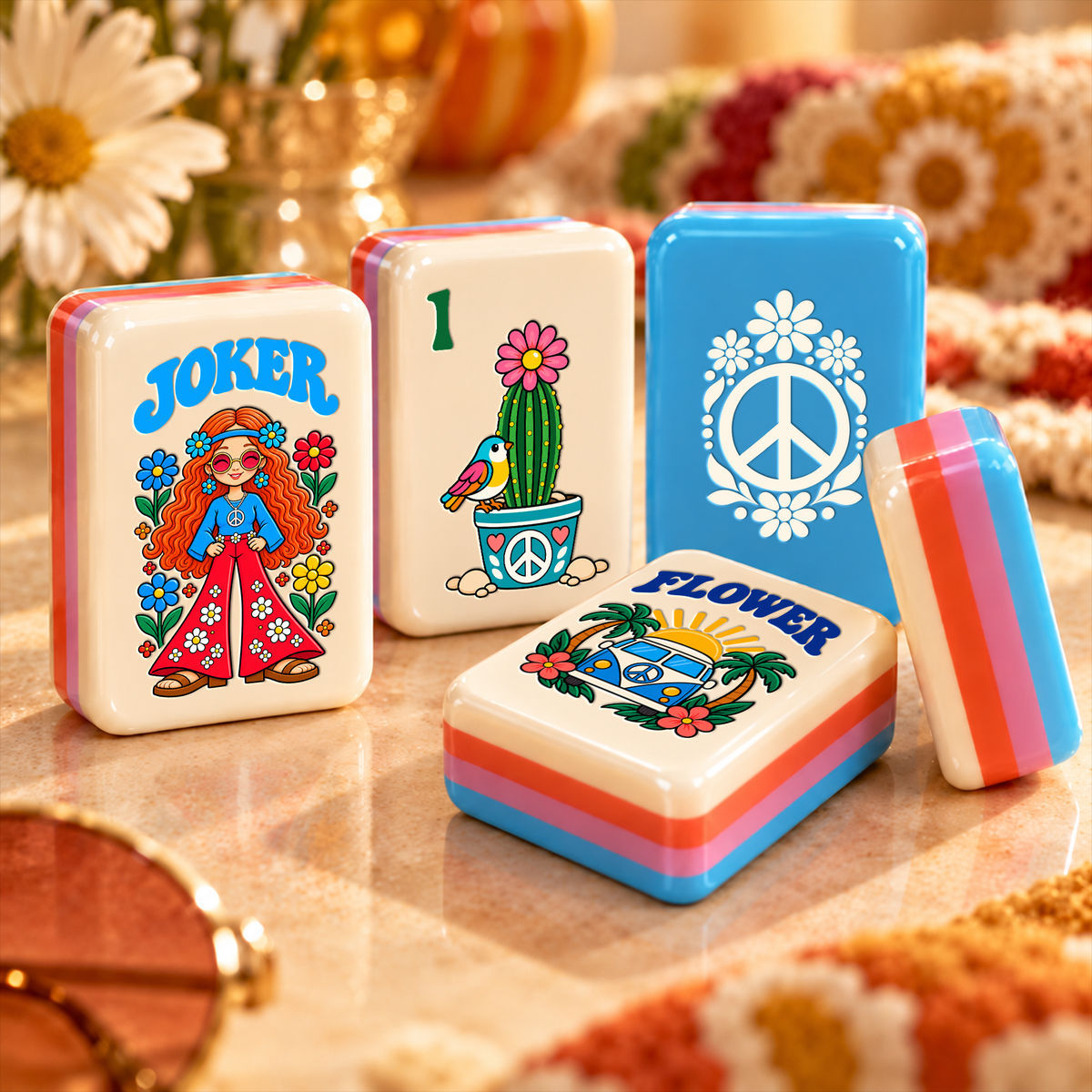
Malaysian mahjong uses 144 tiles (three suits: Bams, Craks, Dots numbered 1–9, four copies each; 16 winds; 12 dragons; 8 flowers) arranged in a wall and drawn in melds of two or one tile. Unlike American mahjong—which follows an annual League card and forbids sequences (chows)—Malaysian play allows both pungs (three identical) and chows (1-2-3 in sequence), uses different scoring systems, and draws tiles individually rather than in the Charleston passing ritual. Hands are typically worth points based on combinational complexity, not fixed card positions. Setup takes 5–10 minutes; a game lasts 1–3 hours depending on how many rounds you play. You'll need tile racks, a mat to protect the wall, and a reference guide for local hand rankings.
Malaysian mahjong, also called Mahjong Shanghai or Cantonese-influenced play, blends Hong Kong hand structures with Southeast Asian tile counting. Unlike American mahjong—which follows an annual League card and forbids sequences (chows)—Malaysian play allows both pungs (three identical) and chows (1-2-3 in sequence), uses different scoring systems, and draws tiles individually rather than in the Charleston passing ritual. Hands are typically worth points based on combinational complexity, not fixed card positions. Setup takes 5–10 minutes; a game lasts 1–3 hours depending on how many rounds you play. You'll need tile racks, a mat to protect the wall, and a reference guide for local hand rankings.
How do you arrange the Malaysian mahjong wall?
The wall begins with all 144 tiles face-down in four stacks of 36 tiles each, one for each player. Each stack is arranged in pairs stacked vertically, creating a long rectangular barrier around the table. The wall sits in the center of the table—East player (often dealer) sits opposite the wall's East side. Players don't shuffle tiles into the wall itself; instead, you arrange them in pairs before the game begins, then draw from the wall's right end moving counterclockwise. The East player draws first, then South, West, and North, taking two tiles per turn until each player holds 13 tiles (total 52 drawn). The 14th tile (drawn by the player whose turn it is) completes their initial hand, initiating play.

What tiles are in a Malaysian mahjong set, and how do they differ?
A Malaysian set contains 144 tiles: 108 suit tiles (Bams 1–9 × 4, Craks 1–9 × 4, Dots 1–9 × 4), 16 winds (North, East, South, West × 4 each), 12 dragons (Red, Green, White × 4 each), and 8 flowers (Spring, Summer, Autumn, Winter × 2, and Plum, Orchid, Chrysanthemum, Bamboo × 1 each—exact flower distribution varies by region). American mahjong uses 152 tiles including jokers and extra dragons; it has no chows, so suit tiles aren't arranged in sequences during play. Malaysian sets often feature bamboo racks that hold 14 tiles per player, mat surfaces designed for wall manipulation, and scoring reference sheets. Because chows are legal in Malaysian play, tile visibility and hand arrangement differ significantly from American games where only pungs, kongs, and quints are exposed.
🀄 Shop best-selling mahjong sets →
How does the drawing and discarding system work in Malaysian mahjong?
After the wall is established and each player holds 13 tiles, East draws the 14th tile and discards one face-up to the table center. The discarded tile remains visible; any player may claim it to complete a pung (three identical), chow (sequence like 4-5-6 Bams), or kong (four identical). If no one claims the discard, play moves to the next player counterclockwise, who draws one tile from the wall's right end and discards one from their hand. The turn-by-turn cycle continues until someone completes a winning hand (usually five melds plus a pair, depending on local rankings). Claiming a discard exposes your meld face-up on the table; concealed melds (drawn from the wall without claiming a discard) score higher. A player may also declare "Kong" by drawing four identical tiles, laying them face-up, then drawing a replacement tile from the wall's end—this is called a "dead tile" position.
What are the hand rankings and scoring differences from American mahjong?
Malaysian hand rankings depend on local convention and region (Singapore rules differ from Penang rules, for example). Typically, hands are scored by meld type and concealment: a hand of five pungs scores higher than a hand mixing pungs and chows, and concealed melds ("closed" hands) outrank exposed ones. American mahjong uses a fixed yearly card where each hand has a specific point value; Malaysian play calculates points based on tile combinations. For example, a "Little Three Dragons" (two dragon pungs and one dragon pair) scores differently than three separate pungs. Scoring also rewards "all terminals" (melds using only 1s and 9s plus winds/dragons) or "all honors" (wind and dragon melds only). A single game round ends when one player declares "Mahjong" (a winning hand). Rounds continue until players complete an agreed number (often 4 or 8), and the player holding East position rotates after each round.
🎁 See our most-loved mahjong sets & accessories →

What rules and etiquette differ from American or Hong Kong variants?
Malaysian mahjong draws from Cantonese (Hong Kong) rules but applies local conventions that American players may find unfamiliar. First, chows are legal—a 4-5-6 Crak sequence counts as a valid meld, which is forbidden in American mahjong. Second, tiles are never shuffled into a randomized hand; they remain in a formal wall structure and are drawn in strict order. Third, if a player discards a tile that another player can claim for multiple melds (a "dispute"), table rules determine priority—usually the player needing it to complete a winning hand wins the tile. Fourth, declaring a "Kong" mid-game draws a replacement tile and passes discarding to the next player, creating a branching turn sequence absent from American play. Fifth, no "joker" tiles exist in traditional Malaysian sets; instead, players track wild-tile rules locally or omit them entirely. Finally, exposing a meld immediately signals its type to all players, encouraging strategic planning several turns ahead.
Feature | Malaysian Mahjong | American Mahjong | Why it Matters |
Tile count | 144 (no jokers) | 152 (8 jokers) | Draw and wall strategy differ |
Chows allowed | Yes (1-2-3 sequences) | No | Hand completion paths expand in Malaysian |
Hand reference | Local rankings vary by region | Annual League card (fixed hands) | Setup preparation differs; memorizing vs. card-checking |
Exposure rules | Melds claimed from discard or wall | Melds exposed only as they're made | Malaysian games signal intent; American hides strategy longer |
Scoring basis | Meld type, concealment, honors | Fixed point values per card | Malaysian requires regional knowledge; American is standardized |
Dealer rotation | East position rotates each round | Often fixed or rotates by rule | Affects who draws first and winds cycle |
What equipment do you need to host a Malaysian mahjong game?
For a comfortable Malaysian mahjong session at home, you need a 144-tile set (not a 152-tile American set), mahjong racks with pushers to hold and organize your tiles safely during draws, and a mat to protect your table and define the wall space. A score pad and pen track round winners and final scores. Many players prefer a travel bag or case if hosting games at rotating homes—tiles and racks pack compactly and tiles arrive uncracked. A dice set determines who becomes East player (dealer) and initiates the wall. If playing with friends unfamiliar with Malaysian rules, print or display a one-page hand-ranking guide specific to your region (Singapore, Malaysia, or Penang rules differ). Most regional mahjong clubs or online forums publish free ranking sheets.
✨ Find your Mahstead set — free US shipping →
What mistakes should you avoid in your first Malaysian game?
Common errors to prevent:
Confusing tile counts: A 144-tile set is required; American 152-tile sets include jokers and are incompatible with traditional Malaysian play.
Drawing out of turn: Maintain strict wall order (right end moving counterclockwise). Jumping ahead invalidates hand completions.
Claiming a discard without legality: A tile may only be claimed if it completes a legal pung, chow, or (in final turns) a winning hand. Never claim to "break" another player's meld.
Forgetting concealment bonus: Tiles drawn from the wall (not claimed from discard) score higher—shield your rack so opponents cannot see which tiles are newly drawn.
Mixing rule variants mid-game: Agree on your region's hand rankings before the first game begins. Penang rules (emphasizing honors and terminals) differ from Singapore rules (rewarding balanced melds).
Exposing melds prematurely: Once a meld is laid face-up, it cannot be changed. Double-check before declaring.
Losing track of the dead tile after a Kong: When a player declares a Kong, they draw a replacement tile from the wall's end (not the right side used for regular turns). This shifts the wall's remaining count and affects final draws.
Before you buy: What to check
Tile durability & readability: Acrylic or bamboo tiles should show clear suit symbols (Bam with a bird on 1 Bam, Crak with interlocking circles, Dot with dots in a pattern) and legible numbers. Worn or faded tiles slow down play and create disputes over identity.
Rack stability: Racks must hold 14 tiles securely without tiles sliding or toppling mid-game. Test pushers for smooth operation—they should glide without jamming.
Mat dimensions: A mat should span 28–36 inches square, accommodating a wall and discard area for four players comfortably. Thicker mats (5–8 mm) muffle tile noise and protect tables better.
Set completeness: Verify all 144 tiles are present before the first game. A missing tile tile means one player cannot hold a full hand, halting play.
Regional rules reference: Confirm your group's rules in advance—request a ranking sheet or link from your host or club. Surprises mid-game frustrate newcomers.

FAQ
Can I use an American mahjong set for Malaysian play?
No. American sets contain 152 tiles (including 8 jokers); Malaysian requires 144 tiles with no jokers. Jokers don't exist in Malaysian hand rankings, and the extra tiles disrupt wall and draw mechanics.
Are chows allowed in Malaysian mahjong?
Yes, unlike American mahjong where chows (sequences like 1-2-3 Bams) are forbidden. Malaysian hands may include chows, pungs, and kongs. This expands hand-completion possibilities and changes strategy significantly.
How do I know which hand rankings to use?
Malaysian mahjong has regional variants. Singapore, Penang, and Malaysia proper each emphasize different hand combinations. Ask your host or club which rules apply before playing. Many clubs publish free ranking sheets online or via email.
What happens if two players claim the same discard?
Priority rules vary by region. Typically, a player completing a winning hand claims first; if neither player is winning, the player closest counterclockwise from the discarder has priority. Agree on this rule before the game begins.
How long does a game take?
A single round (one dealer) lasts 15–30 minutes if players know the rules and hands. A full game (4 or 8 rounds) takes 1–3 hours, depending on speed and local custom. New players often take longer their first few games.
Can I play Malaysian mahjong with three players?
Traditionally, Malaysian mahjong is designed for four players. Three-player variants exist but require modified wall counts, hand sizes, and draw mechanics—your host or club can provide three-player rules if needed.
What's the difference between a Kong and a Pung?
A pung is three identical tiles (e.g., three 5 Dots). A kong is four identical tiles. Declaring a Kong mid-game allows you to draw a replacement tile from the wall's end, extending your turn and your hand total.


View More
View More
View More
