
How Many Tiles Do You Start With in Mahjong?
Last updated: Nov 23, 2026
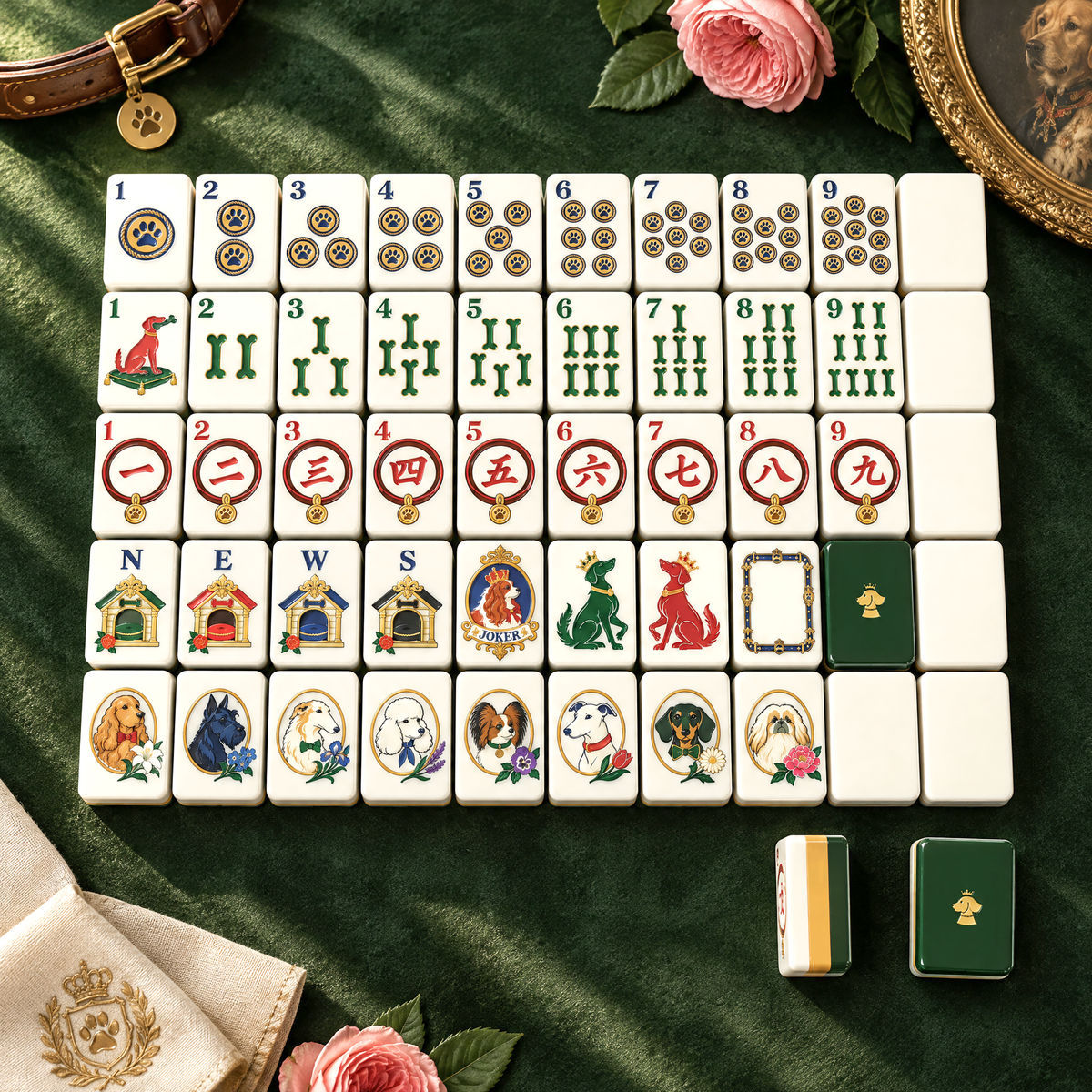
In American mahjong, each of the four players begins with 13 tiles. After the Charleston (the tile-passing ritual), the East player draws one tile, starting the game with 14 tiles in hand; all other players still hold 13. The pool contains 152 playing tiles total: 108 from three suits (Bams, Craks, Dots), 16 winds, 12 dragons, 8 flowers, and 8 jokers. Every American mahjong set is designed for this exact count. Understanding the tile count matters because it determines hand length, draw order, and whether you can legally complete a winning hand before the wall empties.
Why Does American Mahjong Use Exactly 152 Tiles?
The 152-tile count creates a game where hands rarely empty the wall. With four players drawing and discarding over roughly 15 rounds, the system ensures enough tiles remain for valid winners—no dead games where no one can declare. The National Mah Jongg League standardized this count in the 1930s, and it's remained unchanged. The structure—108 suited tiles (36 per suit), 28 honor tiles (winds and dragons), 8 flowers, and 8 jokers—distributes evenly: each player sees a balanced mix of every type. When you buy from our best-selling collection, you get all 152 tiles plus spares, so you're never short mid-game.
🀄 Shop best-selling mahjong sets →

What Tiles Come in a Standard Set?
A complete American mahjong set contains four copies of each tile number 1–9 in Bams, Craks, and Dots (108 tiles total), four each of North, East, West, South winds, four Red dragons, four Green dragons, four White dragons, eight flowers numbered 1–8, and eight jokers. No blanks or extra tiles belong in the 152-tile playing count. Flowers are drawn only during the initial deal and immediately replaced from the dead wall; you never hold a flower in your hand during play. Jokers are wildcards—they can stand in for any tile in an exposed pung, kong, quint, or sextet, but never in a single tile, a pair, or a concealed group. This tile inventory is why choosing a quality engraved set matters: every tile must be readable at a glance, especially under game pressure.
How Many Tiles Does Each Player Actually Hold?
At the start, each player holds 13 tiles. East draws one, bringing East to 14. On each subsequent turn, the active player draws one tile from the wall, then discards one, keeping the hand at 14 tiles. When a player declares a winning hand, they hold exactly 14 tiles arranged as four complete groups (pung, kong, quint, or sextet) plus a pair. Players sitting out (non-East) wait for their turn, always holding 13 until they draw. If someone calls an exposed group off another player's discard before drawing, the hand count adjusts temporarily, but the draw-then-discard cycle keeps it at 14 during active play. This rhythm is why beginners often ask: "Do I always have 14?" The answer is yes—active players always hold 14; waiting players hold 13.
What Happens When the Wall Runs Low?
The wall begins with the 152 tiles minus the initial deal (52 tiles dealt: 14 to each player, then 8 flowers replaced). That leaves roughly 100 tiles for draws. If no winner emerges before the wall empties, the hand ends as a "dead wall" or push—no scoring, next game begins. This rarely occurs in casual games; most hands resolve within 10–15 draws. The eight jokers circulate constantly, replacing tiles in exposed groups, so the actual tile scarcity is felt in the suited and honor tiles. Experienced players track the wall to estimate how many draws remain—a skill that sharpens strategy late in a hand. For smooth, distraction-free play, keep your set organized and your discards clear; a cluttered table makes wall counting harder.
How Does Tile Count Differ in Other Mahjong Variants?
Chinese mahjong typically uses 144 tiles: four copies of 1–9 in four suits (144 total), with winds and dragons but no flowers or jokers. Riichi (Japanese) mahjong also uses 136 tiles and adds a sixth suit, melds called chows (sequences), and different scoring rules. Hong Kong mahjong varies by region but often includes jokers or wild cards in a 152-tile pool. Taiwanese mahjong adds flowers and a joker system similar to American play but with distinct hand patterns. If you're switching between variants—say, learning American after playing Chinese—the tile count change affects hand speed, meld availability, and wall psychology. Always ask your group: "Are we playing American?" before sitting down. American rules assume 152 tiles, four players, no chows, and hands from the current year's National Mah Jongg League card. Our guide for beginners explains American-specific rules and how they differ from international versions.
Variant | Tile Count | Suits & Honors | Jokers? | Sequences (Chows)? |
American | 152 | 3 suits + winds, dragons, flowers | Yes, 8 | No |
Chinese | 144 | 4 suits + winds, dragons | No | Yes |
Riichi (Japanese) | 136 | 4 suits + winds, dragons | No | Yes |
Hong Kong | 152 | 3 suits + winds, dragons | Often | Varies |
Taiwanese | 152 | 3 suits + winds, dragons, flowers | Yes | No |
🎁 See our most-loved mahjong sets & accessories →
What to Check Before You Buy
Before hosting your first game, verify your set contains all 152 tiles. Count the suited tiles: 36 Bams (bird on 1), 36 Craks, 36 Dots. Check honors: 4 each of North, East, West, South winds; 4 Red, 4 Green, 4 White dragons. Count 8 flowers and 8 jokers. Some sets include spare jokers or blanks beyond the 152-tile count; those extras stay in the box and never enter play. If a tile is cracked, faded, or missing, the game can't be played fairly—request a replacement before your first session. Our Mahstead sets arrive complete and ready; each tile is engraved for clarity and durability. Organize your tiles in a sturdy mahjong rack with pushers so you can hide your hand from other players and manage draws smoothly. A padded travel bag or case keeps tiles safe between games and prevents loss.
✨ Find your Mahstead set — free US shipping →
Why Tile Count Shapes Game Strategy
Knowing the exact tile inventory lets you calculate odds. With 152 tiles and four players each drawing one per turn, roughly 100 tiles are drawn over a full game. Skilled players track which tiles hit the discard pile and estimate which remain in the wall or other hands. If three 5 Craks are discarded early, you know only one is left in play—your odds of drawing it drop sharply. Jokers add wildcard uncertainty; if all eight jokers are visible in melds, no more wildcards exist. This tile awareness separates casual players from competitive ones. You don't need to count obsessively, but glancing at the wall height and known discards sharpens your bets. Beginners often ask, "Why do experienced players pause before drawing?" They're mentally auditing the remaining tiles. Start building this habit now, and your game will deepen.

FAQ
Do all players start with the same number of tiles?
Yes—all four players start with 13 tiles. After the Charleston, East draws one tile (now 14), while the others remain at 13 until their first turn.
What if someone draws a flower during the initial deal?
Flowers are immediately swapped for a replacement tile from the dead wall during the deal. You never keep a flower in your hand; it's discarded and replaced on the spot.
Can I add extra jokers to increase luck?
No. American mahjong uses exactly 8 jokers in the 152-tile pool. Extra jokers in the box are spares only—they never enter play. Adding jokers breaks the game's balance.
What happens if my set is missing a tile?
The game cannot be played fairly. A missing tile means one group combination is impossible, skewing odds. Verify all 152 tiles before your first session.
Why can't I use blanks as wildcards?
Blanks (spare tiles in some sets) are never part of the 152-tile count. American mahjong designates only the eight official jokers as wildcards. Blanks create confusion and are not legal.
How many tiles are left after the initial deal?
After dealing 14 tiles to each of four players (56 tiles) and eight flowers replaced (8 tiles), approximately 100 tiles remain in the wall for draws.
Do different mahjong games use the same number of tiles?
No. American uses 152; Chinese uses 144; Riichi uses 136. Always confirm your variant before playing to avoid rule conflicts.
Can four players play if someone leaves mid-game?
No. American mahjong requires exactly four players. If someone leaves, the game ends. Three- or two-player variants exist but use different rules and tile counts.


View More
View More
View More
