
Malaysian Mahjong vs Wright-Patterson Mahjong: Rules & Play
Last updated: Nov 23, 2026
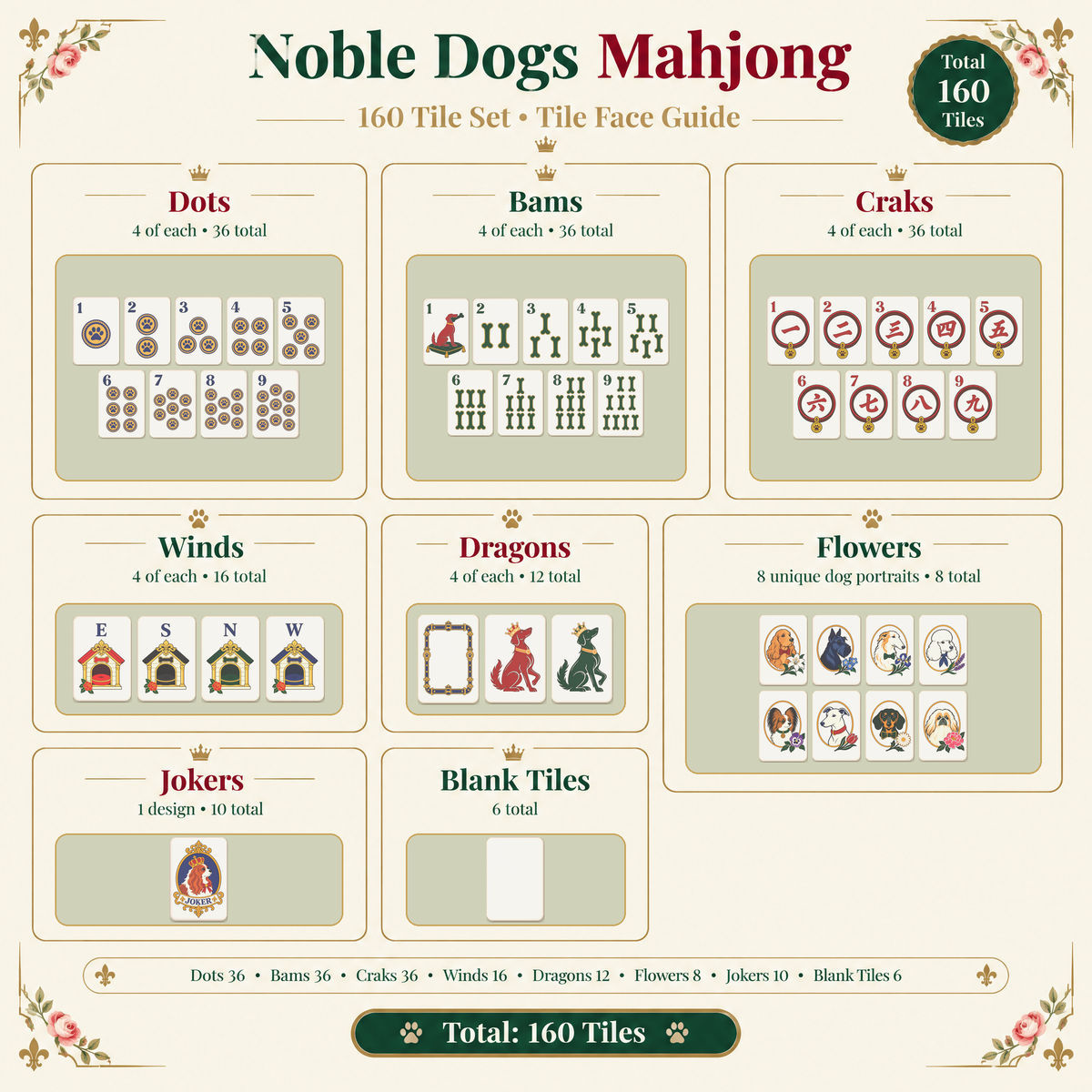
Malaysian mahjong uses 144 tiles (108 suit tiles, 16 winds, 12 dragons, plus flowers and jokers) and allows chows (1-2-3 sequences) alongside pungs and kongs—unlike American mahjong, which forbids chows. Hands are self-designed, not drawn from a published card. Wright-Patterson mahjong, played primarily in Ohio and neighboring states, uses a different hand card (not the National Mah Jongg League's annual card) and its own hand patterns, scoring, and occasionally variant tile composition. Both games share the four-player structure and wind rotations of standard mahjong but diverge on valid melds, going mahjong calls, and tile delivery. Neither is compatible with American mahjong sets or rules; if you play both, you need separate gear and must memorize each variant's card and scoring system. Mahstead builds American sets; check local clubs or regional mahjong organizations for Malaysian or Wright-Patterson equipment and instruction.
Malaysian mahjong and Wright-Patterson mahjong are not regional cousins of American mahjong—they are distinct games with separate rules, hand cards, and tile compositions. If you play American mahjong and want to try either variant, you're switching games entirely. Understanding what makes each unique helps you decide whether to learn it and what equipment you'll actually need.
What makes Malaysian mahjong fundamentally different?
Malaysian mahjong uses a 144-tile set and permits chows (sequences like 1-2-3 of the same suit), which American mahjong never allows. In Malaysian play, you can declare and expose a chow just as you would a pung or kong. Hands are not printed on an annual card; players either memorize traditional winning patterns or agree on a house hand list before play begins. Scoring is calculated by point values assigned to each tile and meld type, not by the complex multiplication system on the American card. Going mahjong typically requires a specific combination of melds (often all simples, or a mix of honors and terminals) that varies by region. A single round plays much faster than American mahjong, so games often run multiple hands in succession rather than stopping after one winner.

How does Wright-Patterson mahjong differ from American?
Wright-Patterson mahjong uses a proprietary hand card distinct from the National Mah Jongg League's annual card. The card lists winning hand patterns specific to that variant, but the patterns, tile combinations, and special hands are not the same as those in American mahjong. Players in Ohio and nearby states have maintained this regional game for decades, and it has developed its own community and tournaments. Some Wright-Patterson rules permit tiles or melds that American rules forbid; others restrict plays that American players allow. If you've learned American mahjong, you cannot simply apply that card or those rules to Wright-Patterson play—you must learn the Wright-Patterson card, scoring system, and hand-winning conditions from scratch. The tiles themselves may be standard (144 or 152), but how you use them, what counts as a valid hand, and how you score are entirely different.
Can you use an American mahjong set for either variant?
Not reliably. American sets contain 152 playing tiles plus jokers, which is the standard for American mahjong. Malaysian mahjong uses 144 tiles; if you play with an American 152-tile set, you have 8 extra tiles that must be removed before play, and the extra jokers or blanks may not fit Malaysian hand patterns. Wright-Patterson sets may require a different joker count or blank tiles than American sets provide. More critically, the hand cards are incompatible: an American set is sold with no printed card (players buy the annual National Mah Jongg League card separately), and the published American card cannot be used for Malaysian or Wright-Patterson hands. If you play both American and one of these variants, you need separate sets, separate hand cards, and separate knowledge of each game's rules.
Quick comparison: tile counts and meld rules
Variant | Tile Count | Allows Chows? | Hand Card | Joker Use | Scoring Basis |
American | 152 playing tiles | No | Annual NMJL card | Yes, in melds | Multiplication points × limit |
Malaysian | 144 tiles | Yes | House or regional list | Varies by region | Point value per tile/meld |
Wright-Patterson | 144–152 (region-dependent) | Rarely or not | Wright-Patterson card | Specific rules | Wright-Patterson point system |
American mahjong forbids chows; Malaysian embraces them. American uses a single national card updated every spring; Malaysian and Wright-Patterson rely on regional or fixed cards. Joker rules differ: American allows jokers in any meld except a pair; Malaysian rules vary by region; Wright-Patterson follows its own card's restrictions.
🀄 Shop best-selling mahjong sets →

Where do players learn these variants?
Malaysian mahjong is most common in Malaysia, Singapore, and diaspora communities across Asia and North America. Players typically learn from family or local clubs; published books on Malaysian rules exist but vary in detail by region, since no single governing body standardizes the game worldwide. Wright-Patterson mahjong is maintained by regional clubs in Ohio and nearby areas. If you want to learn either variant, search for community centers, libraries, and cultural centers in areas with established Malaysian or Wright-Patterson communities, or ask at American mahjong clubs whether members also play these variants—many experienced players know multiple games.
What to check before you buy a set for a non-American variant
Confirm the variant you're joining. Ask the group or club explicitly which rules and hand card they use. "Malaysian mahjong" can vary by region; "Wright-Patterson" is more standardized but still local.
Find out the exact tile count and composition. Does your group use 144 tiles, 152, or something else? Does the set need a specific number of jokers or blanks? Don't assume.
Get the hand card first. Buy or download the hand card your group uses before you buy a set. The card determines which tiles you need and which melds are valid.
Ask whether you can borrow a set for your first game. Most clubs welcome newcomers and lend equipment so you can try the game without committing to a purchase.
Check tile size and material against your group's tables and racks. Malaysian and Wright-Patterson sets may have different tile dimensions than American sets, and older racks or mats may not accommodate them.
If you play American mahjong and want to try a best-selling American set, you have clear standards: 152 tiles, the annual National Mah Jongg League card, and well-established rules. If you're exploring Malaysian or Wright-Patterson, you're entering a region-specific world—connect with local players first, then source your gear once you know exactly what your group needs.
🎁 See our most-loved mahjong sets & accessories →
Why American mahjong is easier to start with if you're new to all variants
American mahjong has a single national card published every spring by the National Mah Jongg League. You buy one set (with 152 tiles) and one card, and you know the rules apply wherever you play in North America. Malaysian and Wright-Patterson require you to find local players first, memorize a region-specific card, and often learn rules that vary by neighborhood or club. American mahjong clubs are easier to find in most US cities, runs of games are standardized, and learning one set of rules means you can play with nearly any American group. If you're just starting mahjong, American is the logical entry point—it's well-documented, widely taught, and equipment is straightforward. Once you've mastered American play, learning a second variant becomes a natural challenge rather than a confusing first step.
✨ Find your Mahstead set — free US shipping →

FAQ
Can I play Malaysian mahjong with an American mahjong set?
Not without removing 8 tiles—American sets have 152, Malaysian uses 144. The hand patterns and meld rules also differ. Use a set and card designed for Malaysian play to avoid confusion.
Is Wright-Patterson mahjong the same as American mahjong?
No. Wright-Patterson uses a different hand card, unique hand patterns, and its own scoring system. They share the four-player format and wind rotations, but the games are distinct.
What's the biggest rule difference between Malaysian and American mahjong?
Malaysian allows chows (1-2-3 sequences); American forbids them entirely. Malaysian hands are self-designed or drawn from a regional list, not a published national card.
Where can I find people who play Malaysian or Wright-Patterson mahjong?
Search community centers, cultural organizations, and libraries in areas with established Malaysian or Ohio-area communities. Ask local American mahjong clubs—experienced players often know multiple variants.
Do I need to buy a special set for each variant I play?
Yes, if tile count or composition differ. Always confirm with your group what tiles and hand card they use before buying equipment.
Can the same hand card work for American and Malaysian mahjong?
No. Each variant has its own card with different winning patterns, meld rules, and tile combinations. You must use the correct card for your game.


View More
View More
View More
