
Malaysian Mahjong vs. Competition Rules: What Differs
Last updated: Nov 23, 2026
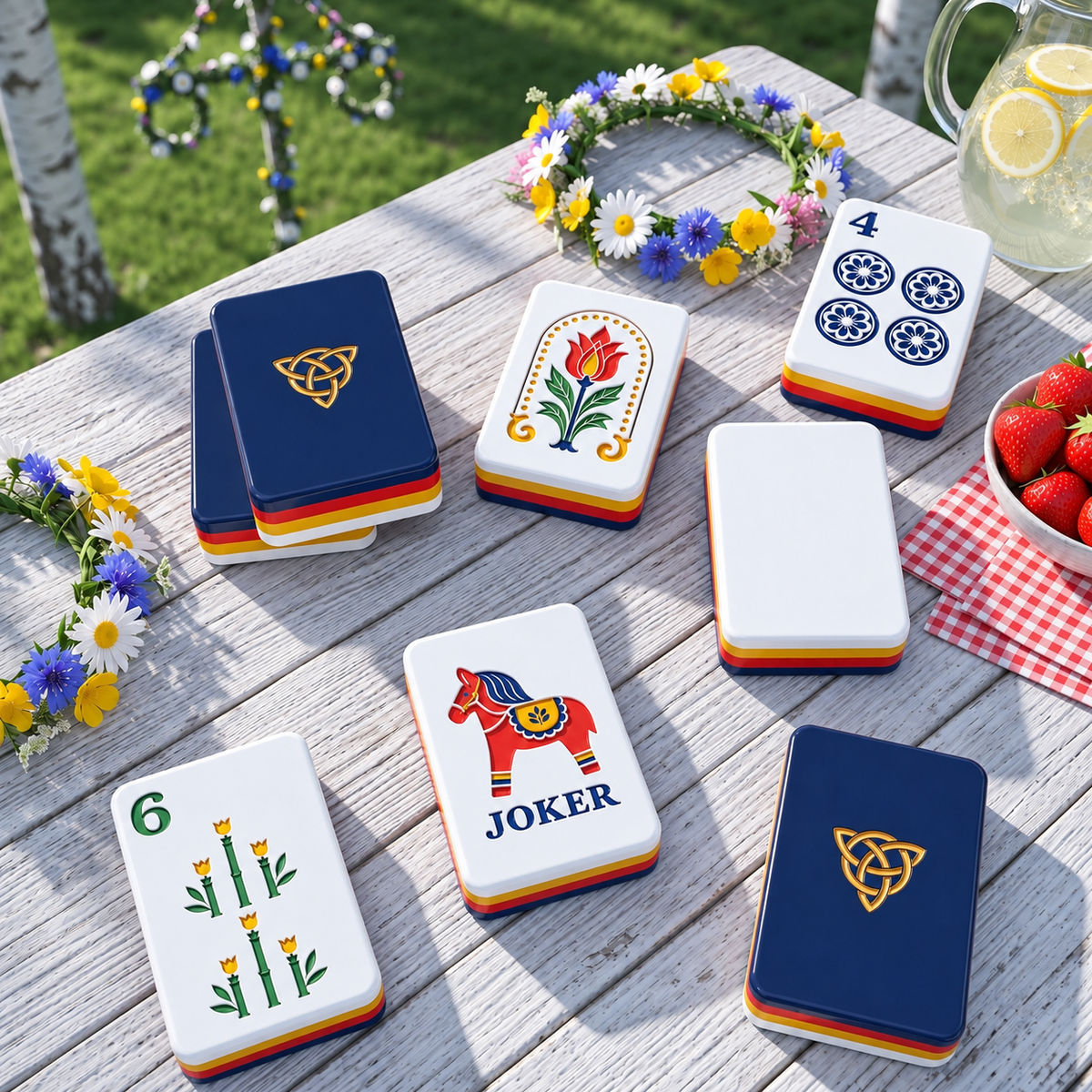
Malaysian mahjong uses 144 tiles (not American's 152) and plays without the Charleston pre-game tile pass. Hand patterns follow a simpler structure: melds are made of chows (1–2–3 sequences), pungs (three identical), and kongs (four identical), unlike American mahjong which forbids chows and uses a rigid hand card issued yearly. Malaysian play allows multiple chows and sequences to be declared and exposed during play; American mahjong exposes only pungs, kongs, quints, and sextets from the current National Mah Jongg League card. Scoring systems differ too—Malaysian uses point calculations based on melds and winning type, while American scoring is hand-specific and card-based. If you host both styles, you'll need separate tile sets: a 144-tile Malaysian or Chinese set versus American 160-tile sets, since American tiles include wind and dragon tiles in different counts and configurations than other variants.
What tile count does Malaysian mahjong actually use?
Malaysian mahjong plays with exactly 144 tiles—four copies each of numbers 1 through 9 in three suits (Bams, Craks, Dots: 108 tiles), plus 16 winds and 12 dragons (28 tiles), and 8 flowers (144 total). American competition mahjong uses 160-tile sets, which contain 152 playable tiles plus spares. The Malaysian set contains no jokers; American mahjong includes 8 jokers as part of the 152 playing tiles. This difference affects hand complexity—fewer tiles means fewer possible combinations, and Malaysian hands are structured around chow sequences, which American rules explicitly prohibit. When you're choosing equipment for your group, this is the deciding factor: if players know only American mahjong, buying a Malaysian set creates immediate confusion because the tile distribution and hand-building logic are fundamentally different.

How do hand patterns differ between the two games?
Malaysian mahjong hands consist of four melds (each 3 tiles) plus a pair (2 tiles: 14 tiles total). A meld can be a chow (like 3–4–5 Bams, a sequence), a pung (like three 7 Craks, identical tiles), or a kong (four identical). American mahjong hands are card-based only—you look up the current year's National Mah Jongg League card and must match the exact pattern shown, such as "1 Like Number" or "Similar Like Number." American hands also total 14 tiles but are locked to specific published patterns; no improvisation allowed. Malaysian play allows you to create any valid 14-tile combination from your hand and the draw. This structural difference means American players cannot simply "switch" to Malaysian play mid-season without relearning melds, calling rules, and winning conditions. If your group wants to try both, you'll need to agree ahead of time which rule set applies and provide the right tile count for each.
Do the pre-game passes (Charleston) exist in Malaysian mahjong?
No. American mahjong begins with the Charleston—a three-round ritual where each player passes tiles to left, then across, then right before the first hand begins. Malaysian mahjong starts with a simple draw: each player takes 13 tiles, and the dealer draws one to begin play. This 13-tile opening (rather than American's 14 after Charleston) reflects the fundamental difference in how rounds develop. American rules use the Charleston to randomize starting hands and add strategy before play starts; Malaysian play emphasizes in-game decision-making during the draw phase. The Charleston is so integral to American mahjong that skipping it would confuse seasoned players. If you're hosting a mixed group, running separate games by variant is cleaner than trying to adapt rules mid-session. Many groups keep a best-selling set on hand for American play and reserve a Chinese or Malaysian 144-tile set for those nights.
What scoring system does Malaysian mahjong use versus American?
Malaysian mahjong scores based on the type of winning hand (like "all pungs," "all terminals," "mixed ranks") and melds formed during play. Points accumulate; winners may score 2, 4, 8, 16, or 32 points depending on hand complexity and bonus conditions (like drawing the winning tile versus being fed one). American mahjong scoring is card-based: each published hand has a point value tied to its pattern (30, 40, 50, 60, etc. points), and the player who declares the hand wins from all three opponents. No point tiers or complexity bonuses apply—you match the card pattern, you win the stated points, full stop. American scoring is simpler to learn but less flexible; Malaysian scoring demands quick mental math and knowledge of bonus multipliers. If you teach newcomers, American mahjong's fixed scoring removes ambiguity, while Malaysian encourages players to recognize scoring opportunities. Both systems reward strategic meld-building, but in different ways.

How do in-game calling and exposure rules compare?
American mahjong allows a player to call only the tiles they actively need to complete a hand on the current card. Once called and exposed (pung, kong, quint, or sextet), the meld is locked and cannot be moved. Jokers can supplement a meld but cannot form a pair or stand alone. Malaysian mahjong permits calling any meld—chow, pung, or kong—at any time during play, and melds may be declared without a specific winning hand in mind. Some regional Malaysian rules allow "eating" (taking a discard to complete a chow with tiles from your hand) or "bumping" (forming a pung from a discard and two hand tiles), adding layers of tactical play absent in American rules. American play is more rigid: you consult the card, you call only what advances that pattern, and you stop. Malaysian play is more fluid and negotiable, with regional house rules often varying. When hosting both variants, enforce strict rule agreement at the start—write it down or reference a rulebook—because calling a meld in one game and being corrected mid-play in the other creates friction and slows the table.
🀄 Shop best-selling mahjong sets →
Comparison: Key Rule Differences at a Glance
Rule Area | American Mahjong | Malaysian Mahjong |
Tile count | 160-tile set (152 play) | 144-tile set |
Jokers | 8 (part of 152 play) | None |
Hand patterns | Card-based only, current year NMJL card | Any valid 14-tile melds + pair |
Melds allowed | Pung, kong, quint, sextet only | Chow, pung, kong |
Chows (sequences) | Forbidden | Required in many hands |
Charleston | Mandatory 3-round tile pass | None—simple draw start |
Opening tiles | 14 (after Charleston) | 13 (plus dealer draw) |
Scoring | Fixed by card pattern (30–60 pts) | Variable by hand type & bonuses (2–32 pts) |
Win condition | Must match exact card pattern | Any valid 14-tile hand with pair |
House rules | Standardized via NMJL card | Often regional variation |
What should you check before hosting both variants?
Tile set: Confirm you have the right count (160-tile for American, 144-tile for Malaysian/Chinese). Mixing sets mid-game stalls play. Rule clarity: Write or print the house rules for whichever game you're running. Verbal agreement alone leads to disputes when someone forgets. Player experience: Group Malaysian and American players separately on your first night, or pair experienced players with learners to explain variant-specific calls. Scorecard: American uses the card; Malaysian uses a notepad or phone calculator. Have both ready. Charleston vs. no-Charleston: The pre-game ritual is so distinctive that skipping it for American players confuses them. Treat it as non-negotiable if you're playing American rules.
🎁 See our most-loved mahjong sets & accessories →
Many of us host weekly games with players who've learned only American mahjong, so we keep a dedicated 160-tile set with engraved American titles for consistency. If you're exploring Malaysian mahjong, buy a separate 144-tile set to avoid accidental mixing. Label your cases clearly—nothing derails a Tuesday night faster than discovering mid-hand that you've pulled the wrong set. We also recommend a mat that supports both and a rack with pushers sized for your tile type, so you can move between variants without fumbling.
Who plays each variant—and does it matter for your group?
American mahjong is dominant in the US, Canada, and some English-speaking communities; it follows the National Mah Jongg League standard. Malaysian mahjong is played across Malaysia, Singapore, and parts of Southeast Asia. Chinese and Taiwanese variants also exist and use 144-tile sets with different scoring and calling rules. Riichi mahjong (Japanese) uses 136 tiles. If your group is multi-generational or includes players with family roots in Malaysia or China, knowing which variant they grew up with helps you communicate. Some groups rotate variants seasonally—American in fall/winter using the card, Malaysian in summer for casual play. Others stick to one. There's no wrong choice; consistency matters more than which game you pick. When learning either variant, commit to 4–6 weeks of the same rules before rotating, so muscle memory and calling reflexes settle in.
✨ Find your Mahstead set — free US shipping →

FAQ
Can I use the same tiles for American and Malaysian mahjong?
No. American uses 160-tile sets (152 playable + spares) with jokers; Malaysian uses 144-tile sets with no jokers. Tile counts, wind distribution, and dragon configurations differ. Using the wrong set causes miscounting and rule confusion.
Which variant is easier to learn—American or Malaysian?
American is more rigid (follow the card, fewer calling options), which some find easier. Malaysian is more flexible but demands quicker mental math for scoring. Beginners often find American's fixed rules less intimidating; experienced players enjoy Malaysian's strategic depth.
Do Malaysian rules allow "eating" from the discard pile?
Regional Malaysian rules vary. Some allow eating (forming a chow from a discard + hand tiles); others do not. Always clarify house rules before play. Check a Malaysia-specific rulebook if your group is learning that variant.
Why does American mahjong ban chows?
Historical divergence. American mahjong evolved into a card-based game using fixed patterns, eliminating chows to simplify calling and prevent disputes. Chinese and Malaysian variants retained chows as core building blocks.
If I host both games, should I buy two sets?
Yes. Label them clearly (American vs. Malaysian) to prevent mid-game mix-ups. A separate tile set for each variant ensures consistent play and avoids the cost and confusion of trying to adapt one set to two rule systems.
What happens if a player calls a meld wrong in Malaysian play?
House rules vary. Some groups allow a "take-back" if caught before the next draw; others penalize it as a dead hand. Agree on this before play starts. American rules are stricter—miscalls end the hand and usually cost the player tiles or points.


View More
View More
View More
