
Hong Kong Mahjong Flowers and Bonus Tiles: What They Are & How to Play
Last updated: Nov 23, 2026
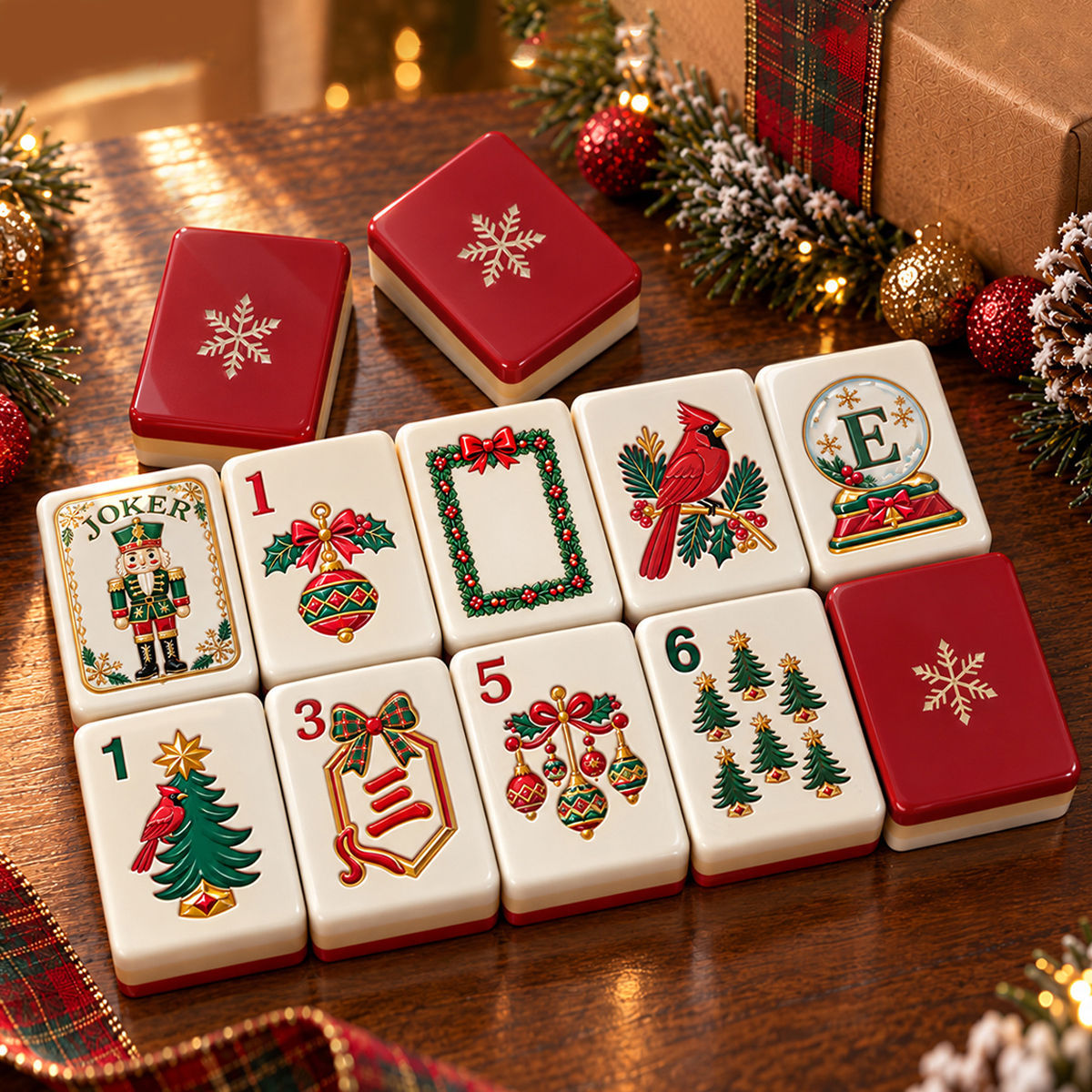
In Hong Kong mahjong, flowers and bonus tiles are mechanics, not decorations. They're drawn at the start of each hand, scored instantly, and then replaced—a system that fundamentally changes how you calculate winning value and approach the game. Understanding this system is essential if you play across variants or host games with players from different backgrounds.
What are flowers and bonus tiles in Hong Kong mahjong?
Flowers and bonus tiles are eight special tiles in the Hong Kong set, separate from the core number and honor tiles. Flowers (Spring, Summer, Autumn, Winter) and bonus tiles (Plum, Orchid, Bamboo, Chrysanthemum) are typically printed with seasonal imagery. When you draw one during the initial deal or as a replacement draw, it scores points and is set aside; you draw again to restore your hand to 13 tiles. No other variant (American, Chinese, Riichi) handles them this way.
🀄 Shop best-selling mahjong sets →

How do you score flowers and bonus tiles?
Each flower and bonus tile typically awards 1 point to your base hand before play begins. If you're the dealer and draw two flowers, you gain 2 points before discarding starts. Some regions or house rules award 2 points per tile or double flowers on the dealer's position. Scoring depends entirely on your group's agreed ruleset—ask before you play, because Hong Kong variants are local and house-specific. The key difference from American mahjong is that these points are automatic; there's no decision-making involved, and jokers cannot substitute for them.
Why don't American mahjong sets include flowers in play?
American mahjong uses only the 152-tile standard: three suits (Bams, Craks, Dots) × 1–9 each, 16 winds, 12 dragons, and 8 flowers. Those eight flowers are decorative or serve as blanks in a spare set; they never count during play because the National Mah Jongg League card does not recognize flower-based scoring mechanics. American mahjong's hand structure depends on exposed sets (pungs, kongs, quints, sextets) and pair combinations from the card—not on automatic bonus draws. If your game uses the League card, flowers are cosmetic only. However, if you're exploring Hong Kong or classical Chinese mahjong, flowers become active scoring elements that reshape the entire hand value calculation.
How do Hong Kong flowers differ from Chinese and Riichi variants?
Hong Kong mahjong is distinct because flowers and bonus tiles are mandatory scoring draws at hand start—you cannot skip them or opt out. In classical Chinese mahjong, some regions use flowers, others do not, and scoring varies. Riichi mahjong (Japanese) has no flowers at all; its bonus system relies on dora tiles (flipped tiles that trigger point multipliers) and fu/han calculations. Taiwanese mahjong also omits traditional flowers but uses a completely separate payout structure. The Hong Kong system is the most immediate: draw, score, replace, play. No other variant integrates bonus tiles this tightly into the opening sequence.
What tiles do you need and where do you draw them?
At the start of a Hong Kong hand, each player draws 13 tiles from the wall. Before discarding begins, players reveal any flowers or bonus tiles they drew. Those tiles are placed aside (typically at the end of your rack or on the mat in front of you), and you draw replacement tiles from the wall one at a time, going around the table, until your hand is restored to 13. You continue this replacement process whenever anyone draws a flower or bonus tile during the hand. This means the wall is drawn from multiple times before the main "play" phase even starts—a sequence American players rarely encounter. If you host both American and Hong Kong games, a quality mahjong mat with clear zones for player hands, the wall, and set-aside tiles will make the process less confusing for beginners.

What are the common mistakes when playing Hong Kong flowers?
Forgetting to replace the flower draw: New players often set aside a flower but forget to draw a replacement, leaving their hand at 12 tiles. This breaks the entire hand structure.
Misidentifying which tiles are flowers: Not all seasonal tiles are flowers. In some Hong Kong sets, flowers are distinct from honors and must be clearly marked. If your set's artwork is faded or ambiguous, you'll spend time arguing. Our best-selling mahjong sets feature crisp, high-contrast designs that make flowers unmistakable.
Mixing American and Hong Kong scoring: American players sometimes assume flowers are worth 0 or are optional. In Hong Kong play, they're always drawn and always scored.
Drawing a flower during the hand and replacing incorrectly: If Player A draws a flower mid-hand, they set it aside and draw again immediately, not after others discard. The wall draw happens out of turn.
Not confirming house rules before play: Hong Kong mahjong has no official league like American play does. Every group sets its own flower-point values, replacement order, and payout rules. Ask. Write it down if you're the host.
Mistake | Why it breaks the game | How to prevent it |
No replacement draw | Hand stays 12 tiles; hand cannot win | Announce "flower" clearly; draw before playing |
Misidentified flowers | Argument over tile identity | Use sets with bold artwork; learn your set |
Mixing rule systems | Scoring dispute; game stops | Agree on rules before the Charleston |
Wrong replacement timing | Turn order fractures | Draw immediately; only then discards resume |
Unconfirmed house rules | Payout chaos mid-game | Host writes rules; all players sign off |
What should you check before you buy a Hong Kong mahjong set?
Before purchasing a set, confirm:
Flower clarity: Can you instantly distinguish flowers from other tiles? Worn or faded artwork causes delays and arguments.
Tile quantity: Standard Hong Kong sets have 144 tiles (36 per suit, 16 winds, 12 dragons, 8 flowers, no extra jokers). Verify your set includes all eight flowers and that they're not mixed with honor tiles.
Language/artwork: Some sets print Chinese characters; others use symbols. Choose what your group reads fluently.
Replacement tiles: If flowers are actively drawn, you'll want backup tiles (spares) in case of damage during frequent wall draws.
House rules you'll use: Before you buy, know whether your group scores 1 or 2 points per flower, who draws flowers first (dealer or non-dealer), and what happens to flowers during win/loss scoring. Different Hong Kong regions use different rules.
🎁 See our most-loved mahjong sets & accessories →
How to host a Hong Kong mahjong night
If you're transitioning from American mahjong or hosting players new to Hong Kong rules, do this:
Set up the mat clearly: Designate a visible zone for flowers/bonus tiles so they're never confused with hand tiles. A mahjong mat with labeled zones removes confusion.
Walk through one hand before real play: Deal 13 tiles. Have each player reveal flowers and draw replacements. No scoring yet—just movement and replacement rhythm.
Write the agreed scoring on a card: How many points per flower? Does the dealer score double? Is there a bonus for drawing all four flowers in one hand? Post it where everyone can see.
Clarify the wall draw order: In Hong Kong play, when someone draws a flower mid-hand, does the next player still discard normally, or does the wall draw happen first? Agree now.
Play slowly the first hand: Money doesn't change hands until the second or third hand, when everyone's comfortable.
Have spare tiles and a backup set on hand: Flowers are drawn frequently; damage happens. Backups prevent game stops.
✨ Find your Mahstead set — free US shipping →
When to use Hong Kong rules instead of American
Choose Hong Kong mahjong if:
Your group includes players from Hong Kong, Singapore, Malaysia, or Taiwan who learned on Hong Kong house rules.
You want faster hands (bonus draws add scoring, so hands end quicker).
You prefer automatic scoring over card-based hand selection.
You're teaching mahjong history and want to show variants beyond the American League card.
Choose American mahjong if:
Your group values standardized, published rules (the National Mah Jongg League card).
You want consistent scoring and hand definitions across all games.
You prefer longer, strategic hands with no surprise bonus draws.
If you host both, engraved sets with clear titles help players identify which variant you're playing and keep energy high.

FAQ
Do Hong Kong mahjong flowers count toward a winning hand?
No. Flowers and bonus tiles score points before play and are set aside. They do not appear in your final hand or on the card. They are pure bonus points added to your base hand value.
Can I use an American mahjong set to play Hong Kong mahjong?
Not if you need eight distinct flower tiles. American 160-tile sets include eight flowers, but the National Mah Jongg League card treats them as blanks or decorative. If your group agrees to treat American flowers as Hong Kong flowers and score them, you can, but the tile designs may not match Hong Kong imagery, causing confusion.
How many points do flowers add to a winning hand in Hong Kong mahjong?
Typically 1 point per tile, but house rules vary widely by region. Some groups award 2 points, some double flowers for the dealer, some add bonuses for matching flowers. Ask your group before playing.
What happens if no one draws a flower during a hand?
Play proceeds normally. No bonus points are added that hand. All hands in Hong Kong mahjong start with the potential for flower draws, but not all hands include them.
Can I substitute a joker for a flower tile in Hong Kong mahjong?
No. Flowers and bonus tiles are fixed; jokers (if the set includes them) cannot replace them. Flowers must be drawn from the wall to score.
Is Hong Kong mahjong played with 144 or 152 tiles?
Standard Hong Kong mahjong uses 144 tiles (no extra jokers). American mahjong uses 152 tiles (144 base + 8 jokers that can substitute for any tile during play). The systems are incompatible in structure.
How do I teach beginners Hong Kong flowers without confusing them?
Walk through one complete flower-draw cycle before any hand begins. Deal, reveal flowers, replace, then play one full hand. On the second hand, speed increases naturally. Use a mat with clear zones. Post your house rules visibly.


View More
View More
View More
