
Malaysian Mahjong Strategy: Win More Games Playing Hong Kong Rules
Last updated: Nov 23, 2026
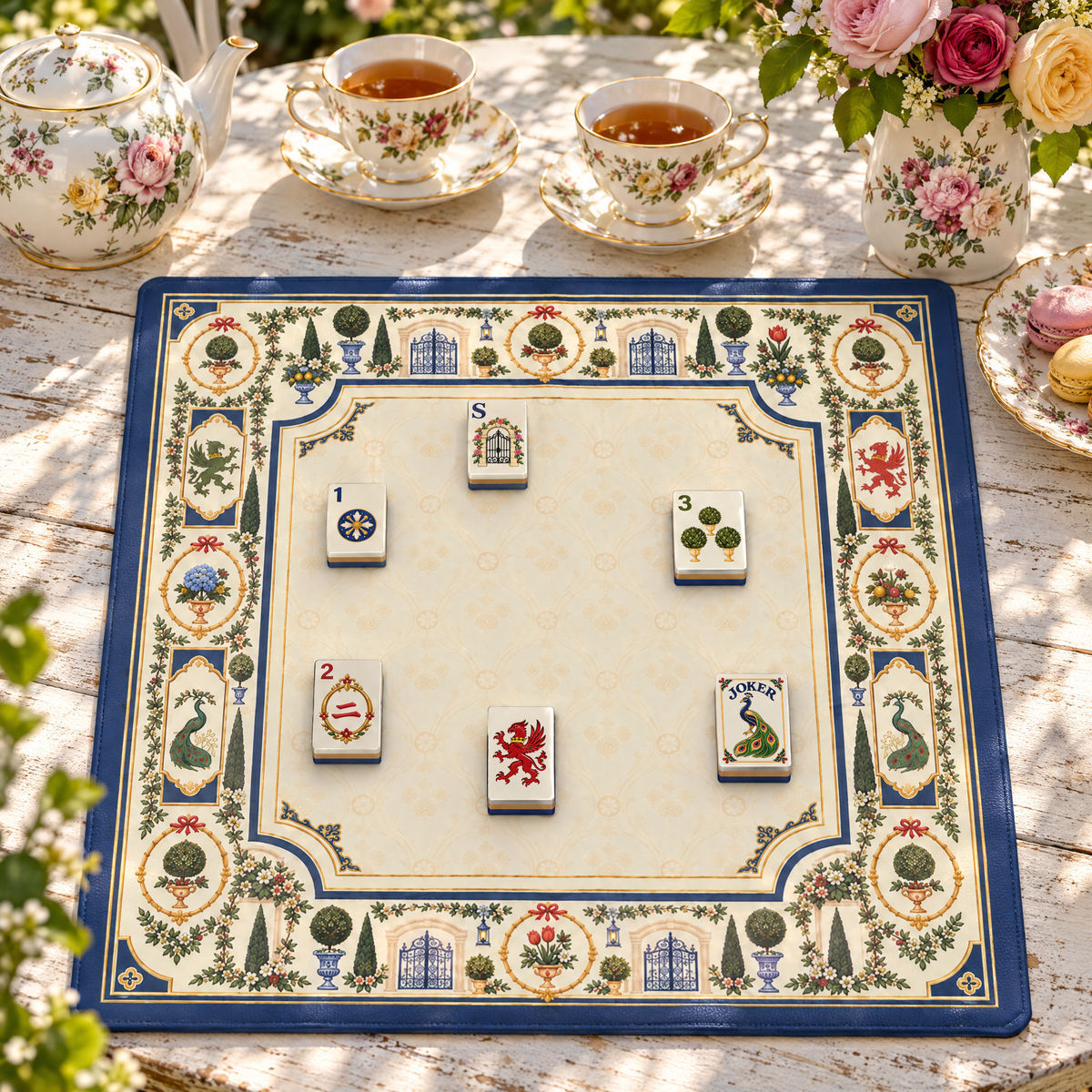
Malaysian mahjong uses Hong Kong rules: 13 tiles in hand + 1 drawn, sequences (chows) are legal and can be exposed, and winning hands need one pair + four melds (triplets, quints, or sequences). Unlike American mahjong's rigid seasonal card, Hong Kong mahjong is pattern-free—any combination works so long as it follows the meld rule. Speed is the first strategic shift: players declare melds openly, so the game moves faster and tile flow is visible. Second, honor tiles (winds and dragons) score high and are contested early; holding them creates pressure on opponents. Third, you must learn to read both the discard pile and the wall—what's been drawn tells you what's safe to play. A full game runs 4–8 hands (rounds), and scoring depends on complexity and who wins. The core tactic is balancing aggression (melding often, discarding safely) with hand management (flexibility beats rigidity). We host American mahjong games weekly, but when we play Hong Kong rules, the tempo and psychology change completely—you're reading people faster and committing earlier to your hand shape. 🀄 Shop best-selling mahjong sets →
How does Malaysian mahjong differ from American mahjong strategy?
American mahjong requires matching the current year's National Mah Jongg League card—hands are predetermined patterns. You cannot expose sequences (chows); only pungs, kongs, and sextets. Malaysian (Hong Kong) mahjong uses no card: any legal meld pattern wins. Sequences count as valid melds and are exposed openly during play. This means Malaysian strategy hinges on adaptability—you pivot your hand based on live discards and visible melds, not a fixed pattern sheet. American players plan backward from the card; Malaysian players build forward from opportunity. Speed dominates Malaysian play; caution drives American play. The shift requires retraining your hand-reading instinct: in Hong Kong rules, a mid-game discard you hadn't considered becomes valid if your hand shape allows it.

Why is hand speed more important in Malaysian mahjong?
Every exposed meld in Malaysian mahjong is public information—four players see exactly what you're building. This transparency collapses decision time: if you sit on a hand too long, rivals infer your waiting tile and discard around it. American players can hide their progress behind the card and jokers; Malaysian players cannot. The wall empties faster because drawn tiles feed exposed melds continuously. This forces a hard choice: commit early (meld often, reduce flexibility) or stay flexible (hold tiles longer, risk falling behind). Most Malaysian tables favor the aggressive style because the player who declares first wins the hand—hesitation costs the win to someone faster. Speed also matters in calling sequences: if you can legally form a chow from another player's discard (called "eating" in Cantonese), you must do it before the player after you acts. That split-second decision is purely instinctive if you've played enough.
Which honor tiles should you prioritize in Malaysian mahjong?
Dragons (Red, Green, White) and winds are the highest-value tiles in Hong Kong play. Red Dragon pairs with Cracks, Green with Bams, White with Dots—and White also serves as zero in scoring. Early in the hand, holding three or four of one dragon breed signals strength; most tables will assume you're building a pung (triplet) and avoid discarding that suit. This creates a psychological edge: you can hold dragons defensively (to block opponents) or offensively (to complete a pung or kong). Winds follow suit: holding three Easts or three Wests early in a round when that wind is relevant (East plays against East wind tiles, for example) amps pressure. The core tactic is timing: discard your honor "floaters" (single dragons or winds not part of your meld set) in the first four or five turns, before opponents sense weakness. Once three or four honors are gone, the remaining honor tiles become scarce—holding them late-game makes you a threat. Late-game honor retention also signals you're fishing for a high-value hand, which prompts defensive discards from rivals.
How do you read the discard pile and wall in Malaysian mahjong?
The discard pile is open history; the wall shows draw order. In Malaysian mahjong, every tile played is a signal. If East discarded two Bams early, Bams became "hot"—hitting the wall, few Bams remain. Conversely, if no Dots have been played by turn six, Dots are "cold"; they're still in the wall or in hands. Cold tiles are safer to discard. The wall tells you density: if only one Red Dragon hit the discard pile, three Red Dragons remain in play—they're contested. Reading the wall means counting: 108 tiles in three suits (36 per suit) × four copies each. On turn three, count how many of each number in each suit have been exposed or discarded; subtract from four to estimate remaining. This mental tally isn't perfect, but it informs probabilities. Most experienced Malaysian players count the most dangerous tiles—dragons, honor winds, and the tile they suspect someone is waiting for. If Player A melded two Bam sequences and then discarded a 5 Dot, Player A is likely not waiting for Dots; a 5 Dot becomes a "safe" discard for you. The real skill is negative counting: knowing what's not a threat is as valuable as knowing what is.
What's the role of jokers and wildcards in Malaysian strategy?
Hong Kong mahjong rules typically do not use jokers in the formal game, though some casual Malaysian tables adopt wildcard house rules (often one or two printed jokers, used in quints or high-value sets). If your table plays with wildcards, they function differently than American jokers: they can substitute for any tile within a meld, but cannot be held as a single tile or a pair, and their use inflates the meld's value. Strategy shifts when wildcards are in play: hands with wildcards become less reliable defensively (you can't hide them as blanks) and more ambitious offensively (you can complete partial melds faster). American mahjong relies on jokers heavily—your hand is often shaped around joker placement. Malaysian formal play minimizes jokers, forcing players to build melds with rigid tile matching. If you're transitioning from American to Malaysian mahjong, expect to feel tile-poor without jokers; the remedy is learning to fold weaker hand branches early and commit to the strongest path. This discipline separates casual and strong Malaysian players.

How do you balance aggression and safety in Malaysian hand management?
Strategy | When to use | Risk | Reward |
Meld first | Rounds 2–4, strong suit visible | Fewer hand options | Board control, quick win |
Hold and wait | Rounds 5–7, hand still scattered | Lose the hand to someone faster | Flexibility to pivot |
Defensive discard | When rival is one tile away from win | Miss your own win opportunity | Stop the leader |
Aggressive honor hold | Early rounds, dragons/winds collected | Rivals deduce your meld | Prestige and high score |
The tension in Malaysian mahjong is perpetual: every meld you expose shrinks your flexibility, but staying closed loses you the race. A hand that melded by round three often wins by round five—slow hands rarely win. The table dynamic matters: if you're trailing (fewer melded sets than rivals), aggression is correct. If you're ahead (two melds to their one), caution extends your lead. Most Malaysian strategy texts teach a 60–40 split: in six-hand games, three hands played aggressively (meld early, commit hard) and three hands played conservatively (wait for a strong shape, then meld in a cluster). This rhythm prevents predictability and lets you adapt to the specific opponents and tile flow. Novice players either meld everything instantly (and get stuck with unmatched tiles) or hold too long (and lose to someone faster). The skill is the decision point: the exact moment in turn 3 or turn 4 when you know your hand will either win or stall—that's when you shift from closed to open play.
🎁 See our most-loved mahjong sets & accessories →
What tile sets and accessories work best for Malaysian mahjong practice?
If you play Malaysian mahjong regularly, a tile set with clear suit markings is non-negotiable—the pace demands instant tile recognition. Acrylic tiles with engraved numerals (not painted) stay legible through fast shuffles and extended sessions. A dedicated mahjong mat with a felt playing surface reduces tile noise, speeds cleanup, and protects tiles from wear. Racks with pushers are especially valuable in Hong Kong play: the pusher lets you organize your closed hand into melds-in-progress without touching the tiles, so you can signal your hand shape without revealing it. A travel bag or case matters if you rotate between Malaysian tables or host games at different venues; tiles and racks remain organized and protected. We recommend starting with a best-selling set paired with a mat—that's the minimum kit for serious Malaysian mahjong. Add a rack if you have hand or arthritis concerns, or if you want to host games where players learn faster by organizing visually.
What to check before you buy
Tile size and weight: Malaysian tables vary in speed; heavier tiles (thicker acrylic or wood) slow chaos and reduce mis-shuffles; lighter tiles speed play.
Suit contrast: Ensure Bams, Craks, and Dots are visually distinct even in dim light. A mat with a dark felt surface makes lighter tiles pop.
Joker count: Confirm whether your set includes jokers and whether your table rules permit them; formal Hong Kong sets include none.
Rack compatibility: If buying racks separately, verify they accommodate all four players and support your set's tile size.
Storage space: Hong Kong sets are compact (13 tiles per player + 1 draw), but a mat plus racks require a dedicated bag or storage shelf.
✨ Find your Mahstead set — free US shipping →
Comparing Malaysian and American strategy in one table
Element | American Mahjong | Malaysian (Hong Kong) |
Hand source | Current year's card | Any legal 4-meld + pair pattern |
Meld types | Pungs, kongs, sextets (no chows) | Pungs, kongs, chows (sequences) |
Meld exposure | Only when needed | Often, early, to show strength |
Joker role | Essential; carries meld value | None (or optional house rule) |
Winning speed | 8–12 turns average | 5–8 turns average |
Key skill | Card pattern matching | Tile flow reading & speed |
Strategy focus | Rigidity & risk management | Flexibility & aggression |

FAQ
Can you play Malaysian mahjong with an American mahjong set?
Technically yes, but not ideally. American sets include eight jokers (not used in formal Hong Kong play) and often include blank tiles. You'll need to remove or ignore those tiles. The real issue is psychological: American sets are designed for hand-building patterns, not live sequence-building. You'll adapt faster with a standard 108-tile set (suits + honors, no jokers).
What's the difference between "eating" a tile and "ponging" in Malaysian mahjong?
"Eating" (in Cantonese chi) means forming a sequence (chow) from another player's discard; it's only legal if it's your immediate turn and the sequence is valid. "Ponging" (pung) means claiming a discard to complete a triplet. Both interrupt normal turn order, but "eating" is riskier because it locks your hand into a specific suit. Pung (triplet) offers more flexibility.
How do you score a hand in Malaysian mahjong?
Scoring varies by house rules and regional variant (Cantonese, Singaporean, etc.). Most systems award points for: the winning meld type (simple vs. complex), honor tile content (dragons and winds are high-value), and concealed vs. exposed melds (concealed = double points). A full house rules sheet is essential before your first game; ask the table organizer for their specific scoring ladder.
Should I learn American mahjong first, or can I start with Malaysian mahjong?
Either works, but they're fundamentally different. American mahjong is pattern-memorization and joker-juggling; Malaysian is tile flow and speed. Many players learn American first (more widely available, slower, easier to absorb rule details), then transition to Malaysian as a mental exercise. If you love strategy games and fast decision-making, start with Malaysian.
What's the biggest strategic mistake beginners make in Malaysian mahjong?
Melding too early without a clear end-game shape. A meld that looks strong in round two often leaves you stranded in round four because you've locked yourself into tiles that don't complete. Strong Malaysian players hold closed hands longer, gathering data about the wall and discards, then meld in a rapid cluster once they see the winning path. Patience (not passivity) is the edge.
How do I know when to defend against a player who's close to winning?
Count their exposed melds. If a rival has three complete melds (9 tiles exposed) and only needs a pair, they're one turn away from winning—every tile you discard is a gamble. Discard the slowest, coldest tiles (suits with few appearances in the discard pile or wall). If your own hand is weak, sacrifice safety and discard honored tiles last, betting that they're less likely to fit their pattern. This is called "danger-tile management" and is pure probability, not guesswork.


View More
View More
View More
