
What Set Do You Need for Vietnamese Mahjong?
Last updated: Nov 23, 2026
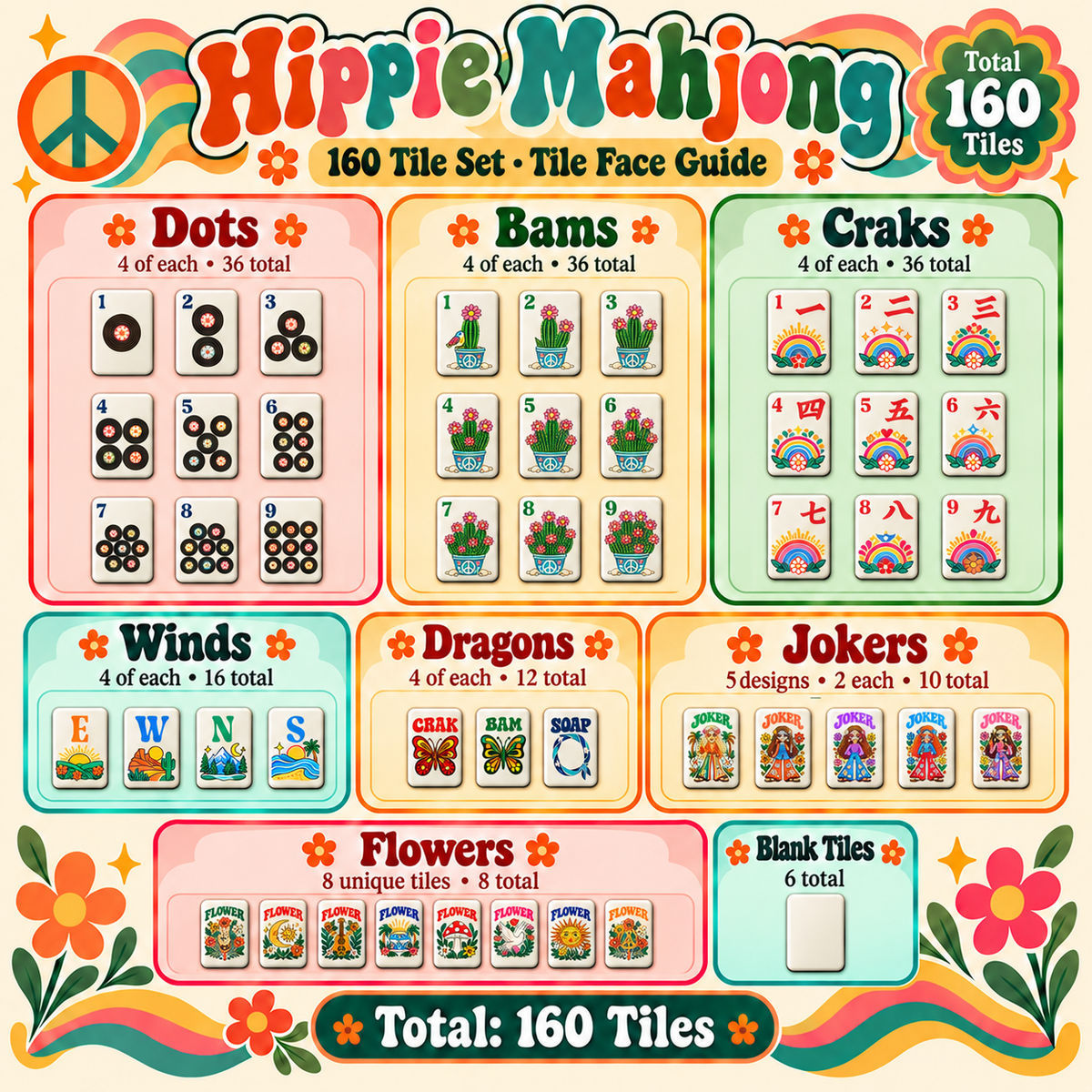
Vietnamese mahjong uses a standard 152-tile American set—the same three suits (Bams, Craks, Dots), winds, dragons, flowers, and jokers. The key difference: Vietnamese play follows Hong Kong or Singaporean rules, not the American League card system. This means you can make chows (1-2-3 sequences), call tiles from other players, and play with different hand patterns entirely. You'll need one acrylic or resin American set with clear, readable tiles; any quality set works. Expect to play four-player rounds lasting 30–60 minutes per hand. Most Vietnamese groups play for fun or small stakes, rarely tournament rules. If your group is brand-new, confirm whether they follow Hong Kong, Singaporean, or Vietnamese-house rules first—rule variants change strategy, tile values, and winning combinations significantly.
🀄 Shop best-selling mahjong sets →
How is Vietnamese mahjong different from American mahjong?
American mahjong locks you to one year's National Mah Jongg League card. You expose only pungs (three identical tiles), kongs (four), quints (five), and sextets (six)—no sequences allowed. Vietnamese mahjong, by contrast, allows chows: exposed runs like 4-5-6 Bams count as valid melds. Winning hands come from traditional Hong Kong patterns—pairs, pungs, chows, and kongs in any combination—not a printed card. Jokers work differently too: in American play, jokers never go in single-tile or pair slots; in Vietnamese, jokers are often wild and substitute for any tile in any position. This openness means the game feels faster, more social, and less rule-dependent. Most Vietnamese players I know prefer it because house variations are common and negotiable—you adapt rules to your table, not to a national standard. Both games need the same physical tiles, but the strategy and hand reading are completely different.

What tiles do you actually get in a Vietnamese-ready set?
Any 152-tile American set contains exactly what you need: 108 suited tiles (Bams, Craks, Dots, all numbered 1–9, four of each), 16 winds (four of each: North, East, West, South), 12 dragons (four Red, four Green, four White), 8 flowers, and 8 jokers. That's 152 tiles total—the universal count for both American and Vietnamese play. Vietnamese groups don't require special tiles; a standard acrylic or resin set works perfectly. The only practical difference: Vietnamese players sometimes mark or house-rule the joker count, so sets that come with spare jokers (like a 160-tile set with extra pieces) give you flexibility if your group plays with house rules about how many wilds are active. Look for tile sizing: Vietnamese players typically prefer tiles between 28–32 mm for comfortable hand-holding and table play. Clear engraving matters because reading tiles quickly during rapid play is essential. A set that clearly distinguishes Bams (bamboo symbols), Craks (cracked marks), and Dots (circles) prevents costly misreads.
How do you pick a set: acrylic vs. resin vs. bamboo?
Material comparison:
Material | Best for | Durability | Cost basis | Noise | Storage |
Acrylic | Weekly players, travel | 3–5 years | entry-level | medium | lightweight, compact |
Resin | Serious players, display | 5+ years | mid-range | low, pleasant | heavier bags needed |
Bamboo | collectors, showpieces | variable | premium | varies | special cases |
Acrylic tiles are the workhorse for Vietnamese groups. They're affordable, lightweight, and durable enough for weekly play. Acrylic clacks pleasantly on a mat, tiles don't crack easily, and they're easy to clean if spilled on. Resin tiles feel more substantial and are slightly heavier—some players prefer the weight distribution for hand play. Resin also looks nicer if you display your set between games. Bamboo is rare and primarily for collectors; it's not practical for regular play. For a new Vietnamese group starting fresh, acrylic from Mahstead's best-selling collection is the practical choice. Most sets in that range are acrylic with readable symbols, durable enough for years of weekly play, and come with a mat or bag option if you want to expand.

What do you need beyond the tiles themselves?
Tiles alone aren't quite enough for comfortable play. A mahjong mat gives you a dedicated playing surface: it protects tiles from scratches, defines each player's zone, and keeps tiles from sliding across a wooden table. A mat also lets you keep a clean hand layout during Vietnamese play, where exposing and calling melds happens often. Many Vietnamese groups also use racks with pushers to hold their tiles upright and organize melds neatly—this is almost essential if you're calling chows and pungs frequently, since you need to see all tiles at once. A soft bag or case protects your set during transport between players' homes. If your group rotates hosting duty, a bag is non-negotiable. A die or pair of dice is standard; Vietnamese play uses them to determine the starting hand and rotate turns. Finally, keep the NMJL card handy even if you're not playing American rules—it's a reference for tile names and symbols, useful when teaching newcomers. Start with tiles and a mat; add racks and a bag as the group settles.
🎁 See our most-loved mahjong sets & accessories →
How do Vietnamese rule variants actually change what you buy?
Most Vietnamese groups play one of three rule sets: Hong Kong (the most common variant played in Vietnam), Singaporean (similar but with different scoring), or house rules (custom tweaks). All three use the same 152 tiles, so your set never changes—but the rules change how many jokers stay active, whether you can claim tiles out of turn, and how many points certain hands are worth. Some conservative Vietnamese groups even mix American League card hands into their play, creating a hybrid ruleset. The practical impact: confirm your group's rules before buying, because you might discover mid-game that the group plays with 6 active jokers (house rule) instead of 8, or that "loose" calling is allowed (any player can claim a discarded tile, not just the next player). These variants don't affect what set you buy, but they do affect how you learn the game and whether you need to house-rule your own tiles. If your group is just forming, buy a standard 152-tile American set and negotiate the rules together at the table. Once settled, you won't change the tiles—you'll just adapt house-rule variants as needed.
✨ Find your Mahstead set — free US shipping →
What to check before you order
Confirm the tile count. Vietnamese play requires exactly 152 tiles in active play. Mahstead sets come as 160-tile collections (152 playing tiles plus spare pieces), which is perfect—the spare jokers or blanks let you replace damaged tiles or accommodate house rules. Don't buy a set marketed as 144 or 166 tiles unless you understand your group's specific needs.
Verify tile size and readability. Vietnamese players need quick tile recognition during fast-paced call-outs. Tiles should be at least 28 mm and have clear, distinct symbols. Engraved (not painted) tiles last longer and remain readable after years of play.
Ask your group about joker rules first. Some Vietnamese groups use 8 jokers; others activate only 4 or 6. Knowing this in advance prevents you from having to swap jokers mid-game. A set with spare jokers gives you flexibility.
Check if you need a mat and racks. For Vietnamese play with frequent calling and exposing, a mat and racks are almost essential—not optional. Budget for these if you're hosting the first game.
Confirm free shipping. Mahstead ships across the US free, so factor that into your cost basis. Check the current product page for any set-specific details before finalizing your order.

FAQ
Can I use an American mahjong set for Vietnamese play?
Yes. Vietnamese mahjong uses the exact same 152 tiles as American mahjong. The difference is the rules, not the tiles. Any quality American set works perfectly for Vietnamese play.
Do I need special jokers for Vietnamese mahjong?
No. Vietnamese play uses the same 8 jokers that come in a standard American set. Some house rules reduce the active count to 4–6, but you never need different jokers—just agree on your group's count beforehand.
What's the biggest rule difference I need to know?
Vietnamese mahjong allows chows (1-2-3 sequences), which American mahjong does not. Players can call tiles from other discards during their turn, and hands are won using traditional Hong Kong patterns instead of the League card.
Should I buy engraved tiles or painted tiles?
Engraved tiles last much longer and stay readable after heavy play. Vietnamese groups tend to play frequently, so engraved is the practical choice. Painted tiles fade and chip with time.
Is acrylic or resin better for Vietnamese play?
Acrylic is lighter, more affordable, and durable enough for weekly games. Resin is slightly heavier and lasts longer if you play very frequently. For a new group, acrylic is the standard choice.


View More
View More
View More
