
Is Mahjong Harder Than Go? The Real Comparison
Last updated: Nov 23, 2026
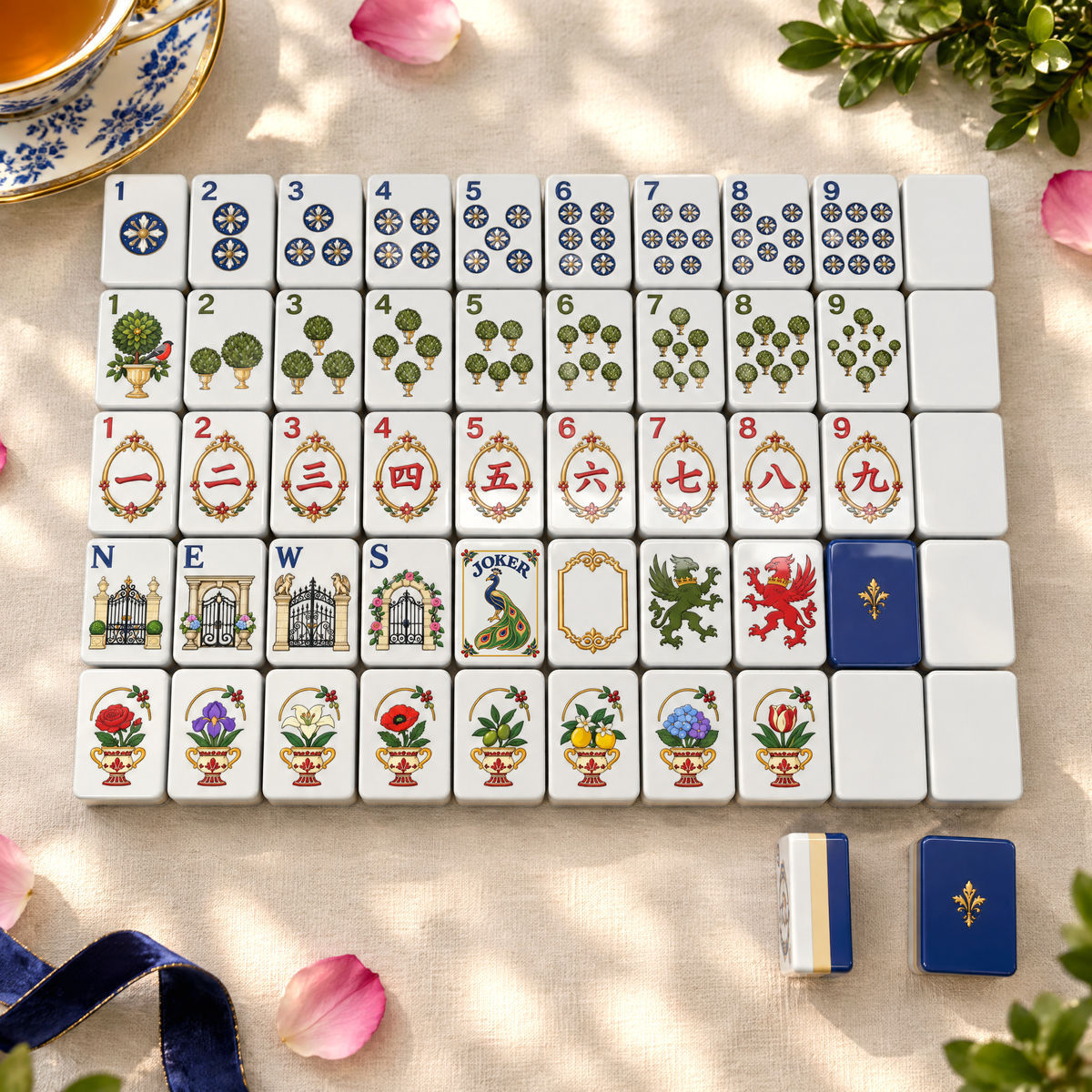
Mahjong is not objectively harder than Go, but they're difficult in opposite directions. Go has simpler rules (place stones, control territory) but near-infinite strategic depth—a lifetime of learning. American mahjong has more rule overhead: you must memorize the current-year hand card, understand tile categories, track discards, manage the Charleston passing ritual, and recognize patterns within moments. Go's difficulty peaks in strategy; mahjong's peaks in recognition speed and memory. A new Go player struggles with why moves matter; a new mahjong player struggles with what is legal right now. Once American mahjong rules click (typically 4–6 weeks of weekly play), the game becomes faster and more social. Go rewards quiet, long-term thinking; mahjong rewards quick decision-making and table talk. Neither is "harder"—Go is deeper, mahjong is denser. Most players who try both prefer one based on personality, not skill. Our best-selling mahjong sets include printed hand cards so you can reference rules instantly during your first games. 🀄 Shop best-selling mahjong sets →
How do the rules actually compare in complexity?
Go has two core rules: place a stone, capture territory. You learn Go in minutes. Mahjong requires understanding 152 tile types, four hand-passing sequences, pung/kong/quint/sextet calls, joker rules, exposure rules, and the hand card itself—each changing yearly. However, Go's strategy explodes after those two rules. Mahjong's complexity is front-loaded; most rule confusion vanishes after 4–6 games. Once you internalize the hand card and what "pung" means, mahjong plays faster than Go, which demands long silent consideration. Go's rule complexity is near-zero; its conceptual complexity is infinite.

Which game demands faster decision-making?
Mahjong requires snap decisions: you have seconds to discard after drawing. Go allows—and rewards—minutes of thought per move. In American mahjong, hesitation is read as a tell; in Go, thinking is expected. If you prefer reactive, high-pressure gaming, mahjong wins. If you prefer deep analysis, Go wins. Players with ADHD often gravitate toward mahjong's constant action; contemplative players choose Go. Neither is "harder"; they reward different brain styles. Mahjong speed comes from rule fluency, not raw intelligence.
How much must you memorize in each game?
Go: memorize nothing. Positions are always visible on the board. Mahjong: memorize the current year's hand card (40+ patterns), track 13 discards per opponent, know which tiles you've seen, recall standard tile compositions. The hand card changes each April—you must relearn it. However, humans excel at pattern matching, and the hand card uses recurring visual patterns (all Bams grouped, all Dragons together). After two seasons, the card becomes automatic. Go requires no memorization but infinite strategic memory—knowing historical games, opening principles, endgame patterns. Both demand memory; mahjong's is visual-taxonomic, Go's is strategic-historical.
Why do strategy players find one harder than the other?
Go players often find mahjong's rule overhead frustrating; they want to think, not reference. Mahjong players often find Go's slow pace and abstract long-term thinking draining. Strategic depth ≠ difficulty. Go has deeper strategy but simpler rules; mahjong has simpler (once-learned) rules but faster tactical play. If "harder" means "takes longer to play well," Go wins by a factor of 10—serious Go players study for years. If "harder" means "confusing in your first month," mahjong wins. Competitive mahjong tournaments exist and are highly skillful, but recreational play is accessible within weeks. Competitive Go demands years of study to reach novice strength.
Dimension | Mahjong | Go | Winner for Speed? |
Rules to learn | 15–20 concepts | 2 rules | Go |
Time to first competent game | 4–6 weeks | 1 hour | Go |
Decision time per turn | 5–10 seconds | 1–5 minutes | Mahjong |
Memorization required | Hand card + discards | Strategic patterns | Mahjong (visible work) |
Social pressure | High (constant talk) | Low (quiet) | Mahjong |
Strategy depth (years to master) | 5–10 | 20+ | Go |
🎁 See our most-loved mahjong sets & accessories →

Which game suits a beginner's first month?
Mahjong is friendlier in the first month. You play full games immediately; every hand teaches the card. Go requires learning life-and-death reading, territory evaluation, and opening principles before play feels purposeful. A beginner Go player may win by accident; a beginner mahjong player loses to rule confusion, not strategy. However, if you enjoy abstract spatial thinking, Go is less frustrating. If you enjoy fast social play, mahjong wins outright. Most new mahjong players host their first full game night within 4 weeks. Most new Go players play casually for months before joining a club. Mahjong is the better "first game" for groups; Go is the better "first game" for solo practice.
What if you want to try both?
Learn mahjong first if you value quick wins and social play. Learn Go first if you're comfortable with slow strategic growth. Many players do both—mahjong weekly (social, quick), Go casually (solo, deep). They strengthen different skills: mahjong sharpens reaction time and pattern recognition; Go builds long-term spatial reasoning. Neither skill transfers directly, but both improve general strategic thinking. Starting with mahjong won't harm Go learning, and vice versa. The real difference is personality. If you decide mahjong is your game, a full American mahjong set with printed hand cards removes the biggest beginner barrier—you can reference rules without stopping play.
What to check before you buy:
Does your set include the current-year hand card printed or enclosed? (Non-negotiable for beginners.)
Are all 152 tiles present? (Not all sets include enough jokers; verify the tile list.)
Do the tiles feel substantial in hand? (Cheap tiles make the game feel less rewarding.)
Is the mat readable under your table lighting? (A muted mat color is easier on the eyes than glossy white.)
✨ Find your Mahstead set — free US shipping →
Should you choose mahjong or Go?
Choose mahjong if you want:
Social, fast-paced play (games end in 30–45 minutes).
Quick rule fluency (4–6 weeks to competence).
Constant action and decision-making.
A game that's fun for groups on day one.
Choose Go if you want:
Solo strategic depth (lifetime of learning).
Calm, contemplative gameplay.
A game with 2,000 years of theory.
Minimal rule burden (all strategy, no reference card).
Most players conclude: mahjong is not harder, just different. It's denser in the first month, then lighter than Go. If you enjoy both, rotate between them—mahjong on game nights, Go for solo thinking. Starting with one of our best-selling sets gives you everything needed: 160 tiles, printed hand card, matching mat, and pushers. After four games, you'll know whether mahjong is your game for good.

FAQ
Can I play American mahjong after learning Go, or do the strategies conflict?
No conflict—they use opposite brain modes. Go trains long-term spatial reasoning; mahjong trains rapid pattern-matching. Most Go players pick up mahjong rules within 2–3 games because both require reading your opponent, but the tactical speed of mahjong feels alien at first. Start with the hand card always visible.
Is mahjong easier if I already know Rummy or bridge?
Yes, somewhat. Bridge teaches you to track cards and manage a hand; Rummy teaches you about runs and sets. American mahjong has no runs—only identical sets (pungs/kongs)—but the hand-management muscle memory helps. You'll still need 3–4 games to internalize the hand card.
How long before I'm competitive at mahjong versus Go?
Mahjong: 6–12 months of weekly play to hold your own at a competitive club. Go: 2–3 years to reach "novice" strength in tournaments. Recreational mahjong is fun immediately; competitive Go has a steeper ramp.
Does mahjong have the same "aha moment" as Go?
Mahjong's "aha" comes when you stop looking at the hand card—usually week 4–6. Go's "aha" comes when you see a deep sacrifice move in a pro game—months in. Mahjong's moment is quicker but less profound.
Can a six-person group play mahjong, or is it only four players?
American mahjong is strictly four players. Go can be played one-on-one, team-on-team, or as simultaneous handicap play. If your group is larger, rotate tables or play 2- and 3-player mahjong variants, though these are less common.
What's the biggest mistake beginners make in each game?
Mahjong: holding onto tiles hoping for a specific hand instead of building what's open. Go: playing small territory fights instead of thinking big-picture. Mahjong mistakes are visible immediately; Go mistakes reveal themselves over dozens of moves.


View More
View More
View More
