
Malaysian Mahjong Quick Start Guide
Last updated: Nov 23, 2026
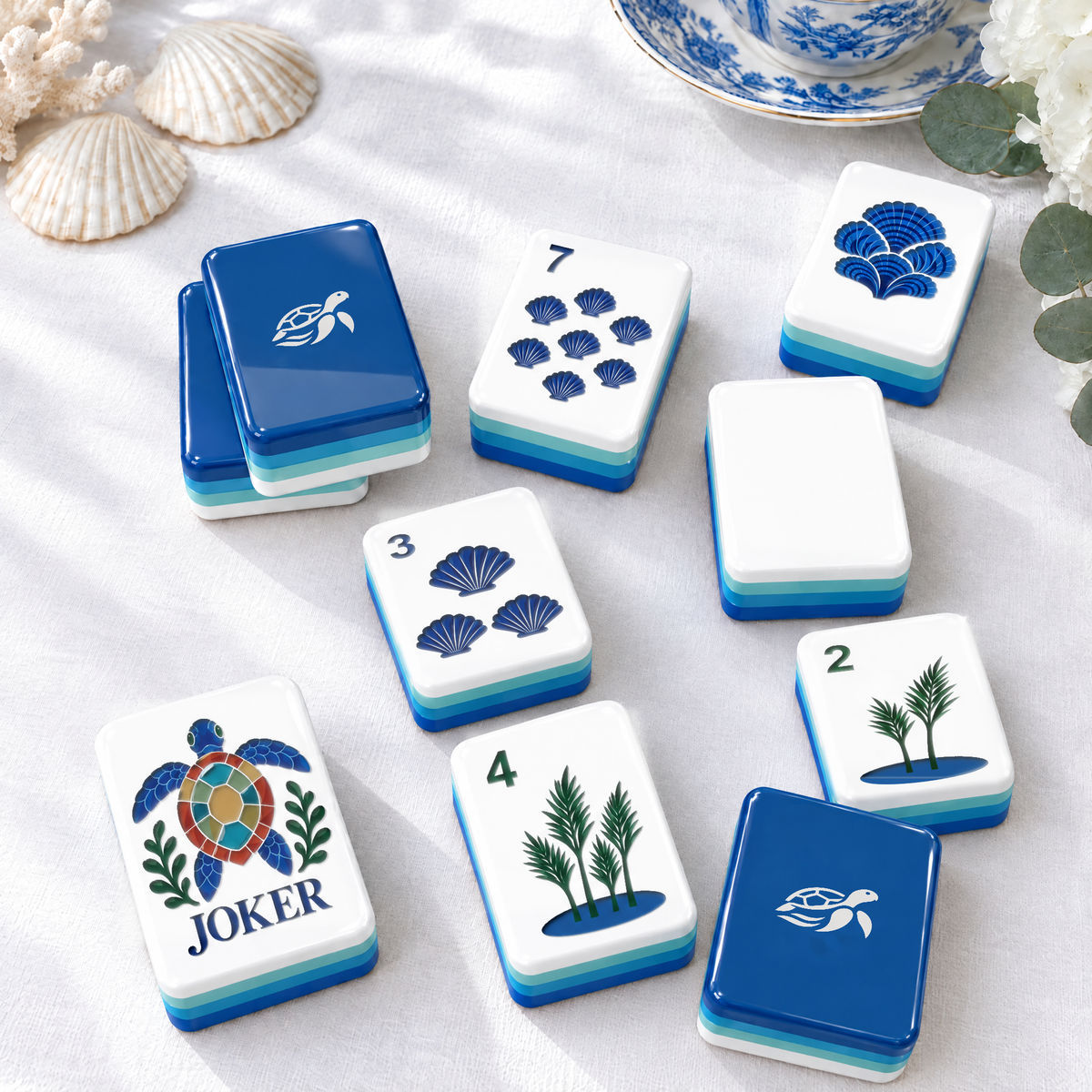
Malaysian mahjong (also called 16-tile, Hong Kong-style, or Malaysian classical) uses 136–144 tiles and emphasizes hand melds called pungs (three identical tiles), kongs (four identical), and chows (three consecutive numbered tiles in one suit, unlike American mahjong which forbids sequences entirely). A standard Malaysian game plays four rounds with 13 tiles per hand plus one drawn per turn; you win by declaring "mahjong" with a complete hand of melds plus a pair, or by drawing the winning tile yourself. Hands are built through luck and discards rather than from a pre-printed card like American play. Jokers exist but follow stricter rules than American variants. The game flows faster than American mahjong and suits players who enjoy reading opponents' discard patterns. Setup takes 10 minutes; a session runs 1–2 hours. You'll need a 160-tile acrylic set if transitioning from American, though purists use specialized Malaysian sets with traditional tile faces.
What exactly are chows, and why does American mahjong ban them?
A chow is three consecutive numbered tiles from a single suit—for example, 4 Dots, 5 Dots, 6 Dots. Malaysian mahjong allows you to call and expose chows from another player's discard, speeding up hand completion. American mahjong forbids chows entirely: you can only expose pungs (three identical: 5 Bam, 5 Bam, 5 Bam), kongs (four identical), quints (five identical), and sextets (six identical). This fundamental difference makes Malaysian hands more fluid and reactive—you're not locked into a static card's patterns. American play rewards planning a specific hand shape before the game begins; Malaysian play rewards adaptability and reading the discard pile.

How many tiles and jokers does a Malaysian set use?
A standard Malaysian mahjong set contains 136 tiles for serious play: three suits (Bamboo, Character, Dot) × 1–9 each × four copies (108 tiles) + 16 winds (4 each) + 12 dragons (4 each) = 136. Some regional variants add 8 flower tiles, bringing the count to 144. Jokers (called flowers or blanks in Malaysian play) are fewer and more restricted than in American mahjong—typically 4–8 per set, and they cannot substitute for tiles in exposed melds (only for gaps in your hand). This constraint means you cannot rely on joker insurance the way American players do. Most recreational Malaysian tables use a standard 136-tile set; export sets sometimes include extra tiles for spares.
What's the hand structure: melds and winning combinations?
A winning Malaysian mahjong hand contains 14 tiles total: four melds of three tiles each (12 tiles) plus one pair (2 tiles). Your melds can be:
Pungs: three identical tiles (e.g., East, East, East)
Kongs: four identical tiles (e.g., 3 Bamboo, 3 Bamboo, 3 Bamboo, 3 Bamboo)
Chows: three consecutive numbered tiles, same suit only (e.g., 2 Dot, 3 Dot, 4 Dot)
You can mix meld types in a single hand. For example: pung of 1 Character + chow of 5–6–7 Bamboo + kong of White dragons + pung of North winds + pair of Red dragons = mahjong. Some hands require all pungs and no chows (called "all pairs" or "all simples"), and these often score higher. Unlike American mahjong, you do not follow a pre-printed card; instead, you judge hand value by the type and rarity of melds you've built—winning an "all honor" hand (winds and dragons only) scores more than a mixed hand.
🀄 Shop best-selling mahjong sets →
How does play flow turn by turn, and what happens with discards?
Each player begins with 13 tiles drawn from the wall (a stack shuffled together before play). On your turn, you draw one tile from the wall, then discard one tile face-up into the center. The next player may then:
Pung your discard (call it out, expose three tiles from hand including your discard)
Kong your discard (expose four identical tiles, including your discard)
Chow your discard (if you're in the right position and have two consecutive tiles in that suit; position rules vary by region)
Mahjong (win immediately if your discard completes their hand)
Pass (do nothing; play passes to the next player)
If no one calls your discard, it stays in the center and play moves to the next player. Unlike American play, exposed melds stay face-up on the table, and future discards feed into them. This open play makes Malaysian mahjong social and visible; you're watching not just your hand but the building tableau on the table. A critical beginner mistake is discarding tiles recklessly early—experienced players track which tiles have been discarded and guess what melds opponents are building.

How do Malaysian and American mahjong sets differ in tile design and count?
Feature | Malaysian Mahjong | American Mahjong |
Total tiles | 136–144 | 152 + 8 jokers |
Sequences allowed | Yes (chows) | No—exposed melds only |
Joker rules | Limited use, cannot substitute in exposed melds | Freely substitutable in exposed melds and pairs |
Hand source | None—melds built during play | Current year's National Mah Jongg League card |
Hand size | 14 tiles (4 melds + pair) | 14 tiles (hand from card) |
Tile faces | Traditional Chinese characters or numbers | Characters, numbers, sometimes Romanized |
Charleston | No tile pass before play | Yes—mandatory pass ritual |
Scoring system | Point multipliers based on meld rarity | Card-based score lookup |
An acrylic 160-tile American set is not ideal for pure Malaysian play (it includes 8 extra jokers and may be marked for American hands), but it works in casual games if you ignore the American rulebook and use Malaysian rules instead. Many households that play both variants keep one set and simply adjust the house rules.
What are the biggest beginner mistakes, and how do I avoid them?
Mistake 1: Calling chows carelessly. In Malaysian play, chows can only be called in a specific position (usually left-hand player, depending on house rules). Calling out of turn wastes your moment and gives opponents information. Fix: Learn your table's positional rules before you start; ask the host.
Mistake 2: Discarding high-value tiles too early. Honors (winds, dragons) and edge numbers (1, 9) are safer discards late in the hand, when fewer players need them. Throwing them early signals weakness. Fix: Hold onto your highest tiles through the first 3–4 turns; watch what others discard.
Mistake 3: Overusing jokers. Some players see a joker and assume it goes everywhere. In Malaysian play, jokers fill specific gaps in your nearly-complete hand; they don't act as wild cards in exposed melds. Fix: Count your hand's completeness before using a joker; use it only to finish the 14-tile requirement.
Mistake 4: Not tracking discards. The center pile tells you what melds are safe and unsafe. If all three 5 Dots have been discarded, no one is building a chow with 5 Dot. Fix: Glance at the discard pile every turn; mentally note which tiles are gone.
Mistake 5: Mixing up pung vs. chow exposure. When you call a tile, state the meld type aloud ("pung" or "chow") to avoid disputes. Fix: Practice naming melds during your first game; do not assume everyone plays by the same house rules.
What to check before you buy a set for Malaysian play
Tile count: Confirm you have 136–144 tiles, not 152 (American sets include extra jokers).
Joker limit: Count jokers; Malaysian sets typically include 4–8, not 8 as a standard.
Tile markings: Check that character, bamboo, and dot faces are clear and legible (acrylic is sharper than ceramic).
Rack size: Standard racks hold 13–14 tiles comfortably; if you buy separate racks with pushers, test the fit.
Storage: Malaysian sets are smaller and lighter than American; they fit in travel bags easily.
Rules card: Ask the seller or seller's community forum for a Malaysian rules summary (not included with most U.S. sets).
🎁 See our most-loved mahjong sets & accessories →
How do I transition from American mahjong to Malaysian rules?
Start by learning the three meld types (pung, kong, chow) and forgetting the annual League card—that's American-only. Teach your group that chows are legal and that jokers are scarce. Play a practice round with one experienced Malaysian player calling out melds so others learn the rhythm. You can use an American acrylic set if you ignore the joker layout; most importantly, agree with your table on positional rules for calling (which player can chow which discard). After two games, the flow becomes natural. Many players find Malaysian mahjong quicker and more social because melds are visible and competitive moments happen openly, not just at declaration.
✨ Find your Mahstead set — free US shipping →

FAQ
Can I use an American mahjong set for Malaysian play?
Yes, if you have 136–144 tiles and adjust the joker count downward. American sets include 8 jokers and extra blanks (160 tiles total); set aside the spares and use only the 152 playing tiles, then apply Malaysian rules. The tile faces are identical, so readability is not an issue.
What is a "quint" or "sextet" in Malaysian mahjong?
Quints (five identical) and sextets (six identical) are rare hand melds that score very high and are often claimed in scoring variants. Standard Malaysian play treats them as extended kongs; some regional rules award bonus points for them. Confirm with your table whether they appear in your game.
How long does a round of Malaysian mahjong take?
A single game (one round, one winner) typically runs 15–30 minutes; a full session of four rounds (East, South, West, North) takes 1–2 hours. American mahjong typically runs longer because you're matching complex hand patterns from the card.
Are there regional differences in Malaysian mahjong rules?
Yes. Peninsular Malaysia, Sabah, and Sarawak have slight variations in positional chow rules, joker substitution, and scoring bonuses. Ask your host or local group which variant they play; most casual tables use a "relaxed" version that allows chows from any discard and uses fewer restrictions on jokers.
What's the hardest part of learning Malaysian mahjong as an American player?
Accepting chows and relearning hand patterns. American players are trained that sequences are forbidden; unlearning that takes one or two games. After that, tracking discards and adapting your hand strategy is the biggest skill jump.
Do I need a special mat or rack for Malaysian play?
No. A standard mahjong mat works for any variant. Racks with pushers are optional but helpful if your group plays with 13–14 visible tiles; they let you organize melds neatly.
Can I learn Malaysian mahjong from an online video?
Yes, several YouTube channels teach Malaysian rules (search "Malaysian mahjong tutorial"). Pair that with one in-person session with an experienced player; seeing the flow live clarifies confusing moments much faster than video alone.


View More
View More
View More
