
Card Colors in Mahjong: The Rule Explained for Players
Last updated: Nov 23, 2026
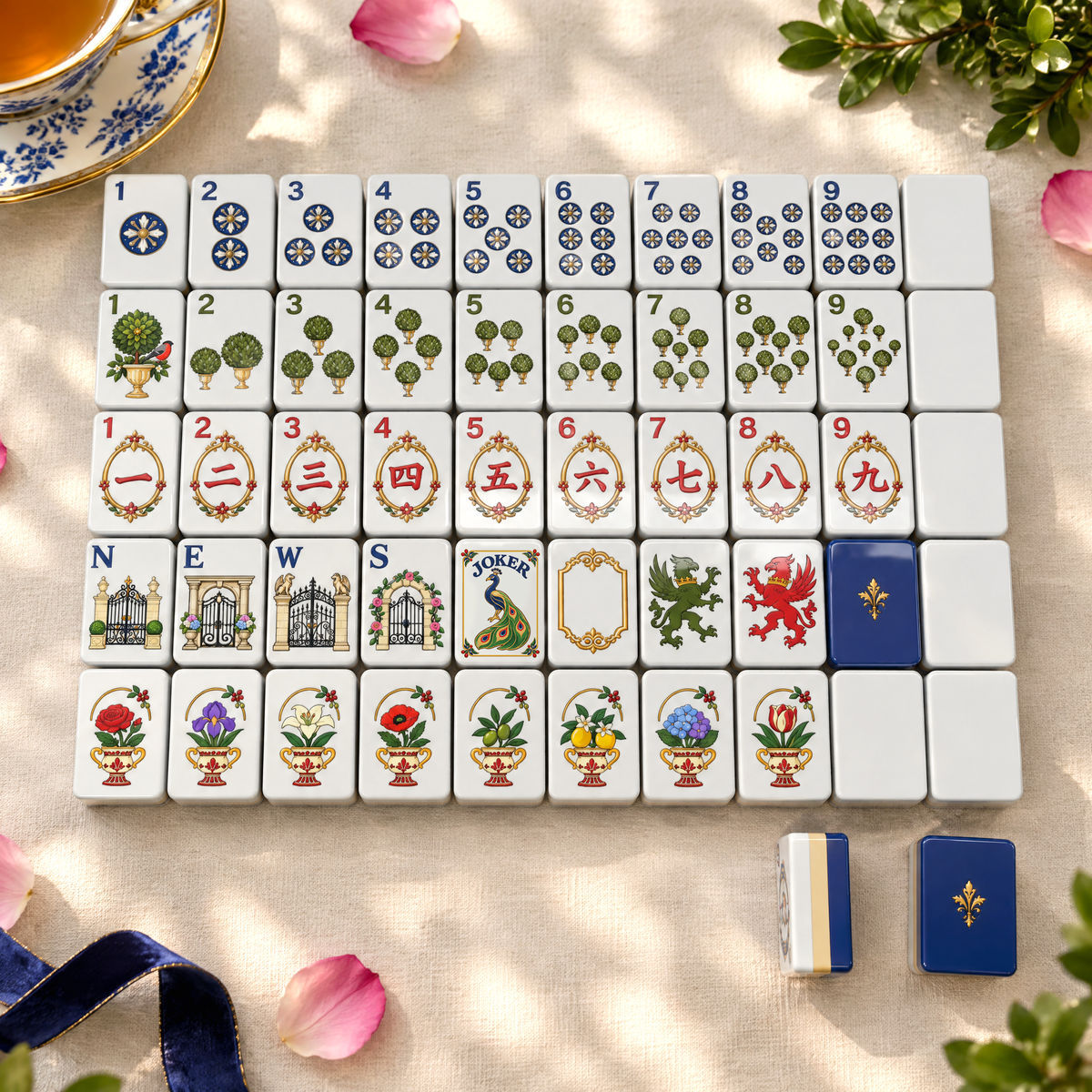
The National Mah Jongg League doesn't mandate tile colors; instead, it standardizes by suit. Bams (bamboo) are traditionally green, Craks (characters) red or orange, and Dots (circles) blue or white. These colors serve one purpose: speed and clarity at the table. When you glance at your rack or the wall, color coding lets you instantly sort your hand by suit, identify exposed melds, and verify that called hands match the card. Different tile manufacturers use slightly different shades, and some sets feature bold contrasts while others use softer tones. A Mahstead acrylic set, for example, uses bright, laser-engraved colors that stay vivid for years. The rule isn't "use this exact shade"—it's "use a consistent, readable color per suit so all four players can verify hands without confusion." This is why monochrome or novelty sets can slow play or cause disputes.
In American mahjong, tile colors aren't decorative—they're part of the rule structure. Each suit (Bams, Craks, Dots) carries its own color convention to help players read hands quickly and spot winning patterns.
Why does color matter in mahjong?
Speed and clarity. When all four players can instantly see which tiles are Bams, Craks, and Dots, play moves fast and mistakes drop. At a weekly game, a player with poor eyesight or color confusion can call a hand, and the table verifies it instantly by color before exposing melds. Without consistent color, you'd need to read every single tile's face—slow, frustrating, and error-prone during fast play or when someone calls.

What's the standard color for each suit?
Bams (bamboo sticks, numbered 1–9) are green. Craks (Chinese characters) are red or orange. Dots (circles) are blue or white. Winds (N, E, W, S) are usually tan or beige. Dragons come in three colors: Red Dragon goes with red (pairs with Craks), Green Dragon with green (Bams), and White Dragon (also called "Soap") with white or blue (Dots). These conventions come from tile manufacturers' practice, not a written League rule—but every set sold in North America follows them. A set that breaks this pattern will confuse your game group because their eyes expect the standard mapping.
Does the National Mah Jongg League enforce specific colors?
No written rule prescribes exact Pantone numbers, but the League expects consistent, distinguishable color per suit. If you showed up with a set where Bams and Craks were nearly identical shades, an experienced table would reject it as unplayable. The League card (updated each spring) lists hands by suit combination; players rely on color to verify a called hand in seconds. The rule, then, is implicit: if you're playing by League standards, use colors that make suits instantly recognizable to all players. This is why we recommend a best-selling acrylic set—they're tested on thousands of tables and engineered for legibility.
🀄 Shop best-selling mahjong sets →
How do color and engraving work together?
Many players upgrade to engraved American mahjong sets not just for style, but for readability. Engraving adds texture to the tile face, so color and tactile feedback help you sort your rack faster. If you're hosting a regular game, especially one with newer players or older players with vision challenges, an engraved set cuts confusion by half. The color is crisp, the characters are deep and clear, and the tiles feel different—green Bams literally feel like Bams by the time your hand knows them. In contrast, a glossy, thin-printed set can fade or wear, and low-contrast colors blur together under bad lighting.

What happens if players disagree on tile colors?
It rarely comes up, but when it does, the rule is simple: use a reference set. If Player A's set has muted colors and Player B's has bright ones, bring out a neutral third set or check the current League card's color photo. In practice, most disputes vanish if the host provides one good set for the table—which is why weekly game groups invest in quality best-selling mahjong sets. A set doesn't need to be expensive; it needs to be consistent. All 152 playing tiles should have the same color-coding system, and all Bams should be identical to each other, not a mix of light and dark greens. Check before you buy: buy a single set and play with it weekly rather than multiple sets with drifting colors.
Do variants like Chinese or Hong Kong mahjong use different colors?
Chinese and Hong Kong mahjong use the same suit structure (Bams, Craks, Dots) so colors overlap, but tiles often look different. Hong Kong sets are smaller, Shanghai sets use different dragon symbols, and some Chinese sets flip the Red/Green Dragon pairs. The rule, however, stays consistent: suit colors must be distinct. If you're learning Chinese mahjong after American, a Chinese set may surprise you, but color coding remains—green for Bamboo (Bams equivalent), red for Characters (Craks), white for Circles (Dots). Riichi (Japanese) mahjong adds a fourth suit (Honors suit), but color still serves the same function: instant identification. The lesson: never assume a colorful set is "universal." If you switch variants, ask the host or teacher what colors apply.
Comparison: Tile Materials & Color Durability
Material | Color Durability | Readability | Best For |
Acrylic (engraved) | 5+ years, laser-sharp | Excellent; color + depth | Regular home games |
Bamboo & bone (carved) | 10+ years, patina builds | Excellent; tactile + color | Heritage games, collectors |
Plastic (printed) | 2–3 years, fades | Good; depends on lighting | Casual play, travel |
Resin (molded) | 3–5 years, varies | Fair to good; color varies | Budget sets, beginners |
🎁 See our most-loved mahjong sets & accessories →
What to check before you buy
Verify all three suits have distinct, readable colors. Hold tiles under normal and dim lighting. Green, red, and blue (or white) should pop.
Check that all tiles of the same suit match. Pull ten Bams. Are they all the same shade? Variation signals inconsistent printing or dye lot issues.
Test under your game table's lighting. A set that looks great in a showroom photo may blur under your dining room's overhead light.
Ask if the set is based on League standards. Not all novelty or artistic sets follow the traditional color scheme—confirm before buying for regular play.
Compare engraved vs. printed. Engraved tiles keep colors vibrant longer and add tactile clarity. For a set you'll play with weekly, engraving is worth the investment.
If you host weekly games, your set is the table's foundation. A color-consistent, well-made set eliminates disputes and lets players focus on strategy, not squinting.
Why Mahstead sets are color-tested
Our best-selling acrylic sets are laser-engraved and color-matched to League standards. Every Bam is green, every Crak is red, every Dot is blue—consistency from tile one to tile 152. The engraving means color bonds to the acrylic, so fading is rare even after years of weekly play. We also offer custom engraved sets if your group wants a host name or year engraved, but the color scheme remains regulation-ready. Free US shipping, and the set arrives ready to play.
✨ Find your Mahstead set — free US shipping →

FAQ
Can I use a monochrome set if I read all tiles carefully?
Technically, yes—but you'll slow your table by 30–50%, frustrate other players, and miss the whole point of color coding. A monochrome set violates the spirit of League-standard play. Use a color set.
Does the National Mah Jongg League have an official color swatch?
No written swatch, but the League's photo examples in the card and rulebook show traditional colors: green Bams, red Craks, blue/white Dots. Manufacturers follow this convention; it's de facto standard, not written law.
What if my old set has faded colors?
Faded Bams and Craks can blur together, especially under poor light. If you play weekly, invest in a new set—speed and accuracy matter more than nostalgia. Keep the old set as a spare or collectible.
Are rainbow or novelty colored tiles allowed in League play?
No. League play requires standard color coding: Bams green, Craks red, Dots blue/white. Novelty sets are fine for casual home games, but not for sanctioned or group play.
How do I teach a new player to recognize suits by color?
Before the first game, hold up a Bam and say "green," a Crak and say "red," a Dot and say "blue." Have them sort their rack by color. After one hand, it clicks. Color coding is why beginners learn so fast.
If I bring a set to a game and the host has a different set, which do we use?
The host's set. Consistency matters more than preference. Use one set for all four players; don't mix. If the host's set has color problems, offer your own as a replacement—politely.


View More
View More
View More
