
Western Classical Mahjong: History, Rules & How to Play
Last updated: Nov 23, 2026
Western classical mahjong refers to traditional Chinese mahjong played with rule sets adapted in Europe, the UK, Australia, and other Western regions—distinct from American mahjong's closed hand and structural card-based play. The game typically uses 144 tiles (some variants add flowers, winds, or honours), and hands come from established rulebooks rather than an annual card like the National Mah Jongg League. Games last 4–16 rounds; players draw and discard openly. If you're hosting American mahjong in Dallas or another US city, you'll use acrylic 160-tile American sets with the current year's League card, but Western classical players traditionally play with bakelite or ceramic tile sets. Costs range widely by material; the fundamental difference is that Western classical mahjong emphasizes continuous draw-and-discard cycles and classical hand patterns, while American mahjong locks hands before play begins via the Charleston. Both are genuine, centuries-rooted games—the choice depends on your local player community and your learning source.
What is the core difference between Western classical and American mahjong?
American mahjong uses a fixed hand structure that you learn before the game starts from the National Mah Jongg League's annual card, locked in via the Charleston tile exchange. Western classical mahjong plays with open draw-and-discard cycles—you pick a tile, discard one, and adapt your hand strategy as play progresses, similar to rummy or gin. American sets are acrylic and include jokers; classical sets are traditionally ceramic, bakelite, or bamboo. In American play, you cannot form or call chows (sequences like 1-2-3); in Western classical, chows are fundamental hand-building units. American mahjong is purely four-player; Western classical accommodates two, three, or four players depending on house rules. The scoring systems also differ entirely: American uses point values tied to hand patterns on the League card, while Western classical awards points based on melds completed and bonus tiles drawn.
🀄 Shop best-selling mahjong sets →

Are Western classical rules standardized, or does each region play differently?
No single universal ruleset exists for Western classical mahjong. The UK, for example, follows the "International Rules" codified by the British Mahjong Association, which simplifies classical Chinese play for Western learners. Continental Europe uses similar simplified structures but with local house variations. Australia has its own conventions, as do other English-speaking communities. This fragmentation means two clubs in the same city might play with slightly different scoring, bonus tile rules, or flower-tile values. In contrast, American mahjong is highly standardized: all players follow the same National Mah Jongg League card released each spring, and the game structure (four players, no chows, jokers as wild tiles) is nearly identical everywhere in the US. If you're interested in Western classical mahjong, your best move is to find a local club or meetup (community centers, libraries, or synagogues often host groups) and learn their rulebook first.
How many tiles does a Western classical set contain, and what's included?
The standard Western classical set contains 144 tiles: three suits of 36 tiles each (Bamboo, Characters, Dots numbered 1–9, four of each), plus 16 wind tiles (four each of North, East, West, South), 12 honour tiles (three types, four of each), eight flower tiles, and eight season tiles—some variants omit flowers and seasons, dropping the count to 136. Each tile is typically made from ceramic, bakelite, or bamboo, with bone or bamboo racks. A 160-tile American set, by contrast, includes the standard 152 American tiles (same suit structure but different symbols, no classical flowers, eight jokers instead of one standard draw tile) plus eight spare tiles. Western classical sets rarely include jokers; in American play, jokers are essential wild tiles that can substitute for any tile in an exposed meld. If you host weekly American mahjong games, you'll need best-selling American mahjong sets with racks, pushers, and a mat; Western classical players typically invest in heavier ceramic or bakelite pieces that last decades.
What are the basic turn structure and winning conditions?
In Western classical mahjong, each player draws one tile from the wall (or the dead wall, a reserved stack) and discards one tile face-up. The discard is immediately available to any player who can use it to complete a meld (called "claiming" or "chowing"). Play continues around the table; the key skill is remembering which tiles other players have discarded and inferring what they need or want to avoid. You win by completing a hand of melds—typically four melds plus a pair—and declaring your win either on your own draw or by claiming another player's discard. Bonus points accumulate if you draw certain tiles (dragons, your own wind, the round wind) or if your melds contain all honours. In American mahjong, by contrast, your entire hand structure is locked before play: you do not adapt or respond to discards in real time. You only win when you draw the exact tile that completes your pre-set pattern on the League card, and you must call "Mah Jongg!" to declare. American play is faster (typically 45–90 minutes per game) and relies on memorizing hand patterns; Western classical is slower, more analytical, and rewards memory, probability assessment, and reading opponents.
How does scoring work in Western classical versus American play?
Western classical scoring awards points based on the complexity and rarity of your melds. A basic meld (three identical tiles, called a "pung") earns the base unit; a longer sequence ("chow") may earn less; a set of four identical tiles ("kong") earns more. Concealed melds (drawn yourself, not claimed from another's discard) score higher. Bonus points are added for dragons, seat winds, round winds, and special tile draws. Games are typically scored round by round, and the tally sheet is updated after each player's win; a session might run 8, 12, or 16 rounds, and scores accumulate across all rounds. American mahjong scoring is entirely different: each hand on the current League card carries a specific point value (ranging from 20 to 90+ points based on rarity and pattern complexity). When you win, you collect points only from the three other players according to the hand's value and your position (Pung pays double as East, for example). A typical American mahjong session runs about 16 hands (one full rotation of each player as East), and players settle up at the end with the highest total score. Western classical scoring rewards both winning and strategic play across many rounds; American scoring is binary—you either complete a valid hand and win points, or you do not.

What tiles do I actually need to learn to recognize?
Western classical mahjong uses three main suits: Bamboo (shown as a bamboo stalk, numbered 1–9), Characters (Chinese numerals 1–9), and Dots (circles, 1–9). On each tile, the suit symbol and number are displayed. Honour tiles come in two groups: Winds (North, East, South, West, each shown with a Chinese character) and Dragons (Red, Green, White—usually marked with distinct symbols or colours). Flowers and seasons (if included) are numbered 1–8 and show seasonal imagery. American mahjong uses the same three suits called Bams (the 1 Bam shows a bird), Craks, and Dots, plus winds and dragons, but no classical flowers or seasons; instead, American sets include eight jokers, which can replace any tile. The visual learning curve is steeper for classical mahjong because you must recognize Chinese characters and symbols; American mahjong tiles often include numerals and clearer English labelling, making them faster to learn. However, once you know the suit structure, both games become intuitive—players typically memorize tile meanings through play rather than study.
Can I play Western classical mahjong with an American mahjong set?
Not effectively. An American 160-tile set is designed for the National Mah Jongg League card structure: it includes jokers (which have no role in classical play), omits flowers and classical honour combinations, and uses different suit symbols (Bams, Craks, Dots instead of the traditional Bamboo, Characters, Dots imagery). You could theoretically remove the jokers and play, but American tiles lack the classical flower and season tiles, so you'd be missing essential melds in any Western classical ruleset. More practically: American mahjong and Western classical mahjong are separate games with different tile distributions, hand patterns, and scoring logic. If you're learning American mahjong from a local club in the US, stick with an acrylic best-selling set designed for American play so you have the correct tiles and jokers. If you're learning Western classical from a European or UK-based rulebook or club, order a classical set (typically ceramic or bakelite) that matches your local ruleset—your instructor will specify which regional variant to buy.
How do I find a Western classical mahjong community or learn the rules?
Search online for "mahjong club near me" or visit your local community center, library, or country club—many Western communities host classical mahjong groups (particularly in the UK, Australia, and Europe). The British Mahjong Association publishes comprehensive rulebooks and maintains a directory of affiliated clubs; similar organizations exist in other countries. Meetup boards and Facebook groups focused on mahjong often list regional players and teaching times. If you're in the US but interested in classical play, online communities like Mahjong Time or international forums can connect you with players; many offer free accounts for learning. Be prepared to invest time: Western classical mahjong has a steeper learning curve than American play because the ruleset is not standardized across all regions—you'll need to learn your specific club's house rules, which can take 5–10 sessions of play to internalize. In contrast, American mahjong learners can pick up the basics in one or two sessions because the League card structure is identical nationwide. If you're serious about either game, your best investment is finding a patient mentor in your local community rather than learning from videos alone.
Aspect | American Mahjong | Western Classical |
Tile count | 160 (152 + 8 spares) | 144 (or 136 without flowers) |
Hand structure | Fixed before play (from League card) | Adaptive, open draw-and-discard |
Chows (sequences) | Not allowed; no card-based sequences | Core hand-building unit |
Jokers | Essential; can substitute any tile | Not used in classical play |
Players | Always 4 | 2, 3, or 4 (variant-dependent) |
Winning call | Must declare "Mah Jongg!" on exact tile | Win on own draw or claimed discard |
Scoring | Points tied to League card pattern value | Points based on meld complexity and bonuses |
Session length | ~16 hands, 45–90 minutes | 8–16 rounds, 1–3 hours+ |
Standardization | Identical nationwide (US) | Varies by region (UK, EU, Australia, etc.) |
Tile material | Acrylic (durable, easy to clean) | Ceramic, bakelite, or bamboo (traditional) |
🎁 See our most-loved mahjong sets & accessories →
What should I check before buying a Western classical mahjong set?
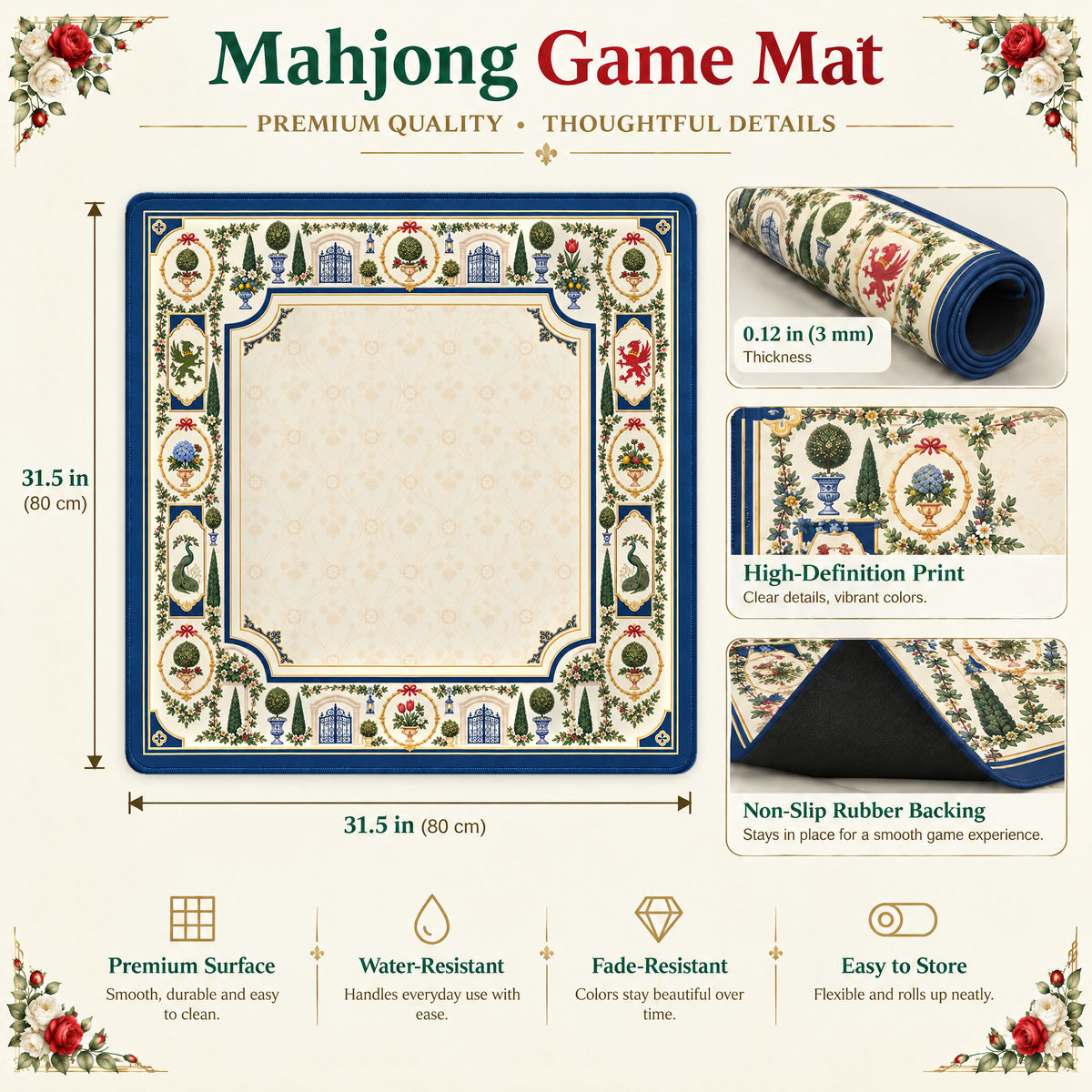
Before purchasing, confirm which regional ruleset your local club uses (UK International Rules, Dutch, Belgian, Australian, etc.) and ask your instructor or mentor which tile composition they follow—some omit flowers or seasons, others include them. Check whether the set includes a rulebook in your language; most classical sets do not. Verify the tile material and weight; ceramic and bakelite sets are heavier and more durable than plastic, but cost more and require care (they can chip). Inspect racks and pushers if included—classical sets often have bamboo or bone racks, which are lovely but fragile compared to acrylic. Ask whether the set includes wind labels or dragon symbols that match your club's conventions, because regional variations exist. If you're a beginner, consider borrowing or renting a set for your first few weeks rather than buying outright; you may discover that your local club's preferred brand or style is different from what you initially choose. Finally, ensure you have a suitable playing surface: Western classical mahjong is typically played on bare tables or mats without pushers, so you'll need a mahjong mat with enough grip to prevent tiles from sliding during open play.
Why do American mahjong players rarely play Western classical, and vice versa?
The two games evolved separately. American mahjong was standardized in the 1920s–1930s by Jewish and affluent American communities who wanted a faster, more predictable game; the National Mah Jongg League codified the rules and published an annual card in 1937. Western classical mahjong retained the slower, more strategic draw-and-discard model closer to traditional Chinese play and spread through European and Commonwealth countries. Over a century, each community built its own teaching networks, tournaments, and social traditions. A player trained in American mahjong finds classical play frustratingly slow and unstructured (the hand is not locked, tiles are not predetermined); a classical player finds American play rigid and non-strategic (you cannot adapt to opponent discards). Both communities are thriving but largely separate, with few players fluent in both rule systems. If you're in the US and want to play mahjong socially, American mahjong is far easier to find and learn; if you're in the UK, Europe, or Australia, Western classical is the standard. Mixed games are extremely rare because switching between the two mid-session causes confusion.
✨ Find your Mahstead set — free US shipping →

FAQ
Is Western classical mahjong the same as Chinese mahjong?
No. Chinese mahjong is the original game played in China for centuries; Western classical is a simplified, rule-standardized adaptation created for European and Commonwealth players in the 20th century. Chinese mahjong includes regional variants (Cantonese, Shanghai, Sichuan), bonus rules, and scoring systems not found in Western classical. Western classical is essentially a Westernized version designed for easier learning and consistent play across clubs.
Can I learn American mahjong and Western classical mahjong simultaneously?
Technically yes, but not recommended. The two games use different hand structures, scoring, and tile roles. Most players find switching between them confusing mid-week. It's better to master one system (whichever your local community plays) for at least a season, then learn the other if you travel or relocate.
What is the best beginner set for Western classical mahjong?
Start with a set that matches your local club's conventions—your instructor will recommend a brand and tile style. Entry-level ceramic or plastic sets (144 tiles) are affordable; reserve bakelite or high-end ceramic for later once you're confident in the rules. Ensure the set includes a rulebook or quick-reference guide in your language.
How long does a Western classical mahjong game typically last?
A single game (one player's turn as dealer/East) lasts 5–15 minutes depending on speed. A session of 8–16 rounds (a full rotation of East players or a timed event) runs 1–3 hours. American mahjong hands are often faster (3–10 minutes per hand), so a 16-hand American session typically takes 45–90 minutes.
Where can I find the rules for Western classical mahjong online?
The British Mahjong Association publishes free rules and a player directory. Search "International Mahjong Rules" or "British Mahjong Association" online. Regional variants exist (Dutch, Australian, etc.), so confirm which ruleset your local club follows before buying resources or a set.
Is Western classical mahjong more difficult than American mahjong?
It depends on your learning style. American mahjong requires memorizing 300+ hand patterns from the League card; Western classical requires understanding strategy, probability, and opponent reading. American is faster and more pattern-based; Western classical is slower and more analytical. Most players find the game they learn first easier.


View More
View More
View More
