
Malaysian Mahjong Cheat Sheet: Rules, Tiles & Quick Start
Last updated: Nov 23, 2026
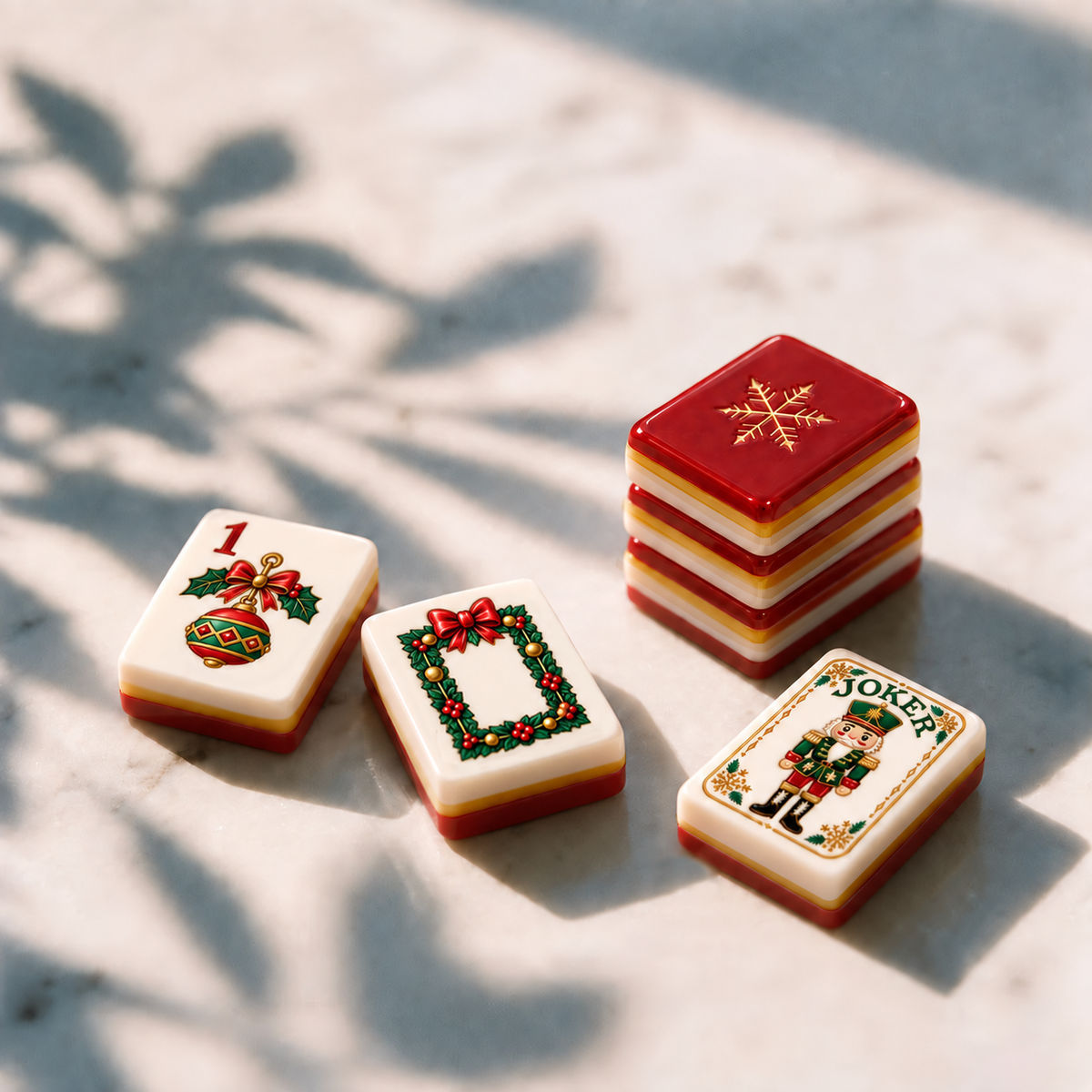
Malaysian mahjong plays with 144 tiles in three suits (Bams, Craks, Dots 1–9, four of each), 16 winds, 12 dragons, and 8 flowers—like American mahjong, but with no jokers or blanks. Players draw and discard in turn, building hands from exposed melds (pungs, kongs, chows) and a final pair. Winning happens when your 13 tiles plus a drawn or discarded tile form a valid hand: often a "all pungs" or "mixed" pattern. Turns move faster than American play because there's no Charleston tile-pass ritual, no hand verification against a printed card, and no rigid yearly pattern list—players agree on valid patterns before the game starts. A round typically lasts 30–90 minutes. Basic equipment includes a set of 144 tiles, a mat for organization, and racks to hold tiles upright. The main strategic difference: Malaysian play emphasizes reading opponents' discards and quick decision-making rather than memorizing fixed hand patterns.
How does Malaysian mahjong tile setup differ from American?
Malaysian sets contain exactly 144 tiles: three complete suits (Bams, Craks, Dots) with numbers 1 through 9, four copies each (108 tiles); plus four winds (N, E, S, W), four copies each (16 tiles); four dragons (Red, Green, White, Blank), four copies each (16 tiles); and eight flowers in two ranks, four copies each (8 tiles). American mahjong adds eight jokers and four blanks to reach 160 playing tiles; Malaysian play omits jokers entirely, making draws depend wholly on the wall and discard pile. This means a tile you need is either in the wall, discarded by an opponent, or held by another player—there's no joker wildcard to substitute. The walls are built identically: four walls of 36 tiles each, stacked two high, drawn from the end after the break (where the dice result lands). Because no jokers exist, chows (1-2-3, 4-5-6, etc. sequences) are just as common as pungs (three identical tiles), and both can be called or exposed mid-hand without triggering a meld penalty.

What hand patterns win in Malaysian mahjong?
Malaysian winners vary by regional rule, but the most common framework divides hands into five types: all pungs (no chows), all chows (no pungs), mixed (both pungs and chows), honor-heavy (mostly winds and dragons), and special patterns like thirteen orphans or seven pairs. A valid winning hand always contains exactly 14 tiles: thirteen in combination (melds and pairs) plus one final tile that completes the hand. Unlike American mahjong, there's no reference card to consult—the table agrees on which patterns count before play begins. Many groups allow "open hand" play, where you can call and expose any meld (even chows) the moment an opponent discards a matching tile or you draw it from the wall. Some groups restrict chow-calling to only your own discard or wall draw, not others'. The winner declares mahjong and the hand scores immediately based on its complexity: all pungs score higher than mixed, honor hands score highest. Common regional variations in Malaysia itself include Cantonese-style rules (emphasizing seven-pair and honor hands) and Fujian-style rules (more flexible on chow combinations). Before sitting, always ask the group which patterns they recognize and how many points each is worth.
How do turns and calling work in Malaysian play?
Each player takes a turn in wind order (East, South, West, North). On your turn, you draw one tile from the wall (or steal from the discard pile via a called meld), then discard one tile face-up for others to see. The next player can either take that discard to complete a pung, kong, or chow, or pass it and draw from the wall. If you call a discard, you expose the meld and continue your turn by discarding another tile. If you draw the tile you need from the wall, you can also expose a meld, but this doesn't delay your turn. Crucially, only the player whose turn would be next can call a discarded tile—in some variants, all players can call simultaneously, and the closest player (or the one who called first) gets it. Once a meld is exposed, all future draws for that meld come from the wall only; you can't steal an opponent's discard into an already-exposed meld. A kong (four identical tiles) can be called from a discard or completed when you draw the fourth tile from the wall. After a kong, you draw a bonus tile from the end of the wall to compensate for using an extra tile. The game ends when one player completes a 14-tile winning hand or when the wall runs dry and no one can draw.
What's the scoring difference compared to American mahjong?
Malaysian mahjong scores differently than American, which uses complex point tables and counts per suit and wind position. Malaysian scoring is simpler: the winner collects points from each other player based on hand type and any scoring bonuses. A basic hand (mixed pungs and chows) might earn 1 point per opponent; a difficult hand (all pungs or all honors) might earn 4 or 8 points. Kongs add bonus points because they use extra tiles. Going out on a wall draw (self-drawn win) often earns double from all players; going out on a discard earns from the discarder only. Many groups use a "base payment" system: one base value per hand, then double or triple it if the hand includes specific honor tiles or bonus conditions. Unlike American mahjong, where hand verification is precise and claims are checked against the league card, Malaysian play trusts table consensus—if everyone agrees your hand is valid, it is. This speeds up play dramatically but requires all four players to know or agree on the rules before the game starts. Typically, three to four rounds of play (one player as East wind per round) constitute a complete game session. One player might act as scorekeeper, tallying cumulative points across all rounds and declaring a final winner when everyone agrees to stop.

Which variant rules should you confirm before you play?
Regional and household rule variations are common enough that a five-minute conversation before dealing prevents disputes. Use this quick checklist to align with your table:
Rule Element | Ask Your Table | What It Affects |
Chow calling | Only self, or from any player? | Speed of play, meld access |
Kong bonus | Draw extra tile? Which tile (end or next)? | Tile availability, hand completion odds |
Win conditions | Wall draw vs. discard payout; self-drawn double? | Scoring and strategy |
Special hands | Seven pairs, thirteen orphans, all honors—legal? | Hand rarity and point values |
Pung vs. chow points | Does all-pungs score higher than mixed? | Hand type strategy |
Table stop | Play until wall is empty or until someone wins? | Game length and player elimination |
Wind round order | E–S–W–N or another sequence? Does East repeat? | Turn order and session length |
Confirm these seven items and write them down if playing with new people. Most disputes stem from unclear kong rules or winning-tile ownership (did someone discard it into your ready hand, or did you draw it?). Having written agreement prevents bad feelings.
🀄 Shop best-selling mahjong sets →
What equipment do I need to play Malaysian mahjong?
You need a 144-tile set—the standard Asian mahjong inventory with no jokers or blanks. A mahjong mat helps organize tiles visually; choose one with clear hand-layout zones and durable fabric, especially if you're playing weekly. Racks with pushers let you hold and arrange your 13 tiles upright and hidden from opponents, and the pusher helps you grab and discard tiles smoothly without fumbling. Many players buy travel bags to protect the set during transport; Malaysian mahjong is a social game and sets often travel to homes and gatherings. A scorepad or phone notes app tracks running totals; a die or dice determines wall break position (usual rule: one die tossed by East wind, or two dice for variance). Some tables use a wind marker token to track which player is East. Our best-selling collection includes full 160-tile sets (144 playing tiles plus spares) with durable acrylic tiles and protective cases—all sold with free US shipping. For a Malaysian-specific session, you'll ignore the eight spare jokers and use only the 144 core tiles.
🎁 See our most-loved mahjong sets & accessories →
How does Malaysian mahjong strategy differ from American?
American mahjong strategy centers on memorizing hand patterns from the annual league card and building toward one fixed pattern. Malaysian mahjong strategy is fluid: you adapt as tiles are discarded and opponents' melds are exposed. Since chows are legal and callable, you're watching for runs (e.g., 3-4-5 Bams) as actively as pungs. Discard analysis is crucial—if an opponent discards the Red Dragon, they likely don't need honors; if the player after you discards 7 Craks, they're probably not collecting that suit. Reading the discard pile (the sequence of tiles all players have thrown) reveals which tiles are safe to play (everyone's already discarded them, so few people want them) and which are dangerous (no one's discarded them, so someone might be collecting them). In American play, your hand is mostly your own until you expose it; in Malaysian play, your exposed melds broadcast your strategy, so opponents adjust. This makes Malaysian play mentally faster—you're making snap decisions based on live data rather than long-term pattern matching. A typical week of Malaysian mahjong includes three to six rounds per session, each lasting 20–40 minutes, whereas American mahjong rounds often run 45–60 minutes due to card consultation and validation steps.
✨ Find your Mahstead set — free US shipping →
What to check before you buy a Malaysian mahjong set
If you're buying a traditional Asian 144-tile set specifically for Malaysian play, verify that the set includes no jokers and no blank tiles—those are American additions. Inspect tile clarity: engraved or printed characters on Bams, Craks, and Dots should be crisp and identical across all copies of the same number. Check that the four winds are marked (often N, E, S, W in Chinese characters or English), and that dragons are clear (Red, Green, White, and sometimes Blank, though Blank is interchangeable with White). Tile material matters: plastic sets are light and portable, acrylic sets are heavier and more durable for long play sessions, and bamboo/bone sets are premium but require careful handling. Make sure the case or bag is sturdy enough for weekly transport. Ask the seller whether the set is "144 only" or "144 plus spares"—a spare joker or two won't affect your game, but if you're replacing a set and want no confusion, choose one marketed as standard 144-tile Asian mahjong.

FAQ
Can I use an American mahjong set (160 tiles) to play Malaysian rules?
Yes, but set the eight jokers and any blanks aside before play—they're not part of Malaysian play. Use only the 144 core tiles (108 in three number suits, 16 winds, 12 dragons, 8 flowers). Your American set's tiles are identical in rank and suit to Asian sets, so gameplay is unaffected.
Is Malaysian mahjong faster than American mahjong?
Generally yes. Malaysian rounds average 20–40 minutes compared to 45–60 for American mahjong, because there's no Charleston tile-pass before play, no reference card to consult for hand validation, and no scoring verification step. Players agree on rules upfront and play flows continuously.
Do all chows count in Malaysian mahjong, or are some forbidden?
In most Malaysian variants, any consecutive 1-2-3, 2-3-4, etc. sequence counts as a valid chow, regardless of suit. A few regional styles restrict chows to number suits only (no honor chows with winds or dragons), so confirm before play. The key: never a sequence like 1-2-3 mixing different suits—each chow is one suit only.
What happens if the wall runs out and no one has won?
Most groups end the round as a draw (no payout) and move to the next round with the next player as East wind. Some tables allow one bonus draw per player from the end of the wall, but this is regional. Agree on the rule before dealing.
How many people can play Malaysian mahjong?
Officially four players—one at each direction (East, South, West, North). Two- or three-player variants exist but are less common and require house rules for tile management and turn order. Beginners should start with four.
Can I call a chow from any player's discard, or only the player before me?
This varies by region and table. Most Malaysian groups allow only the next player in turn order to call a discard into a chow. Some allow all players to call simultaneously, with the nearest player (or quickest caller) getting the tile. Confirm this rule with your table at the start—it dramatically changes play speed and strategy.
Is the 1 Bam always marked with a bird?
On most traditional tiles, yes—the 1 Bam shows a stylized bird (often a peacock). On modern printed sets, it may be a single large character. The 1 Bam is visually distinct from the 9 Bam in either case, so gameplay is unaffected.


View More
View More
View More
