
Mahjong vs Go: Which Brain Game Suits You?
Last updated: Nov 23, 2026
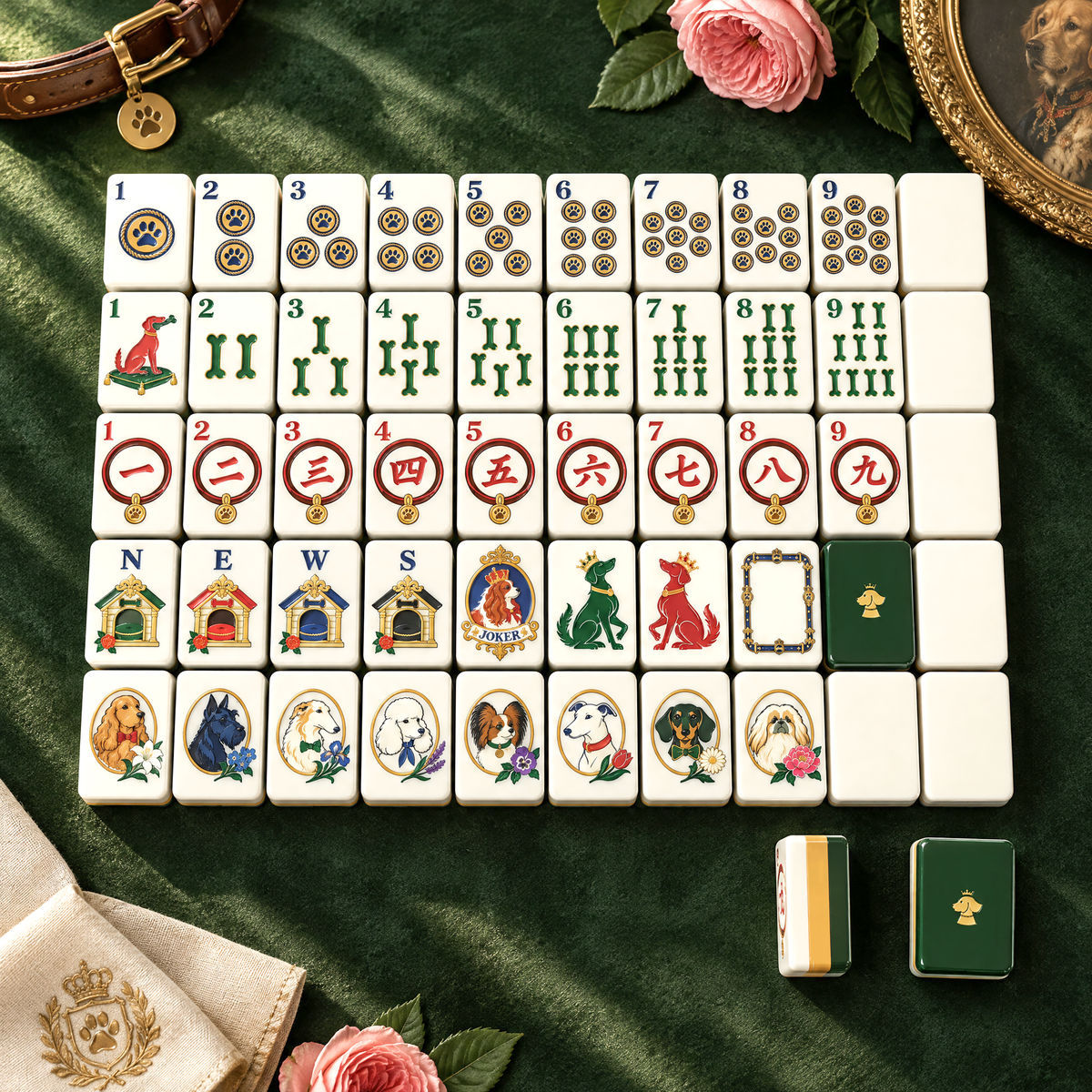
Mahjong and Go are both strategic pattern-recognition games, but they work in fundamentally different ways. Go is a two-player territory-control game played on a 19×19 board with black and white stones; you gain points by surrounding empty space and capturing opponent stones. Mahjong is a four-player (or three-player) tile-matching game where you draw, discard, and collect sets to form a complete hand from the current year's legal patterns—in American mahjong, you use 152 tiles across three numbered suits, winds, dragons, and flowers. Go has no luck; mahjong involves both skill and tile draw. Go games can last 30 minutes to several hours; an American mahjong hand takes 10–20 minutes. Go teaches patience and long-term planning; mahjong rewards memory, speed, and social reading. Neither is objectively "better"—it depends whether you prefer head-to-head silent competition or four-handed team-oriented play with conversation and laughter.
How do the rules actually differ?
Go and mahjong look like board games but operate on opposite principles. Go uses a blank board and stones to claim territory; neither player starts with pieces—they build position as they play. Mahjong starts with all 152 tiles drawn; you don't build the game board—you build your hand by collecting matching sets. In Go, every move is permanent and visible to both players. In mahjong, players conceal most of their tiles; information is hidden and revealed gradually. Go rewards the player who sees furthest ahead; mahjong rewards the player who adapts fastest to unpredictable tile draws.

Why does team play matter?
American mahjong is fundamentally a four-player game where all players compete simultaneously, but the rotation of the "dealer" (East wind) and the settlement (who pays whom) creates a shifting alliance. Go is purely one-on-one: you and your opponent, no third party. If you love social play—banter, debate, and the energy of a table working through a hand together—mahjong thrives on that. If you prefer undistracted analytical dueling, Go isolates you with a single opponent. We host weekly four-person mahjong games; the social rhythm is part of the appeal. Go players often describe a meditative quiet instead.
Which game teaches what skills?
Skill | Mahjong | Go |
Memory | Must recall discards, track hidden tiles | Not required; board is fully visible |
Speed | Recognize hand patterns in seconds | No time pressure; move when ready |
Probability | Adapt strategy to tile luck; calculate odds of needed tiles | Pure logic; no randomness |
Long-term vision | Plan one or two hands ahead | Plan 50+ moves ahead |
Reading opponents | Infer hand strength from discard speed and patterns | Infer strategy from stone placement |
Team coordination | Watch partner's signals; understand rotated seating | Not applicable |
Go demands you see the entire board state and project your advantage 30–50 moves into the future. Mahjong demands you process incomplete information in real time—remember what other players have discarded, guess what they're holding, and adjust your hand strategy when the tiles don't fall your way. Neither is harder; they're hard in opposite directions.
How long does a game actually take?
A single Go game can run 30 minutes (quick casual play) to 2–3 hours (tournament or serious match). You're playing one game. A mahjong session typically runs 1–2 hours and contains 8–16 individual hands; each hand takes 10–20 minutes depending on how quickly players draw and discard. If you want a quick 15-minute mental break, mahjong fits that slot. If you want to sink into one long problem-solving arc, Go is the choice. Many Go players play multiple games in an evening to vary their focus; mahjong players typically commit to a session length and play multiple hands without resetting the board.

Which game has a lower entry barrier?
Go teaches its rules in 10 minutes: place stones, surround territory, capture opponent stones, count. You can learn Go basics and play a casual game immediately. Mahjong rules take longer to absorb, and American mahjong adds an extra layer—you must consult the current year's National Mah Jongg League card to know which hand patterns are legal. However, many people find mahjong easier to start because your learning curve is gentler; Go's strategic depth reveals itself only after you've played 50+ games. Mahjong's tile draw keeps beginners competitive against experienced players. Go's perfect information means a skilled player will beat a beginner almost every time.
When you're ready to try mahjong, our best-selling mahjong sets include all tiles, a score pad, and clear instructions—everything a first-time group needs.
🀄 Shop best-selling mahjong sets →
Does equipment matter differently for each game?
Go requires only a board and stones; any board works for casual play, and the game mechanics never change. Mahjong depends on your set quality and organization tools because you're managing 152 tiles rapidly, calling out hands under mild pressure, and keeping score across multiple rounds. A cheap lightweight set slides around mid-hand; mahjong mats keep tiles stable and protect your playing surface. Racks with pushers organize your tiles and speed up your ability to spot legal hands. A worn or poorly engraved set forces you to squint at suit symbols—wasting seconds you don't have. Go players care about board aesthetics and stone weight; mahjong players need functional, clear tiles and a mat to stay organized. That said, neither game demands expensive equipment to learn. A student-grade mahjong set and any flat table work fine. Once you're hosting regular games, upgrading to quality tiles and a mat makes the experience noticeably smoother.
🎁 See our most-loved mahjong sets & accessories →
For groups that travel or host occasionally, mahjong bags and cases protect tiles during transport and keep everything organized in one place.
Which game builds the strongest community?
Go has clubs, tournament circuits, and online platforms (like KGS, OGS) with ranked rating systems. It's a solitary game played in the company of one opponent, so community forms around matchmaking and rating. Mahjong thrives in standing groups—the same four people, same table, same night every week or month. The game itself demands you sit at a table together, talk through the hand afterward, and debate calls. American mahjong groups often span decades; ours includes players who've been together 15+ years. If you're seeking a competitive ladder and measured progress against strangers, Go's ranked system delivers. If you want a standing social commitment where you see the same faces and learn their betting patterns, mahjong is the answer.
What if you only have time for one?
Be honest: Do you have 90 minutes most weeks to commit to the same four people at the same table? Mahjong. Do you have 45 minutes and want to play against a different opponent each time? Go. Do you love puzzle-solving in silence? Go. Do you love reading people, gossiping, and eating snacks between hands? Mahjong. Do you want to measure your improvement numerically? Go's rating system does that. Do you want to feel the social high of making a great call or completing an impossible hand with your group? Mahjong delivers that in spades.
Most importantly: you don't have to choose. Many of us play both—Go on Tuesday, mahjong on Thursday. They use different parts of your brain. The barrier to trying mahjong is lower than Go because a beginner can win a hand on their second attempt; Go requires 20+ games before you play at all competitively. If you're curious about mahjong specifically, start with our beginner's guide, which walks through the hand-building process step by step.
✨ Find your Mahstead set — free US shipping →
What to check before you buy a mahjong set (if you're now leaning mahjong)
Tile clarity: Can you see the suit and number from arm's length? Engraved tiles wear better than printed.
Weight: Light tiles slide; heavier acrylic tiles stay put on a mat.
Completeness: Does the set include all 152 tiles, 8 jokers, a score pad, and the current-year National Mah Jongg League card? Many sets omit the card.
Included accessories: Does it come with a mat, racks, or pushers? If not, factor those costs in.
Durability for regular play: If you're hosting weekly, buy once—cheap sets chip and fade.
Our engraved American mahjong sets are built for long-term weekly play and include everything you need to start.

FAQ
Can beginners win at mahjong against experienced players?
Yes. Tile draws are random, so a beginner can complete a legal hand before an expert if the draws favor them. Go doesn't work that way—skill dominates from the start. That's why mahjong is more welcoming to new players.
Do Go and mahjong use the same board?
No. Go uses a wooden board (typically 19×19 lines) with stones. Mahjong uses all 152 tiles drawn from a wall and organized in your hand or on a rack. They don't share equipment.
How long does it take to get good at each game?
Go skill floors are higher—expect 50+ games before you can play competitively. Mahjong competence arrives in 5–10 games because the hand patterns are fixed (you study the card). Mastery of both takes years.
Which game is better for a corporate team-building event?
Mahjong, easily. It's four-player, social, and newcomers aren't at an overwhelming disadvantage. Go is one-on-one and requires two evenly matched players to be fun.
Can you play mahjong alone like you can practice Go problems solo?
Not really. Mahjong requires four players drawing tiles simultaneously; you can't play against yourself. Go has endless solo puzzle collections. If solo practice appeals to you, Go is the answer.
What if my group wants to play both?
Many groups do. Play Go on one night (one 1-hour game) and mahjong on another (one 90-minute session with 8 hands). They use different parts of your brain and attract slightly different player types, but there's overlap.


View More
View More
View More
