
Harbin Mahjong for Beginners: Rules, Setup & How to Start
Last updated: Nov 23, 2026
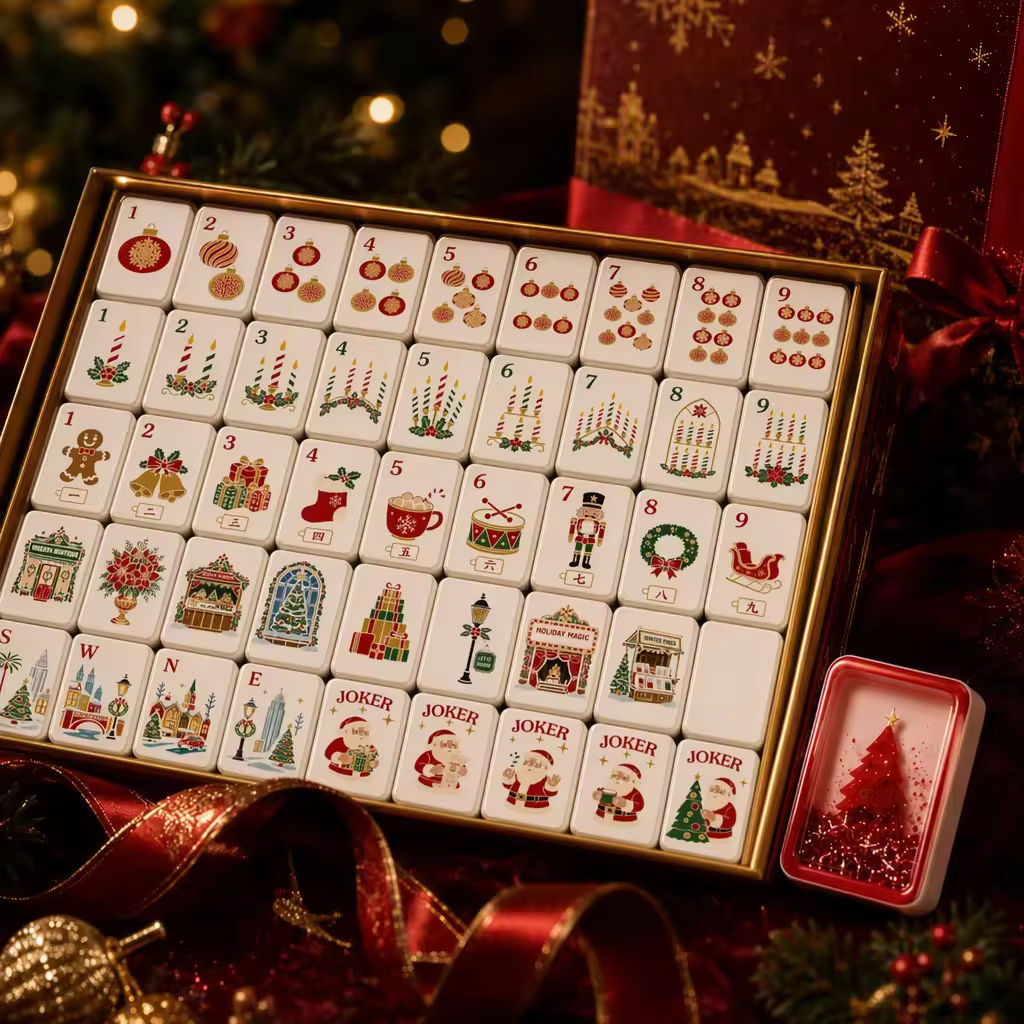
Harbin mahjong is a Chinese regional game played with 108 tiles (three suits: Bams, Craks, Dots 1–9, four copies each, plus winds and dragons) in a tile-passing format similar to American mahjong's Charleston but faster and more fluid. Games are typically 13–16 rounds; each player draws and discards one tile per turn. Unlike American mahjong, Harbin uses chows (sequences like 1-2-3), pungs (three identical tiles), and kongs (four identical). Hands win when the last tile forms a pung, kong, or chow, plus specific patterns from regional scoring rules. The game emphasizes speed and reading opponents' discards—you can call for needed tiles before your turn. A standard Harbin session lasts 1–2 hours with four players. Beginner sets work best with clear tile markings; many players transition from American mahjong using a simpler best-selling collection of quality sets adapted for variant play. Learning Harbin teaches you tile-reading skills that strengthen American mahjong play too.
How does Harbin mahjong differ from American mahjong?
The biggest difference: Harbin allows chows (sequences of three consecutive numbers in one suit), which American mahjong forbids. Harbin uses only 108 tiles versus American's 152, meaning fewer patterns to memorize. Harbin hands come from regional scoring rules—not a licensed card—so hand logic is more flexible. Discard calling is immediate and urgent; you call the tile you need before it hits the discard pile. Harbin feels closer to speed poker than American mahjong's deliberate, card-based strategy.
🀄 Shop best-selling mahjong sets →

What tiles are in a Harbin mahjong set?
Harbin uses exactly 108 tiles: 36 suit tiles (Bams 1–9, four of each; Craks 1–9, four of each; Dots 1–9, four of each), 16 wind tiles (four each: North, East, West, South), and 8 dragon tiles (two Red, two Green, two White). Honor tiles (winds and dragons) are played in combinations like suit tiles—three in a pung, four in a kong, or as scoring bonuses. There are no jokers in traditional Harbin. This smaller tile set makes setup quicker and memorization easier for beginners than American mahjong's 152-tile deck.
How do you set up and deal a Harbin game?
Setup order:
Four players sit around a table, North, East, South, West.
Shuffle all 108 tiles face-down and form a wall of 27 stacks (four tiles high, 27 deep) on each player's side—one complete wall per side.
East player rolls dice to determine dealer order.
The winning player from the previous hand (or a designated player if first hand) becomes East and draws first.
Each player in turn draws four tiles three times (12 tiles each), then the East player draws a 13th tile. Total: 13 tiles per player to start.
Common beginner mistake: Drawing from the wrong end of the wall. Always draw from the live end (not the dead end, where special draws like Kong draws come from in some variants). Mark your wall end clearly before play.
What are the basic hand patterns and winning combinations in Harbin?
Harbin hands are built from three types of combinations:
Pung: Three identical tiles (e.g., three 5 Dots or three East winds).
Kong: Four identical tiles (opens scoring opportunities and grants bonus draws in many Harbin rule sets).
Chow: Three consecutive numbered tiles in one suit (e.g., 3-4-5 Craks). This is forbidden in American mahjong but core to Harbin.
A winning hand has 14 tiles forming one of these patterns:
Four melds (pungs, kongs, or chows) plus a pair.
Five melds with no pair (in some regional rule sets).
Special patterns like "All Pungs" or "All Honors" (scoring bonuses).
Scoring varies by region, but a basic Harbin win is simpler than American mahjong—there's no licensed hand card to match. Players learn regional rules before sitting down; ask the table which variant they play (Harbin City rules, Harbin online rules, or Harbin mixed rules are common).
Pattern | Tiles | Scoring | Difficulty |
Four Melds + Pair | 14 tiles (3+3+3+3+2) | Base win | Easy |
Pung Win | 14 tiles, all pungs | 2× base | Medium |
Chow Win | 14 tiles, all chows | 1.5× base | Medium |
All Honors | 14 tiles, winds + dragons only | 3–4× base | Hard |
Kong Bonus | Four identical + melds | +1 per kong | Varies |
🎁 See our most-loved mahjong sets & accessories →
How does the discard and call system work in Harbin?
Harbin play is fast and interrupt-driven. Here's the turn sequence:
Active player draws one tile from the live wall and adds it to their hand (now 14 tiles).
Active player examines their hand and decides which tile to discard face-up into the center.
Other players immediately scan the discard. If any player needs that tile to complete a pung, kong, or chow, they call it before the next player draws.
First call wins the tile. The calling player takes the tile, completes their meld, and may discard immediately (hand stays 13 or 14 tiles depending on regional rules).
If no one calls, play passes to the next player (clockwise: East → South → West → North).
Timing is critical: Calls must happen within 1–2 seconds or the tile is dead. This speed teaches beginners tile-reading and attention—hallmarks of strong mahjong play across all variants. Many Harbin games forbid exposed melds on the table (all tiles stay in hand until winning declaration), so keeping focus is essential.
Common beginner mistake: Calling too slowly or assuming a tile is safe. In Harbin, never discard a tile another player just drew—they will likely call it immediately.

What scoring and scoring patterns should beginners know?
Harbin scoring depends on the regional ruleset in play, but basic principles are:
Base win: 1 point (or 1 chip per opponent).
Pung bonus: ×2 if all four melds are pungs (not chows).
Honor bonus: ×2 or ×3 if the hand includes winds or dragons in specific combinations.
Kong bonus: +1 point per kong exposed (or bonus draws per kong in some variants).
First-round win: Bonus multiplier (1.5× to 2×).
Last-tile win: Bonus (1.5×).
Example: A four-pung hand with two kongs and an East wind bonus might be worth 3–5 points depending on the table's rules. Most Harbin games settle scores after each round using chips, not cumulative card scoring like American mahjong.
Ask the table before playing which scoring method they use (point-based, chip-based, round-based). Beginners often see printed Harbin score charts at clubs or online; photograph or take notes before your first game.
What should you check before you buy a Harbin mahjong set?
Tile clarity: In Harbin, chows are called constantly, so suits must be unmistakable—Bam tiles are round, Crak tiles are cracked, Dot tiles are dots. Many beginner sets blur these distinctions. Choose tiles with high-contrast colors: Bams in one hue, Craks in another, Dots in a third.
Tile size and weight: Harbin play is fast; tiles should be easy to grab and manipulate quickly. Acrylic tiles are standard; ceramic or bone slows play and breaks more easily.
Wind and dragon clarity: Since honors appear in bonus patterns, ensure they're clearly labeled (N, E, W, S and Red, Green, White Dragon). Beginner sets sometimes use ornate symbols that confuse new players.
Complete 108 count: Verify you have exactly 108 playing tiles—no more, no fewer. Some sellers add jokers or extras that muddy the count.
Storage: A Harbin set lives in a sturdy bag; games are frequent and sets travel. Look for a travel bag or case with solid padding—Harbin acrylic tiles are durable but benefit from protection during transport.
Set-up mat: A mahjong mat with clear wall areas helps beginners organize the tile wall and discard zone, reducing confusion on turn order and draws.
✨ Find your Mahstead set — free US shipping →
Step-by-step: How to host your first Harbin game
Gather four players and agree on regional ruleset (Harbin City, Harbin online, or a hybrid taught by the strongest player).
Use a clear mat (or a smooth table) and set up your tile wall with one complete wall per player's side.
Deal 13 tiles per player as described above; active player (East) draws their 14th tile.
Establish discard order: After each hand, move dealer position clockwise.
Play 4 or 8 rounds (one round per direction: East, South, West, North); after each direction completes, rotate dealer.
Settle scores after each round using chips or a scorecard.
Play for 1–2 hours then tally final standings.
Beginner focus: Your first game, don't aim to win—aim to understand chows, practice calling, and feel the pace. Harbin teaches speed; American mahjong teaches precision. Both skills make you a better player overall.
What to check before you buy
Tile suit markings are unmistakable (Bam ≠ Crak ≠ Dot visually).
Set includes exactly 108 tiles with no blanks or jokers.
Acrylic or ceramic tiles are smooth and easy to grasp quickly.
Winds and dragons are clearly labeled (N/E/W/S, Red/Green/White).
Bag or case is padded and seals properly for transport.
A mahjong mat with wall zones helps organize play for first-timers.

FAQ
Can I use an American mahjong set to play Harbin?
No. American sets have 152 tiles including jokers, flowers, and honor multiples that don't fit Harbin's 108-tile structure or chow-based logic. Harbin requires its own 108-tile set to play correctly.
How long does a Harbin game take?
A full session (usually 8 rounds, two complete rotations of dealer position) takes 60–90 minutes with four experienced players. Beginners add 20–30 minutes per round due to slower calling and pattern recognition.
What's the biggest rule difference between Harbin and American mahjong?
Harbin allows and encourages chows (sequences like 1-2-3), while American mahjong forbids them entirely. This makes Harbin faster and more flexible in hand construction.
Do I need a scorekeeper for Harbin?
Most groups use chips or a written scorecard to track points after each round. Scorekeeping is faster and more transparent than American mahjong's card-based systems, making Harbin beginner-friendly.
Where can I find a Harbin mahjong game to join?
Search for Chinese mahjong clubs in your city via community centers, libraries, or meetup boards. Harbin is popular in cities with large Chinese communities and among players learning multiple variants.
Can three or two people play Harbin mahjong?
Traditional Harbin requires four players. Two- or three-player variants exist but use modified rules and are less common; ask your table if they offer shorter-player games before joining.
What if I call for a tile but another player calls first?
The first caller (usually judged by who spoke first) wins the tile. If timing is unclear, the active player decides. In friendly games, ties usually go to the player sitting closest to the discarder.


View More
View More
View More
