
Mahjong vs Canasta: Which Game Fits Your Table?
Last updated: Nov 23, 2026
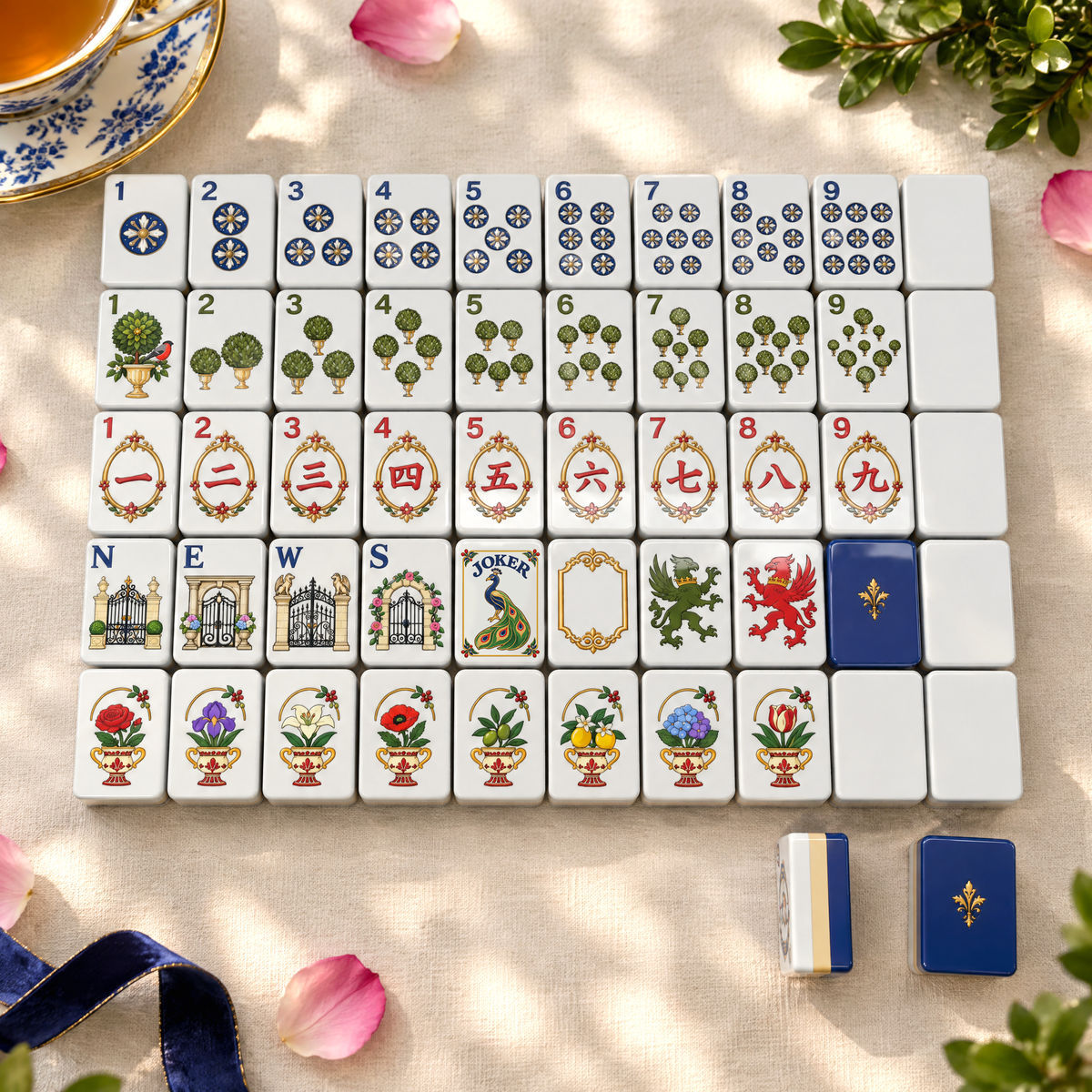
Mahjong (Chinese origin, played in American form with 152 tiles across four suits and winds) wins a complete hand by matching patterns from that year's official card—a closed-ended, strategic game where the card governs legal hands. Canasta (South American rummy, played with standard playing cards or special canasta decks) scores by melding sets and runs openly, with no master pattern list—play continues until someone goes out. Mahjong demands memory of one year's card and takes 1–2 hours per session; canasta plays faster (30–60 minutes) and requires no card reference. Mahjong suits groups hosting weekly in-home games; canasta works better for casual, drop-in social play. Start with a best-selling mahjong set if your group wants ritual and structure; pick canasta if you favor flexibility and speed. Both are learnable in one sitting.
What do mahjong and canasta have in common?
Both games root in rummy—drawing and discarding tiles or cards to form matching groups. Players sit around a table, pass tiles/cards strategically, and race to complete a winning hand before opponents. Both require four players, a calm table, and steady focus. Both build lasting friendships and work as weekly rituals. Neither involves luck alone; both reward memory and foresight. That's where the kinship ends.

How does the goal differ between the two games?
In American mahjong, your goal is to complete one of several pre-set hand patterns printed on the annual National Mah Jongg League card—for example, a "hand" might require two Pungs (sets of three identical tiles) of Bams, one Kong (four identical tiles) of Winds, and a Pair (two identical tiles). You win only when you match that exact structure and call "Mahjong." Canasta asks simply that you meld cards into sets (three or more of the same rank) and runs (three or more cards in sequence of one suit), then go out—lay down your cards, and the first to empty their hand wins the round. Canasta has no pattern card; you create melds freely as long as they're legal combinations. This makes canasta more flexible and mahjong more codified.
Which game moves faster around the table?
Canasta typically runs 30 to 60 minutes per game, depending on player speed and discard strategy. A single round can feel snappy once everyone knows the meld rules. Mahjong takes longer—usually 60 to 120 minutes per complete session—because players must track the official card, watch for four-player wind rotations, and handle the Charleston (the ritual pre-game tile exchange). This isn't a drawback; many players prize the unhurried rhythm. If your group has limited evening time or prefers quicker turnovers, canasta wins. If you're building a weekly Thursday-night ritual where slowness is the point, mahjong's pace is a feature. We host games where the two-hour window feels too short.
What equipment do you actually need to start?
Comparison: Setup Requirements
Game | Tiles/Cards | Special Equipment | Learning Curve | Annual Updates |
Mahjong | 152 tiles | Rack, mat, official card | Steep (tile suit names, card patterns, Charleston) | Yes—new card each spring |
Canasta | 108–120 cards (2–3 decks) | None required | Gentle (standard card ranks, basic meld rules) | No—rules stay stable |
For mahjong, you need the tiles themselves, a mahjong rack with pushers to hold your hand (game-changer for wrist strain), a mat or table cover to protect your surface, the current year's National Mah Jongg League card, and a way to store it—a travel bag or case if you host at different homes. For canasta, you need two or three standard decks (or a dedicated canasta deck), a pencil, paper for scoring, and a flat table. Mahjong's equipment investment is real; canasta's is minimal. If you already own tiles or are building a collection, the barrier to mahjong entry is lower.
🀄 Shop best-selling mahjong sets →
Why do players choose one over the other?
Mahjong players love the ritual: the Charleston before each game, the shared card, the call of "Mahjong," the year-to-year discovery of new hands. It creates continuity and belonging. The closed set of patterns (1–40+ per year's card) means no one invents rules; disputes resolve by consulting the card. Mahjong also carries deep cultural resonance—Chinese, Jewish, and Asian-American communities have played it for generations, and newer players often feel they're joining a lineage.
Canasta appeals to flexibility seekers: no card to memorize, easier onboarding for newcomers, and faster rounds mean you can squeeze in games between other activities. Canasta also scales well—you can play with three, four, or even five or six players (partnership variants exist). If your group is casual, rotating, or includes non-gamers, canasta invites them faster.
For weekly hosted groups with consistent players, mahjong tends to stick. For drop-in game nights or family visits where not everyone plays, canasta is more welcoming.

What's the hardest part to learn?
Mahjong's learning curve is steeper. You must master:
Suit names: Bams (circles), Craks (characters), Dots (bamboo—note the spelling).
The Charleston: a three-step tile exchange ritual that takes 10 minutes to execute the first time.
The card: reading hand patterns, understanding joker rules, recognizing which hands are "closed" (no exposed melds) vs. "open" (some melds can be shown).
Wind rotation: after each game, seats and wind assignments shift.
Joker logic: how jokers work in American mahjong—they can substitute for any tile except in pairs, and you must play them deliberately.
Canasta's learning curve is gentle. Card ranks (A, 2–10, J, Q, K) are universal; meld rules (three or more of the same rank, or a sequence) mirror solitaire. Most players pick it up in one game. The main complexity is scoring—points for melds, bonuses for natural vs. wild-card sets, and penalties for unmelded cards. But scoring comes after the fun; learning to play takes 20 minutes.
For a true beginner to mahjong, we recommend reading how to play American mahjong and playing three practice rounds before a real game. Canasta is playable after five minutes of explanation.
🎁 See our most-loved mahjong sets & accessories →
Which game builds a stronger player community?
Mahjong communities are tight and persistent. Players meet the same four people week after week, year after year, often at the same table. The annual card keeps the game fresh but stable—new hands to chase, old friends to sit with. Mahjong groups are common in cultural communities (Chinese, Jewish, Korean, Vietnamese neighborhoods), country clubs, libraries, and community centers; finding a group usually means asking around or checking local meetup boards. Once you join, you're expected and missed if absent.
Canasta communities are looser and more portable. Tournament play exists (with official rankings), but casual canasta thrives in bridge clubs, retirement communities, and game cafes. Players rotate in and out. The game is more "I feel like cards tonight" than "Tuesday is mahjong." Both models are valid; it depends on whether you crave belonging or freedom.
If you're moving to a new city, mahjong groups take you in as a skilled newcomer; canasta groups welcome you but don't expect long-term commitment.
What to check before you buy tiles or cards
Mahjong: Are you committing to weekly play? If yes, invest in a set with a travel bag so you can host or attend games without fumbling loose tiles. Do you want engraved tiles with personal touches? Our engraved American mahjong sets let you customize by name or occasion. Will you play year-round? You'll need access to that year's National Mah Jongg League card (free online or buy a laminated copy).
Canasta: Do you already own playing cards? If yes, you're ready today. If not, a standard deck costs little and works fine. You don't need a special deck unless you're playing tournament canasta. No storage concerns.
A final word: How to pick for your table
Ask yourself three questions:
Do I want the same game forever, or new patterns each year? Mahjong = new patterns annually; canasta = stable rules forever.
How much time do I have per session? Mahjong = 60–120 minutes; canasta = 30–60 minutes.
Am I building a permanent group or hosting varied friends? Mahjong = permanent group; canasta = both.
If you answered "new patterns," "I have time," and "permanent," mahjong is your game. Start with a best-selling mahjong set and a mat. If you answered "same rules," "quick sessions," and "varied friends," canasta is simpler and faster.
Both games are worth playing. Both build memory, strategy, and friendship. We've hosted both, and we'll play both until we can't shuffle tiles anymore.
✨ Find your Mahstead set — free US shipping →

FAQ
Can I play mahjong with canasta-style open melding?
No. American mahjong allows only fixed patterns from the annual card; you can't invent your own melds. You may expose Pungs (three), Kongs (four), Quints (five), and Sextets (six) of identical tiles only when matching the card pattern. This is what makes mahjong mahjong—the card, not player creativity.
Is canasta easier for complete beginners than mahjong?
Yes. Canasta uses standard card ranks and simple meld rules (three of a kind, or a sequence). Most players grasp the game in one sitting. Mahjong requires learning tile suit names, the Charleston ritual, the card, and joker logic—typically 2–3 games before you're comfortable.
Which game do I teach my parents first?
If they've played cards before, canasta. If they've played mahjong or want the cultural connection, mahjong. Neither depends on age; both reward memory and attention, which older players often excel at.
Can I play mahjong against a computer to practice?
Yes, online mahjong simulators exist (free and paid), though they may not enforce the current year's official card accurately. For American mahjong, practicing with real players is best because the card changes yearly and reading it aloud builds muscle memory.
Do I need jokers in my mahjong set?
Yes. American mahjong uses exactly 8 jokers as part of the 152-tile game set. Jokers substitute for any tile when the card allows; you cannot play a hand without them. Our 160-tile sets include the 8 active jokers plus spares.
Which game costs more to start?
Mahjong, if you're buying from scratch. A set, mat, rack, and case add up. Canasta needs only two decks (inexpensive). But if you already own mahjong tiles, the entry cost for mahjong is zero.
Can I play mahjong with three people instead of four?
Yes, but it's a variant. Consult 2 and 3 player mahjong rules for how winds and tile pools adjust. Canasta handles three players more naturally (one player sits out, or partnership rules shift).


View More
View More
View More
