
Mahjong Travel Set: What to Pack for Games On the Go
Last updated: Nov 23, 2026
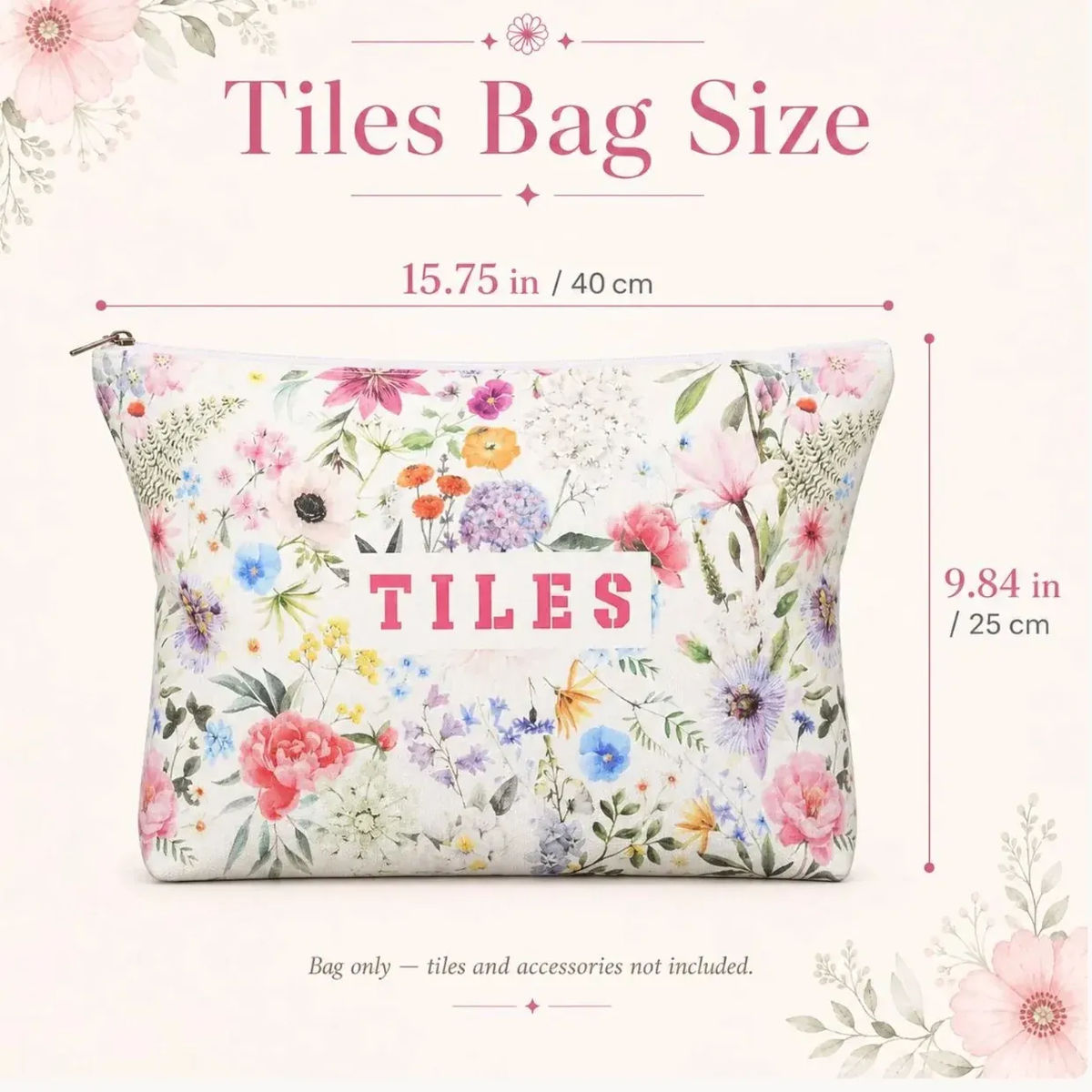
A mahjong travel set combines a 160-tile American set with a protective bag or case designed to move between homes, tournaments, or casual venues. Most travel sets fit in a shoulder bag or rolling case; the standard 160-tile set stays the same whether you travel or not—what changes is the carrying solution. A basic padded bag protects tiles during transport and costs far less than a hard case. Hard cases offer maximum durability for frequent fliers or competitive players. Mid-range soft cases with handles and compartments work best for weekly games between two locations. At Mahstead, we offer custom travel bags and cases sized for a full set plus a mat and racks. Choose based on how often you move your game (weekly vs. a few times a year), whether you drive or fly, and whether your tiles are standard acrylic or engraved heirlooms.
🀄 Shop best-selling mahjong sets →
What fits inside a mahjong travel bag?
A standard American set (152 playing tiles plus 8 jokers in a 160-tile total) fits inside most padded or semi-rigid cases. A full travel setup includes the set, a mahjong mat (folds to 14×14 inches when rolled), racks with pushers, and dice. Soft cases can hold all four components; hard rolling cases easily fit a set plus two mats. Hard cases are roughly 24 inches long, 12 inches wide, and 6 inches deep—standard checked luggage size on US domestic flights. Padded bags are more compact but offer less protection against impact. If you're carrying tiles valued beyond standard replacement cost—say, engraved sets with custom artwork—a hard case is the safer choice.

Should you buy a set with a bag included or separate?
Buying set and bag separately gives you control over quality and durability. A generic padded bag bundled with a cheap set often fails at the seams after a few trips. High-quality travel bags from Mahstead are designed to last years because they're built for weekly movers, not one-time buyers. Buying separately also lets you upgrade just the bag if your set survives longer than expected. For casual players (three to four trips per year), a soft padded case is enough; a hard case is overkill. For competitive or league players moving sets weekly, invest in a rollable hard case upfront. Bundled sets sometimes save money initially but rarely match the durability you need for regular travel.
🎁 See our most-loved mahjong sets & accessories →
How do you protect tiles during car travel?
Car travel is the gentlest scenario for mahjong tiles. A padded shoulder bag, laid flat on the back seat, absorbs bumps and temperature swings. Never leave tiles in a hot car for more than an hour—acrylic can warp or become sticky. Use a hard case if your car has no seat belt to secure the bag. Place the case on a flat surface (trunk floor or rear seat) rather than on a passenger seat where braking might shift it. If you're driving 2–3 hours each way weekly, a travel bag with comfortable handles saves your shoulders over a season. Avoid placing heavy objects on top of the bag in the trunk; stick to soft luggage or coolers nearby instead of car parts or tools.
What's the difference between a soft case and a hard case?
Feature | Soft Case | Hard Case |
Weight | 2–3 lbs | 5–8 lbs |
Durability | Good for weekly local play | Excellent for frequent flights or drops |
Cost basis | Mid-range | Higher per unit |
Compartments | 1–3 usually | 2–4 with removable dividers |
Portability | Shoulder strap or handles | Rolling wheels often included |
Tile protection | Padded; works for car or short walks | Shock-absorbing shell; survives airport baggage |
Setup time | 30 seconds (open and pull out) | 1 minute (unzip, open lid, arrange) |
Best for | Weekly games between two homes | Tournament players, frequent movers, heirlooms |
Soft cases are lighter and faster to open at a friend's house. Hard cases protect against luggage handlers, dropped bags, and accidental spills during setup. If you fly with your set even once a year, a hard case pays for itself in peace of mind.
How do you pack a mahjong set to avoid tile chipping?
Place the bag on a flat surface before packing. Lay the tile tray or container at the bottom, tiles already sorted by type or in their original compartments. Wrap the mat separately in bubble wrap if traveling by air; mats fold but don't compress well. Place the mat along one side of the case, then slide racks and pushers in next to it. Fill gaps with soft cloth or bubble wrap so nothing shifts during transport. Never stack heavy items on top of the closed case. If packing in a car, use the back seat or trunk floor, not a roof rack where temperature and UV exposure degrade acrylic. Check the case's interior after the first trip—if tiles rattle, add padding.

Can you travel with a full mat, or should you buy a compact mat?
A full-size mahjong mat (roughly 27×27 inches when unrolled) is heavy and bulky but creates a proper play surface. A travel or compact mat (roughly 20×20 inches or smaller when unrolled) saves space and weight in a travel case. For weekly games in the same two homes, use one full mat at each location and leave it there—no transport needed. If you're moving a mat every session, a compact mat cuts packing time by half. Rolling a mat tightly (tile-side out, bamboo frame along the inside) lets it fit in most travel bags without damage. We offer mats designed for travel—they're lighter acrylic or nylon backing, easier to roll, and still durable for years of use.
✨ Find your Mahstead set — free US shipping →
What to check before you buy a travel set or bag
Bag interior dimensions: Confirm your set (or set + mat + racks) actually fits. Measure your tile container or tray before ordering.
Material: Padded fabric absorbs shock; hard plastic protects against punctures. Check reviews from players who transport by air versus car.
Compartments: More dividers mean less tile shifting. For a full setup, look for at least two sections (one for tiles, one for mat/racks).
Handle or strap comfort: Test weight distribution if possible. Shoulder straps should have padding if you're carrying weekly.
Zipper and seam strength: Open and close the case 10 times in-store (or check photos and videos from other buyers). Poor zippers fail after 5–10 trips.
Corner and edge reinforcement: Hard cases should have bumpers. Soft cases should have double stitching at stress points.
Return policy: Travel gear is only useful if it survives the first few trips. Confirm you can exchange a defective case within 14 days.
Our travel bags and cases are built for players who game weekly, not casual buyers. Each is tested by our own players before it goes to market.
Does a travel set cost more than a home set?
The tiles themselves cost the same whether you travel or not—a 160-tile American set is a 160-tile American set. What changes is the bag or case. A basic padded bag adds modest cost. A hard rolling case with compartments can double the total price of a basic set. If you're a competitive or league player, the bag investment pays off by protecting a set you'll use for years. Casual players (once or twice a season) might skip a travel bag entirely and use a pillowcase or cardboard box for occasional moves. Most weekly players find mid-range soft cases the sweet spot: better protection than a pillowcase, lighter and cheaper than a hard case.
Which travel set is best for airport security and TSA rules?
Mahjong tiles are not restricted items—they pass TSA screening like any other game. Pack your set in carry-on or checked luggage; neither triggers suspicion. A hard rolling case labeled with your initials or a luggage tag speeds identification if it's misplaced. TSA may open and inspect the bag; padding and compartments protect tiles from being spilled or crushed during inspection. Never pack tiles in a locked case—TSA may force it open. Soft cases are faster for TSA to inspect and repack. If flying frequently (more than twice a year), a hard case with wheels is worth the weight because it rolls through airports instead of adding to your physical carry.

FAQ
Can a regular suitcase work for traveling with a mahjong set?
Yes, if your set container fits inside and you pad it with towels or bubble wrap. A suitcase gives maximum protection but is overkill for weekly local play. A dedicated travel bag is faster to pack, easier to unzip at a friend's house, and saves luggage space for other items on family trips.
How often do mahjong tiles get damaged during travel?
Damage is rare if you use padded or hard-shell protection. Most breakage happens when tiles are packed loosely or stacked under heavy objects. Using a proper travel bag cuts damage risk by over 90% compared to no padding, based on feedback from our weekly players.
Should I buy a travel set for my first mahjong purchase?
If you're new to mahjong and not yet sure about regular play, start with a best-selling home set and add a travel bag only after you've hosted or attended three or four games. This lets you confirm your game schedule before investing in portability.
What's the weight difference between a soft and hard travel case?
Soft cases typically weigh 2–3 pounds; hard cases run 5–8 pounds depending on size and material. The difference matters if you're flying—every airline has baggage weight limits—but is negligible for car travel.
Can you fit a full mat inside a travel case, or should you ship it separately?
A full mat rolls to roughly 14 inches long and 4 inches in diameter; most hard cases fit one along the side. Soft cases can fit a rolled mat but with less room for tiles and racks. If you're mailing your set to a venue, ship the mat in a separate padded envelope to avoid creasing.
How long does a travel bag last before zippers or seams fail?
A quality travel bag lasts 3–5 years of weekly use if seams are double-stitched and zippers are heavy-duty. Cheap padded bags may fail after 1–2 years. Our players report that bags from Mahstead hold up through consistent weekly transport because we test them in real game scenarios before offering them.
Is an engraved or custom mahjong set worth protecting with a hard case?
Yes. Custom engraved mahjong sets represent both sentimental and financial investment. A hard case costs less than replacing a damaged set and extends its life by decades. If a set is a gift or family heirloom, hard-case protection is non-negotiable.


View More
View More
View More
