
Mahjong Travel Set for Beginners: What to Buy & Why
Last updated: Nov 23, 2026
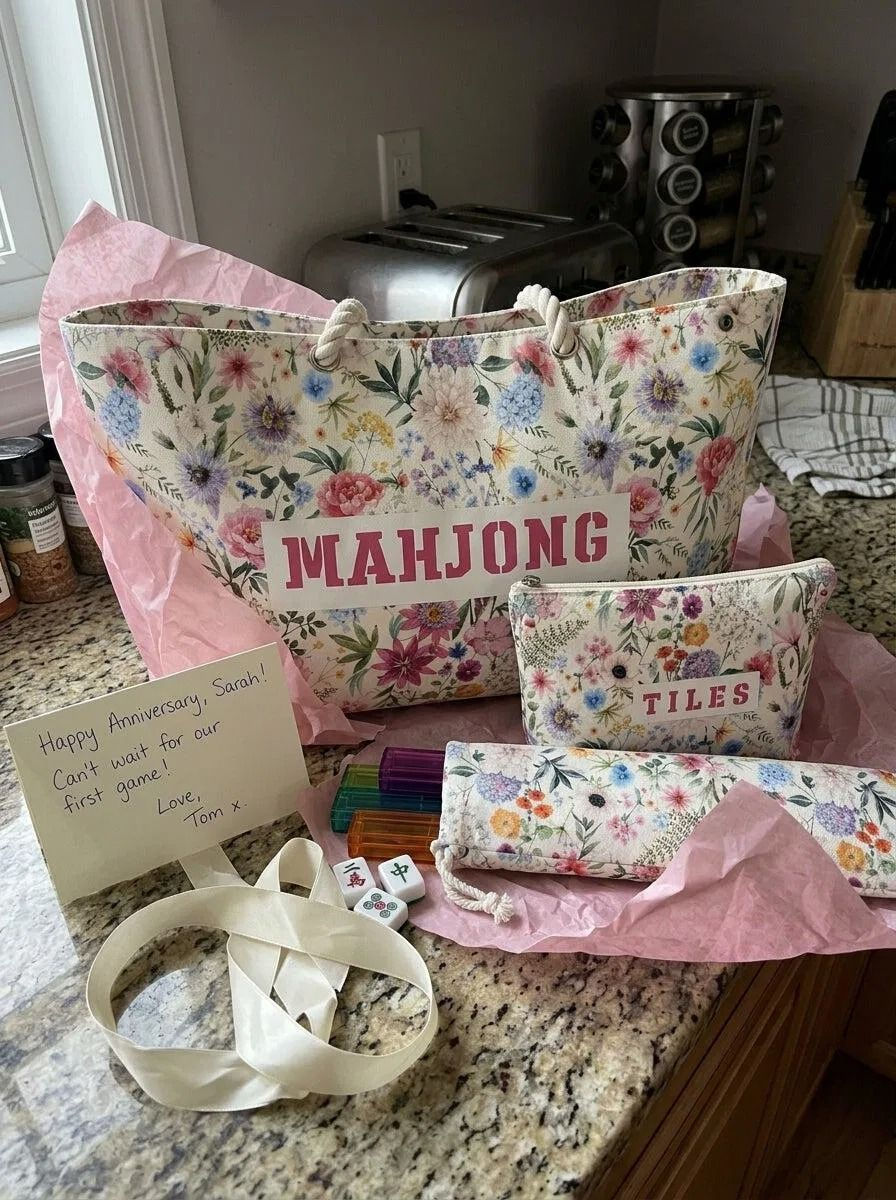
A mahjong travel set for beginners combines three essential pieces: the tiles, a carrying bag, and supporting gear like racks and a mat. When you're learning American mahjong, you need the correct tile inventory (152 playing tiles plus spares) and gear that doesn't slow down your setup at a friend's house or coffee table. Beginners often overspend on decorative cases or underbuy on bag durability, then regret it after a few trips. We've watched new players pull tiles from backpacks in crumpled bags and lose jokers within a month. This guide shows you exactly what to evaluate before buying, compares practical setups for different play styles, and flags the common mistakes we see weekly.
🀄 Shop best-selling mahjong sets →
What exactly do you need in a travel mahjong set?
A complete travel set includes 160 acrylic tiles (152 playing tiles, 8 spares), a carrying bag with organized compartments, a set of racks with pushers, a mat, and dice. The tiles are numbered and suited (Bams, Craks, Dots) plus winds, dragons, flowers, and jokers—everything required to play American mahjong from the current year's National Mah Jongg League card. Racks hold your hand and keep tiles upright so opponents can't see them; pushers help you manage revealed melds cleanly. A mat defines the center playing area and prevents tiles sliding across uneven surfaces. Dice roll to determine the starting player. For beginners, a soft-sided travel bag with padded compartments protects tiles far better than loose storage, and it's easier to carry than a rigid case. Our travel bag collection includes designs purpose-built for beginners—some organized by tile type, others with elastic straps to keep racks secure during transport.

How do beginners choose between acrylic, bone, and bamboo tiles?
Acrylic tiles are ideal for travel: lightweight, durable, and resistant to warping in temperature changes or humid environments. Bone-and-bamboo tiles are traditional and beautiful but heavier, fragile if dropped, and absorb moisture—risky in cars or plane overhead bins. Bamboo backing also cracks if stored in direct sun or heat. Acrylic doesn't stain easily and survives accidental drops without chipping. For a beginner learning the game (not yet a collector), acrylic is the right choice: you'll play more often if you're not terrified of damaging expensive tiles. We recommend acrylic for anyone traveling more than once a month or playing outdoors.
What's the difference between a soft bag, hard case, and rolling luggage for mahjong?
Bag Type | Weight | Durability | Setup Speed | Best For | Consideration |
Soft-sided travel bag | 2–4 lbs | High (padded) | Fast (pull and play) | Weekly games, coffee shops, homes | Fits car doors, doesn't block view |
Hard case | 5–8 lbs | Very high | Slow (heavy lift) | Air travel, storage | Overkill for casual play; hard to fit in small spaces |
Rolling luggage | 6–10 lbs | Very high | Medium (roll + carry) | Multiple sets, long trips | Bulky if playing indoors; better for tournaments |
Backpack with straps | 1–2 lbs | Medium | Medium | Solo players, public transit | Tiles may shift; no rigid protection |
For beginners playing weekly at a friend's house, a soft-sided travel bag is fastest. You pull it out, racks are in their slots, the mat unfolds, and you're playing in two minutes. Hard cases look impressive but weigh more and intimidate newcomers who worry about "official" gear slowing down casual games. Rolling luggage makes sense only if you're traveling via plane with tournament sets or storing multiple sets long-term.
🎁 See our most-loved mahjong sets & accessories →
Should beginners buy a mat and racks with pushers in the travel set, or separately?
Buy them together as a set. Bundled travel sets are cheaper than buying tiles, a bag, racks, and a mat separately—and everything fits the same bag. Mats vary in size (typically 26×26 inches for American play) and material: felt is softest on tiles but retains spills; vinyl is waterproof and easier to clean. Racks with pushers come in wood or plastic; plastic is lighter for travel and easier to sanitize between players. When browsing mahjong racks with pushers options, check that the travel bag's compartments fit your chosen rack height and width—some bags are too shallow for tall wooden racks. Most travel-focused sets we sell pair compact plastic racks and a lighter mat to reduce luggage weight.
What mistakes do beginners make when buying a travel set?
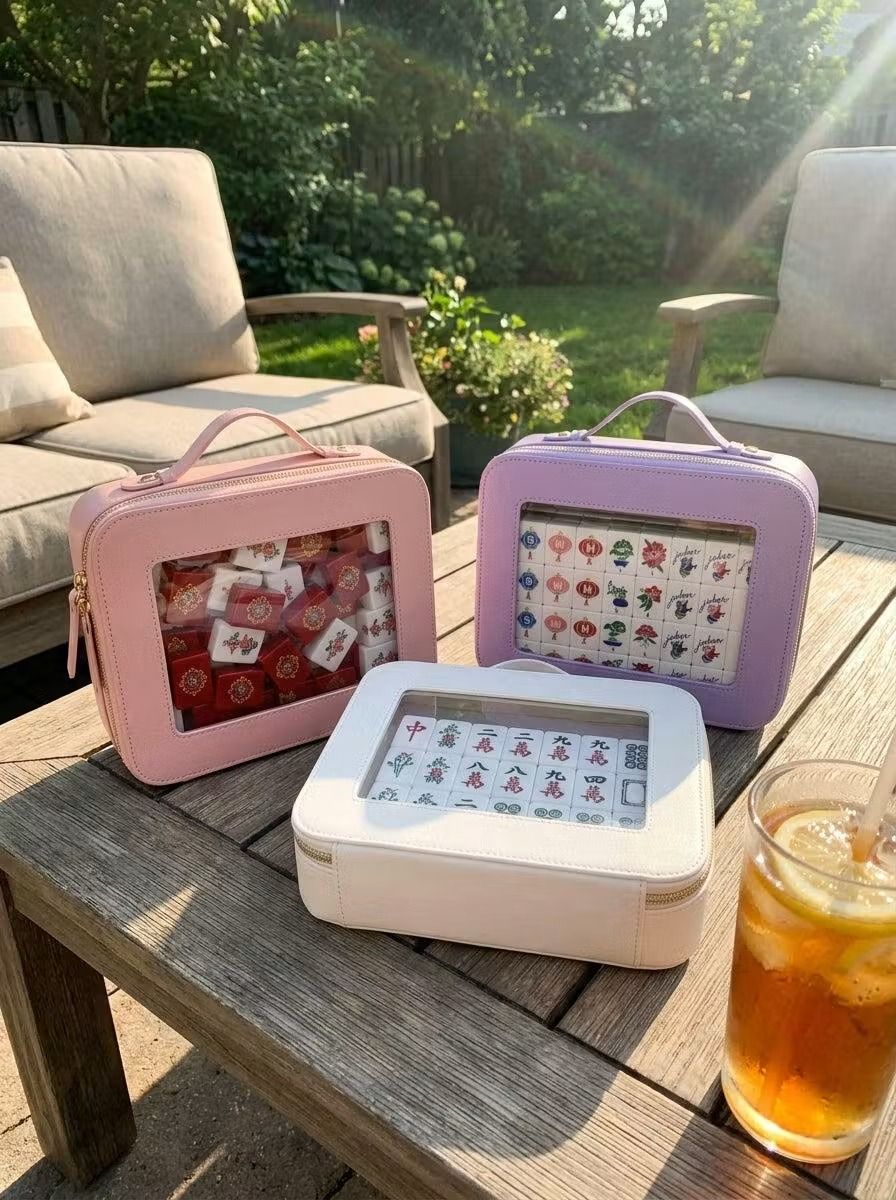
Mistake 1: Assuming all 160-tile sets are travel-ready. Many sets come in decorative boxes designed for home display, not portability. A cardboard box takes up space, breaks easily, and you'll end up removing tiles into a drawer anyway. Always check whether the set includes a dedicated travel bag; if not, budget for one.
Mistake 2: Buying a mat too large or too rigid. A mat larger than 32×32 inches won't roll compactly and becomes a pain to carry to a car or into someone's home. Rigid mats (those with a hard backing) are durable but don't compress. For travel, choose a lightweight felt or neoprene mat that rolls tight.
Mistake 3: Neglecting spare tiles. A 160-tile set has 152 playing tiles plus 8 spares—those extras matter. If you lose a joker at a friend's house, you reach into the travel bag's spare compartment and continue play. Without spares, one lost tile stops the game. Never buy a 144-tile set for travel; American mahjong always requires 152 tiles.
Mistake 4: Skipping the pushers. Some budget travel sets don't include racks and pushers, figuring "you can use your hands." Your hands tire fast, and opponents see your tiles. Pushers cost little; including them in a travel bundle saves you money compared to buying separately.
Mistake 5: Choosing a bag with no tile compartments. A travel bag that dumps all tiles loose into one pocket guarantees loss and breakage. Compartments or velvet pouches keep suits separated, making setup faster and tile longevity longer. Look for bags with at least 4–6 labeled sections.
✨ Find your Mahstead set — free US shipping →
How do you know if a travel set includes everything before ordering?
Check the product description for this exact list:
152 playing tiles + 8 spares (always 160 total)
Travel bag or carrying case (soft-sided preferred for beginners)
Racks with pushers (should fit the bag)
Mat (should be rollable, not rigid)
Dice
If any of these five items are listed as "not included" or "sold separately," add them to your order or choose a different set. Many beginner sets from our best-selling collection bundle all five—that's the best value. Compare two similar sets by counting what's actually in the box before checkout.
What about engraved or personalized travel sets for beginners?
Personalized tiles are a wonderful gift for someone committed to learning mahjong, but not for a true beginner who hasn't played weekly yet. Engraving adds cost and time—useful only after you know you'll play regularly. If a friend is a brand-new beginner, start them with a standard set; if they love it after three months, gift them engraved American mahjong sets later as a celebration. That said, engraved sets ship in the same travel-friendly formats as plain sets, so the portability advice here applies equally.
A practical framework: matching travel set type to your play style
Play weekly at one friend's house? A soft travel bag with compact racks and lightweight mat. Weight is low priority; durability and setup speed matter most.
Play at different locations each week? Add a backpack-style bag with shoulder straps. Hands-free carry in grocery-store parking lots or public transit is crucial.
Travel by car an hour or more for games? Invest in a hard case or rolling luggage if you also carry the mat and racks. The tiles are already a set; protecting them during highway drives justifies the weight.
Play in outdoor or humid climates (poolside, patios)? Acrylic tiles only, and a waterproof travel bag. Moisture-resistant materials prevent mold and swelling.
Play solo as a beginner (learning the card and hands)? A compact backpack set without a large mat. You're studying at a desk, not hosting; lighter is faster to set up and put away.
This framework helps you avoid overpaying for features you won't use and underpaying for protection you need.

FAQ
Do I need to own a mahjong set to learn the game?
No. Community centers, libraries, synagogues, and mahjong clubs often provide sets during lessons. Borrow one or use theirs for your first month. Buy a personal set once you're playing weekly—usually after 4–6 casual games.
Can I use my travel set at home, or should I buy a separate home set?
Travel sets work fine at home and last longer because you're not moving them. Many beginners use one travel set everywhere. Home-only sets are deeper investments (nicer tiles, heavier materials) if you play daily and never leave the table.
What's the lightest travel set available for air travel?
Acrylic tiles in a soft-sided travel bag with plastic racks and a rollable neoprene mat weigh 3–5 pounds total. This fits most airline carry-on limits. Check your airline's weight rules before booking; TSA allows game tiles as carry-on.
Do travel sets from Mahstead come with instructions for beginners?
Our travel sets include tiles, racks, mat, and bag. For learning rules and hands, beginners should reference the current year's National Mah Jongg League card (available separately) and beginner guides. Our how to play American mahjong blog post walks through hand reading and play mechanics.
What should I do if a tile breaks or gets lost during travel?
Every 160-tile travel set includes 8 spare tiles. If you lose a joker or non-essential tile, use a spare. If you lose a suit tile (a Bam, Crak, or Dot needed for your hand), you'll need to end the round or borrow a replacement from another player's spare set. Spares exist precisely for this scenario—one reason a 160-tile set is better than a 144-tile set for travel.
Can beginners play mahjong on a vacation with a travel set?
Yes. Pack a set, bring the current year's mahjong card, and play anywhere with a flat surface. Bring your own mat to ensure consistent playing conditions if playing at rental homes or hotels with unfamiliar tables. Many travelers enjoy teaching mahjong to friends or family during vacations—a travel set makes this possible.
How long do acrylic tiles last with regular travel use?
Acrylic tiles from quality manufacturers survive years of weekly play and transport. Racks and bags wear faster; tiles are the longest-lasting component. Mats and pushers may need replacement after 2–3 years depending on use. Tiles themselves outlast the bag or mat, so a travel set remains playable by refreshing just the bag and mat if needed.


View More
View More
View More
