
Mahjong Travel Bag Reviews: What Actually Matters When Choosing
Last updated: Nov 23, 2026
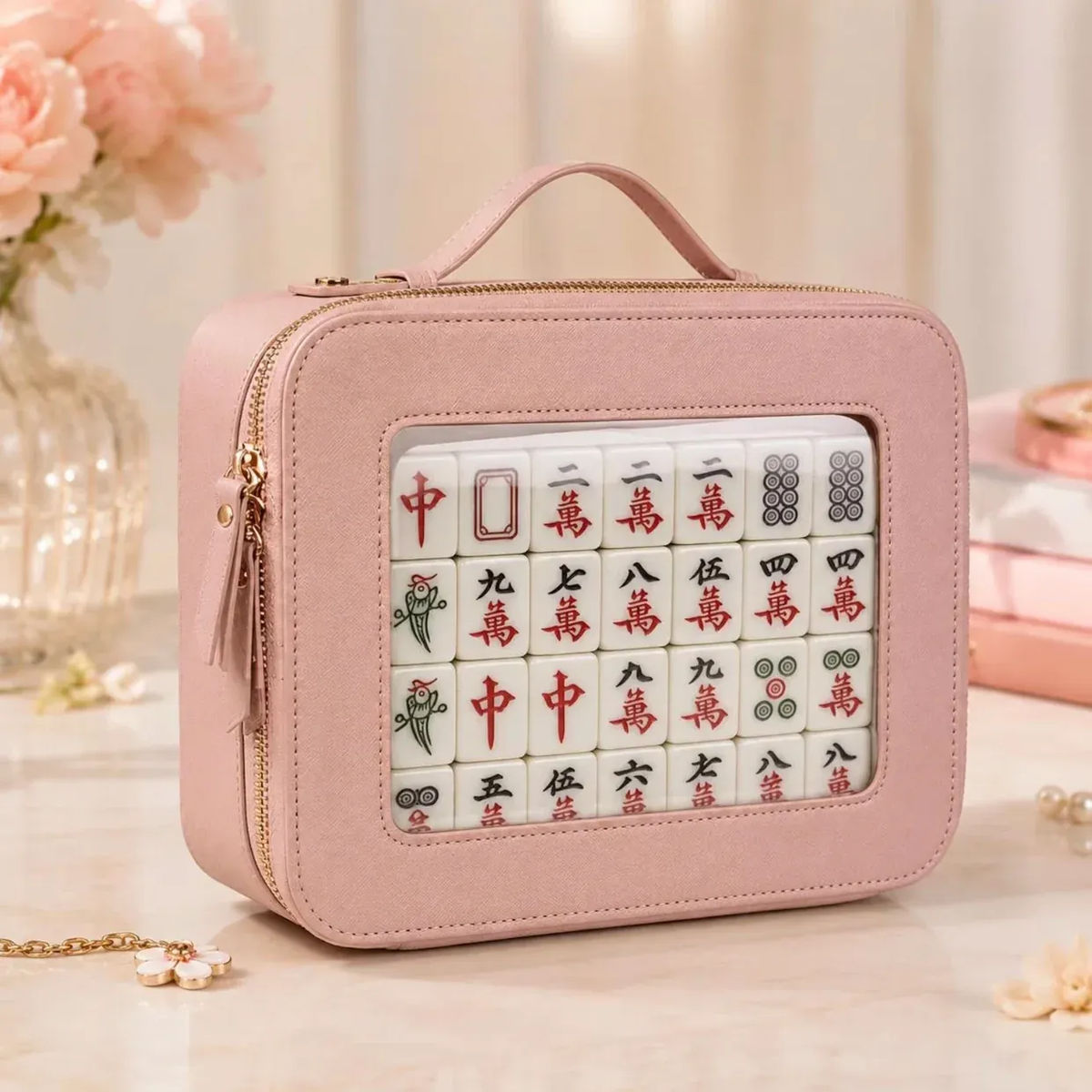
A mahjong travel bag is a padded carry case designed to hold a complete 160-tile acrylic set, mat, racks, dice and scoring chips without damage during transport. Bags range from soft fabric carriers with minimal padding to rigid cases with custom foam inserts. Most work best for trips between homes or tournament venues within driving distance; they're not checked-luggage rated. Quality bags cost more than sets themselves, but a cracked tile or bent rack from poor packing can end a game mid-hand. Look for reinforced stitching, handles rated for weight (a full set plus mat weighs 15+ pounds), and interior compartments that keep tiles separate from hard edges. Avoid single-layer nylon or bags without padding—tiles will shift and crack. Mahstead's travel bag collection includes options designed for American sets specifically, with sizing tested by weekly players. 🀄 Shop travel bags & cases →
How big should a mahjong travel bag be?
Your bag needs room for the set itself, the mat rolled or folded, racks, pushers, dice, and the score card—plus padding around each. A 160-tile acrylic set in its box is roughly 10" × 6" × 3"; the mat alone adds volume. Soft bags typically measure 18" × 14" × 8" minimum; rigid cases run 20" × 16" × 10" or larger. If you're also carrying a mat separate from your set (which we recommend), you need two compartments or a bag designed for both stacked flat. Measure your current mat when folded—a standard mat folds to roughly 14" × 10"—and add 2–3 inches of clearance on each side for padding. Bags that look roomy often feel cramped once you add protective bubble wrap or foam around tiles. Interior compartment dividers are worth the extra cost; they prevent tiles from sliding into racks or dice bouncing across your set during a pothole.

What padding and materials actually protect tiles?
Acrylic tiles survive impacts if surrounded by shock-absorbing material, but cheap foam degrades after a few trips. Quality travel bags use closed-cell foam (½ inch minimum), which resists compression and retains shape after repeated packing. Ballistic nylon or heavy-duty canvas exteriors resist punctures better than standard nylon; stitching should use heavy-gauge thread at stress points (corners, handle attachments, zipper tracks). Water-resistant linings matter more than "waterproof" marketing—a spill inside your car won't total your set if the lining sheds moisture before it reaches tile cases. Test zippers before buying if possible; cheap zippers jam when loaded, trapping you mid-game setup. Padding thickness varies: soft bags often use ½-inch foam, while rigid cases with custom inserts deliver ¾–1 inch. Tiles don't need military-grade armor for living-room-to-car trips, but they do need consistent cushioning without thin spots.
What's the real difference between soft and rigid cases?
Soft bags are lighter, pack into tight vehicle spaces, and cost less. They work well if your car's interior is already relatively stable and you're not stacking bags three-deep in a trunk. Rigid cases protect against external crushing (if you set something on top of your vehicle) and stack predictably, but they're heavier and take permanent space. A rigid case with custom foam inserts lets you grab a tile set without re-packing—grab-and-go saves time before a game and reduces the risk of forgetting pieces. Soft bags let you compress them between trips; rigid cases require a shelf or closet. For weekly home games with occasional tournament trips, soft bags suit most players. For players who travel monthly or host multiple venues weekly, rigid cases earn back their cost through faster setup and fewer lost or damaged tiles. Neither type suits airline travel as checked luggage; TSA inspections often disturb padding, and pressurized cargo holds can crack acrylic over time.

How do you compare bags by price and durability?
Bag Type | Typical Use | Durability Note | Best For |
Basic soft nylon | Occasional home trips | Minimal padding; zippers fail first | Beginners, car-to-car only |
Padded soft bag | Weekly games, local travel | ½-inch foam; handles weakest point | Regular players, tournaments within 2 hours |
Semi-rigid case | Monthly+ trips, multi-venue weeks | ¾-inch foam; lightweight plastic frame | Tournament hosts, traveling groups |
Rigid case w/ custom foam | Frequent travel, showroom demo | 1+ inch foam; zippers robust | Collectors, travel enthusiasts |
The cost difference often reflects reinforcement at stress points—doubled stitching at handle bases, YKK zippers instead of unbranded sliders, and compartment design that prevents tiles from shifting. A cheap soft bag fails in the handle or zipper within 20–30 uses; a mid-range bag typically lasts 3–5 years of weekly play plus tournaments. Look at the warranty or return policy offered by the retailer; if a bag fails at the seam before year two, the maker isn't confident in construction. Mahstead's best-selling mahjong sets come ready to travel, and our travel bags are sized and padded to fit them reliably.
🎁 See travel bags sized for our acrylic sets →
What should you check before ordering a bag?
Before checkout, measure your mat folded (not rolled—it's smaller folded). Confirm the bag's interior width, depth and height; vendor photos often shoot from angles that hide shallow compartments. Check the handle material: reinforced nylon webbing with bar-tacking (X-stitching) at attachment points survives 15+ pounds better than thin straps. Read reviews mentioning specific failure points—"zipper broke after two months" or "tiles slid during highway merge"—over generic praise. Ask whether compartment dividers are removable; you may want to reconfigure for a mat plus custom carrying case for individual items. If the bag is available with interior foam insert options, choose the one matching your tile set's box dimensions, not guesses. Check return windows; travel bags are hands-on purchases, and the first trip often reveals fit problems. Confirm whether the bag ships with any padding or if you need to pack it yourself—some retailers sell a bare shell. Look for reinforced bottom corners; cheap bags develop stress cracks there first.
✨ Explore Mahstead travel bags — free US shipping →
How does mat choice affect bag selection?
Your mat's bulk affects which bag will actually work. A standard American mahjong mat folded is roughly 14" × 10"; some players roll them into cylinders for bags with external pockets, saving interior space. Thicker mats (¼ inch) take more room than thin ones (1/8 inch). If you're buying a bag to fit both a set and a mahjong mat together, measure both folded and add padding depth. Many travelers pack the mat in a separate slim bag or vinyl tube, freeing the main bag for tiles and racks with pushers. A rolling mat storage cylinder costs less than a second travel bag and protects the mat's fabric independently. That said, an oversized travel bag that holds both set and mat in one grab beats two bags for quick weekend trips.
What to check before you buy
Interior dimensions vs. your folded mat + set box (measure, don't estimate)
Handle stitching at the base—look for reinforcement or bar-tacking visible in photos
Compartment dividers and whether they're removable for custom packing
Zipper brand (YKK or equivalent; unknown brands fail first)
Foam thickness in product specs (½ inch minimum; ¾ inch better for frequent travel)
Weight when empty—if the bag itself is heavy, factor that into car trips
Water-resistant lining—not waterproof, but moisture-shedding is honest marketing
Return window—at least 30 days to confirm fit after one trip
Warranty or guarantee—maker confidence in handle and zipper longevity
🀄 Browse mahjong travel bags & cases →
We pack our sets with care, but the bag you choose makes the difference between a game that travels well and tiles that arrive cracked. Start by measuring your mat folded and your set in its box; that tells you whether you need a compact soft bag or room for separate compartments. Check handle stitching and zipper quality in photos or reviews—those fail first on budget bags. For weekly home games plus occasional tournaments, a mid-range padded soft bag with reinforced handles usually lasts years. For players hosting or traveling frequently, a rigid case with compartment dividers saves time and protects tiles from pressure changes in vehicle trunks. Whatever you choose, avoid single-layer nylon and bags without interior padding; they're false economy when a cracked tile costs money and a lost tile stops the game cold. See the full travel bag collection for options tested by players like us—free shipping across the US, so you can order today and travel tomorrow.

FAQ
Can I use a regular duffel bag to carry my mahjong set?
Regular duffels lack padding and compartment dividers, so tiles shift and crack easily during turns or stops. A dedicated mahjong travel bag costs more upfront but saves your set from costly damage. If you must improvise, pack tiles in the original box and surround it with bubble wrap and towels, keeping all weight off the stack.
How much does a good mahjong travel bag cost?
See current price on our travel bag product page for our full range. Cost reflects padding thickness, handle reinforcement, compartment design, and zipper quality. Budget soft bags are less than standard sets; rigid cases with custom foam cost more but last longer.
Should I use a travel bag for storage at home, or just transport?
Travel bags protect sets during transit but aren't ideal permanent storage—zippers can degrade under constant compression, and padding can trap moisture in humid climates. Use a shelf or closet for storage; reserve the bag for trips. This extends both the bag's lifespan and your tiles' finish.
Can I pack my mahjong set in a carry-on for a flight?
Acrylic tiles are allowed in carry-on luggage, but airport X-rays and TSA inspections can disturb padding, and pressurized cargo holds risk cracking acrylic. Travel bags aren't rated for checked luggage stacking or pressure changes. If you fly to a tournament, mail your set ahead or buy a set at your destination.
What's the difference between a mahjong bag and a game night travel bag?
Mahjong bags are sized for a 160-tile set plus mat, with compartments for tiles, racks, and dice. Generic game night bags are deeper and wider but shallower—tiles can shift sideways. Mahjong-specific bags keep everything snug and organized so no piece gets lost mid-setup.
Do travel bags protect tiles from heat or cold in a car?
Padded bags slow temperature swings but don't insulate completely. Acrylic tiles tolerate normal climate control in cars; don't leave a set in direct sunlight or an unheated trunk for hours. Long outdoor storage or extreme temperatures can warp tiles or soften acrylic over time.


View More
View More
View More
