
Mahjong Travel Bag Materials Compared: Canvas, Nylon, Leather
Last updated: Nov 23, 2026
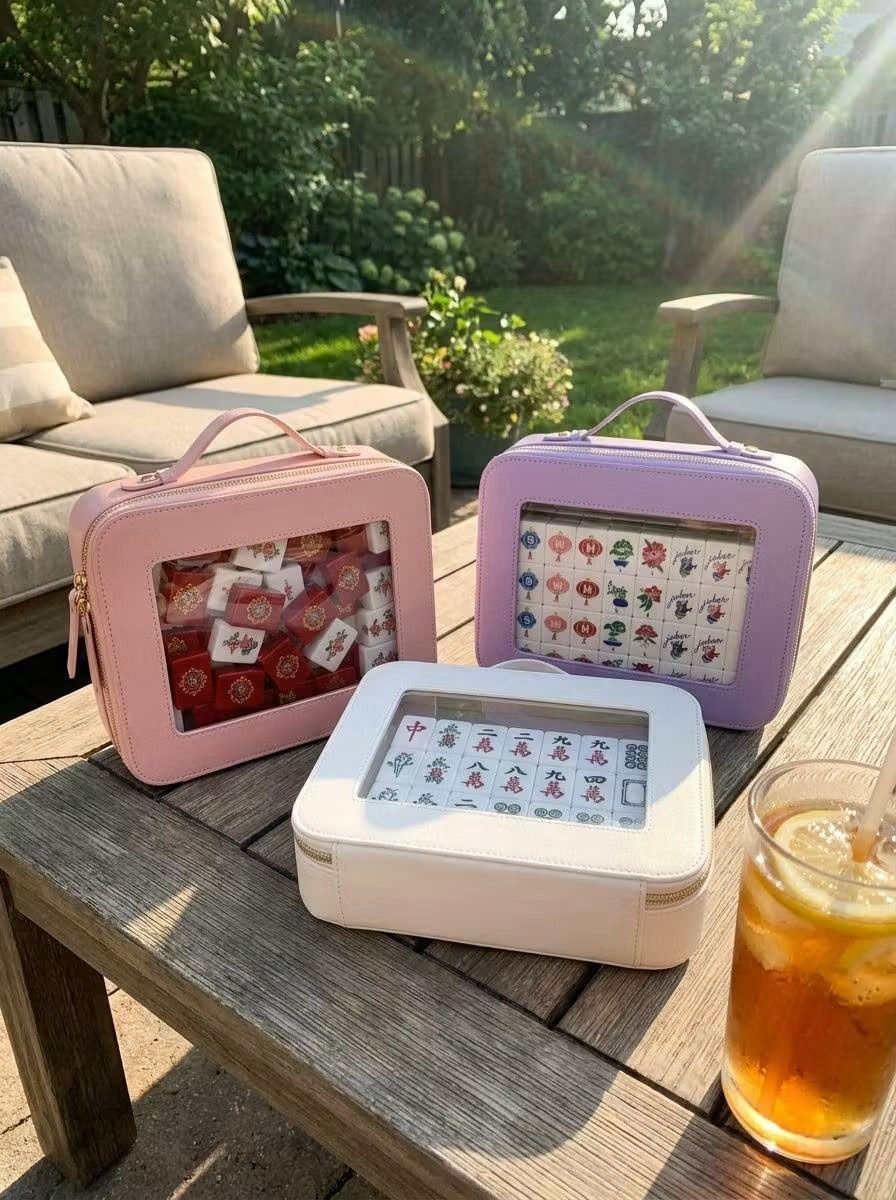
We host weekly mahjong games and pack sets for tournaments across Texas—so bag durability matters. Canvas bags breathe, stay lightweight, and age well; nylon resists water and wear; leather looks beautiful but needs care. Most American mahjong sets fit standard-sized bags (roughly 12–16 inches long, 8–10 inches deep). Choose canvas for casual weekly play, nylon for frequent travel or humid climates, leather for longevity and style. Check interior pockets for tile storage, reinforced handles, and whether the bag holds a mat, racks, and extra jokers. Mahstead's travel bag collection includes options in all three materials. Cost, durability, and maintenance vary—we've broken down each option below.
What material lasts longest in a mahjong bag?
Nylon and leather both outlast canvas in heavy rotation, but for different reasons. Nylon resists mildew, water, and friction; leather develops a patina and softens with age if conditioned regularly. Canvas weakens faster when wet and can tear under repeated pressure—but it's still reliable for casual play if stored dry. If you travel to humid tournaments or store your set in basements, nylon wins. For home games played weekly in climate-controlled rooms, canvas holds up fine for years. Leather requires annual conditioning but won't degrade from moisture or wear the way untreated canvas can.
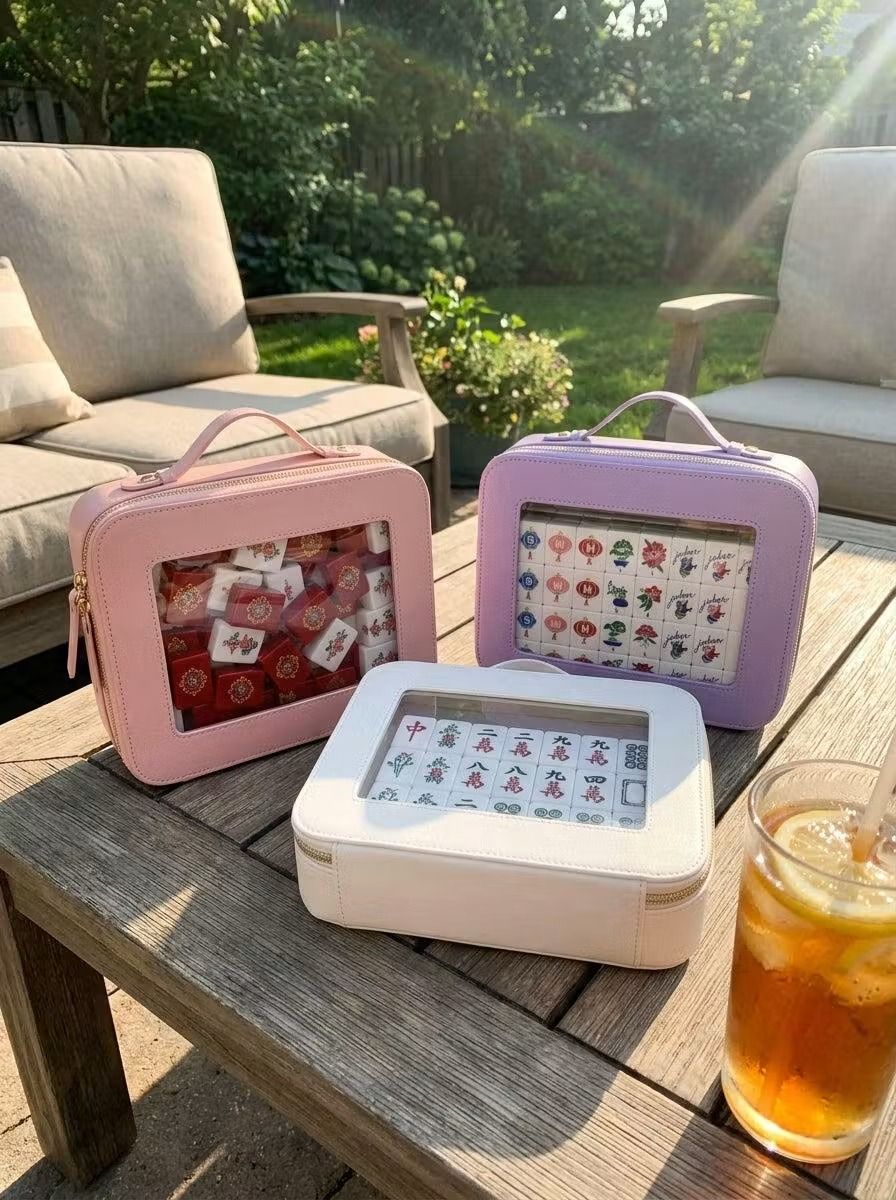
Should I choose a bag to match my acrylic tile set?
Most of us buy a bag based on function first, then color. Acrylic tiles in red, black, jade, or natural translucent tones work with nearly any neutral or jewel-tone bag—but matching pays off visually when you carry best-selling mahjong sets to friends' homes or tournaments. Canvas and nylon come in black, gray, navy, cream, and forest tones; leather in cognac, burgundy, or natural tan. If your set has engraved titles or themes, a solid-colored bag lets the tiles shine. Bold prints (florals, mahjong motifs) add personality but limit future set swaps. Check the bag's interior fabric—white or light linen lining shows stains quickly; dark lining is forgiving and professional-looking.
🀄 Shop best-selling mahjong sets →
How do I know what size bag I actually need?
Standard American mahjong sets (160 tiles with racks and pushers) need roughly 2,000–2,500 cubic inches of usable space. Most bags marketed for mahjong are 12–16 inches long, 8–10 inches wide, and 5–7 inches deep. Before you buy, measure your box or racks: we always tape a ruler to the table and measure length, width, and depth in inches. Then add 1–2 inches for zipper thickness and padding. A bag holding your set, a mat for playing, and racks with pushers needs a wider base (14+ inches) or a tall profile (7+ inches). If you carry a mat, nylon compression bags save space. If you prize easy access and quick setup, a structured canvas or leather tote works better. We've seen players overstuff bags and stress the seams—leave 1 inch of clearance at the top.
Material | Best For | Upkeep | Typical Lifespan | Interior Feel |
Canvas | Casual weekly games, home storage | None; air-dry if wet | 3–5 years | Soft, natural linen or cotton |
Nylon | Travel, humid climates, frequent use | Wipe spills; no heat | 5–8+ years | Smooth, slightly cool, water-resistant |
Leather | Long-term investment, weekly play, display | Condition annually; keep dry | 8–15+ years | Supple, warms in hand, develops character |
What features in a mahjong bag actually protect your tiles?
Interior padding matters more than material. A 1/4-inch foam or felt lining cushions tiles during bumps and prevents corner dings on acrylic. Dividers or zippered pockets separate tiles from racks and dice, so metal pushers don't scratch acrylic. A reinforced base (double-stitched or bonded) takes weight without sagging. Check for YKK or comparable brand zippers—cheap zippers jam and split after 50 uses. Padded handles (at least 1 inch wide) distribute weight so your hand doesn't cramp during a trip up stairs. Side handles or grips help you wedge the bag into a car or carry it one-handed. Some bags have removable dividers, which lets you customize storage; we prefer this for sets with extra jokers or blank tiles. Mahstead's travel bag collection includes options with reinforced stitching and padded compartments designed for tile sets.
🎁 See our most-loved mahjong sets & accessories →

How do water and humidity affect different bag materials?
Canvas absorbs moisture and can mildew in damp basements or garages—especially if sealed wet inside a bag. If your room humidity runs above 60%, nylon is safer: it dries fast and resists mold. Leather can absorb water too, and if not dried quickly (within 12 hours), it warps and cracks. Nylon is the only material truly water-proof; canvas and leather are water-resistant only. In practice, most of us store bags in climate-controlled homes and use them once or twice weekly—humidity is rarely a problem. But if you transport your set through rain or in a humid climate, nylon wins on durability. Leather needs a waterproof spray (silicone-based, not wax-based) reapplied every 6 months if exposed to moisture often. Canvas can be treated with a fabric sealant, but it stiffens and loses breathability. We store our best sets in canvas bags indoors and pack nylon bags for road trips.
What's the real maintenance difference between materials?
Canvas: Air-dry only. Spot-clean with a damp cloth and mild soap. Never machine wash. Avoid heat sources. Expect gradual fading and slight softening from use—this is natural patina, not wear. Lasts best in dry storage.
Nylon: Wipe with a dry microfiber cloth after each use. For spills, use a damp cloth and mild detergent; let air-dry completely (6–8 hours). Never use heat or bleach. Zippers should be lubricated lightly with a dry graphite stick (not oil) if they catch. Maintains color longer than canvas.
Leather: Condition with a neutral leather cream every 6–12 months, depending on humidity and use. Wipe immediately after spills; never soak. Stuff with newspaper to hold shape while drying. Avoid direct sunlight, which fades color. A scratched leather bag is a mark of loyal service—embrace it. Leather bags often outlast owners if cared for.
We've seen players skip maintenance and regret it: a water-stained canvas bag can't be recovered, but a leather bag conditioned properly improves with age. Budget 15 minutes twice a year for leather care; nylon needs almost none.
What to check before you buy
Measure your set first. Don't estimate. Pull out your racks with pushers, your mat (if carrying), and a sample tile to check them against bag dimensions online.
Read reviews for zipper durability. Cheap zippers are the top failure point. Look for YKK or equivalents.
Ask if the bag is padded inside. Unpadded nylon bags save cost but offer no shock protection.
Check if there are enough pockets. You'll want one for dice, one for spare jokers or a compact mahjong card guide, and one for your scorecards.
Verify the handle design. Are they sewn at 4 points or 2? Four is stronger.
Ask about interior material. Light lining shows dirt; dark lining hides stains and looks professional.
✨ Find your Mahstead set — free US shipping →
FAQ
Can I wash a nylon mahjong bag in the washing machine?
No. Use a damp cloth and mild soap by hand, then air-dry for 6–8 hours. Heat and agitation damage zippers and foam padding.
Does leather stretch if I overstuff my bag?
Yes, gradually. Over months, overstuffed leather bags lose their shape. Leave 1 inch of clearance at the top and don't exceed the bag's weight limit.
Which material smells best when new?
Canvas has a subtle fabric scent; nylon is nearly odorless; leather smells rich and warm. Leather scent fades after 2–3 weeks of exposure to air.
Is it okay to leave my mahjong bag in a hot car?
Not for hours. Heat weakens zippers and can warp acrylic tiles inside. Park in shade or cover the bag with a light cloth in your trunk.
How do I remove mildew from a canvas bag?
Let it air-dry fully in sunlight for 2–3 days, then wipe with a cloth dampened in white vinegar (1:1 with water). Do not seal it wet again.
Which bag material holds its color longest?
Nylon, especially darker shades. Canvas fades predictably; leather ages to a warmer tone intentionally. Both are beautiful—just different.


View More
View More
View More
