
Mahjong Travel Bag Dimensions: How to Choose the Right Size
Last updated: Nov 23, 2026
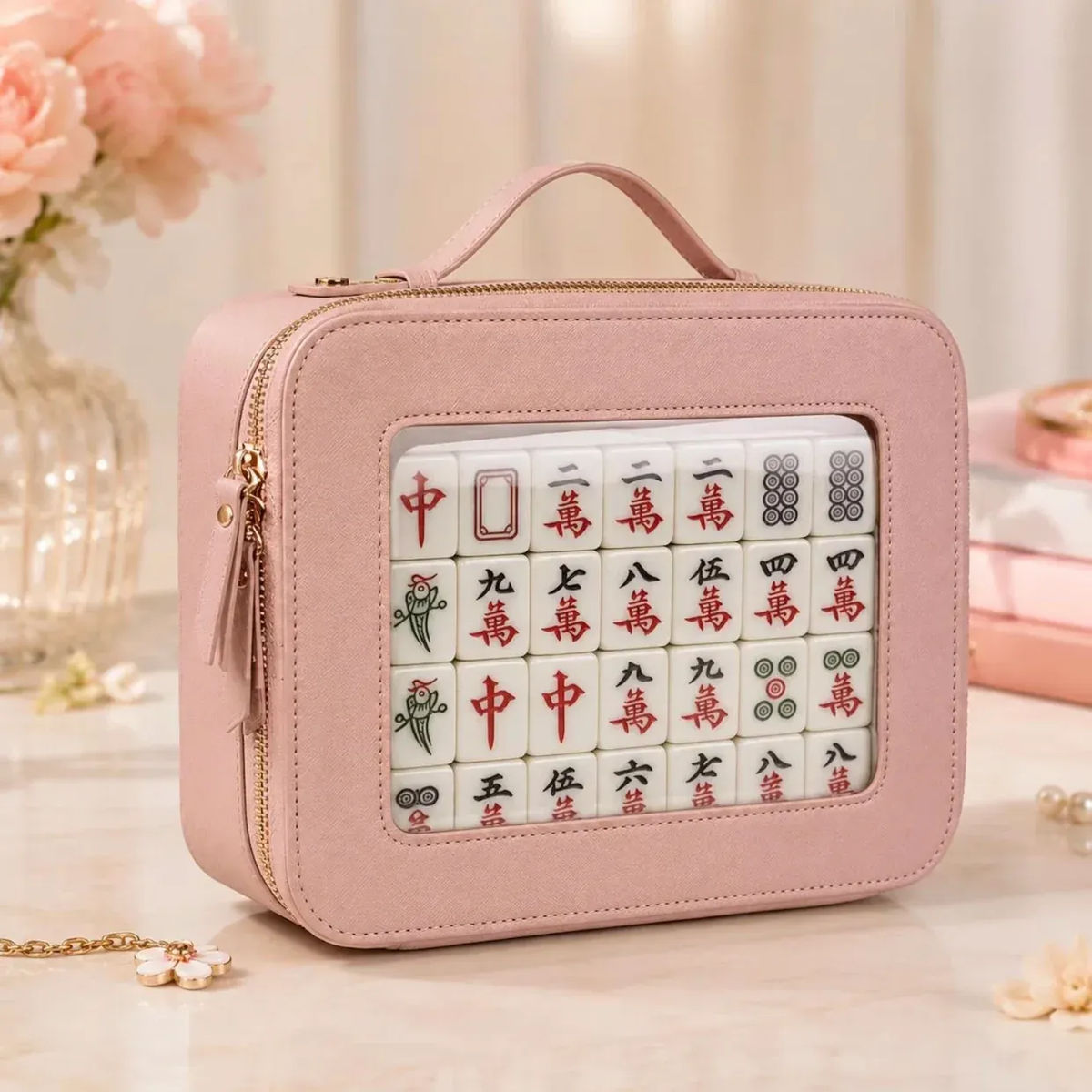
Most mahjong travel bags measure between 13–16 inches wide, 10–12 inches tall, and 5–8 inches deep, enough to fit a standard American mahjong set (160 tiles), a foldable mat, racks with pushers, and dice. Bag capacity matters more than a single dimension: look for at least 600–800 cubic inches of usable space if you're carrying a full game setup. Hard-sided bags protect tiles during travel; soft-sided bags weigh less and pack flatter. When checking listings, confirm the interior dimensions (not exterior) and whether the bag includes dividers or padded compartments—these let you organize tiles separately from your mat. Mahstead's travel bags and cases come with clear interior specs so you know before you order. 🀄 Shop best-selling mahjong sets →
What size bag fits a complete American mahjong set?
A standard American mahjong setup—160-tile set, mat, racks, and dice—requires roughly 13–14 inches wide by 10–11 inches tall by 6 inches deep as a minimum. This accounts for a set in its tile case, a rolled or folded mat, and racks stacked flat. If your mat is thick bamboo or rubber-backed, add 1–2 inches of depth. Measure your actual set's case first; if it's wider than 12 inches, you'll need a bag at least 14–15 inches wide to accommodate it without forcing tiles into corners.

How do you measure a mahjong bag correctly?
Always measure the interior dimensions, not the exterior—bag walls and padding eat up 0.5–1 inch on each side. Use a soft measuring tape inside the bag at the widest points: from left wall to right wall (width), from bottom to top (height), and from front opening to back wall (depth). Note the depth at both the opening and the deepest point, since many bags taper slightly. Check for obstructions like dividers or zippered pockets that reduce usable space. Write these three numbers down and compare them against your set's case dimensions plus the folded mat size—then add 1 inch of buffer for ease of packing.
Should you choose hard-sided or soft-sided bags?
Hard-sided bags protect acrylic tiles from cracks during car rides and airport travel—your tiles survive falls and pressure better—but weigh more and occupy shelf space. Soft-sided bags compress, fit into car door pockets, and are lighter to carry up stairs, yet offer less protection if you drop the bag or stack other items on top. For weekly games that travel by car or stay in one home, soft-sided works fine. For air travel, tournaments, or frequent moves, hard-sided is worth the extra weight. Both styles from our travel collection come with padded interiors; compare your lifestyle against the protection you need.
What interior features matter most in a travel bag?
Dividers or compartments let you separate your tile set case from your mat and racks, preventing tiles from shifting and the mat from creasing your set's case. A zippered tile pocket keeps dice and pushers from rattling loose. Handles (not just a shoulder strap) make one-handed carrying easier when you're juggling keys and drinks. Padding on the bottom protects tiles if the bag tips over. Look for bags with two carrying options—a top handle for car trips and an over-shoulder strap for walking into a friend's house. Avoid bags with exposed metal hardware inside; it can scratch acrylic tiles if the bag gets jostled.
🎁 See our most-loved mahjong sets & accessories →
How do you pack a mahjong bag to avoid damage?
Place your mahjong set case upright on the bottom, never tilted or sideways—this keeps tiles flat and prevents cracking at the edges. Lay your mat next to it (rolled or folded, not crumpled). Stack racks with pushers flat on top of the mat. Put dice and pushers in a small zippered pouch and tuck it into a side pocket. If your bag has a rigid base, the set won't shift during transit. Never overstuff; if the bag strains to zip closed, you're risking both the bag seams and tile cases inside. Test a practice pack at home before your first trip to confirm everything fits with a little give.
Bag Type | Best For | Typical Interior | Travel Distance | Why Choose It |
Soft-sided, padded | Weekly home games | 14"W × 11"H × 6"D | Local car rides | Light, compresses, easy to store |
Hard-sided, reinforced | Tournaments, air travel | 15"W × 12"H × 7"D | Flights, checked luggage | Protects tiles from drops; survives stacking |
Deluxe divided case | Collectors, frequent players | 16"W × 13"H × 8"D | Multiple games per week | Separate compartments; room for multiple mats |
What to check before you buy
Confirm interior dimensions, not exterior—bags shrink when you consider padding and walls.
Verify your set's case size against the bag's width; acrylic cases are often wider than fabric set sleeves.
Test the mat fit: fold or roll your mat the way you actually pack it, then compare that footprint to the bag's floor space.
Count your racks and pushers: if you carry two sets of racks (a luxury many players enjoy), ensure the bag's depth accommodates a second stack.
Check for dividers or compartments before buying—they save tile damage but reduce overall capacity by 10–15%.
Read about handle durability: bags that go in and out of cars weekly need reinforced stitching and double-stitched seams.
✨ Find your Mahstead set — free US shipping →

Why interior space matters more than a single measurement
A bag with interior dimensions of 14" × 10" × 5" sounds roomy, but the math says it holds only 700 cubic inches—borderline for a full setup. The same bag's depth might taper to 4 inches at the back, stealing another 30–50 cubic inches. Real-world packing requires usable space, not theoretical volume. Measure each zone of your bag (front pocket, main compartment, side sleeves) and add them separately. Many players discover too late that a 14" × 11" × 6" bag feels smaller than one rated 13" × 12" × 7" because the second bag has a straighter box shape. Compare bags of similar brands and styles; dimensions tell the truth, but shape and layout determine comfort.
How does a mahjong mat size affect your bag choice?
A foldable or rollable mat is roughly 27" × 27" when open and folds to 14" × 7" or rolls to 4" diameter × 27" long—huge when packed. A rolled mat fits lengthwise in most travel bags and sits beside the tile case. A folded mat stacks flat like a thin book, saving depth but adding to overall footprint. If you own a thick bamboo or felt mat, it may not fold small; those travel best in a dedicated mat tube or a larger bag (15"+ wide). Measure your actual mat in its packed state—don't guess. Some players leave their mat at home on travel days and bring only the set and racks; if that's your style, you can downsize the bag to 12" × 9" × 5".
🀄 Shop best-selling mahjong sets →
Is a mahjong bag worth the investment, or can you use a regular suitcase?
A regular suitcase (12" wide roller bag) sounds spacious until you pack a mahjong set—tiles shift, racks slide, and the mat wrinkles. Mahjong bags have dividers and padding designed to keep tiles from toppling; suitcases don't. A small mahjong bag costs less than a new tile set and protects your investment across dozens of trips. If you travel by plane monthly, a hardshell mahjong bag outperforms a soft suitcase because luggage handlers stack checked bags. For one or two car rides per month, a soft mahjong bag is enough. Buy purpose-built if tiles matter to you; general luggage leaves room for costly mistakes.
How do racks with pushers affect packing?
Standard mahjong racks with pushers are 9–10 inches wide, 2–3 inches tall, and 1 inch thick when stacked. Four racks fit neatly beside or atop a tile case in most 14"+ bags. If you carry two sets of racks (one for each pair of players), you need at least 2.5 inches of stacking depth, or the bag becomes tight. Wooden or bamboo racks weigh more and take up the same space as acrylic racks; check the bag's weight limit if you're sensitive to luggage charges. Racks should always sit flat (not vertical) in a travel bag to avoid tipping and crushing.

FAQ
What's the smallest mahjong bag that works for a basic set and mat?
A 12" × 9" × 5" interior bag holds a 160-tile set and a rolled mat, but offers no room for racks. For a complete game (set, mat, racks, dice), choose at least 13" × 10" × 6" interior dimensions. If your set case is wider than 12", upgrade to 14" × 11" × 6".
Can you fit two mahjong sets in one travel bag?
Yes, if the bag is at least 14" × 12" × 7" interior and has dividers. Two tile cases stack best when placed flat, not tilted. Include a mat and racks, and you'll fill the bag completely. Measure both sets' cases first.
Does a mahjong bag need to be waterproof?
Not required, but helpful. Acrylic tiles resist water better than bamboo racks, yet a spill inside the bag can warp a mat or rust metal hinges on older racks. A water-resistant exterior and waterproof lining add minimal cost and save tile cases from car-door condensation.
How do you measure a rolled mat to fit in a bag?
Roll your mat tightly and measure its diameter and length. Most mats roll to 4–5 inches diameter and 27–29 inches long. A travel bag must be at least 15 inches deep if the mat stands upright, or 30 inches long if it lies flat—most bags accommodate the upright roll beside the tile case.
What's the difference between a mahjong travel bag and a game-night tote?
Travel bags have padding and compartments to protect tiles during transport; totes are open-format and meant for short walks between rooms. Use a padded travel bag for cars and trips; use a tote for carrying a set to a friend's house one block away.
Should you buy a bag that's larger than you need?
Slightly larger (1–2 inches extra on one dimension) gives you packing flexibility and fits future mat upgrades. Oversized bags (17"+ wide) invite overpacking and waste shelf space at home. Aim for snug fit with 0.5–1 inch of buffer.
Do hard-sided bags protect acrylic tiles better than soft-sided?
Yes. Hard plastic or reinforced frame bags survive drops and pressure from stacked luggage; soft bags compress and offer less protection if the bag lands on an edge. For air travel and rough handling, hard-sided is superior.


View More
View More
View More
