
Mahjong Travel Bag Size Guide: Pick the Right Fit
Last updated: Nov 23, 2026
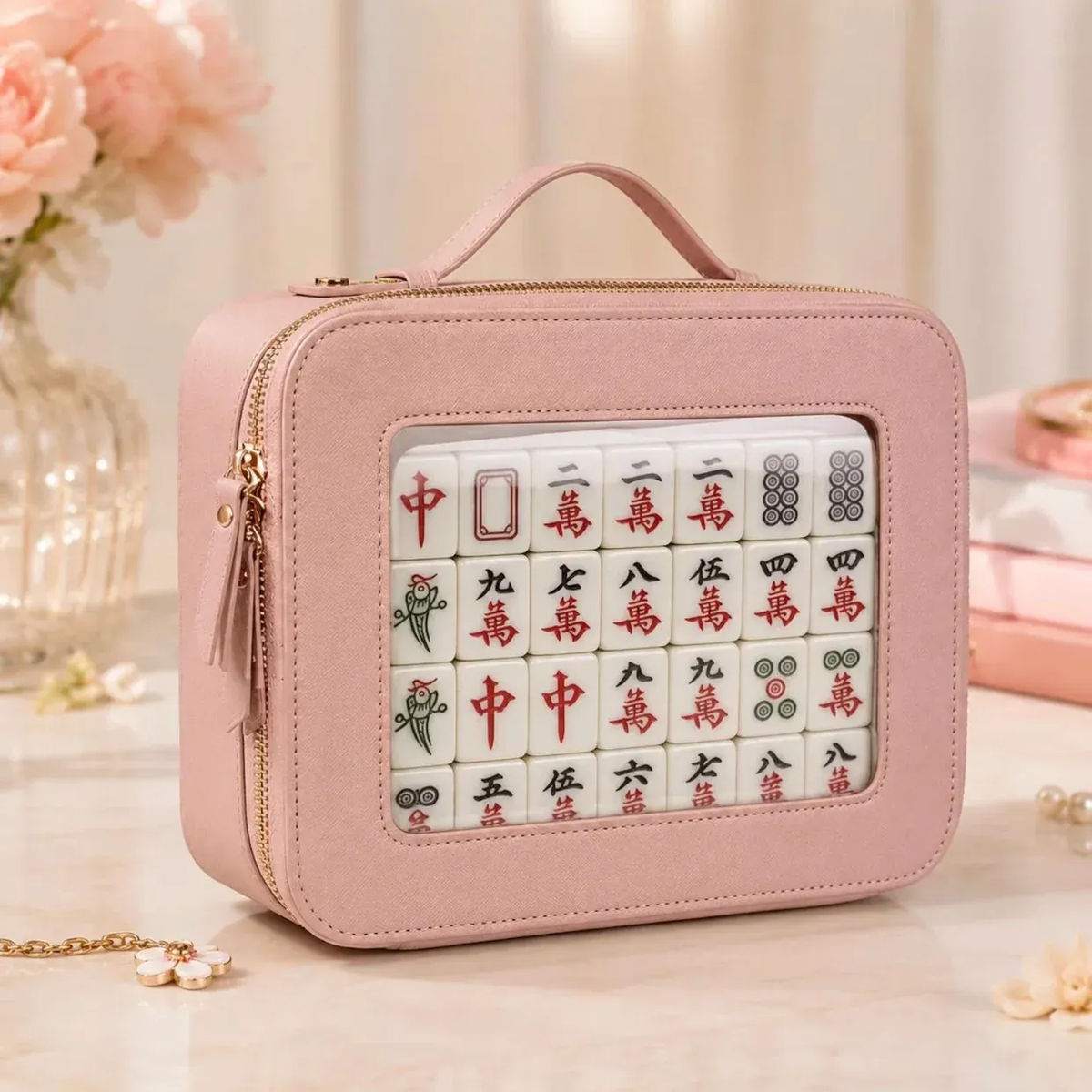
A mahjong travel bag holds your complete 160-tile set, mat, racks with pushers, dice and score cards in one case. American mahjong bags range from compact shoulder carriers (fitting just the tile case and a small mat) to rolling luggage-style solutions that hold a full setup plus accessories. Size depends on whether you're bringing only tiles, tiles plus a mat, or a tournament-ready kit with racks and extras. Most weekly players choose a medium bag that fits a tile case and folded mat side-by-side—think 16–18 inches long, 10–12 inches wide, 4–6 inches deep. Mahstead's travel bag collection offers designs from compact totes to structured carriers; check the internal dimensions before ordering to confirm your acrylic set and mat fit without forcing. The key mistake: buying too small and discovering your racks won't fit, or too large and hauling dead space to weekly games. 🀄 Shop best-selling mahjong sets →
What size do I actually need for a full mahjong setup?
Most of us bring a 160-tile acrylic set, a mat, a pair of racks with pushers, and dice to the table each week. A full setup—tiles in their case, mat rolled or folded, two racks stacked, dice in a small pouch—occupies roughly 18 × 12 × 5 inches when packed flat. If you only bring tiles and skip the mat (playing on a table cover instead), you can downsize to 14 × 10 × 4 inches. Tournament players who carry extra jokers or blank tiles as spares, a score sheet organizer, and multiple pen options often need 20 × 14 × 6 inches minimum. Measure your best-selling tile case by its outside dimensions—acrylic sets are heavier and bulkier than Bakelite—and add 2 inches lengthwise for a folded mat. A bag that feels snug when packed is easier to carry than one with 3 inches of slack.

Should you choose a shoulder bag, a tote, or a structured case?
A shoulder bag (soft-sided, single strap) works for light carriers: just tiles, dice, and score pads. You'll sacrifice support for your acrylic case and risk strap fatigue if you walk more than a few blocks. A structured tote or organizer bag (stiff bottom, two handles, internal pockets) fits a full setup and lets you set the bag down without worrying tiles will tumble. Most weekly players choose this—it's the workhorse for carpool trips and living room games. A rolling case or luggage-style bag suits road tournaments or players who drive an hour to games; rolling saves your shoulder but adds weight and size. The tradeoff: portability (light shoulder bag) versus protection (structured case) versus convenience on longer trips (rolling case). Choose based on your typical distance and frequency—if you're walking or using transit, shoulders suffer with anything over 8 pounds; an acrylic set alone weighs 3–5 pounds, so a 20-pound packed bag demands wheels or two hands.
Bag Type | Best For | Typical Dimensions | Fit |
Shoulder tote | Solo tiles + dice | 12 × 10 × 3 inches | Lightweight, one hand |
Structured tote | Full set + mat | 18 × 12 × 5 inches | Two-hand carry, stable |
Rolling case | Tournaments, long trips | 22 × 14 × 8 inches | Wheels, most capacity |
Soft backpack | Hands-free commute | 16 × 11 × 6 inches | Strap comfort, moderate gear |
🎁 See our most-loved mahjong sets & accessories →
How do you pack a bag so nothing shifts or breaks?
Start by placing your acrylic tile case flat on the bag bottom—acrylic is rigid and protects softer items. Lay your mat (rolled or loosely folded) alongside the case, parallel to it; a rolled mat is more stable than folded. Stack your racks with pushers vertically against the mat, pushers facing inward so they don't catch the bag lining. Place dice, score cards, and small joker/blank spares in zippered pockets or a small pouch inside the bag—not rolling loose in the bottom. If you carry a second set or backup tiles, use a smaller internal organizer or cloth bag to keep them separate. Pack heavier items toward the bottom and handle-side; if you're rolling, weight should sit over the wheels. Test the bag once packed: carry it by one handle, then roll it; does the top close smoothly, or are tiles pressing against the lid? Overstuffed bags crease your mat and stress zipper seams. A tip from our weekly games: wrap your mat in a thin cotton cloth before rolling it—this prevents acrylic dust transfer and keeps racks from sliding.
What interior features matter most?
Look for reinforced bottom panels (synthetic or leather trim) that prevent wear if you set the bag on rough ground; acrylic tile cases are heavy and will puncture thin fabric over time. Padded or divider pockets keep your racks from sliding and protect dice—most structured bags include them. A full-length zipper (runs all the way across, not a partial open) means easier packing and less risk of tiles spilling if you set the bag down at an angle. Waterproof or water-resistant lining isn't essential for casual play but prevents damage if you carry the bag through rain or near a kitchen. Grip handles (not thin straps) reduce hand fatigue on a 5–10 minute walk. Internal dimensions printed or embossed on a product page let you measure before buying—this is your chance to confirm a mat and case will fit side-by-side. Avoid bags advertised for mahjong without actual internal measurements; generic "medium" bags often won't fit an acrylic set because they're designed for smaller games or documents.
✨ Find your Mahstead set — free US shipping →

What's the difference between a travel bag and a mat bag?
A travel bag (or case) holds your entire setup: tiles, racks, mat, dice, and cards. It's a catch-all organizer designed to sit flat, roll smoothly, or hang on a shoulder. A mat bag or mat sleeve wraps only your mahjong mat—it's typically a simple tube or roll with minimal structure, designed to protect your mat from creases and dirt during transport. Some players use both: a mat bag to keep the mat pristine, then slide the mat bag into a larger travel case along with tiles and racks. If you play outdoors, travel frequently, or own multiple mats, a dedicated mat bag is worth the space in your closet. But for a single weekly game, one travel bag that fits everything is more practical. Our pick: buy the travel bag that fits your full setup, then add a mat sleeve only if you own two or more mats or travel regionally to tournaments.
What to check before you buy
Measure your set's case. Pull out your acrylic tile case and check its length, width, and height—write them down. Many sets sold as "160-tile" sets have cases that differ by 1–2 inches depending on the acrylic quality and closure style. Compare your measurements to the bag's interior dimensions, not exterior; manufacturers list exterior size prominently, but interior space is what matters. Confirm mat fit. If you're bringing a mat, measure it unfolded, then estimate how much space it needs when folded (roughly half its length, plus thickness). Most American mahjong mats are 29 × 29 inches folded to about 15 × 15 inches. Test weight. Before shipping, ask if the bag sample (if available locally) or a comparable model is available to handle; a packed bag over 12 pounds will strain your shoulder on a long walk. Check zipper type. Heavy-duty YKK or similar zippers handle repeated opening without jamming; cheap zippers catch acrylic tile dust and fail within a season. Verify return policy. If you're ordering online, confirm you can return the bag if it doesn't fit your setup—this is non-negotiable for mail orders.
Sizing for specific play scenarios
Carpool or 10-minute walk: A structured tote (16 × 12 × 5 inches) is enough; your best-selling set plus mat fit comfortably, and two handles distribute weight.
Transit commute (train, bus, 20+ minutes walking): A backpack or rolling case (18 × 12 × 6 inches or larger) keeps your hands free or wheels take the load; acrylic sets are heavy enough that shoulder strain matters.
Road trip or tournament (driving 1+ hours): A rolling case (20 × 14 × 8 inches) holds your main set, backup tiles, extra jokers, and an organizer pouch; you won't worry about fitting everything in a car.
Minimalist (tiles only, no mat): A compact soft bag (12 × 10 × 4 inches) fits your case and dice; skip the mat weight and leave it at the host's house.
Why Mahstead bags work for mahjong players
Our travel bag collection is built by players who pack and carry these games weekly. We specify internal dimensions (not marketing hype), test zippers with acrylic dust, and design pockets for racks and dice so they don't shift. Each design comes with free US shipping, and because we know a bag that's too small is worse than no bag, we're transparent about what fits inside. You won't find vague "fits standard sets" language; our product pages show actual measurements and what we've tested. Whether you carry just tiles or a tournament-ready rig, picking the right size on the first try means showing up to games without frustration.

FAQ
How much does an acrylic 160-tile set weigh when packed in a bag?
A 160-tile acrylic set weighs 3–5 pounds depending on tile thickness and closure style. Add 1–2 pounds for a mat, 0.5–1 pound for racks and dice. A full packed bag typically weighs 6–10 pounds; rolling cases handle this better than shoulder bags on walks over 15 minutes.
Can a mahjong travel bag fit two sets?
Yes, if the bag is large enough (20 × 14 × 6 inches or more) and both sets have compact cases. Most weekly players don't carry two sets, so a standard medium bag won't fit both. Measure both cases before ordering to confirm.
Should you store your mahjong set in the travel bag year-round?
No. Long-term storage in a bag can crease your mat and trap dust against acrylic tiles. Use a travel bag for transport only; store your set in a dry cabinet or closet otherwise.
What's the best material for a mahjong travel bag—canvas, synthetic, or leather?
Synthetic or water-resistant nylon handles acrylic dust and accidental spills better than canvas. Leather trim on the bottom protects against wear but adds cost. Canvas is lightweight and looks nice but stains more easily.
Do I need a rolling bag or is a tote fine?
A tote works if you carry the bag less than 10 minutes per trip. On longer walks, public transit, or if you have shoulder issues, rolling saves strain. Tournament players who travel often prefer rolling cases for the convenience.


View More
View More
View More
