
Mahjong Tracking Jokers: Tips to Never Lose Count Mid-Game
Last updated: Nov 23, 2026
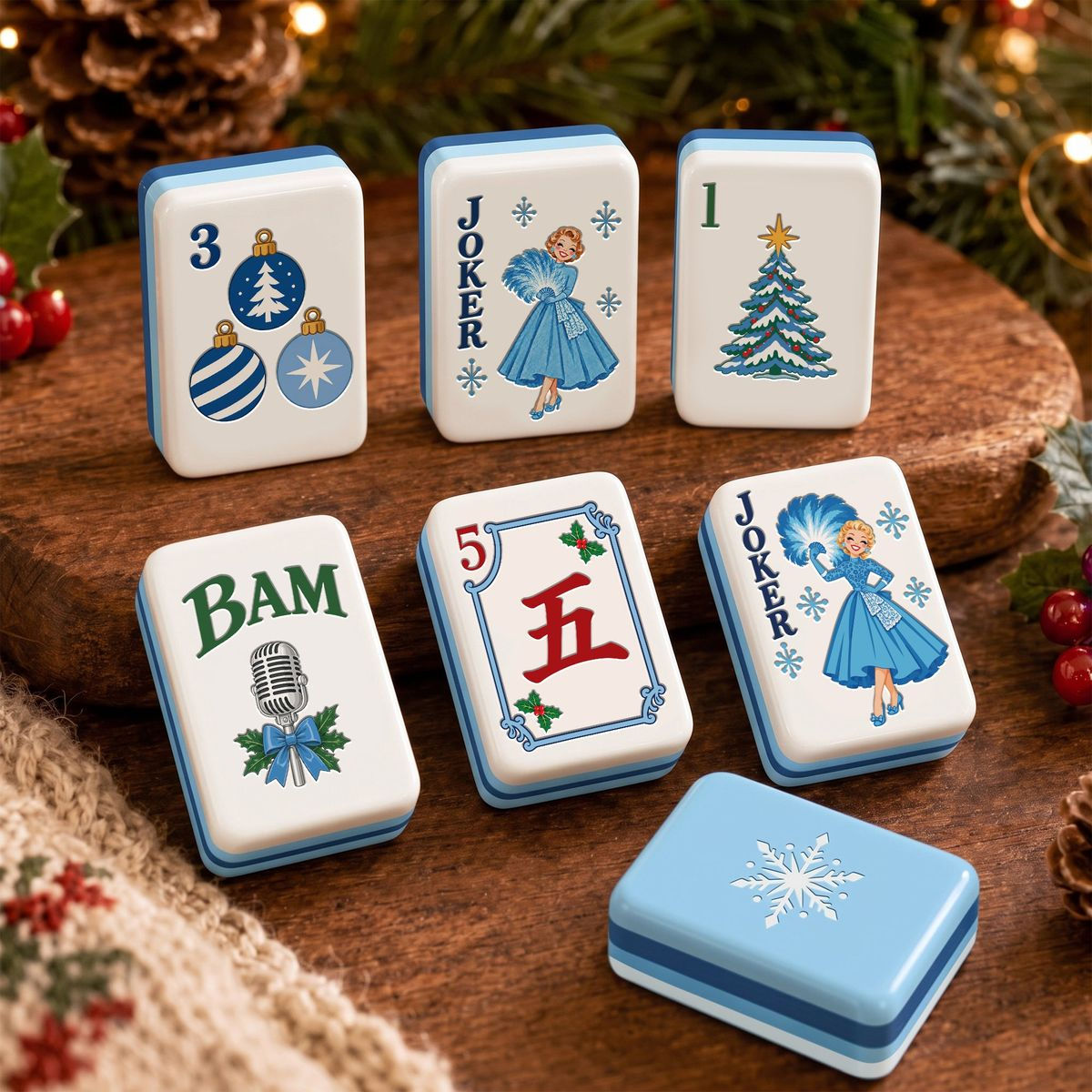
American mahjong always plays with exactly eight jokers among 152 tiles. Tracking them means knowing: how many you hold, how many are exposed on the table, how many remain in the wall and floor. Most players track visually; the sharpest count on their fingers or note silently in their discard pile's shape. You track jokers because jokers can only be used in multiples (never alone or as a pair), and mistaking how many live jokers remain in the wall can make you discard into a dead hand. Mahstead sets ship with eight jokers built in, so your count starts complete—never assume a missing joker; it's always in someone's hand or on the table.
Losing track of jokers mid-hand kills your game strategy and can land you with an unplayable exposure. We show you the counting system that works at the table.
Why does joker count matter more than other tiles?
Jokers are the wildcards that let you build the hand on your card. Unlike the 144 numbered and honor tiles that exist in fixed sets of four, jokers can be called or played at any moment—and once one is used, the pool shrinks. If you think three jokers are still in the wall when only two remain, you might wait for a joker call that never comes, or throw away a tile you'd have kept. Tracking jokers correctly prevents you from committing to a hand shape that depends on a joker you can't get. A single miscounted joker has cost thousands of players a win.

How do players count jokers at a real table?
Most of us use one of three proven methods. The visual sweep: glance at every exposure on the table and count aloud quietly—"one, two, three"—then add the jokers you know are in your own hand. The floor count: as jokers are discarded or claimed, place them in a consistent spot in your discard pile (often at the end, in a row), so a quick look tells you how many you've used. The finger tally: many veteran players hold a quiet finger count in their lap—one finger per joker seen—and update it after each call. All three work; pick the one that fits your table's pace and your memory style. The key is doing it the same way every hand so you build habit.
What are the common joker tracking mistakes?
Mistake 1: Assuming jokers you haven't seen are definitely in the wall. Reality: they could be in an opponent's closed hand, waiting to be picked. Never assume; only count jokers you've actually witnessed. Mistake 2: Forgetting to recount after the Charleston. The Charleston—the tile-passing ritual before play starts—shuffles tile positions, so recount at the start of actual play. Mistake 3: Losing track when someone calls a tile from your discard pile. When you discard and an opponent takes it (or a joker substitutes for it), mentally note which joker left the pool. Mistake 4: Not updating your count when jokers are exposed in pungs or kongs. Every exposed tile is one fewer in the wall. Write nothing down at the table—tracking is silent—but update your mental model after each action.
How does joker tracking change the hands you'll play?
Understanding how jokers work shapes your hand strategy from the moment you look at your tiles. If you see five jokers already exposed or held, you know the remaining three are precious—you'll hold longer for hands that don't need jokers, and bail faster on patterns requiring multiples. If you see only two jokers claimed, you have more freedom to chase hands needing three or four joker substitutes. Tracking tells you when to pivot: if you're waiting on a pung or kong and jokers are running low, switch to a hand that uses none. Conversely, if jokers are still pooled deep in the wall, you can afford to wait for a complex hand requiring two or three. The best players play not the hand they have, but the hand joker math lets them finish.

What's the difference between counting jokers and counting tiles?
Jokers are wildcards—one can substitute for any tile—so they have no "suit" or "number" identity until played. This makes them different from Bams, Craks, Dots, winds, and dragons, which exist in locked groups of four. When you count a suit, you're tracking how many of a specific tile remain (say, four 5 Craks means zero are left). When you count jokers, you're tracking a flexible pool that can become any tile you need. This is why a missing Crak means a Crak is dead; but a missing joker just means the wildcard pool is smaller. Jokers therefore affect flexibility, not tile scarcity. If three jokers are gone and you need an exact substitute, your odds of pulling from the wall are lower. If three Bams are gone, no substitute helps—that hand is dead no matter the joker count.
Comparison: Joker Tracking vs. Suit Counting
Tracking type | What you count | Why it matters | How often you update |
Jokers | Total in wall, hand, exposed | Flexibility; which hands are feasible | After every play |
Specific suit | How many of one tile are gone | Whether a tile is truly dead | When chasing that suit |
Honors (winds/dragons) | Which winds are pooled, which gone | Pung/kong availability | When honors are your hand |
Joker tracking is the fastest; suit counting takes longer and suits fewer hands. Most winning players do both lightly—jokers consciously, suits half-aware.
🀄 Shop best-selling mahjong sets →
How does joker counting affect table speed and etiquette?
Tracking jokers visibly—writing, pointing, vocalizing every count—slows the game and can annoy opponents. Etiquette rule: track silently. A glance, a finger held still in your lap, a mental update—these are invisible. If you must recount, do it on your turn before you draw, not in the middle of someone else's play. Fast tables expect you to have your joker count ready before you need it. Slow-play reputation comes from repeated hesitation while you mentally rebuild your joker map. The fastest players rehearse their count between turns, so they're never caught flat-footed. At a social game, a single recount is fine; at a tournament or money table, three recounts and you're marking yourself as unsure.
What's the endgame joker counting rule?
Once the wall is low—say, ten tiles or fewer remain—joker count becomes critical because you can see how many are left. Count them openly at this stage; everyone does. If three jokers are visible in the wall and you need four for your hand, you're done. If two are visible and you need three, you must wait for someone to discard a joker or you must find an alternate hand. In the final six tiles, many groups switch to real-time table countdown ("four in the wall," "three in the wall") so no one takes a surprise dead hand into the last draw. This public count is normal and expected—it's only the earlier rounds where silent tracking separates sharp players from the rest.
Most of us track jokers because the alternative—dead hands, arguments, replayed rounds—wastes time and kills the mood. Start with the best-selling mahjong sets so you have crisp, clear jokers that are easy to spot and count. Play a few hands using one of the three tracking methods above, and you'll find the system that clicks for you. Then, joker confusion becomes impossible.
🎁 See our most-loved mahjong sets & accessories →
What to check before you buy a set
If you're new to the game, make sure your set has eight jokers clearly marked and distinct in color or design from the numbered tiles. Acrylic sets with engraved jokers are easiest to track because the engraving catches light and stands out. Check that the set also includes spare tiles (extra jokers); sets that ship with only the playing count leave no margin if a tile cracks or a joker goes missing. Free US shipping on all Mahstead orders means you're not paying extra for a backup.
✨ Find your Mahstead set — free US shipping →

FAQ
Can I write down how many jokers are left?
No. Note-taking is not permitted at the table. Joker tracking must be silent and mental. If you must record, do it after the game as a learning tool, not during play.
What happens if someone miscounts and plays a dead hand?
The hand is retracted, the tiles are returned, and play resumes. There's no penalty, but the player loses their turn. Many groups house-rule a one-hand sit-out. Always clarify your group's rule before you start.
How many jokers should a brand-new set have?
Exactly eight jokers for play, plus spare jokers included in the box. A complete 160-tile American mahjong set contains all eight jokers you need and extra tiles for replacement.
Does tracking jokers work the same in Chinese or Hong Kong mahjong?
No. Chinese and Hong Kong mahjong use no jokers or wildcards; they use sequences (chows) and different tile sets. Joker tracking is specific to American mahjong. The pillar on how to play American mahjong explains the difference.
If a joker is lost or cracked, can I use a blank tile instead during play?
No. A blank is a spare, never used in active play. If a joker is truly lost, stop the game and replace it from your set's spares before continuing. Never improvise during a hand.
Do new players need to track jokers as carefully as experienced players?
Beginners benefit most from learning joker tracking early. Start by counting visible jokers (on the table and in your hand), then add the mental update after each play. This habit prevents dead hands and speeds up your learning curve within three to four games.


View More
View More
View More
