
Hong Kong vs. Siamese Mahjong: Rules, Tiles & Key Differences
Last updated: Nov 23, 2026
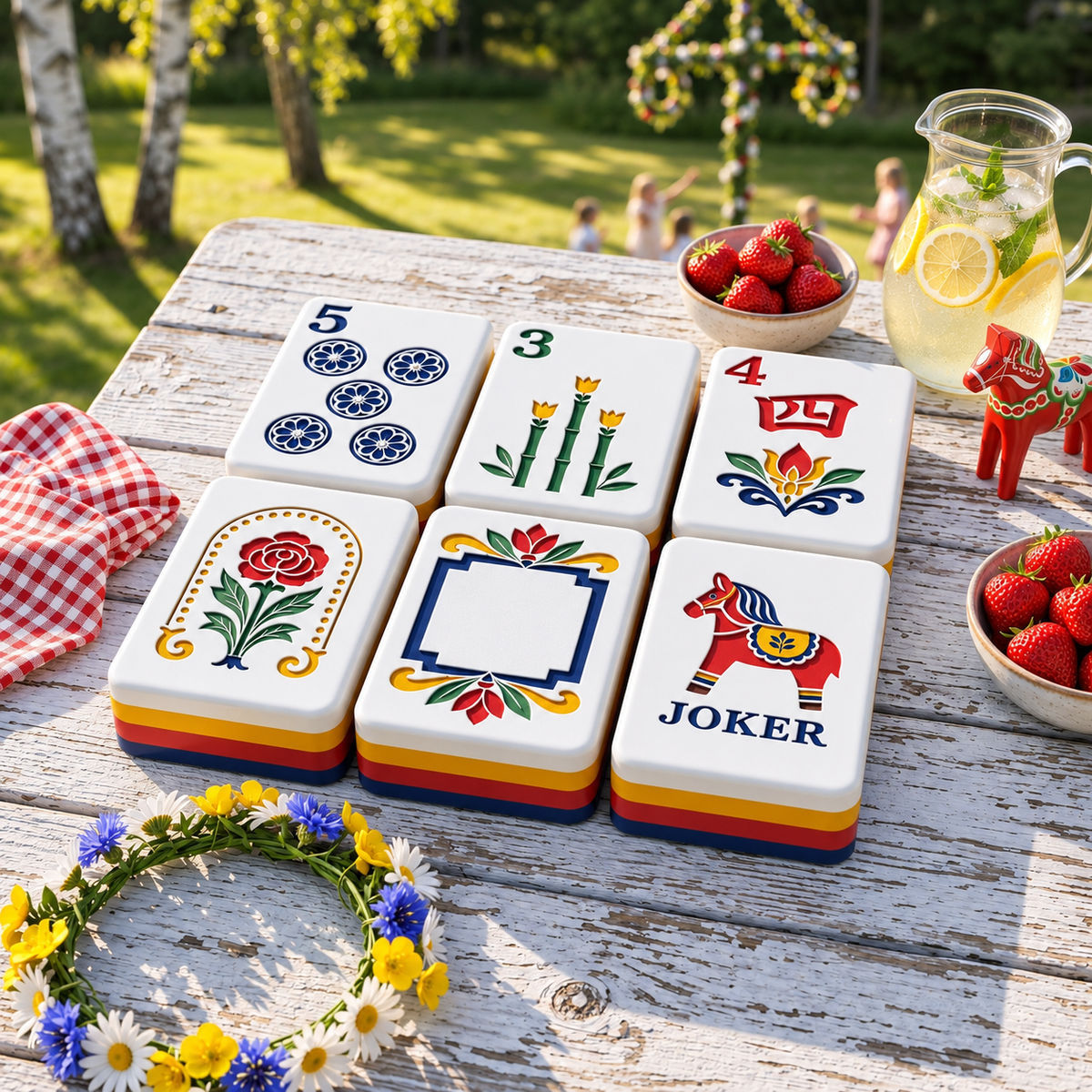
Hong Kong mahjong uses 144 tiles (36 per suit, 16 winds, 12 dragons, 8 flowers, no jokers) and is played by four players. Siamese mahjong uses the same 144 tile count but adds a unique wild-tile mechanic where one suit becomes wild mid-game. Both games build hands from sequences (chows: 1-2-3) and sets of identical tiles (pungs/kongs), unlike American mahjong which only allows identical sets and uses 152 tiles with jokers. Hong Kong emphasizes going out on a drawn tile; Siamese adds higher complexity through the wild-suit rule and a different point system. Neither game uses a hand reference card—players memorize or reference traditional pattern books. Both are played in Asia and by diaspora communities worldwide; neither requires the Charleston passing ritual of American mahjong. If you host mixed-variant games, separate tile sets and rule cards prevent confusion and keep play smooth.
When you learn a new variant, the first shock is always the tile set itself. American players expect 152 tiles and jokers; Hong Kong and Siamese players immediately notice the absence of jokers and the smaller pool. This matters because hand-building strategy changes entirely. In American mahjong, you rely on jokers to fill holes; in Hong Kong and Siamese, you cannot. Every tile you draw has real weight. The 144-tile core (three suits 1–9, four each; 16 winds; 12 dragons; 8 flowers) stays constant between Hong Kong and Siamese. What differs is the ruleset, not the raw materials.
How do Hong Kong and Siamese hand types differ?
Both games use chows (sequences like 4-5-6 of the same suit) and pungs (three identical tiles). The critical difference: Hong Kong limits hand patterns to traditional combinations learned from books or memory; Siamese adds the wild-suit rule, where one nominated suit becomes wild after the first discard round, allowing that suit's tiles to act as wildcards in any position. This transforms hand-building strategy. In Hong Kong, you plan around fixed tile values; in Siamese, you adapt mid-game as the wild suit changes what's possible. Neither allows joker substitution or the honor-and-flower-only patterns of American mahjong. If you move between tables, clarify which system is in play before tiles are shuffled.

What's the real difference in how you go out?
Hong Kong mahjong: you must go out (win) by drawing a tile from the wall or claiming a discard, with a hand of four melds (pungs/chows) plus a pair. Going out on your own drawn tile (self-drawn win) scores higher than going out on a discard. Siamese mahjong follows similar structure but the wild-suit rule can mean you have more or fewer ways to complete a hand. Neither variant allows going out on a kong (a drawn fourth tile); that's a rule unique to some Chinese regional games. Both require the winning hand to be legal at the moment you declare (no hidden jokers or broken sets). Scoring methods differ sharply: Hong Kong uses traditional point tables based on hand complexity; Siamese uses a different multiplier system tied to the wild suit's value. Study your group's specific scoring table before the first hand—this is where confusion ruins evenings.
Why don't Hong Kong and Siamese games use jokers?
Jokers are a modern innovation, most common in American and some East Asian commercial sets. Traditional 144-tile sets (the standard for Hong Kong and Siamese) predate the joker era and operate on the principle that skill lies in managing a fixed pool. Jokers would break the balance of difficulty: without them, every tile has one, two, or three copies remaining in play—everyone can track outs and odds. Add jokers and you lose that precision. Some newer Siamese clubs have experimented with optional joker rules, but the classical game does not use them. If your set includes jokers and you're learning Hong Kong or Siamese, set them aside. They belong to American mahjong, which uses a 152-tile set specifically designed around joker mechanics.
How does the wild-suit rule make Siamese mahjong harder?
In Siamese mahjong, after the first player discards, one suit is randomly or consensually chosen to become wild for that hand. All tiles of that suit now act as blanks—they can represent any tile in any hand sequence or set. This sounds simple but it explodes the cognitive load: you must constantly recalculate which hands are possible, which suits are "safe" to discard, and what your opponents might be holding. A sequence that looked impossible suddenly becomes easy. Hong Kong has no such wildcard; every tile is its face value always. The result: Siamese games are slower (more thinking), more chaotic (more upsets), and harder for newcomers. If you're bridging from American mahjong to a variant, Hong Kong is often the easier entry point because it removes jokers but keeps tile values stable. Siamese demands you unlearn the "fixed tile" assumption entirely.

Which variant should your game group play?
Aspect | Hong Kong | Siamese | American |
Tile count | 144 (no jokers) | 144 (no jokers) | 152 + 8 jokers |
Hand types | Chows + pungs | Chows + pungs + wild suit | Pungs/kongs/quints/sextets only |
Sequences allowed? | Yes (1-2-3) | Yes (1-2-3) + wild | No |
Goes out on drawn tile? | Yes, higher score | Yes, higher score | Must have joker in hand |
Difficulty | Moderate | High | Moderate–high |
Best for | Groups learning classics | Advanced players | Casual North American play |
Rule memorization | Moderate | High | High (card-dependent) |
Choose Hong Kong if your group wants to learn a "pure" variant without house rules or joker chaos. Choose Siamese if you love puzzle-solving and don't mind lengthy decision points. Choose American if you're already playing in North America and want to use the National Mah Jongg League card. Mixing variants in one evening confuses everyone—pick one and stick to it for the season.
When hosting players new to Hong Kong or Siamese, print or display the hand-pattern reference (or download an app that lists traditional patterns) and leave it on the table. Unlike American mahjong, where the card is mandatory and updated yearly, Hong Kong and Siamese rely on memorized or referenced traditions. This is a feature, not a bug: it means your rule set is stable year to year. But it also means new players need a cheat sheet.
🀄 Shop best-selling mahjong sets →
What to check before you buy a Hong Kong or Siamese set
Tile count: Confirm the set has exactly 144 tiles. Mahstead offers 160-tile American sets designed for the 152-tile game plus spares; those are not suitable for classic Hong Kong or Siamese play. Look for sets explicitly labeled 144-tile or "classical." Material: Acrylic, bone, or bamboo all work; acrylic is durable and affordable. Number clarity: Make sure suits (Bams, Craks, Dots) are easy to read from across a table—poor printing will slow every hand. Rack and mat: Hong Kong and Siamese sets often do not come with racks or mats in the box; you may need to source them separately or use tiles on a bare table. If you want a mat, look for one that fits a standard 36-inch square play area and has clear zones for each player's hand.
🎁 See our most-loved mahjong sets & accessories →
Mixing American and Hong Kong/Siamese in one collection
If your household or group plays multiple variants, buy separate sets. Do not mix American (152 tiles + 8 jokers) and Hong Kong/Siamese (144 tiles, no jokers) sets in one container—the tile counts and rules are incompatible and errors will happen mid-game. Instead, label or color-code each set's storage bag or case so everyone knows which set goes with which rules. Some players buy engraved American mahjong sets for their home group and keep a separate classical 144-tile set for travel or club play. This prevents the chaos of grabbing the wrong tiles.
One practical tip from our weekly games: keep a one-page rule summary (Hong Kong scoring, Siamese wild-suit logic, American hand card) taped to the underside of each set's case or bag. New players pull it out, read it, and know exactly what to expect. No arguments about whether something happened in round two or how a pung scored last time.
✨ Find your Mahstead set — free US shipping →

FAQ
Can I use an American mahjong set for Hong Kong or Siamese play?
No. American sets have 152 tiles plus 8 jokers; Hong Kong and Siamese need exactly 144 tiles with no jokers. The extra jokers and tile count will break hand legality. Buy a separate 144-tile classical set for those variants.
Why is Siamese mahjong played less often than Hong Kong?
The wild-suit rule adds complexity and slows play significantly. Hong Kong's fixed tile values are easier to teach and faster to execute. Siamese is popular in Thailand and among enthusiasts who prefer puzzle-like depth, but casual groups gravitate to Hong Kong or American mahjong for smoother, quicker sessions.
Do I need the National Mah Jongg League card to play Hong Kong or Siamese?
No. The League card is required only for American mahjong. Hong Kong and Siamese use memorized or referenced traditional hand patterns, usually from printed books or online guides. Patterns stay the same year to year; you don't need a new card each spring.
Can three or two players enjoy Hong Kong or Siamese mahjong?
Both variants are designed for four players. Two or three-player house rules exist but are non-standard and require group consensus. American mahjong has published two and three-player variants, making it more flexible for smaller tables.
What's the fastest way to learn Hong Kong mahjong if I already play American?
Focus on chows first. American mahjong has no sequences; Hong Kong does, and sequences are the biggest conceptual shift. Second, memorize five or six common hand patterns (straight, all one suit, honors and terminals). Third, accept that you'll lose the first few games—the scoring logic is different. Practice with patient players and keep a pattern reference on the table.


View More
View More
View More
