
Mahjong Tournaments in Memphis: Find Games & Host Events
Last updated: Nov 23, 2026
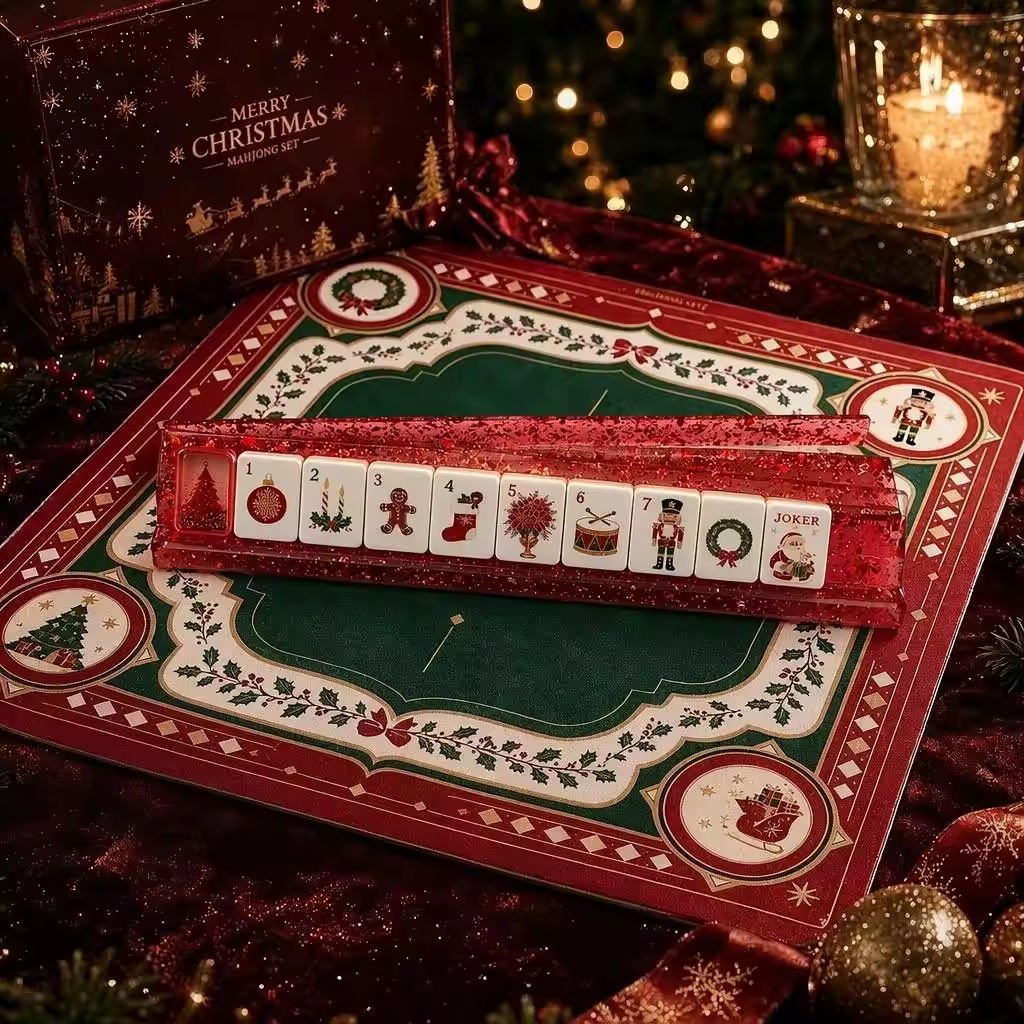
Memphis mahjong tournaments are hosted primarily through community centers, synagogues, libraries, and private mahjong clubs that run seasonal events and weekly play. Most follow American mahjong rules using the current National Mah Jongg League card. To find active tournaments, search Meetup for "mahjong Memphis," contact local senior centers and temples, or ask at library bulletin boards. Tournaments range from casual four-player rounds to larger events with multiple tables and point scoring. Entry fees vary by venue and format. Before attending your first tournament, learn the current-year hand card, understand how the Charleston works, and review basic scoring. Many newer players bring their own best-selling sets with engraved tiles for clarity under tournament lighting.
Where do Memphis mahjong tournaments happen?
Community centers, synagogues, temples, libraries, and country clubs host regular mahjong play in the Memphis area. Start by searching Meetup.com for "mahjong" with Memphis filters to find active groups scheduling weekly or monthly games. Contact your nearest public library—many post flyers for local clubs and tournament dates. Synagogues and temples often host dedicated mahjong groups and occasionally larger tournaments. Senior centers frequently run weekly or seasonal events. Ask for word-of-mouth referrals at any place you find: regulars are usually happy to share where the best games are.

What format and rules do Memphis tournaments use?
Almost all Memphis tournaments use American mahjong, which differs from Chinese or Riichi variants in several ways. American mahjong requires a hand from the current year's National Mah Jongg League card, uses the Charleston (a tile-passing ritual before play), and allows only pungs (three identical tiles), kongs (four identical), quints (five), and sextets (six)—never sequences or "chows." Jokers can appear in these sets but never as a single tile or pair. A standard tournament game uses all 152 playing tiles plus 8 jokers. Most events are four-player games, though some venues run three- or two-player variants using house rules. Scoring is cumulative across multiple rounds, with the highest total winning the event or cash prize.
How do I prepare and practice before my first tournament?
Study the current-year National Mah Jongg League card before you play—this card shows every legal hand for that season and is the only reference allowed during tournament play. Learn to read the mahjong card by identifying sections (Pung/Kong hands, Quint/Sextet hands, Special hands) and understanding the notation. Understand how jokers work—they substitute for missing tiles in exposed sets but can never replace a single tile or form a pair. Practice how the Charleston works—the mandatory tile-passing exchange that begins every game. Review American mahjong scoring so you can track points and avoid penalizing errors. Play weekly casual games at home before entering a tournament—confidence comes from repetition, not rules alone.
What equipment should you bring to a Memphis tournament?
Bring your own set if your home group owns one—tournaments often have shared sets, but bringing a personal set reduces confusion and speeds play. Choose a best-selling mahjong set with clear, large tile faces; engraved acrylic sets with high contrast are easier to read under variable lighting. A mahjong rack with pushers keeps your hand organized and prevents accidental exposure, a real advantage in a tournament where speed and accuracy matter. Bring the current-year card (host venues always provide it, but carry one as backup). Wear glasses if you need them—tournament play moves quickly. If you travel between venues, a mahjong bag or case protects your set and racks during transport. Use a mahjong mat if you host practice sessions at home; a smooth, cushioned playing surface prevents tiles from sliding and shortens setup time.

What mistakes do newcomers make in Memphis tournaments?
Common errors include calling a hand before verifying it matches the card exactly—always double-check your hand against the card before announcing. Many new players misunderstand the Charleston: it's mandatory, not optional, and you must pass specific tiles in a fixed sequence. Joker misuse trips up beginners: remember jokers can only substitute for tiles in exposed sets (pungs, kongs, quints, sextets), never for a single tile or pair. Don't expose tiles early unless you plan to use them in the current hand—exposed sets become locked and count against your flexibility. Avoid holding onto low tiles hoping to make a hand later; competitive play discards early to signal strength. Never assume house rules match the National League card format; always ask the host how they score bonuses and penalties before play begins.
Tournament-Ready Equipment Comparison
Set Type | Best For | Key Feature | Why It Matters |
Engraved acrylic | Tournament players | High contrast, large text | Reads fast under any lighting |
Standard acrylic | Casual groups | Durable, affordable | Lasts through 100+ games |
Bamboo tile sets | Collectors | Authentic feel | Slower play but premium look |
Beginner bundle (set + rack + mat) | New players | Complete starter kit | Speeds learning, all in one |
🀄 Shop best-selling mahjong sets →
What to check before you buy a tournament set
Verify the set contains all 152 playing tiles plus 8 jokers—Mahstead 160-tile sets include spare tiles for replacements without affecting play. Confirm tile size (typically 1.25" or similar) fits your hands and your rack; test at a demo if possible. Check that suits are clearly marked: Bams (sticks), Craks (characters), Dots (circles) should be instantly recognizable at arm's length. Ensure the set comes with racks and pushers if you need them—tournament-level sets often sell the rack separately. Verify packaging protects tiles during shipping; acrylic tiles can crack if jostled. Ask whether replacement tiles are available if a tile breaks later. Read reviews from players, not just retailers, to learn how the set holds up after 50+ games.
✨ Find your Mahstead set — free US shipping →
How to host a tournament at home or at a venue
Secure a large, flat playing surface—a dining table works, but a dedicated mat or card table is better for 2+ hours of play. Set up one table per four players; if you have 8 players, run two simultaneous games and rotate tables between rounds, or play multiple rounds with the same group. Provide each table with the current-year card, printed clearly or laminated. Have pencil and paper for scoring at each table. Distribute one set per table; if you only have one set, play sequential rounds. Set a time limit (usually 1 hour per round) and stick to it. Remind players to shuffle the wall thoroughly before each game and to begin the Charleston exchange properly. Keep snacks and water nearby—long tournaments cause fatigue. For cash events, clarify payout structure before play: most Memphis groups use a sliding scale (e.g., highest score wins 40%, second place 30%, third 20%, fourth 10%) or split the pot equally among winners above a threshold score.
🎁 See our most-loved mahjong sets & accessories →

FAQ
Where can I find the schedule for Memphis mahjong tournaments?
Search Meetup.com for "mahjong Memphis" to find active groups posting weekly or monthly play. Contact local community centers, synagogues, temples, and libraries directly—they often host tournaments and post dates on bulletin boards or websites. Ask at casual games you attend; regulars know the tournament circuit.
Do I need to buy my own set before entering a tournament?
No, most venues provide sets. However, bringing your own ensures clarity and comfort. Many serious players own engraved acrylic sets with pushers for speed and accuracy under tournament conditions.
What's the difference between American mahjong and other variants played in tournaments?
American mahjong uses the National League card (current year only), requires a Charleston before play, and allows only pungs, kongs, quints, and sextets—no sequences. Chinese and Riichi variants play open melds differently and use a wider range of hand patterns.
How much does it usually cost to enter a Memphis mahjong tournament?
Entry fees vary by venue and format. Casual club play may be free or ask a small donation. Larger tournaments typically charge an entry fee; ask the host directly. Cash prizes, if offered, are usually drawn from combined entry fees.
Can beginners compete in Memphis tournaments, or are they for experienced players only?
Most communities run beginner-friendly tournaments alongside advanced events. Ask the host before registering—many venues offer "beginner bracket" play or separate games for newer players learning the current-year card.
What should I do if I disagree with a scoring decision during a tournament?
Stop play immediately and consult the National League card and agreed house rules. Ask the host or a neutral observer to adjudicate. Most venues clarify scoring rules before play begins to avoid disputes.
Is it better to practice with a mahjong mat before playing in a tournament?
Yes. A mat keeps tiles from sliding, lets you practice hand-building speed, and lets you understand how tiles feel during real play. Learn how to choose a mahjong mat to match your home setup.


View More
View More
View More
