
Mahjong Tournaments in Columbus: Where to Play & Compete
Last updated: Nov 23, 2026
Columbus players compete through community centers, libraries, synagogues, country clubs, and private meetup groups—check those venues' activity boards and ask staff for mahjong contacts. Most tournaments follow American mahjong rules and accept beginners in designated sections; play runs weekend afternoons or weeknight sessions. Expect 4-person games lasting 2–4 hours per tournament round, with entry fees and prize pools varying by event. American mahjong requires a 152-tile set, the current year's National Mah Jongg League card (issued every spring), and familiarity with how to play American mahjong. Start by visiting local meetup boards, asking at synagogues or senior centers, or searching Meetup.com for "mahjong Columbus"—most groups announce schedules there. Many tournaments rank players by experience; your first event is often the hardest to find, not the hardest to join.
Where do Columbus players actually find tournaments?
Start at community centers, public libraries, and synagogues in your neighborhood—mahjong organizers almost always post flyers or maintain contact lists there. Search Meetup.com for "mahjong" plus your suburb or zip code; active groups update event calendars weekly and reply within 24 hours. Country clubs and senior centers often host games Tuesday or Thursday afternoons; call the membership desk directly. One tip we've learned: ask the first person you meet at a casual game—they know three more groups you won't find online.
🀄 Shop best-selling mahjong sets →

What's the difference between casual play and tournament rules?
Casual games use the National Mah Jongg League card like tournaments do, but play length, scoring disputes, and entry stakes vary widely. Tournaments enforce strict time limits (usually 1–2 hours per round), verify hands against the official card before paying, and disqualify players for rule breaks. Casual play tolerates slower pace and negotiation. Both use the same American mahjong format: 152 tiles, eight jokers, four players, and no exposed chows. The card changes yearly, so tournament organizers will specify which year's card applies—confirm before registering.
How do beginner players fit into Columbus tournament brackets?
Most tournaments divide players into two or three sections by skill level; beginners typically play in their own bracket until they win section rankings or self-advance. Section play means you compete only against other beginners—winning feels real because your opponents learned the game like you did. Organizers ask your experience level on registration (never seen, casual, competitive—roughly those tiers). A few tournaments merge all sections at the end to crown an overall winner; ask the organizer whether your tournament does that. Starting in a beginner bracket costs no extra and gives you four chances to finish first without playing someone who's won twenty titles.
What do you actually bring to your first tournament?
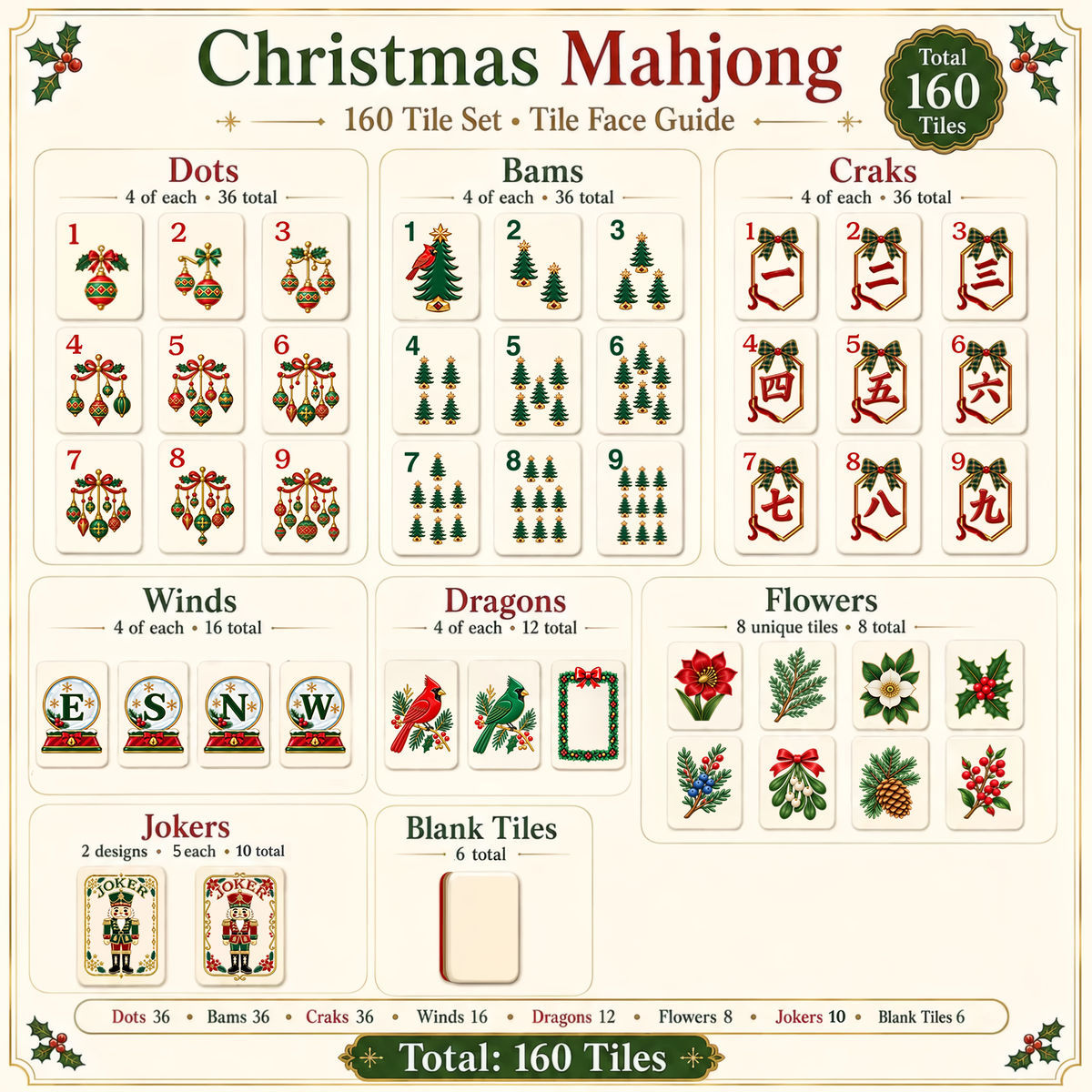
Bring your own American mahjong set, the current year's League card, paper and pencil, a small snack, water, and cash or a check for entry fees. Your set should have 160 tiles (152 playing tiles plus spares), eight jokers, four wind tiles per direction, and all flower and honor tiles; if you're unsure whether yours is complete, check what's in an American mahjong set. Some players bring a mat for tile visibility and grip, though tables often have green felt. Most tournaments provide racks or let you prop tiles; if you own racks with pushers, bring them—they speed play and reduce fumbling. Organizers usually handle scorecards and announce scoring rules at the start.
🎁 See our most-loved mahjong sets & accessories →

How much does it cost and what should I know about entry?
Entry fees range widely—check the flyer or contact the organizer directly for your specific event. Most tournaments charge a per-round fee (entry plus optional prizes) and announce payouts before play starts. Some Columbus groups run round-robin formats (you play everyone once) lasting one afternoon; others use Swiss pairings (winners play winners, losers play losers) across multiple rounds. No organized mahjong tournament asks for payment before you meet the organizer in person and see the venue—if an online ad asks for prepayment via wire transfer, it's a scam. Show up 15 minutes early; seating assignments and tie-breaker rules are posted then.
What if your set wears out or you lose tiles mid-season?
Buy a backup set before your first tournament, not after your first loss. Browse our best-selling collection for American-format sets in acrylic (durable, loud, easy to shuffle), bamboo (quieter, heavier), or bone. Acrylic is what most tournaments see; if you travel to out-of-state events, a travel bag and hard case protect your tiles and keep you organized. Lost a flower? A single replacement tile costs far less than replacing the set; message the seller or ask your tournament organizer if they stock spares. This is why beginners often play with hand-me-down sets first—don't buy new until you know you'll play all season.
What to check before you buy a set for tournament play
Feature | Why it matters | Check for | Red flag |
Tile count | Must be 160 (152 playing + spares) for American mahjong | Box says 160-tile set | Sets labeled 144 or 166 aren't standard American |
Joker clarity | Tournaments require jokers to be visibly different from honor tiles | 8 jokers, bright or unique marking | Fewer than 8 jokers or jokers that look like regular tiles |
Suit spelling | League cards use "Bam," "Crak," "Dot"—mismatches cause confusion | Tiles say "Bam," "Crak," "Dot" (not "Bamboo," "Character") | Spelling variants or ornamental symbols instead of English letters |
Tile weight & grip | Heavy tiles slow shuffles; light tiles stick together during play | Handle the set in person or read reviews from players | Plastic that feels hollow or tiles that slide apart randomly |
Spare tiles included | Spares replace lost or damaged tiles mid-tournament | Box lists joker and blank spares | No mention of spares or vague descriptions |
✨ Find your Mahstead set — free US shipping →
Three steps to enter your first Columbus tournament this month
Step 1: Visit a community center, library, or synagogue near you and ask staff whether they host or know mahjong organizers. Look for flyers on bulletin boards; copy contact info or photos with your phone.
Step 2: Search Meetup.com for "mahjong Columbus" and click "Join" on a beginner-friendly group. Message the organizer: "I'm new to American mahjong—do you have a beginner bracket this month?" They reply within 24 hours with dates, cost, and what to bring.
Step 3: Buy or borrow an American mahjong set, get the current League card from your organizer or a local player, and register one week before the event. Arrive 20 minutes early, introduce yourself to neighbors at your table, and ask questions during practice hands before scoring begins.

FAQ
Do I need to know advanced strategy to enter a beginner tournament?
No. Beginner sections assume players still memorize the card and may call hands slowly. You learn strategy by playing; tournaments give you four games in one day against three different opponents. Most organizers include a 30-minute rules review before round one.
Can I play in an online Columbus mahjong tournament if I live out of state?
Some casual groups host video play via Zoom or stream viewers, but ranked tournament play happens in person at the organizer's venue. Check whether your target event offers remote participation before registering—most don't, but a few experimental groups are trialing it.
What if I forget the League card at home?
Ask another player or the tournament organizer to share a card during play—organizers keep extras. Do not bring a printed PDF; the League card must be physical. One borrowed card per table is normal; two is a red flag that the organizer didn't prepare correctly.
How often do Columbus tournaments happen—weekly, monthly, or seasonal?
It varies by venue. Community centers may run weekly casual games, while league-style tournaments happen monthly or quarterly. Meetup.com groups post their full schedule at the start of the year; most play fall and winter more than summer.
Should I buy an engraved set with my name on it for tournament play?
Not for your first season. Engraved title sets are wonderful after you've played 20+ tournaments and know your style—they're a personal trophy, not a requirement. Start with a standard set; you'll know whether engraving fits your play by next year.


View More
View More
View More
