
Mahjong Tiles for Your Group: How to Choose the Right Set
Last updated: Nov 23, 2026
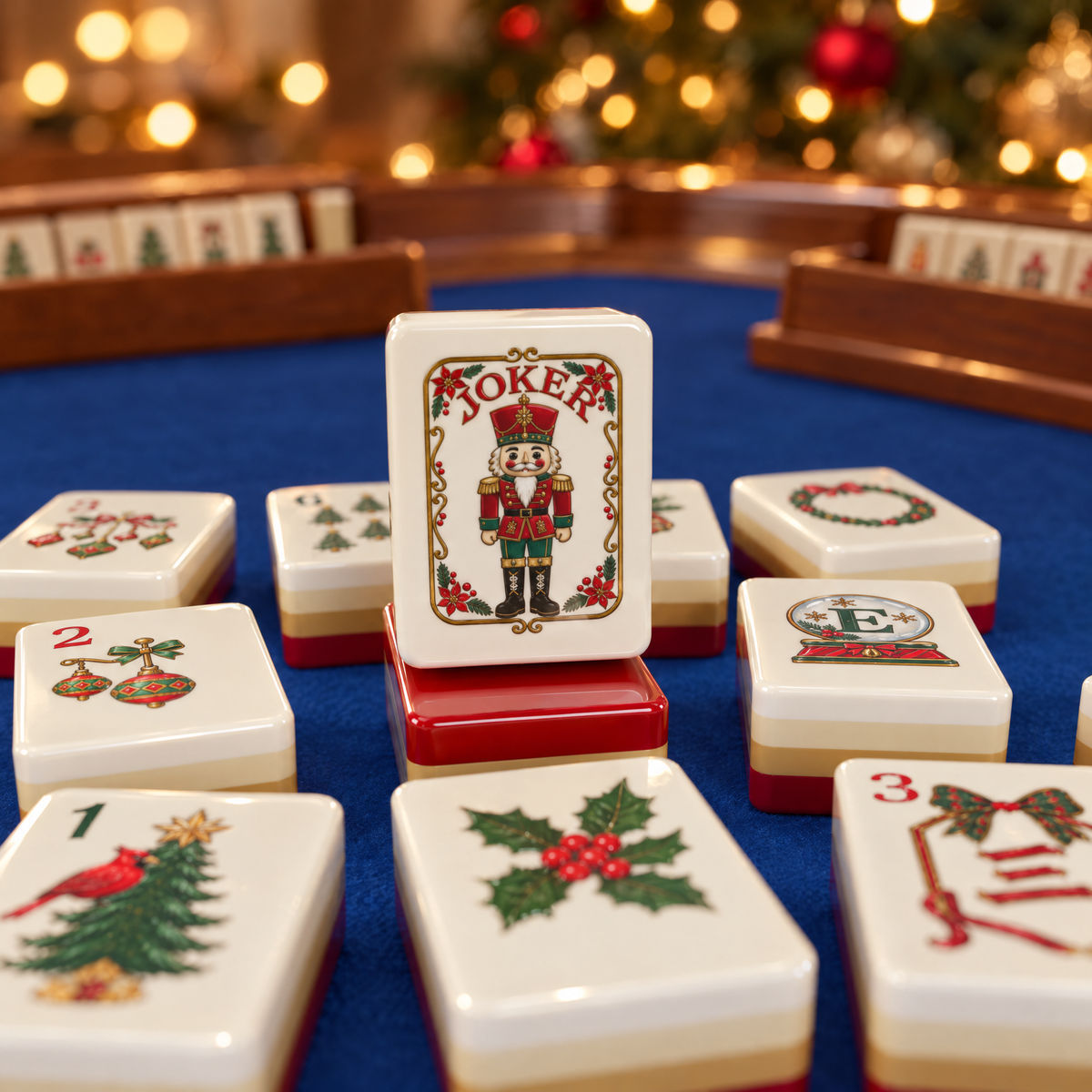
When you're buying tiles for a mahjong group, you're investing in clarity, durability, and often personalization that reflects your players. American mahjong groups need a 160-tile set (152 playing tiles plus spares) with bold face markings so tiles read instantly across the table—especially critical when four players are calling hands simultaneously. Acrylic tiles outlast bamboo under heavy weekly rotation and resist fading from tabletop light. Our best-selling mahjong sets come engraved with group names, seasons, or inside jokes; many groups order their first set within 2–4 weeks and add a second after 18 months of regular play. Standard sets include all suit tiles (Bams, Craks, Dots), winds, dragons, flowers, jokers, and spare tiles. Before ordering, confirm your group uses the current year's National Mah Jongg League card and plays American rules—the tile count and pung/kong structure differ from Hong Kong or Chinese variants.
🀄 Shop best-selling mahjong sets →
What tile markings actually matter in group play?
Tile faces must be legible from across a 36-inch table under standard lamp light—the real test groups rarely think about before the first Tuesday night. Bold printed numerals on suit tiles (Bam, Crak, Dot numbers 1–9), clear honor symbols on winds (N, E, W, S) and dragons (Red, Green, White), and strong joker borders reduce misreads and disputes. When you're picking up three tiles in quick succession to check your hand, a fuzzy or thin print forces you to hold tiles closer or rotate them, burning clock time and breaking group rhythm. Acrylic tiles hold ink crisper than bone or bamboo after 100+ shuffles, and the flat surface resists shine-glare that muddies small characters. Choose sets where the engraving—if you add names or symbols—sits on the back face and doesn't interfere with play-side legibility.

Should your group buy one shared set or multiple?
Most weekly groups discover within two months that one set isn't enough. Your backup set sits home when your primary set travels to a player's house, and nothing derails Tuesday night faster than a tile missing mid-hand. One group we know plays Thursday and Sunday; they bought a second set engraved with a slightly different year to avoid mix-ups when sets return. If your group is consistent (same four players, same venue), one set of engraved American mahjong sets works fine for 2–3 years. If you rotate venues or players frequently, a second set—even unadorned—covers backups, brings sets to two homes at once, and lets you age-test tile wear. Cost-wise, one set handles weekly games; two sets suit groups that play twice weekly or host casual visiting players who might borrow tiles. A comparison: one set = primary investment; second set purchased 18 months later = insurance and convenience.
Scenario | Set Count | Why | Consideration |
Single venue, four regulars, one night/week | 1 set | Tiles always in house | Backup? Play at someone else's eventually |
Two venues (rotates weekly) | 2 sets | One at each house | Reduces transport, shipping, loss |
Open group or beginner lessons | 2–3 sets | Players learn at different speeds, borrowing common | Stack spares for teaching wear |
Tournament-style evening event | 1 set per table | Four tables = four sets | Purchased once; used annually |
🎁 See our most-loved mahjong sets & accessories →
What's the real difference between acrylic and other materials?
Acrylic tiles resist staining, odor absorption, and color fade—critical for groups playing through decades of snacks, drinks, and humid garages. Bone and bamboo are prettier and feel traditional, but they absorb humidity in damp climates, swell slightly, and jam in racks after six months; they also dull under lamp heat and require polishing every season if you host regularly. Bakelite (early plastics) yellows and becomes brittle. When we host games, we choose acrylic because a Tuesday-night tile can sit in a damp car trunk and still shuffle smoothly Friday. Engraved acrylic adds personalization—group names, year, funny slogans—without raising fragility; the engraving sits on the back face, so it doesn't scratch off with shuffling. If your group plays outdoors, acrylic also resists UV bleaching better than most alternatives. Cost-wise, acrylic sets from our collections sit mid-market: more durable than bone, less costly than rare Catalin vintage sets.

How does engraving work, and when should you order?
Engraving adds a group name, season year, or inside joke to the back face of tiles. Most custom orders take 2–4 weeks from proof approval, so if you're buying for a fall season (September–December play), order by mid-August. Some groups engrave only one set and leave backups blank; others engrave both identically or with variant text ("Game On" vs. "Game On 2"). The engraving process etches into acrylic, creating a permanent mark that won't fade or peel off like screen printing. Before you order, decide: Does your group play under one name year-round, or do you rebrand seasonally? Will you add this set to a growing collection (in which case year-marking helps), or is it a one-time buy? Mahstead's engraving works best with short text (under 20 characters per line) and simple symbols; ornate graphics don't reproduce crisply on small tile faces. Confirm your exact wording with the team before checkout to avoid rework.
What other gear should your group buy alongside tiles?
Tiles alone don't run a game—a mat, racks, a bag, and pushers matter equally for speed and comfort. A durable mahjong mat with grid lines and cup holders keeps tiles organized and reduces spills; it folds flat for transport. Racks with pushers let players stand tiles upright so you can't see their hand from across the table—essential for fairness and prevents accidental exposure. A padded travel bag or case protects tiles during the drive to venues and keeps loose jokers from scattering in your trunk. Dice roll for seating and first hand; some groups engrave dice with their name too. If your group hosts a holiday or anniversary game, matching Christmas-themed or seasonal sets add texture without replacing your primary tiles. Start with tiles + mat + racks + bag; dice and backup sets follow naturally as your group grows.
✨ Find your Mahstead set — free US shipping →
What to check before you buy
Tile count: Confirm your set is 160 tiles (152 playing tiles + spares). American mahjong plays with exactly 152; the 8 extra tiles are jokers or blanks and never enter play.
Suit spelling: Look for Bam, Crak, Dot (not "Bams," "Craks," "Dots" in the product name, though those are colloquial).
Face legibility: Request or photo-check sample tiles if ordering custom engraving. Numbers should be bold and readable at arm's length.
Acrylic weight: Heavier acrylic (≥1 mm thickness per tile) resists chipping during shuffles and shuffles more smoothly in racks.
Engraving placement: Verify engraving is on the back face only, not on play-side numerals or symbols.
Spare tile inventory: Confirm your set comes with extra jokers and/or blanks to replace lost or damaged tiles over years of play.
Shipping timeline: If you need tiles by a specific date, order 4–6 weeks ahead to allow proofing and production.
Return policy: Check whether custom-engraved sets can be exchanged if engraving text has an error; most custom orders can't be returned once engraved.

FAQ
Can we play American mahjong with fewer than 160 tiles?
American mahjong requires exactly 152 playing tiles; a 160-tile set includes 8 spares. You cannot play with 144 tiles (used in other variants) using the current National Mah Jongg League card—hand patterns and joker counts don't align. Short sets will stall games when tiles go missing.
How long does a set last with weekly play?
Acrylic sets withstand 2–5 years of weekly four-player games before jokers wear or tiles lose gloss. Lifespan depends on shuffle intensity, storage humidity, and how often tiles travel. A second set purchased after 18 months extends the lifespan of your primary set by reducing use frequency.
Can we customize tiles with our group photo or logo?
Engraving works best with text and simple symbols (names, years, small icons). Complex photos don't reproduce crisply on tile faces. Confirm your design with Mahstead before ordering; overly detailed graphics may blur or lose clarity during the engraving process.
What if a tile cracks or gets lost mid-season?
Your 160-tile set includes 8 spare tiles—extra jokers and blanks—so you can replace a lost standard tile and keep playing. If you lose multiple tiles or a spare doesn't match your set, order a replacement set or contact Mahstead to purchase individual spare tiles if available.
Does engraving add to the cost, and how much lead time do we need?
Engraving pricing varies by design complexity; see current pricing on the product page. Lead time is typically 2–4 weeks after proof approval. Order by mid-August for fall play, mid-May for summer games. Rush timelines may be available—ask Mahstead directly.
Do we need a mat, racks, and bag, or just the tiles?
Tiles alone work if you play on a flat table, but a mat organizes the wall, racks with pushers hide hands and speed play, and a travel bag protects tiles during transport. Most groups add these one at a time as they grow; start with tiles and a mat if budget is tight.
Are these sets good for teaching beginners?
Yes. Acrylic tiles are durable enough for learning shuffles, and clear face markings help new players read suit names quickly. Pair them with a mat and racks guide and you've got a beginner-friendly setup. Some groups buy a second unadorned set for teaching to keep their primary engraved set for experienced play.
Can we play Hong Kong or Chinese mahjong with these American tile sets?
No. American mahjong uses 152 tiles and the current year's NMJL card; Hong Kong and Chinese variants use 144 tiles, different hand patterns, and chows (sequences). Tiles look similar but play completely differently. Confirm your group's variant before purchasing.


View More
View More
View More
