
How Many Tiles in Guangdong Mahjong: Sets & Rules
Last updated: Nov 23, 2026
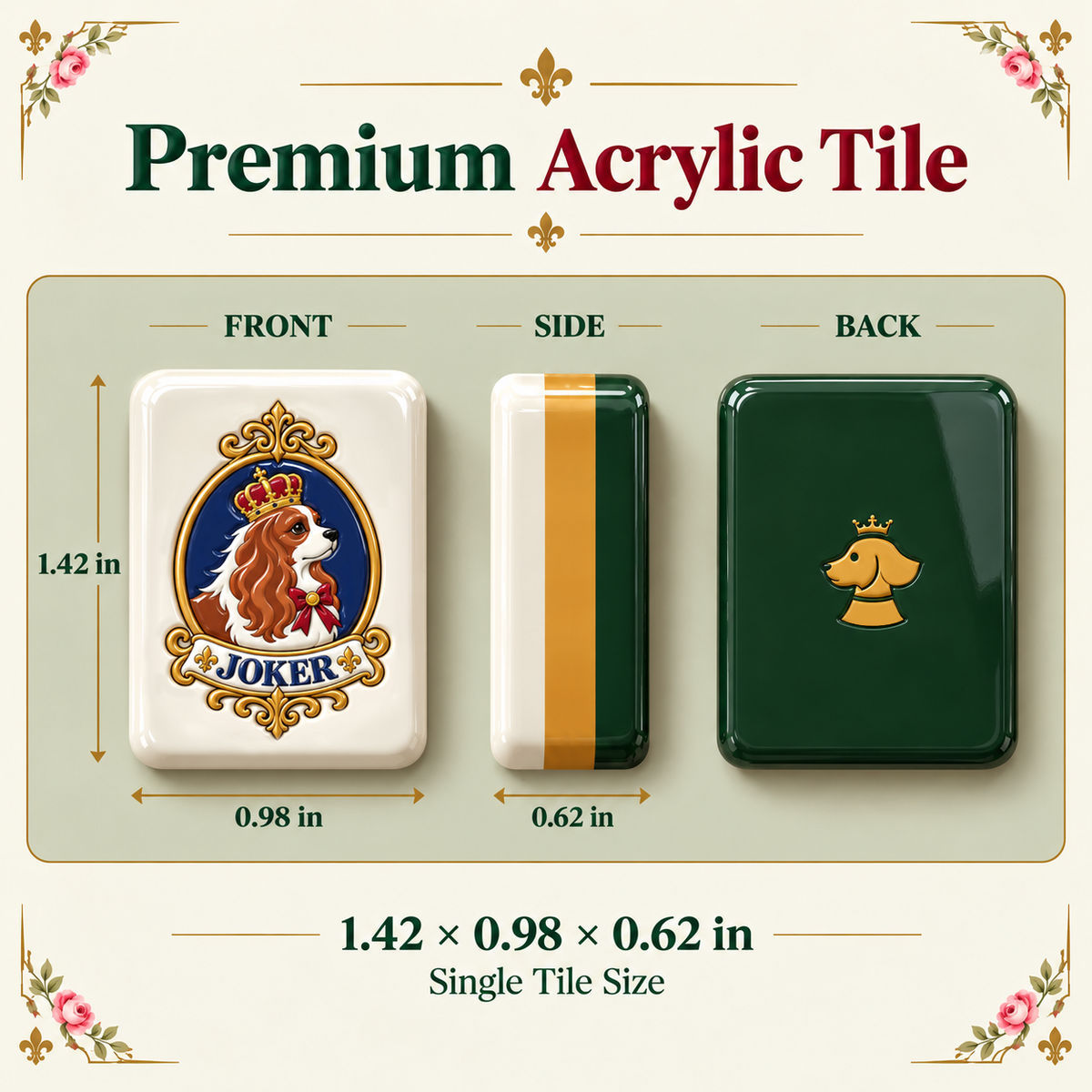
Guangdong mahjong uses 108 tiles: three suits (Bams, Craks, Dots) numbered 1–9, four copies each (108 total), with no winds, dragons, flowers, jokers, or blanks. The game is played with exactly these 108 tiles—no extras, no spares. It originated in Guangdong Province, China, and remains wildly popular across Hong Kong, Macau, and Southeast Asian communities. Play is fast, with no exposed pungs or kongs (everything is concealed until someone wins), and hands shift constantly as tiles are drawn and discarded rapidly. Scoring differs radically from American mahjong; payouts depend on hand type and how you won (self-drawn vs. claimed discard). If you host mixed-variant games, you'll want a versatile set; Mahstead's best-selling mahjong sets are designed for American play but teach you the tile structure any variant builds on.
What exactly is the 108-tile Guangdong count?
Guangdong mahjong removes all non-suit tiles. You get three suits (Bams, Craks, Dots), each numbered 1–9, with four copies of every number—exactly 108 tiles, nothing more. No winds, no dragons, no honors of any kind. This streamlined deck forces players to focus purely on sequences and sets within the three suits. Compare this to American mahjong's 152-tile base: Guangdong strips away 44 tiles (all winds, all dragons, all flowers, all jokers) and fundamentally changes hand structure and probability.

Why is Guangdong so different from American mahjong?
American mahjong hands come from a licensed annual card and include complex honor combos; Guangdong relies on players memorizing traditional hand patterns that have evolved over centuries. American mahjong allows exposed groups (pungs, kongs, quints, sextets); Guangdong keeps everything concealed until someone declares a win. Jokers, which define American strategy, don't exist in Guangdong. Scoring is also radically different: a Guangdong hand might pay 1x, 2x, 4x, 8x, or 16x the base stake depending on hand type and winning method—far more variable than the point-and-chip system American players use. The rhythm is faster; discards are rapid-fire, and reading opponents' hands requires constant attention.
How do you set up and play with 108 tiles?
Four players sit around a table. The dealer (banker) builds a wall of 27 stacks—two tiles per stack, four stacks high—using all 108 tiles divided equally among players. Each player takes 13 tiles to start (52 total); the dealer draws the 53rd. Play proceeds counterclockwise in most variants. Players draw one tile, discard one tile, and call (claim) discards only to complete a hand. Once someone has four groups (melds) of three tiles plus a pair, they declare mahjong and win the round. There are no exposed melds mid-play—all groups stay hidden until the winning hand is revealed. A round ends in seconds if a hand is ready, or after a full wall is drawn with no winner (goulash or dead-wall win).
🀄 Shop best-selling mahjong sets →
What tiles can you actually use in Guangdong hands?
Only number tiles exist: 1–9 Bams, 1–9 Craks, 1–9 Dots. Melds are pungs (three identical tiles, e.g., three 5 Craks) and sequences (three consecutive tiles in the same suit, e.g., 3–4–5 Dots). Pairs are identical tiles (two 7 Bams). The 1 Bam shows a bird (as it does in American sets). Since no honors, dragons, or jokers exist, hands rely entirely on suit manipulation—drawing and discarding strategically to build concealed groups. This simplicity is deceptive: hand-reading, discard timing, and knowing which tiles have been played become hypercompetitive skills. Players track what others discard obsessively to infer hand shape.

How do Guangdong scoring and payouts work?
Guangdong scoring depends on hand type and winning method. A basic pung-only hand (no sequences) might pay 1x the stake; a sequence-heavy hand pays 2x or 4x; rare patterns (all terminals, mixed suits, pure suits) pay 8x or 16x. Winning by drawing your own tile (zimo) typically pays double. Winning off a discard (hu) pays the discarder only. If multiple players could win a single discard, the first to declare takes it. Payouts go directly between players—there is no central pot or scoring sheet like American mahjong. A single round can swing stakes dramatically; games often continue until a target score is reached or a time limit is met. The variance means fortune shifts unpredictably and keeps players engaged.
A quick comparison: American vs. Guangdong tile counts and play
Aspect | American Mahjong | Guangdong Mahjong |
Tile count | 152 (+ 8 jokers) | 108 (exact, no spares) |
Suits | Bams, Craks, Dots | Bams, Craks, Dots |
Honors | Winds, dragons, flowers | None |
Jokers | 8 (required) | None |
Hand source | Annual licensed card | Memorized traditional patterns |
Exposed melds | Yes (pungs, kongs, quints, sextets) | No (all concealed until win) |
Scoring method | Points + chips per hand | Direct cash/stake multiples per hand |
Game rhythm | Moderate, strategic | Fast, aggressive |
Skill focus | Card reading, discard math | Hand reading, tile memory, speed |
🎁 See our most-loved mahjong sets & accessories →
Can you play both American and Guangdong with one set?
Technically, yes—if your set has enough number tiles. American mahjong sets contain 108 number tiles (Bams, Craks, Dots) plus 44 honors and jokers. To play Guangdong, you need only those 108 number tiles. However, the reverse is impossible: you can't play American without winds, dragons, flowers, and jokers. If you host cross-variant games, an American-standard set from our best-selling collection works for teaching Guangdong rules, though it's bulkier than a dedicated 108-tile Guangdong set. For serious Guangdong play, dedicated 108-tile sets are lighter, faster to shuffle, and easier to manage. Guangdong sets are widely available from Asian game retailers and online sellers worldwide—they're cheaper and more compact than American sets, since they contain fewer tiles and simpler designs.
What to check before you buy a set for Guangdong play
Tile count: Verify it's exactly 108 for Guangdong, or 152 + jokers for American. Don't assume labels—count visually or ask the seller.
Suit clarity: Bam, Crak, and Dot symbols must be unmistakable, especially at arm's length during fast play. Thick acrylic or ceramic tiles hold details better than thin plastic.
Tile size and weight: Guangdong players often prefer slightly smaller or lighter tiles for rapid dealing; test a handful before committing to a full set.
Face markings: Chinese numerals (壹–玖) and English numbers should both be present if you're teaching English-speaking players.
Wear resistance: Mahjong tiles endure constant shuffling; cheap tiles chip or fade within weeks. Thicker materials mean decades of play.
✨ Find your Mahstead set — free US shipping →

FAQ
Can I use an American mahjong set to teach Guangdong rules?
Yes, for learning—the 108 number tiles are identical. But you'll ignore winds, dragons, flowers, and jokers entirely. For regular Guangdong play, a dedicated 108-tile set is faster to handle and shuffle.
Do all Guangdong variants use exactly 108 tiles?
Standard Guangdong uses 108. Some regional variants add extra tiles (e.g., 120-tile Hong Kong mahjong includes bonus tiles). Check your ruleset or ask experienced players in your group.
Why does Guangdong have no jokers if American does?
Guangdong mahjong evolved centuries before jokers were added to Western card games. The variant never adopted them; instead, it relies on strict tile scarcity and player skill to create tension and surprises.
How long does a typical Guangdong round take?
2–15 minutes. Rounds end fast if someone has a hand ready or the wall is exhausted. American rounds typically run 5–20 minutes because the annual card has more complex patterns.
Where can I find other Guangdong players to join?
Community centers, libraries, and cultural associations in areas with large Chinese or Hong Kong communities often host mahjong nights. Check Meetup, local Facebook groups, and university alumni networks.
Is Guangdong mahjong harder than American?
Different, not harder. American requires card literacy and joker strategy; Guangdong demands speed, tile memory, and hand-reading. Choose based on what appeals to you.


View More
View More
View More
