
Shanghai Mahjong Winning Hands: Rules, Patterns & Strategy
Last updated: Nov 23, 2026
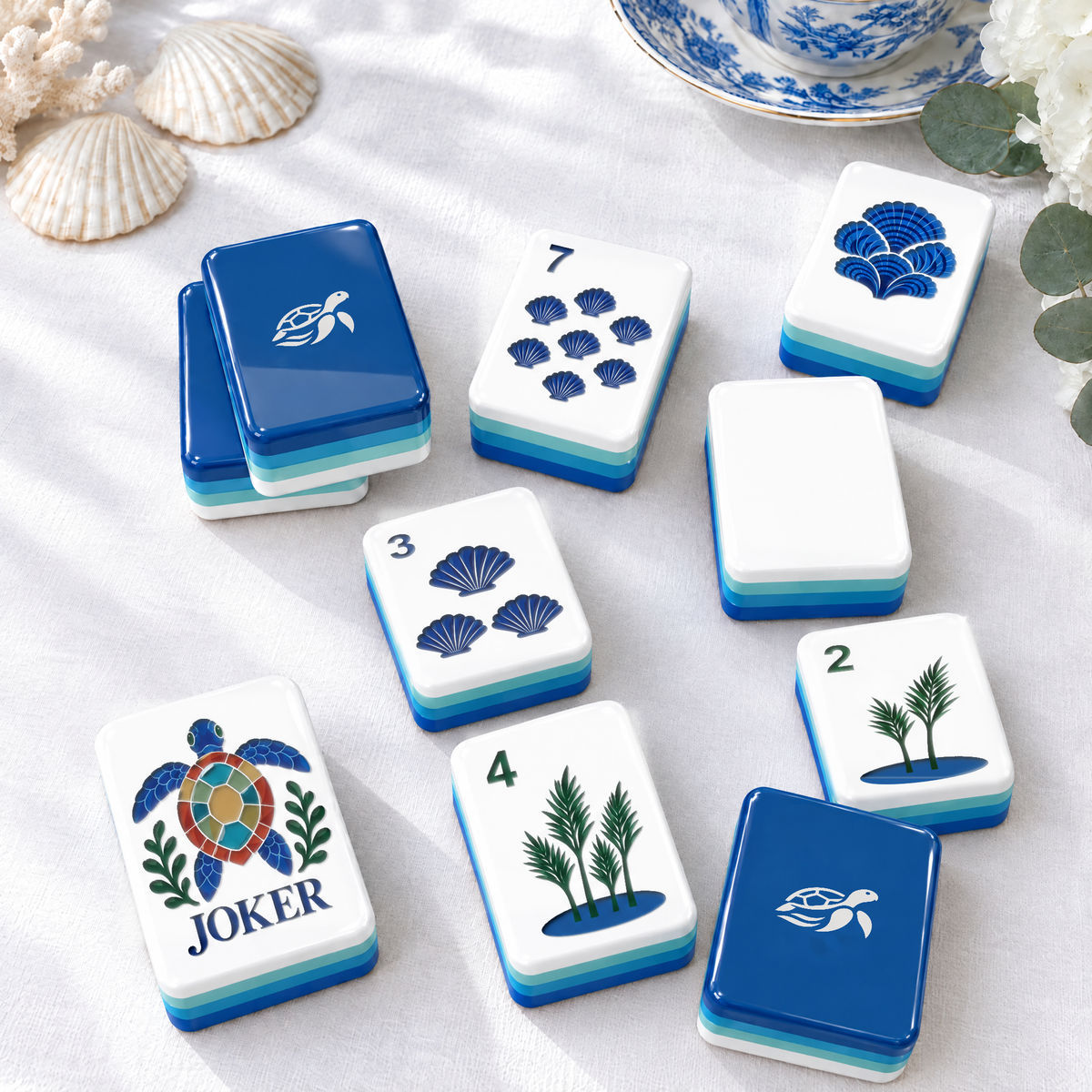
Shanghai mahjong winning hands combine chows (three consecutive numbers in one suit), pungs (three identical tiles), and one pair—plus a special "eye" tile. A complete hand contains four melds of three tiles each, plus a pair (14 tiles total). Unlike American mahjong, which uses a rigid yearly card and forbids sequences, Shanghai allows you to form and call chows freely during play. Sets contain 144 tiles: three suits (Bams, Craks, Dots) numbered 1–9 with four copies each, plus 16 winds, 12 dragons, and 8 flowers. Winning also requires the winning tile to be drawn from the wall or claimed from a discard (called "win by self-draw" or "win by claim"). Players rotate positions each round, and scoring multiplies based on the hand's complexity and the winner's seat.
What's the difference between a chow, pung, and kong in Shanghai?
A chow is three consecutive numbers in the same suit—for example, 4 Bam, 5 Bam, 6 Bam. A pung is three identical tiles: 7 Dot, 7 Dot, 7 Dot. A kong is four identical tiles of the same rank. In Shanghai, chows are called and claimed from discards, while American mahjong forbids chows entirely. You must expose any pung or kong you claim, and you cannot use honor tiles (winds, dragons, flowers) to form chows—only Bam, Crak, and Dot numbers work for sequences. The four melds that make up a winning hand can be any mix of chows, pungs, or kongs.

How do you score a Shanghai mahjong winning hand?
Shanghai scoring depends on the hand's pattern, who drew the winning tile, and which player holds the dealer seat (East). A "self-draw" win (drawing from the wall) typically pays double compared to a "claim win" (winning off a discard). The dealer collects from all three opponents; non-dealers collect only from the player who discarded the winning tile. Hand value increases with "limit hands" (all pungs, all chows, mixed types, or dragons and winds in melds). Some regions play with a fixed point system; others use multipliers that climb with each round. Unlike American mahjong, which sums pung/kong point values per the yearly card, Shanghai uses hand pattern as the primary scoring driver, making it faster to learn but requiring constant awareness of what patterns pay the most.
What are "limit hands" and how do they score higher?
Limit hands—also called "ceiling hands"—are special patterns that score the maximum allowed points in a round, skipping lower calculations. Common limit hands include all pungs (no chows), all chows (no pungs), mixed majors (dragons and winds in every meld), "all terminals" (only 1 and 9 tiles), and "all honors" (winds and dragons only, no number tiles). Some variants allow only the dealer to score a limit hand; others permit any player. In many Shanghai variants, a limit hand is worth the same fixed amount regardless of how it was won (self-draw or claim). This rule keeps the game from becoming a runaway high-value hand chase and ensures that even a simpler limit beats a low-value regular hand. Regional rules vary widely, so agree on limit definitions before the first hand is dealt.
Can you use flowers in a Shanghai mahjong winning hand?
Yes, but flowers work differently than in American mahjong. In Shanghai, flowers are bonus tiles: if you draw or are dealt a flower, you immediately set it aside, draw a replacement tile from the back of the wall, and add the flower tile to your winning total bonus. Flowers do not count as part of your four melds or your pair; they are pure scoring additions. Seasons (Spring, Summer, Autumn, Winter) are sometimes treated as flowers in certain regional variants. Drawing a flower slows your progression toward a winning hand because you must replace it, but each flower you collect adds points—so some players actively hunt for flowers as part of their winning strategy. Always clarify your table's flower rule before play; some casual games ignore them entirely.
How do you know when you've won a Shanghai mahjong hand?
You win by completing a hand of 14 tiles arranged as four melds (chow, pung, or kong) plus one pair. The winning tile must be the 14th tile you draw or claim from a discard. If you draw from the wall (self-draw win), announce "win" or "hu" immediately; other players cannot claim that discard. If another player discards a tile that completes your hand, you can claim it and announce the win. Once you win, you place your tiles face-up on the table in their melds so all players can verify the pattern and confirm scoring. If your hand is illegal—for example, if you claim you have a pung but only show two tiles, or if your pair is missing—the win is void and play passes to the next player. Many tables require you to declare your hand before drawing your final tile if you believe you are one tile away from winning; this rule, called "waiting hand," prevents dead play and speeds the game.
🀄 Shop best-selling mahjong sets →

How does hand pattern influence strategy in Shanghai vs. American mahjong?
In American mahjong, the yearly card is law: you can only win hands listed on that year's card, and you follow the exact tile requirements (like "two Bam pungs, one Crak pung, two Dot pairs"). Strategy revolves around reading and memorizing the card, then adapting to the Charleston passes. In Shanghai, there is no card—you build your hand from any legal combination of four melds plus a pair. This means Shanghai strategy hinges on spotting your best pattern early, discarding the least useful tiles, and reading your opponents' discards to block them or avoid giving them the tile they need. Shanghai is more fluid and reactive; American is more rigid and pattern-based. Both reward hand-reading and tile management, but Shanghai punishes slow decision-making because sequences can appear on any tile draw, while American gives you time to plan around the fixed card. Many players find Shanghai faster and more intuitive for newcomers, but American more satisfying for those who enjoy memorization and pattern-matching.
Strategy Angle | Shanghai Mahjong | American Mahjong |
Hand basis | Any valid 4 melds + 1 pair (no card) | Current year's National League card only |
Sequences allowed | Yes (chows); called freely | No sequences ever allowed |
Winning tile | 14th tile drawn or claimed from discard | 14th tile drawn or claimed, must match card hand |
Scoring driver | Hand pattern (limit hands, self-draw bonus) | Tile values on the card per pung/kong rank |
Card use | None—play is free-form | Card is mandatory reference for every hand |
Skill focus | Tile reading, pattern recognition, discard blocking | Card memorization, Charleston strategy, rigid matching |
Learning curve | Faster for rule logic; tile patterns more intuitive | Steeper; requires card mastery and Charleston knowledge |
Common mistakes when calling a winning hand in Shanghai
Misidentifying your pair: A pair must be two identical tiles—two East Winds, two 5 Craks, etc. A pair cannot be two different tiles, even if they are the same rank in different suits. Always verify both tiles before claiming a win. Incomplete melds: If you call a win but have fewer than four complete melds, the hand is void. Count each meld: three tiles make a chow or pung; four make a kong. Wrong meld type: If you announce a pung but later show tiles that form a chow, or vice versa, the hand is illegal. Once you place your tiles face-up, they lock your claim. Claiming someone else's discard illegally: If multiple players want the same discard (one to win, one to pung), the winner takes priority. If a non-winner claims a tile, they must expose the meld immediately or forfeit their claim. Forgetting flowers: If a flower was drawn earlier and set aside, verify it was counted in the bonus before finalizing scores. Not declaring "waiting hand": At many tables, if you are one tile away from winning, you must declare this before drawing. Failure to declare can result in a dead hand or penalty.
🎁 See our most-loved mahjong sets & accessories →
What to check before you buy a Shanghai mahjong set
Tile count: Shanghai uses exactly 144 tiles. Confirm the set you order includes all three suits (Bam, Crak, Dot) with numbers 1–9 and four copies each, 16 winds, 12 dragons, and 8 flowers. No blanks or extra jokers are needed.
Suit clarity: Tiles must show each suit clearly—Bams often display a circle, Craks a character or stick mark, Dots as actual dots. Verify the font or symbols are legible at arm's length across a table.
Tile material: Bone and bamboo sets are durable and traditional but expensive; acrylic or plastic sets are affordable and come in vibrant colors. Check weight—heavier tiles (bone/bamboo) feel better but lighter sets travel easier.
Storage and mats: Ask if the set includes a fabric or vinyl mat for play. A mat protects tiles and defines the playing surface. Separate mahjong mats are available from specialty retailers if needed.
Regional rule cards: Some sets come with a printed guide to Shanghai rules. This is valuable for beginners but not essential—many rules vary by table, so always agree on house rules before the first hand.
Language and symbols: If you are learning from English-language books or apps, ensure your tiles use Western numerals (1–9) or easily recognizable suit symbols, not only Chinese characters.
Why American mahjong sets don't work for Shanghai
American mahjong sets sold today contain 160 tiles (or 152 in some older sets) with jokers and blanks—tools that don't exist in Shanghai. The American set includes East, South, West, North winds, Red Dragon, Green Dragon, and White Dragon (eight flowers in American), but Shanghai uses all eight flowers plus the four winds and three dragons, giving it different tile geometry. The biggest difference: American jokers—plastic wildcards—are illegal in Shanghai. American mahjong has no sequences (chows), so there is no reason for jokers; Shanghai would allow joker use in theory, but traditional Shanghai play forbids them. If you own an American mahjong set from Mahstead, you can use it to learn American rules, but you'll need a separate 144-tile Shanghai set to play authentic Shanghai mahjong with friends or at a Shanghai-focused club.
✨ Find your Mahstead set — free US shipping →

FAQ
Can I use a joker as a wildcard in Shanghai mahjong?
No. Jokers are illegal in traditional Shanghai play. Only the tiles in the 144-tile set count; no wildcards, blanks, or substitutes are allowed. If your hand is incomplete and you draw a joker, you must discard it and draw again (house rules vary, so confirm with your table before play).
How many tiles do I need to win a Shanghai mahjong hand?
Exactly 14. Four melds (three tiles each = 12 tiles) plus one pair (2 tiles) equals a complete winning hand. If you have only 13 tiles, you are "waiting hand" (one tile away from winning).
What happens if two players claim the same discarded tile for a win?
The winner has priority. If a non-winner also claims the tile for a pung or kong, the winner takes the tile and scores immediately. The non-winner must then discard a different tile or pass their turn.
Do I have to call "waiting hand" before drawing in Shanghai?
It depends on your table's house rules. Many casual games do not enforce this rule. Competitive or club play often requires a "waiting" declaration to prevent slow play. Agree on this rule at the start of the session.
Can flowers be part of a meld or pair in Shanghai mahjong?
No. Flowers are bonus tiles only. When you draw a flower, you set it aside and draw a replacement from the wall. Flowers add points but never count as part of your four melds or pair.
Is Shanghai mahjong easier to learn than American mahjong?
For rule logic, yes. Shanghai has no card to memorize and lets you form any valid hand. American requires learning the yearly card and the Charleston passing ritual. However, both games reward tile-reading and pattern recognition—the skills transfer easily between them.


View More
View More
View More
