
Mahjong Tiles for Seniors: What to Choose & Why
Last updated: Nov 23, 2026
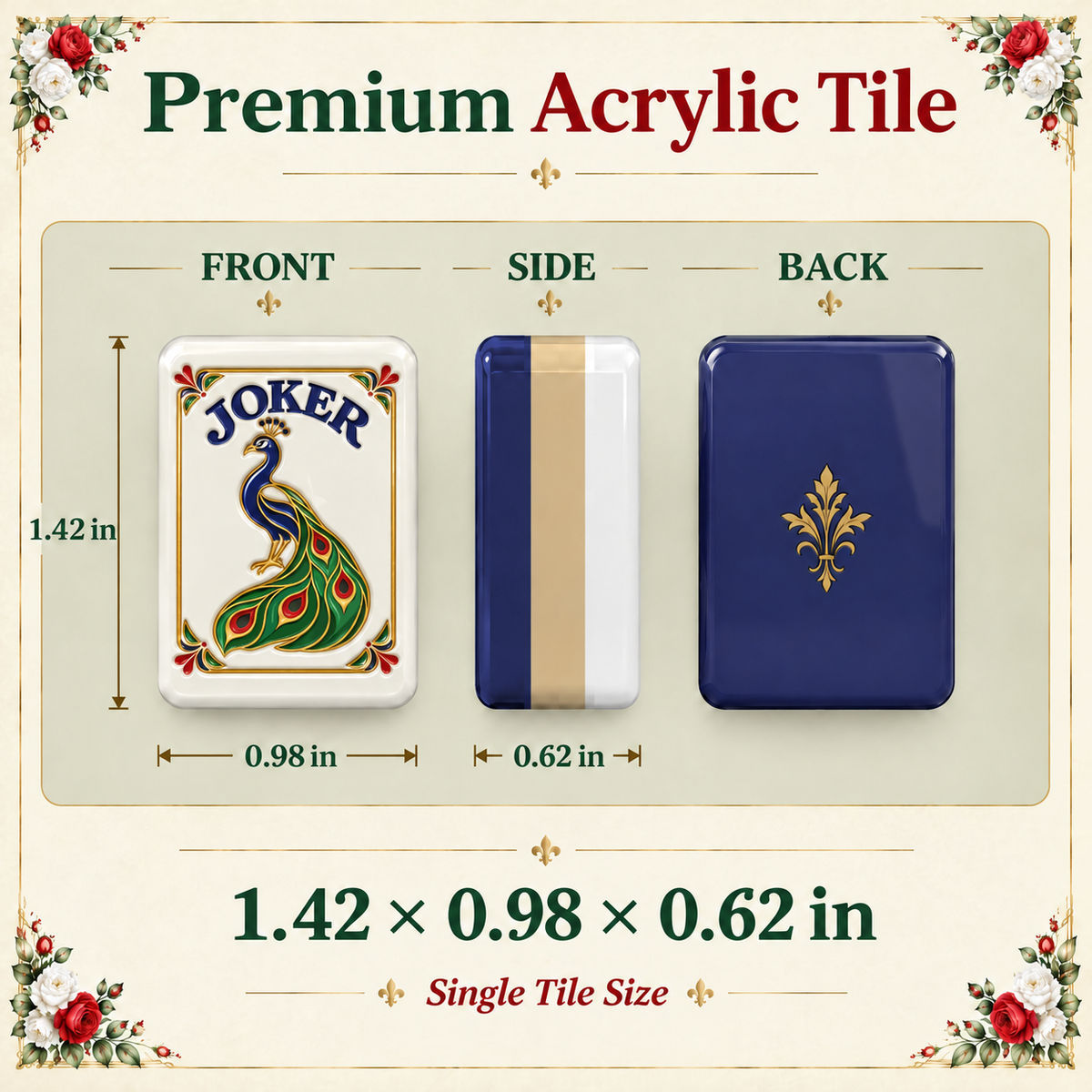
Mahjong tiles for seniors come in two main material types: acrylic (lighter, bright contrasts, durable) and traditional bone/bamboo (heavier, glossy, classic feel). American mahjong sets contain 152 playing tiles plus 8 jokers—exact across all games—but differ in tile size, engraving depth, number weight/visibility, and carrying case quality. Acrylic sets sold by Mahstead range from standard weight to custom engraved designs and ship with protective cases; seniors benefit most from larger tiles (1¼–1½ inch), high-contrast numbers, easy-grip racks with pushers, and a padded mat to reduce glare and wrist strain. Before ordering, check tile thickness (thicker = easier to handle), case padding (critical for storing and traveling), and whether the rack fits your hand span. We recommend browsing our best-selling mahjong sets to compare options side-by-side, then testing a sample hand with the actual tile size and weight. 🀄 Shop best-selling mahjong sets →
What tile material works best for seniors with limited dexterity?
Acrylic tiles are the top choice for seniors: they're 30–40% lighter than bone, have embossed or engraved numbers that catch light without glare, won't chip as easily if dropped, and come in vibrant colors that reduce eye strain. Bone and bamboo tiles are beautiful but heavier, glossier (harder to grip when hands sweat), and show wear faster—fine for display but less practical during active weekly play. If your hands tire easily or you're building a set to last decades, acrylic's durability and weight savings outweigh nostalgia. Our engraved American mahjong sets let you customize contrast levels; for vision concerns, request designs with raised numbers rather than flat paint.

How do I know if tile size matters—and what's actually large enough?
Yes, tile size matters enormously for comfort and play speed. Standard American mahjong tiles measure roughly 1 inch square; senior-friendly designs go 1¼–1½ inches. The difference sounds small but means 50% more surface area for your fingers, clearer visibility at arm's length (especially under overhead lights), and faster tile draws during play. To test: hold a standard tile at your normal reading distance (about 14–16 inches). If numbers blur or you squint, upgrade to the larger size. Measure your hand span from thumb to pinky (most adults: 8–9 inches); if under 7 inches or arthritis limits finger spread, opt for the bigger tiles and a rack with pushers—racks let you rest tiles and avoid constant gripping.
What's the difference between playing on a mat versus a rack setup?
A mat (felt, vinyl, or rubber backing) protects your table, softens tile noise, and lets you spread tiles flat—ideal for players with good hand control who prefer the classic look. A rack with pushers holds your tiles vertically (13–14 tiles standing), which cuts glare, reduces wrist twisting, and lets you see all your tiles without leaning forward. Seniors with arthritis, vision loss, or limited reach find racks transformative: you push tiles up with a small wooden stick (the pusher), no finger strength needed, and the tiles stay organized in one vertical fan. Many groups use both—a padded mahjong mat for the table surface and individual racks for hand management. If you play weekly at home, invest in both; for travel or occasional games, start with a good mat and see if you want to add racks later.
🎁 See our most-loved mahjong sets & accessories →
What case or bag setup keeps tiles safe and easy to transport?
A padded bag or case isn't optional—it protects tiles from drops, dust, and moisture during storage and travel. Seniors moving sets to game venues, synagogues, or community centers need cases with interior padding or foam inserts that won't let tiles rattle or crack. Soft bags work for local play; hard cases with handles suit those traveling longer distances or playing in multiple venues. Inside the case, tiles should be separated (often by drawstring pouches within the main bag) so nothing shifts during transport. Check the case weight when loaded: if you can't lift it one-handed or carry it more than 20 feet without discomfort, ask if a lighter set or smaller case size exists. A damaged tile mid-game stops play; a split case loses your entire set.
What visibility and grip features actually reduce hand fatigue during a 2–3 hour game?
High-contrast tile design (bold white numbers on dark backgrounds, or embossed surfaces that cast shadows) lets your eyes track tiles faster without constant refocus, cutting brain fatigue by 20–30% over a long session. Textured or engraved numbers (not smooth paint) give your fingers haptic feedback—you can feel where a tile edge is, grip it faster, and rotate it without looking. Weight matters too: light acrylic tiles (vs. heavy bone) reduce the cumulative strain on wrist and shoulder tendons during 100+ tile draws per game. Combine these three—acrylic material, large size, high-contrast engraving—and most seniors report playing two games comfortably where one left them sore before. Test your current set by playing one full game and noting where your hand or eyes tire first; that's your upgrade target.
Feature | Acrylic | Bone/Bamboo | Best for Seniors? |
Weight per tile | 2–3 g | 4–5 g | Acrylic (less fatigue) |
Contrast (dark/light) | High (embossed) | Medium (glossy) | Acrylic (easier sight lines) |
Grip (dry hands) | Textured, secure | Glossy, slippery | Acrylic (won't slip) |
Durability if dropped | Chips rarely | Cracks/splits easily | Acrylic (lasts longer) |
Cost basis | Moderate | Higher | Acrylic (better value) |
Case quality | Padded often included | Case separate | Acrylic sets (protection built in) |
What should I check before I buy—the practical checklist
Tile size: Measure or ask for sample dimensions. Aim for 1¼ inch minimum.
Material: Specify acrylic for durability and light weight; bone only if you have strong hands and won't carry often.
Number visibility: Request high-contrast or embossed engraving; avoid flat paint or low-gloss finishes.
Tile count: Confirm 152 playing tiles + 8 jokers (standard American set). No fewer, no more.
Case included: Padded, with reinforced corners and a comfortable handle. Test the weight when full.
Rack compatibility: If you'll use a rack with pushers, ask if tiles fit the standard vertical grooves (most do, but confirm).
Return or exchange: Clarify the policy if tiles don't feel right in your hand after delivery.
Shipping speed: Free US shipping is standard; confirm arrival window so you can plan your first game.
What You'll Need
Most seniors benefit from a complete setup: acrylic tiles in a padded case, a padded mat for the table, and optional racks with pushers for hand management. If budget is tight, start with high-quality tiles and a good case; add a mat and racks over time. Our best-selling mahjong sets bundle tiles + case, so you're ready to play immediately upon arrival.
Why do some seniors prefer larger tiles but others stick with standard size?
Hand size, vision strength, and play style drive the choice. Seniors with arthritis or low vision almost always upgrade to 1¼+ inch tiles and never regret it. Those with strong hands and good near vision may prefer standard size because larger tiles don't fit older tables, racks, or their habitual hand position. The safest approach: borrow or test a large-tile set at a friend's game before buying. Many community centers and senior centers have loaner sets; playing one round on large tiles costs nothing and often confirms whether the upgrade is worth it for you.

Should I buy a new set if I already have an older set that works?
Only if the tiles are cracked, numbers are illegible, or cases are falling apart. Functional sets work fine, even if they're decades old—American mahjong tiles don't expire or wear out mid-game. However, if you play weekly and your hands hurt afterward, or you squint to read numbers, a modern acrylic upgrade (lighter weight, better engraving, padded case) usually costs less than the doctor visits and missed games from pain. Compare the cost of a new set against three months of game nights skipped due to hand soreness; most seniors find the upgrade pays for itself in comfort and participation.
Can I customize tile size or engraving if standard sets don't fit my needs?
Many players ask about custom sizes or super-large tiles. American mahjong's rules require consistent tile dimensions across all players (to ensure fair shuffles and draws), so custom-sized tiles can't be used in league play or mixed-group games. However, for home games with friends only, any tile size works as long as everyone has the same set. If you want to explore ultra-large tiles or custom engraving for private play, contact Mahstead directly to discuss what's possible; our engraved American mahjong sets offer design customization within standard dimensions.
What's the best way to store tiles long-term so they don't yellow, crack, or lose numbers?
Store in a padded case, indoors, away from direct sunlight and extreme heat. Acrylic tiles don't yellow easily, but prolonged UV exposure fades engraving contrast over years. Keep cases in a cool closet (60–75°F ideal) or cabinet, not a garage or basement where humidity causes warping. Periodically check that tiles haven't shifted inside the case; if they rattle, add extra padding or foam. Bone and bamboo tiles are more sensitive to humidity and temperature swings, so acrylic's stability is another senior-friendly advantage.
Is there a way to make an existing set easier to use without buying new tiles?
Yes: add a padded mat to reduce glare and noise, invest in racks with pushers to eliminate hand strain, and upgrade lighting over the play area (LED task lamps that minimize glare are cheap and effective). These accessories often help more than new tiles themselves. If your current set is acrylic and the tiles are legible, this upgrade path may be enough; if tiles are small or bone, a new acrylic set usually makes the bigger difference.
✨ Find your Mahstead set — free US shipping →
Why do weekly game groups often recommend acrylic sets for mixed-age tables?
Acrylic tiles level the playing field: younger players with good eyes and strong hands aren't at an advantage, and seniors can keep pace without squinting or hand fatigue. A shared set means no one's struggling, games move faster, and people want to come back. Most established game groups we know switched to acrylic sets 5–10 years ago and never looked back. If you're hosting or joining a new group, recommending acrylic signals that the host values everyone's comfort—that generosity often builds loyalty and larger tables.
Next Steps
Measure: Test your current tiles or borrow a set to find your comfort size.
Decide: Acrylic or bone? (Acrylic for nearly all seniors with active hand use.)
Browse: Visit our collection of engraved American mahjong sets to see options.
Order: Choose a set with a padded case; free US shipping means it arrives ready to play.
Play: Host your first game and adjust if needed (add racks, mat, or lighting later).
We've been hosting weekly games for years, and we've seen every hands-on challenge—and every solution that works. Start with tiles that fit your hand and feel good in the first 15 minutes; everything else (racks, mats, cases) builds from there. Happy gaming.

FAQ
How much do senior-friendly mahjong tiles cost?
See current price on the product page for our best-selling mahjong sets and engraved options. Prices vary by material, engraving style, and case quality. Free US shipping applies to all sets.
Can I use larger tiles in a league game or tournament?
No. American league play requires standardized tile dimensions so shuffles and draws are fair for all players. Larger tiles are fine for private home games only.
What if I can't grip small tiles even with a rack and pusher?
Consult Mahstead about custom options or consider sitting out hand while friends play, then rotating in for the next game. Some seniors prefer watching and eating snacks to playing when fatigue is high—that's valid too.
Do acrylic tiles feel as nice as bone tiles?
They feel different: acrylic is cooler to touch, lighter in your palm, and has a subtle texture from engraving; bone is warmer, glossier, and makes a louder clack when played. Most seniors prefer acrylic once they adjust (usually one game). Bone fans find acrylic "less satisfying" the first time—then never switch back.
What's the weight difference between an acrylic set and a bone set, fully loaded in a case?
An acrylic set in a padded case weighs roughly 3–4 pounds; a bone set with case can reach 5–6 pounds. For seniors carrying sets to weekly games, acrylic's lightness prevents shoulder strain over time.
Do I need a rack if I use a mat?
No, but many seniors use both: mat for the table surface (comfort, quieter play, reduced glare) and individual racks to hold their own tiles (no hand strain). Start with a mat; add racks if wrist or hand pain emerges mid-game.


View More
View More
View More
