
Two Player Mahjong Scoring: Rules & Setup
Last updated: Nov 23, 2026
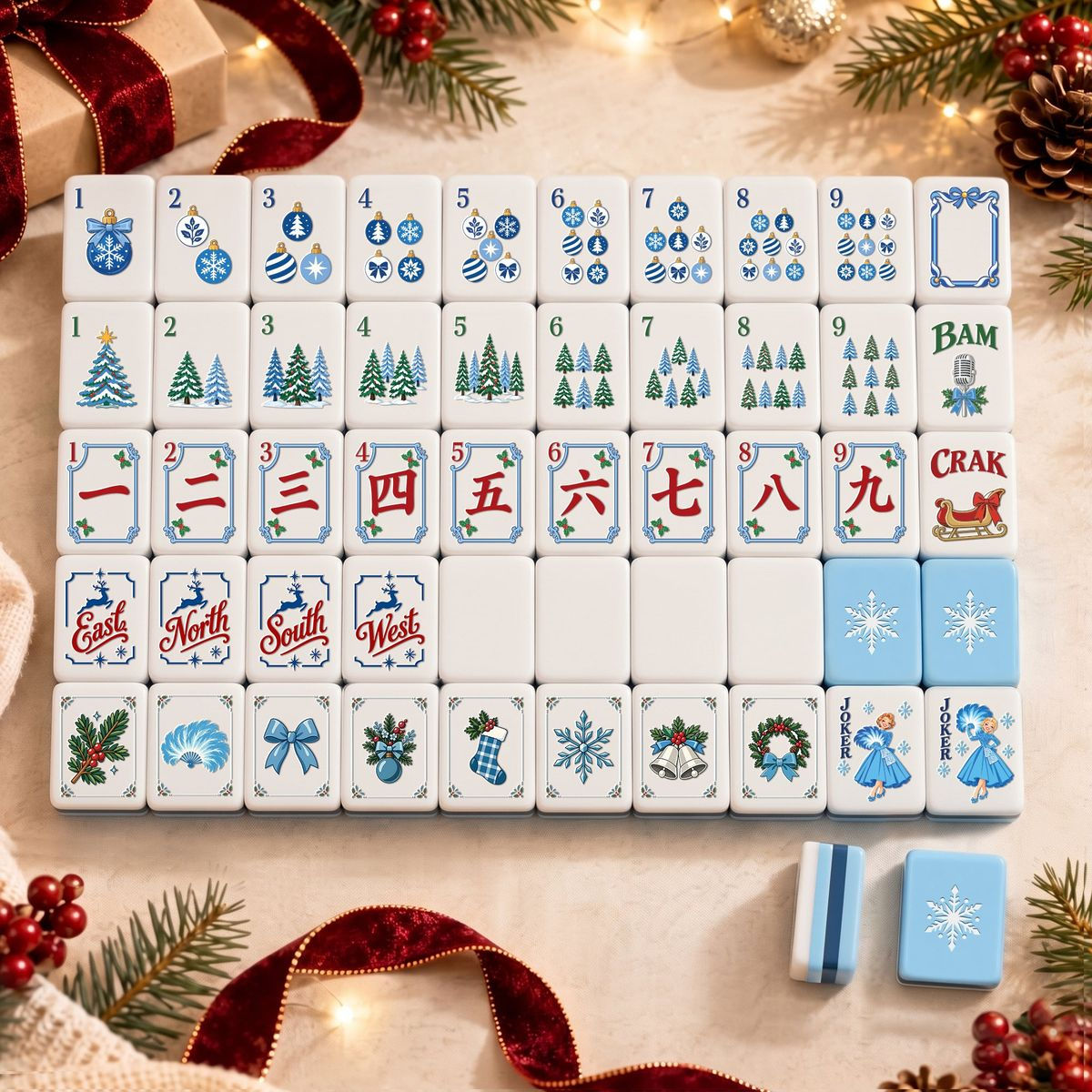
Two-player American mahjong uses the National Mah Jongg League card and standard 152-tile sets, but scoring and payment differ from four-player games. In four-player mahjong, a winning hand is paid by all three other players; in two-player, the non-dealer always pays the dealer's hand value to the dealer—no splitting payments. Dealer wins pay double. Non-dealer wins are paid by the dealer alone. The dealer button rotates after every hand (unlike four-player, where it rotates conditionally). Use the current year's league card to verify your hand; all 152 tiles and 8 jokers stay in play. The biggest adjustment is psychological: two-player is faster, more intimate, and every tile drawn or discarded signals intent directly. We've hosted hundreds of two-player games at Mahstead, and the scoring system is straightforward once you see a few hands played live. No house rules needed—just follow the card and the dealer-pays structure.
How does two-player payment actually work?
In American two-player mahjong, the dealer (first player) and non-dealer (second player) take turns. When the non-dealer wins, the dealer pays the hand's full point value. When the dealer wins, the non-dealer pays double the hand value. If nobody wins and the wall empties, it's a draw—no payment. The dealer keeps dealing until a non-dealer win, then positions swap. This differs radically from four-player mahjong, where all three opponents chip in.
🀄 Shop best-selling mahjong sets →

What does the mahjong card show for two-player hands?
The National Mah Jongg League card lists hands for traditional four-player games, but every single hand on the card is legal in two-player. The card shows patterns by section: pungs and kongs (three and four identical tiles), quints and sextets (five and six), pairs, and combinations. Because two-player uses identical hand patterns, you consult the exact same card as a four-player group would. Look for a hand matching your tiles, read left to right—number, suit notation, tile combination, and joker count. Two-player doesn't require a separate card; the league card works as-is. If a hand requires five jokers but you only have eight in play (the standard), that hand is available. Never deviate from the current year's card.
Why does dealer status matter more in two-player?
With only two people, the dealer's advantage is pronounced. A dealer win pays twice as much as a non-dealer win of equal value, so dealer hands are worth pursuing. The dealer changes every hand a non-dealer wins, preventing one person from dominating indefinitely. If the dealer draws and wins repeatedly (a "cooking" dealer in colloquial terms), non-dealer payments stack quickly. We track this over a session—after twenty hands, the dealer's edge usually averages out. The two-player format makes the dealer rotation feel snappier than four-player because no "second east" or conditional passes interrupt the flow. Keep a scorecard if playing for stakes; two players can drift into confusion without explicit tracking.
How do you handle a dead hand or no winner?
When no player melds a legal hand and all 152 tiles are drawn, it's a "wall exhaustion" or draw—no payment occurs. Some two-player groups reset the dealer; others keep it. The league card determines legality: if your tile combination doesn't match any current-year pattern, your hand is dead, you're out of that round, and play continues. Unlike four-player, where a dead hand might be declared mid-game, two-player often runs straight through because there's nowhere to "pass" a dead hand. If you declare prematurely and your hand isn't valid, stop, announce it, and the dealer draws until tiles end or the other player wins. This is rare if both players reference the card before claiming.
What tile set and layout work best for two players?
You'll need the full 152-tile American mahjong set with all eight jokers. A best-selling acrylic set works perfectly—acrylic tiles are durable, easy to read, and don't require repainting after years of play. Set up using a dedicated mahjong mat to define the dealer wall and tile draw area clearly. With two players, the wall arrangement is compact: one side for the dealer to draw, one for the non-dealer, and a single discard zone (many players use the center). Mahjong racks with pushers help organize your 13 tiles (the standard hand size) so both players see their own tiles without accidentally revealing. A rack isn't mandatory for casual play, but it speeds up tile recognition and prevents miscounts. If you're traveling, a portable travel bag or case keeps your set and mat protected.

Quick two-player setup checklist
Element | What to do | Why it matters |
Tile set | Use 152-tile American set + 8 jokers | Four-player rules apply identically |
Dealer choice | Whoever rolls highest dice starts | Establishes initial dealer position |
Dealer wall | Build 17 stacks (34 tiles) on one side | Two-player uses compact wall layout |
Hand draw | Dealer draws 14, non-dealer draws 13 | Dealer takes first and last tile |
Card reference | Current year's National Mah Jongg League card | Only legal hands on this year's card count |
Payment rule | Non-dealer win: dealer pays full value. Dealer win: non-dealer pays double. | Simplifies payment to one payer per round |
Discard zone | Pile in the center or between players | Clear sightline for both players to track discards |
Dealer tracking | Rotate dealer after each non-dealer win | Prevents one player holding advantage too long |
🎁 See our most-loved mahjong sets & accessories →
Scoring examples for two players
Example 1: Non-dealer wins, Quint with joker Non-dealer's hand: Quint of 3 Bams (one joker) + other legal melds. The card lists this quint as worth 30 points. Non-dealer wins; dealer pays 30 points to the non-dealer. Dealer position now rotates to the non-dealer.
Example 2: Dealer wins, two Kongs Dealer's hand: Two kongs (4 identical tiles each) of 1 Crak and 2 Dot, plus melds. The card values this hand at 25 points. Dealer wins; non-dealer pays 25 × 2 = 50 points to the dealer. Dealer keeps the position and deals again.
Example 3: Wall exhaustion After 152 tiles are drawn, neither player has a legal hand on the current card. No points awarded; no payment. The dealing position either stays with the dealer (variant one) or passes to the non-dealer (variant two)—agree beforehand. Most pairs play that the dealer keeps dealing.
✨ Find your Mahstead set — free US shipping →
Common two-player mistakes to avoid
Forgetting the dealer-pays rule. Many beginners fall back on four-player logic where all opponents pay. In two-player, only one person pays per win. Clarify this before starting.
Misreading the league card. The card uses abbreviation shorthand: "Bam," "Crak," "Dot" for suits; Roman numerals or dot-counts for tile values. Spend two minutes learning the card's layout before your first hand. A guide to reading the mahjong card can help.
Drawing tiles out of turn. With only two players, tile-draw order is rigid: dealer draws, then non-dealer, repeating. Accidentally drawing twice breaks the round; reset and restart the hand.
Not tracking dealer rotation. Without a written note, many two-player pairs forget who dealt last. Keep a scorecard with dealer names and hand count.
Mixing in joker rules incorrectly. American mahjong allows jokers in pungs, kongs, quints, and sextets—never in a single tile, pair, or chow. Two-player follows this rule exactly.
What to check before you buy
Tile clarity: Can you read numbers and suit symbols easily from across a small table? Acrylic sets with engraved or painted markings remain legible after years of play.
Set completeness: Verify you have all 152 tiles plus 8 jokers. Count once before your first game.
Mat size: Two-player games need less space than four-player, but a dedicated mat defines the wall and discard zones. Measure your table before ordering.
Racks optional but helpful: If you play frequently, racks with pushers reduce tile fumbling and accidental reveals.
Portability: If you travel between locations, choose a set and case that fit your bag.

FAQ
Can I play American two-player mahjong without the current league card?
No. The National Mah Jongg League card is the official rulebook for hand legality. Without it, you cannot verify if a winning hand is valid. You must have the current year's card in play.
Do I need eight jokers for two-player, or can I use fewer?
You need exactly eight jokers. A standard 152-tile American mahjong set includes eight jokers as part of the legal play count. Remove fewer, and your set is incomplete.
If the dealer wins three times in a row, do they keep dealing?
Yes. In two-player, the dealer keeps dealing until a non-dealer wins. Only then does the dealer position rotate. A dealer can win many hands consecutively.
How long does a typical two-player game last?
Most casual two-player sessions run 30–90 minutes, depending on how many hands you play and how fast both players draw and discard. A single hand averages 5–10 minutes.
Should I use racks and pushers for two-player, or is it optional?
It's optional but recommended if you play regularly. Racks keep your 13 tiles organized and prevent accidental reveals. For casual play, a tray or even the table surface works, but racks speed up recognition and reduce mistakes.
What's the difference between two-player and three-player mahjong?
Three-player uses a modified hand count and alters which tile is discarded. Two-player uses identical four-player rules with only payment adjusted. For full three-player rules, see 2 and 3 player mahjong rules.


View More
View More
View More
