
Is Riichi Mahjong Hard to Learn? A Player's Honest Guide
Last updated: Nov 23, 2026
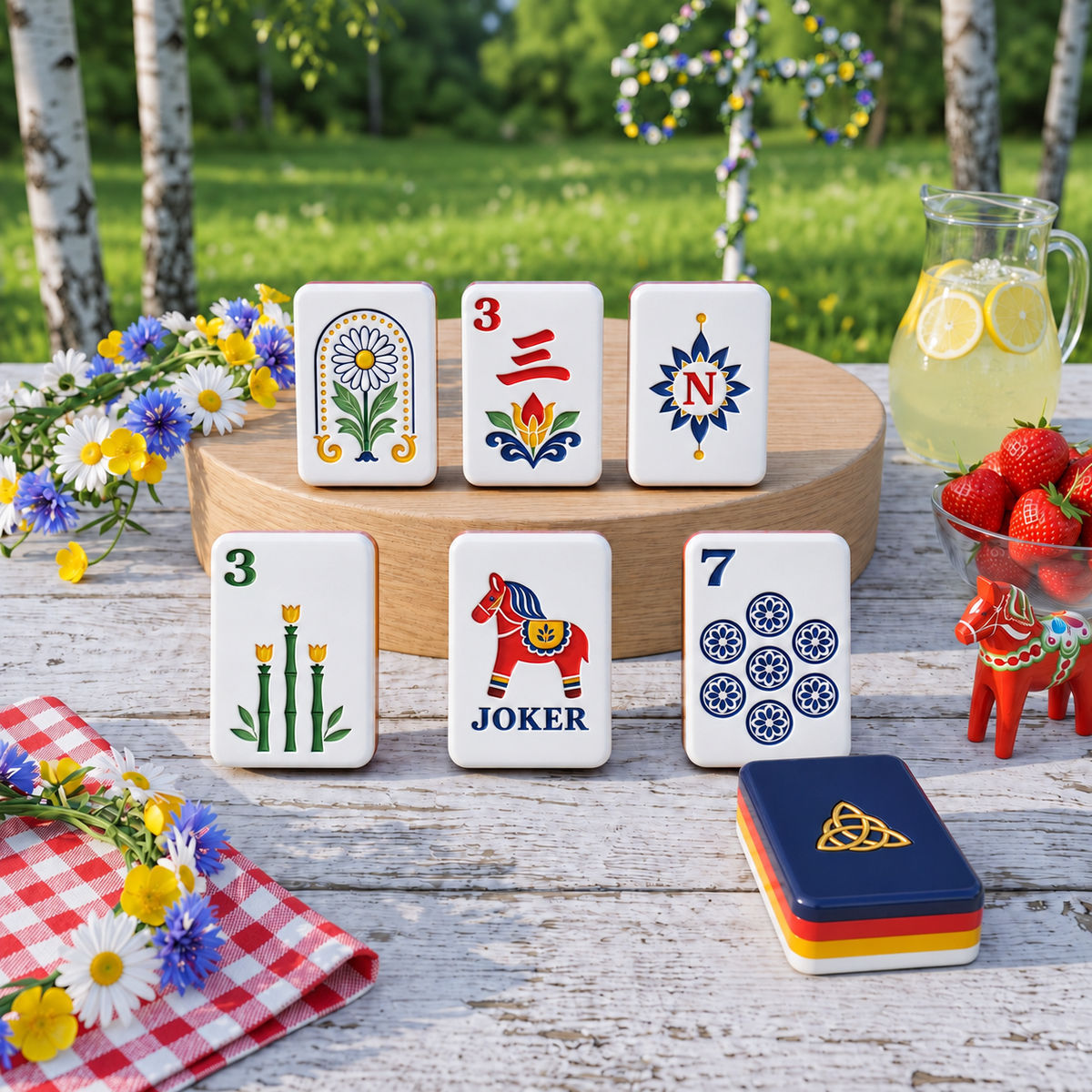
Riichi mahjong is moderately hard to learn: easier than American mahjong in one way (the tile layout is standardized; no yearly card to memorize), harder in another (hand patterns and scoring systems require memorization). A typical Western player needs 4–8 hours of structured play to grasp the basics—recognizing winning hands, melding rules, and the discard-and-draw cycle—then 20–40 more hours to internalize hand value, tile efficiency, and position-based strategy. Unlike American mahjong, riichi uses 136 tiles (no winds or flowers), draws from a live wall, and allows chows (1-2-3 sequences) and pungs (3 identical) both concealed and exposed. You win by calling "tsumo" (self-draw) or "ron" (steal discard); your hand's pattern, tile type, and openness determine your payout. Riichi is learned best through live play, not rules alone. From our table, the biggest mistake is expecting American knowledge to transfer: tile names, hand logic, and what counts as a "win" are all different.
Riichi mahjong is harder than American mahjong for most Westerners—but not because the tiles are different. The barrier is hand patterns and scoring, not tile count. A typical Western player needs 4–8 hours of structured play to grasp the basics—recognizing winning hands, melding rules, and the discard-and-draw cycle—then 20–40 more hours to internalize hand value, tile efficiency, and position-based strategy. Unlike American mahjong, riichi uses 136 tiles (no winds or flowers), draws from a live wall, and allows chows (1-2-3 sequences) and pungs (3 identical) both concealed and exposed. You win by calling "tsumo" (self-draw) or "ron" (steal discard); your hand's pattern, tile type, and openness determine your payout. Riichi is learned best through live play, not rules alone.
How does riichi differ from American mahjong?
Riichi and American mahjong are separate games: different tile sets, winning hands, and scoring entirely. American mahjong uses 152 tiles (Bams, Craks, Dots, winds, dragons, flowers, jokers), requires hands from an annual card, and forbids chows; riichi uses 136 tiles (4 each of three number suits 1–9, 7 honor tiles × 4), allows chows and pungs freely, and wins on any legal combination. American mahjong is closed (all melds hidden until your win); riichi is open (melds are exposed as called). Scoring in American mahjong is points per hand; riichi scoring is meld-based and influenced by position (East/South/West/North), concealment, and winning method. Learning one does not teach you the other—they are unrelated rule systems that happen to share tile appearance.

What are the hardest parts for beginners?
Hand patterns and tile terminology trip up Western learners most. Riichi requires you to recognize four pattern types—triplets, sequences, pairs, and terminal/honor melds—and combine them into a single winning shape; no reference card lists winning hands like American mahjong's card. Tile names (pin/sou/man for suits; East/South/West/North for winds; dragons) are unfamiliar, and hand value depends on yaku (scoring patterns: all triplets, all sequences, specific wind or dragon, etc.). Position matters: East pays double, South/West/North pay singles. The discard mechanic (a live wall shrinks as tiles are drawn; you draw one, play one, every turn) feels like speed compared to American play. Most beginners confuse chows (consecutive: 1-2-3) with pungs (triplets: 1-1-1) and call the wrong one, losing turns.
How long does it take to play your first game?
Your first riichi game lasts 90–120 minutes if someone teaches it live; 30 minutes of setup (learning tile names, hand patterns, meld rules), 60 minutes of play (with pauses for questions and rule lookups). You will win 1–2 hands purely by accident and lose most rounds because you do not yet know which discards are safe or which melds build winning hands. After 4–6 games (8–12 hours of play, not study), you will recognize winning patterns quickly, understand when to call chow/pung/kong, and play at normal speed (12–15 rounds per hour). After 20–40 hours, you develop tile intuition: reading board state, predicting what others need, and building hands with intention. Riichi depth is unlimited—pro play involves complex probability and psychology—but casual fluency takes 3–4 weeks of weekly play.
What mistakes slow down learning?
Memorizing yaku without playing: Riichi players often read all 13+ yaku patterns and expect to apply them instantly. In reality, you learn yaku through failure: you build a hand thinking it is yaku-less (unwinnable), lose it, and later recognize that shape won for someone else. Playing beats studying.
Ignoring discard safety: American mahjong players expect melds are called only when available; in riichi, any discard can be stolen for a meld if you are not careful. Beginners discard tiles freely and get "ronned" (hand stolen from your discard). Learn which tiles are dangerous: recently played tiles, tiles no one is building, and your own earlier discards.
Confusing chows and pungs: The two meld types look the same when called. A chow is always 1-2-3 or 4-5-6 or 7-8-9 in one suit; a pung is always three identical tiles (e.g., 5-5-5). Call the wrong one and you must undo the meld or sit out.
Playing in the wrong seat: East (dealer) position pays 1.5× what others pay and wins 1.5× what others win. If you do not know the position rule, you will underpay winners or overpay losers. Always confirm position before hands start.
Forgetting the wall: Riichi draws from a live wall on the table, then passes the turn. In American mahjong, you draw from a pool. Watch which end of the wall is drawn from; drawing from the wrong end is a dead hand.
What's the best first resource?
YouTube channels dedicated to riichi mahjong are more useful than books for beginners: you see tiles in motion, hear names aloud, and watch live hand-building. Channels like "Mahjong Soul" (the online riichi platform) have beginner guides. Find a local riichi group (universities, Asian community centers, meetup boards in large cities) and ask for a teaching game: 90 minutes of patient instruction beats hours of solo study. Online platforms like Mahjong Soul let you play against bots at beginner speed with rule explanations on click—but they reward riichi knowledge you do not yet have, so expect to lose 30 of your first 50 games. The real skill gate is playing with people who correct you live. If no local group exists, ask online riichi communities for Discord servers or clubs nearby.
How does scoring work in plain terms?
Riichi scoring multiplies your hand's base value by factors. Your hand has a base point count (1–8 points) determined by its yaku (pattern type: "all triplets" = 2 points, "all terminals" = 3 points, etc.) and tile count (13 tiles = 1 point minimum; more points if you used fewer melds). East (dealer) pays 1.5× this base; South/West/North each pay 1×. A hand worth 2 base points from East pays you 3 points; the same hand from South pays 2 points. Scoring caps exist: a hand with too many yaku becomes "mangan" (capped at a flat high payout) or "haneman"/"baiman" (higher caps). Winners multiply payouts by how many players paid (usually 3). Losers pay only if their discard was stolen or they were dealer. Full scoring systems have variants (round bonuses, East bonus, uma final adjustments), so always confirm house rules before playing.
Aspect | American Mahjong | Riichi Mahjong |
Tiles | 152 (Bams, Craks, Dots, winds, dragons, flowers) | 136 (three suits + seven honors) |
Winning hands | From annual card; 1,000+ patterns | Yaku-based; ~20 main patterns |
Chows allowed? | No; pungs/kongs only | Yes; chows and pungs both |
Melds | Exposed only at win | Exposed as called (open play) |
Scoring | Points per hand; no multiplier | Base points × East/South position |
Draw method | From drawn pool; shuffled | Live wall on table |
Learning curve | Easier to start (flat 4–6 hours) | Steeper; 20–40 hours for fluency |
🀄 Shop best-selling mahjong sets →

Do I need different tiles for riichi vs. American?
Yes. Riichi tiles are numbered 1–9 in three suits (pin, sou, man) plus seven honors (four winds, three dragons). American tiles include 1–9 in three suits (Bams, Craks, Dots) plus winds, dragons, flowers, and jokers. You cannot play riichi with an American set; the tile faces are labeled differently and honor counts are wrong. Riichi sets are smaller (136 playable tiles vs. 152) and have no jokers. If you host both games, keep separate sets at your table—mixing them is a common mistake that stalls play for 10 minutes while players sort tiles.
What skills transfer from American mahjong?
Tile recognition (spotting numbers, suit colors, and honor characters quickly) carries over. Your ability to track which tiles are in play, estimate probability, and watch other players' discards applies to riichi. The social rhythm—attention span, conversation skills during turns, managing quiet at the table—is identical. But hand logic, winning conditions, and scoring do not transfer: you will need to unlearn American assumptions (no yearly card, chows are legal, melds are exposed). Players who expect American rules to apply in riichi often call illegal melds or claim phantom wins. Start riichi as if you are a beginner, even if you are an expert American player.
Should I learn American or riichi first?
American mahjong is easier and more forgiving for absolute beginners: the annual card gives you a visual reference, hands are closed (less pressure), and losing rounds are fast. Riichi requires hand pattern memory and comfort with live, open play. If you are starting mahjong entirely, American is the softer entry. If you have already played American mahjong for 50+ hours and want deeper strategy, riichi offers more complexity. In the US, American mahjong groups are much larger; in Asia and Europe, riichi dominates. Choose based on where your local community plays. If you have no local group, American mahjong with friends at home is easier because you can prop the yearly card and pause frequently; riichi online (Mahjong Soul) is accessible but brutal for raw beginners due to bot speed.
🎁 See our most-loved mahjong sets & accessories →
What's the best setup for learning at home?
A quiet table (3 feet × 3 feet minimum), four chairs, and a mat with clear, large tile markings help beginners see the board. Riichi sets should have clear, large characters; small tiles cause errors under pressure. Provide a printed yaku sheet (free online) or reference cards so players can check patterns without memorizing. For your first sessions, use an online riichi guide projected on a screen or printed beside the table; pausing for rules lookups is normal and expected. Set a timer for rounds (18 minutes is standard; 25 minutes for beginners) so games do not drag. If you play weekly, your learning curve accelerates: after four weeks of 2-hour sessions, you will feel confident enough to play without pauses.
✨ Find your Mahstead set — free US shipping →
Common beginner checklist
Tile set: Riichi-specific set with clear characters (not American tiles).
Learning method: Live teaching game with a patient player or YouTube + Mahjong Soul platform.
First playdate: 90 minutes with three friends; plan to lose most hands.
Reference materials: Yaku sheet printed and taped to table; discard safety guide.
Commitment: 4–6 games (8–12 hours) before fluency; 20–40 hours for casual competence.
House rules: Confirm scoring, East bonus, payment method (points, cash, or virtual) before dealing.
Timing: Play weekly if possible; monthly play extends learning by 3–4×.

FAQ
Can I learn riichi mahjong from just reading rules?
No. Riichi requires pattern recognition and live play feedback. Reading alone leaves you unable to spot yaku or judge tile safety. Learn alongside play: 30 minutes of rules, then play with patient teachers who correct you as you go.
Is riichi mahjong faster or slower than American?
Faster turn speed (draw one, play one, every 10–30 seconds), but rounds take similar time overall (12–15 hands per hour vs. American's 10–12). Total game length is comparable: 60–90 minutes for four rounds.
What's the hardest yaku to recognize as a beginner?
"Pinfu" (all sequences, no pairs of honors) and "tanyao" (all middle numbers, no terminals) look like losing hands until you see them win. You learn these through repeated exposure, not memory.
Can I play riichi mahjong online as a beginner?
Yes, but bots play faster than live teaching allows. Use Mahjong Soul's beginner tables or practice mode; expect to lose most games until you internalize hand shapes.
Do I need to memorize all yaku to start?
No. Learn the five most common first: "tanyao" (all middle numbers), "pinfu" (all sequences), "toitoi" (all triplets), "yakuhai" (honor tile triplet), and "honorterminal" (honor or terminal triplets). You will naturally learn others through 20 hours of play.
Is riichi mahjong popular in the US?
Yes, but smaller than American mahjong. University clubs and online communities (Discord, Mahjong Soul) are active. Check community centers, libraries, and meetup boards in large cities; ask at local Asian cultural centers.


View More
View More
View More
