
Mahjong Solitaire Rules: A Complete Guide to Playing Alone
Last updated: Nov 23, 2026
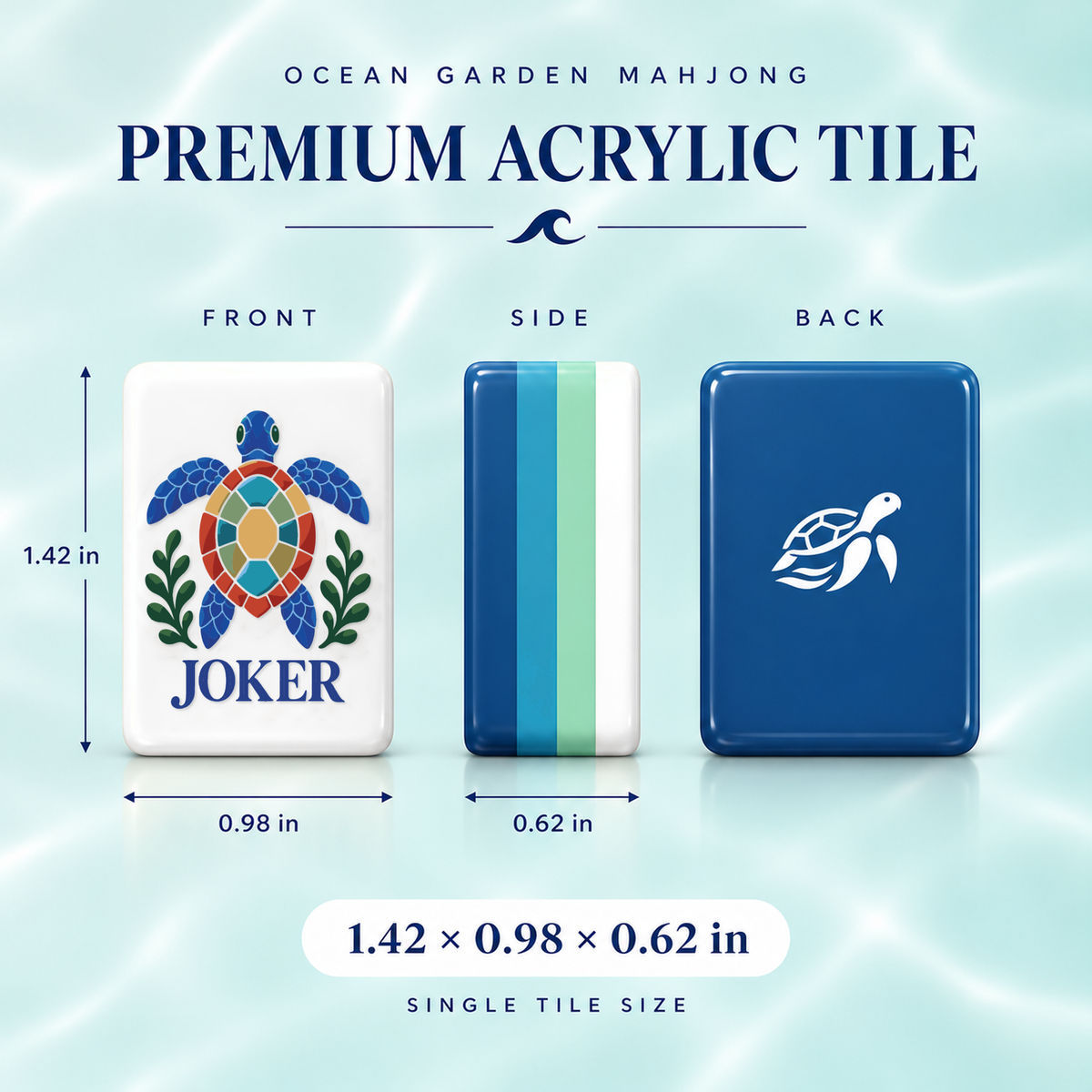
Mahjong solitaire is a patience-style game played solo with one standard American mahjong set (152 tiles plus 8 jokers). You arrange all 160 tiles in a preset pyramid, tower, or geometric layout on a mat or table, then remove matching pairs from exposed positions until none remain—or until no legal pairs exist. Unlike the four-player card-based American game played weekly at clubs, solitaire uses the tiles themselves as both setup and puzzle. A typical game lasts 15–45 minutes. The goal is to clear the entire board; most layouts succeed roughly 1 in 10 times, making it genuinely challenging. You'll want mahjong mats with clear grid lines and best-selling mahjong sets with durable acrylic tiles so they don't chip during repeated solo sessions.
What exactly is mahjong solitaire?
Mahjong solitaire is a single-player logic puzzle, not the four-player game many know. You start with 144 tiles (one complete standard set minus jokers) laid faceup in a fixed pattern—pyramid, pagoda, or custom shape—then systematically remove pairs of identical tiles. A pair must be either both fully exposed or moveable without disturbing other tiles. Unlike the table game, there's no hand, no card, no opponent. It's you against the layout. The puzzle element—deciding which pair to remove first—directly affects whether you can clear the board. This makes solitaire an excellent solo training tool for learning tile recognition and building spatial thinking.

How do you set up a mahjong solitaire game?
Start by choosing or printing a layout template (pyramid, pagoda, or four-stack are most common). Shuffle all 144 tiles facedown, then place them one by one into the pattern, filling from left to right, bottom to top, or according to the layout's directions—consistency matters so you can replay the same seed. Once all tiles are placed faceup, you're ready to play. A mahjong mat with printed grids eliminates setup time and keeps tiles aligned, especially useful for regular solo practice. Many players keep a notebook to record which layout and shuffle order produced a win, so they can replay winning games or study losing ones.
🀄 Shop best-selling mahjong sets →
What are the rules for matching pairs?
In mahjong solitaire, a valid pair must be two identical tiles—both the same number, suit, wind, dragon, or flower. For example, two 5 Dots, two East Winds, two Red Dragons, or two Plum flowers. You cannot pair different numbers (like 3 Bam with 5 Bam) or different suits. A pair is only legal if it meets one of these exposure rules: (1) both tiles are completely uncovered—no other tile sits atop, beside, or overlapping them; (2) one or both tiles sit at the very edge of the layout, allowing free removal. Blocked tiles—those trapped under or directly adjacent to another tile—cannot be taken. Many players misunderstand "adjacent"; in most layouts, tiles directly touching (north, south, east, west) block each other. Diagonal adjacency usually allows removal. Check your layout's specific rules before starting.
How do you win a mahjong solitaire game?
You win by removing all 144 tiles in valid matching pairs until the board is empty. Each successful pair removal opens new tiles underneath or beside it, potentially unblocking new matches. The strategy lies in planning ahead: removing one pair might trap you into an unwinnable position later, or it might cascade into multiple new options. There's no score—you either clear the board or you don't. Most standard layouts succeed in roughly 10–15% of attempts with optimal play; random shuffles and poor early decisions drop that to near zero. Losing isn't failure—it's data. Record which pairs you removed in order and trace why the game became stuck. This builds intuition for tile probability and spatial planning, making you a stronger four-player American mahjong player too.
What's the difference between solitaire and the four-player table game?
Element | Mahjong Solitaire | Four-Player American Mahjong |
Players | 1 | 4 |
Tiles Used | 144 (no jokers) | 152 + 8 jokers |
Setup | Fixed layout on table | Each player draws 13 tiles; Charleston pass |
Gameplay | Match exposed pairs; no hand | Form melds (pungs, kongs, quints); call and expose |
Rules | Layout-specific exposure rules | National Mah Jongg League card (annual) |
Winning | Clear entire board | First to complete a card-listed hand |
Pace | Self-paced, 15–45 min | Depends on players; 45 min–2+ hours |
Learning Benefit | Tile recognition, pattern spotting, spatial logic | Hand composition, reading the card, strategy |
Solitaire builds tile fluency and calm focus; the table game adds social rhythm, timing pressure, and strategic calling. Both are valuable. Many solo players use solitaire as a warm-up before a weekly game.
🎁 See our most-loved mahjong sets & accessories →

Can you play mahjong solitaire with American game rules?
Not directly, because American mahjong is fundamentally hand-based: you draw tiles, form melds (pungs, kongs, quints), and work toward a specific hand listed on the current year's National Mah Jongg League card. Solitaire removes all those elements—no hand, no card, no exposed melds, no calling. However, you can use an American mahjong set for any solitaire layout; the tiles are identical. Some players create hybrid variants where they practice recognizing American melds on a board layout, but that's a custom drill, not solitaire proper. If you want to learn American mahjong itself, read our guide to how to play American mahjong to understand hand structure, the Charleston, and melds first. Solitaire is best used as a tile-recognition supplement, not a substitute for learning the table game.
What layouts are best for beginners?
Pyramid is the gentlest start: tiles stack in a triangle (widest at bottom), making exposure rules straightforward and strategy moderately forgiving. Most tiles come uncovered quickly, giving you many options early on. Pagoda (also called "tower") stacks tiles vertically in layers, creating tighter blocking but a cleaner spatial model—easier to visualize than irregular shapes. Four Stacks simply divides 144 tiles into four piles of 36, laying each pile face-up in a column; it's nearly solvable every time and perfect for pure relaxation or teaching a beginner the pairing rule. Spider or Dragon layouts add difficulty: many tiles remain blocked until very specific sequences are cleared, rewarding planning. Beginners should start with Pyramid, play 5–10 games to internalize the exposure rules, then progress to Pagoda. Custom digital apps often let you choose difficulty; use them for practice before playing with physical tiles.
What equipment do you need to play solo?
A mahjong mat with a printed or embroidered grid speeds setup and keeps tiles aligned—especially helpful if you play multiple games per week. A best-selling mahjong set with durable acrylic tiles resists chipping during the repeated flipping and handling solitaire demands. You don't strictly need racks or pushers (those are for four-player table games), but a notebook to record winning seeds and failed sequences is invaluable for study. Dice are unnecessary. A clear, flat playing surface—dining table, game mat, or dedicated board—works fine. Many solo players keep their set in a travel bag or case so they can play solitaire during travel or at a quiet space away from the weekly game table.
✨ Find your Mahstead set — free US shipping →
What are common mistakes in mahjong solitaire?
Mistaking adjacency for blockage: Some layouts block only tiles directly stacked or overlapped; touching tiles at an edge may still be playable. Always confirm your layout's adjacency rules before game one. Removing random pairs early: Early moves ripple through the entire board. Pausing to scan for cascades—pairs whose removal will unblock multiple new matches—makes winning far more likely. Forgetting one set has only four of each tile: You can't make five identical pairs from one layout; if you've removed four Red Dragons, no fifth exists. Tracking which tiles you've removed prevents the trap of hunting a phantom fifth tile. Playing too fast: Solitaire has no timer. Take 2–3 seconds per move to check exposure and plan ahead. Restarting on a difficult board instead of replaying: Losing is learning. Record the seed and replay it once more to try a different strategy before reshuffling. This builds your spatial intuition far faster than random new games.
What to check before you buy a set for solitaire
Tile durability: Acrylic tiles withstand repeated handling better than bone or bamboo; inspect edges for signs of chipping before purchase.
Visibility of tile faces: Large, clear engravings matter for long solo sessions; check that all suits (Bam, Crak, Dot) and winds are easily readable.
Mat quality: If the layout is printed on your mat, ensure lines are clear and won't fade after 20+ plays.
Set completeness: Confirm you have exactly 144 playable tiles plus spares; verify the inventory before opening.
Storage: A case or bag protects tiles during storage and transport if you play in multiple locations.

FAQ
Can you play mahjong solitaire online or do you need physical tiles?
Digital apps exist and work well for learning, but many players prefer physical sets for tactile feedback and focus. Apps handle tile shuffling and layout automatically; sets require manual setup but feel more meditative.
How often can you actually win a mahjong solitaire game?
Depends on layout and play skill. Pyramid and Four Stacks succeed 15–25% of the time with optimal moves; Spider and Dragon layouts win far less frequently. Recording your wins helps you study which early decisions led to victory.
Do you need jokers to play mahjong solitaire?
No. Solitaire uses exactly 144 tiles (one complete set minus the 8 jokers). Jokers are for four-player American mahjong only. Remove them before setting up a layout.
Is mahjong solitaire good practice for learning to play four-player mahjong?
Yes, especially for tile recognition and pattern spotting. It won't teach you hands, the card, melds, or calling strategy, but it builds confidence handling tiles. Use solitaire as a supplement, not a replacement, for learning the table game.
What's the best mat for playing solitaire regularly?
A mat with a printed grid layout eliminates setup time and keeps tiles aligned across 20+ games. Look for non-slip backing and durable fabric that won't wear where tiles slide most. See our guide to choosing a mahjong mat for specifics.
Can different layouts be played on the same set, or do I need multiple sets?
One set works for all layouts; you simply rearrange the same 144 tiles into different patterns. No need to buy multiple sets. Many players keep one set and rotate layouts monthly to stay engaged.


View More
View More
View More
