
History of Cantonese Mahjong: Rules, Tiles & Regional Play
Last updated: Nov 23, 2026
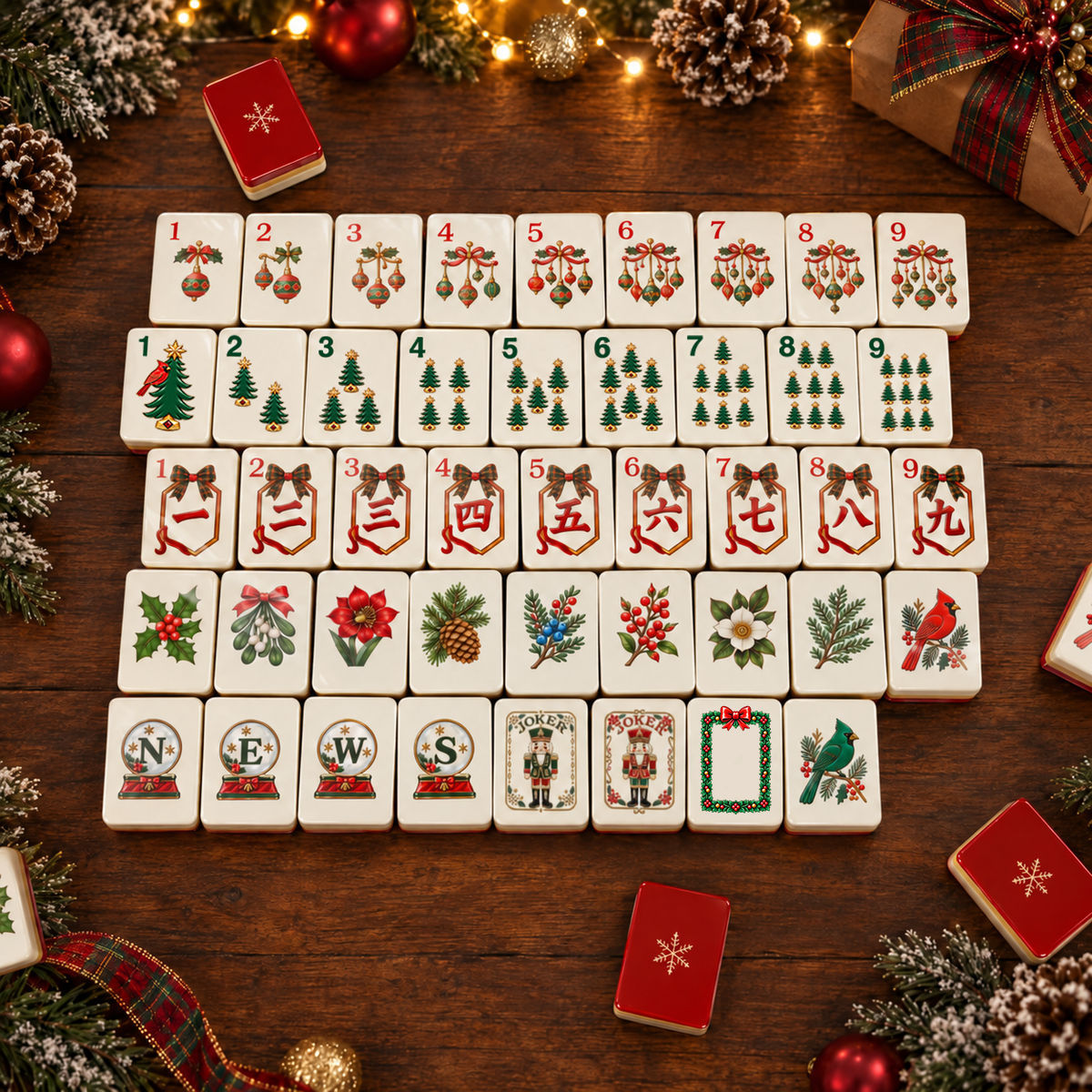
Cantonese mahjong (also called Hong Kong mahjong) emerged in the mid-20th century as Hong Kong's signature regional adaptation of classical Chinese mahjong. It uses a standard 136-tile set: three suits (Bams, Craks, Dots) numbered 1–9, four copies each; 16 winds; 12 dragons; and 8 flowers. Players draw and discard in turn, competing to form a complete hand of melds and a pair before others. Winning hands include pungs, kongs, eyes, and sequences (chows)—a major difference from American mahjong, which forbids exposed chows entirely. Cantonese play prioritizes speed, flexibility, and reading opponents' discards. Scoring systems vary by region, but typical games end when one player wins or when all tiles are exhausted. Cantonese mahjong differs sharply from American (no National Mah Jongg League card required, sequences allowed, faster tempo) and from Riichi (no riichi declaration, simpler hand patterns). A full game takes 15–45 minutes per round. We recommend acrylic or bone-and-bamboo sets for durability at the table; explore our best-selling mahjong sets to find one that suits your play style.
Cantonese mahjong carries the fingerprints of Hong Kong's unique history. Born in the mid-20th century during Hong Kong's rapid modernization, it absorbed influences from classical Chinese mahjong (played since the Qing Dynasty), merchant culture, and the pragmatism of a bustling port city. Where classical Chinese mahjong valued ritual and elaborate hand structures, Cantonese players favored speed and adaptive strategy. The game spread from Hong Kong's mahjong parlors into homes, restaurants, and gambling dens, earning a reputation for thrilling reversals and lightning-quick rounds. Today, Cantonese mahjong is the default game across Hong Kong, Macau, and diaspora communities worldwide.
How does Cantonese mahjong differ from American mahjong?
American mahjong and Cantonese mahjong are fundamentally different games disguised by shared tiles. American mahjong requires players to follow a printed card (updated annually by the National Mah Jongg League) showing all legal hands for that year; Cantonese players memorize hand types and adapt to each moment. American mahjong forbids exposed sequences (chows); Cantonese mahjong makes chows central to almost every winning hand. In American play, you cannot call tiles after they are discarded into the center; Cantonese play allows (and encourages) calling—you can claim another player's discard to complete a visible set immediately. A 152-tile American set is rigid; a Cantonese hand demands flexibility and reading your opponents' intent. Speed differs too: a Cantonese round often concludes in 10–15 minutes, while American games typically run 30–60 minutes per round.
🀄 Shop best-selling mahjong sets →

What tiles are used in Cantonese mahjong?
Cantonese mahjong uses 136 tiles in total. Three suits—Bams (often depicted with bamboo), Craks (circles), and Dots—run from 1 to 9, with four copies of each number, giving 108 suit tiles. The winds are North, East, South, and West; there are four copies of each wind, totaling 16 honor tiles. Dragons include Red (paired with Craks), Green (with Bams), and White or "Soap" (with Dots), again with four copies each, for 12 dragon tiles. Most sets also include 8 flower tiles (Plum, Orchid, Bamboo, Chrysanthemum, and sometimes seasonal variants), though some regions exclude flowers from play. The 1 Bam traditionally depicts a bird rather than bamboo stalks, a detail you will notice immediately when you hold an authentic set. Unlike American mahjong sets, which add spare jokers and blanks, traditional Cantonese sets contain only the standard 136 tiles with no extras; modern sets sometimes add wild tiles for house-rule variations.
What are the core rules of a Cantonese hand?
Every Cantonese winning hand consists of four melds plus one pair (called "eyes"). A meld can be a pung (three identical tiles), a kong (four identical tiles), or a chow (three consecutive numbers in the same suit—for example, three, four, five of Dots). This is where Cantonese play opens up compared to American mahjong: sequences and chows are not just allowed but essential. A player wins by completing this 4-meld-plus-pair structure before any opponent, or by draw if all tiles are exhausted without a winner. Calling is permitted: if another player discards a tile you need, you can claim it immediately and form a visible meld (exposing it to the table). Jokers or wild tiles do not exist in classical Cantonese play, though some house rules add them for casual games. Winning requires both luck (the tiles dealt) and judgment (which discards to claim, which to hold, which to dump safely).
🎁 See our most-loved mahjong sets & accessories →
How do Cantonese scoring systems work?
Cantonese mahjong scoring varies significantly by region, house, and formal tournament rules. Most systems assign point values to different winning patterns; common scoring recognizes combinations like all chows, all pungs, mixed terminals, and sets of honors. The winner collects points from other players based on the value of their winning hand. In many casual games, a player who wins by drawing from the wall (self-draw) collects double or triple; a player who wins by claiming a discard collects standard. Tournament play in Hong Kong often uses the "Singapore" or "HK Standard" ruleset, which standardizes point values and hand rankings to ensure fair competition. A single hand might score anywhere from 1 point (simple win) to 8 or more points (rare, high-value hands), and multipliers apply based on wind position and other factors. Scoring sheets vary by region, so always clarify house rules before playing with a new group.

What is the role of the Charleston in Cantonese play?
Cantonese mahjong does not use the formal Charleston tile-passing ritual that American mahjong players employ before each round. Instead, after tiles are drawn from the wall, play begins immediately. Some friendly games shuffle and redistribute tiles before dealing, but this is informal and rapid—nothing like the American Charleston's three rounds of passes. The absence of the Charleston makes Cantonese play faster and more spontaneous: there is no pause for strategy before the first turn. Play and adaptation happen in real time as tiles are drawn and discarded. For a complete guide to how tile-passing works in American play, see our dedicated Charleston explanation.
Why do Cantonese and Hong Kong players prefer this variant?
Cantonese mahjong thrives in Hong Kong and Macau because it rewards rapid, intuitive play and reading opponents—skills that suit a fast-paced city culture. The game is genuinely social: players talk, joke, and challenge one another's calls, making it as much about banter as tiles. Winning requires both luck and psychological insight: can you tell whether your discard is safe, or will the player to your right grab it immediately? The flexibility of hand types (any four melds plus eyes) means almost every round is winnable, and almost every round has surprises. Cantonese variants like "Bloody War" (where all four players can win the same hand) add chaos and excitement. Historically, the game became embedded in Hong Kong's social fabric—weeknight family games, holiday tournaments, restaurant parlor culture—in ways that American mahjong, with its rigid League card, never quite achieved. Regional pride also plays a role: Cantonese mahjong feels like Hong Kong's own game.
What equipment do you need to play Cantonese mahjong?
You need a standard set of 136 mahjong tiles (or 144, if your set includes spare blanks), a flat playing surface, and optionally a mat or case. Most Cantonese sets are made from bone and bamboo (traditional, elegant, audibly satisfying when tiles snap together) or acrylic (durable, bright, easier for aging eyes to read). A mahjong mat protects your table while giving tiles a consistent surface to glide across. Racks with pushers help organize your hand and keep tiles from sliding; many Cantonese players prefer a simple row without pushers for speed. A travel bag or case keeps your tiles safe if you move between homes or play groups. Scoring pads and wind markers (indicating who is East, South, etc.) are optional but helpful. Dice determine dealer order. Many players bring snacks, tea, or soft drinks to games, as Cantonese mahjong sessions can stretch several hours.
Item | Purpose | Who needs it | Why it matters |
136-tile set | Core game tiles | Everyone | Defines the game |
Flat surface or mat | Playing base | Everyone | Protects tiles & table |
Racks (optional) | Hand organization | Casual players | Keeps tiles from scattering |
Case or bag | Transport & storage | Traveling players | Prevents tile loss or damage |
Scoring sheet | Track points | Tournament players | Ensures consistent scoring |
Dice | Determine dealer | Everyone | Standard game ritual |
✨ Find your Mahstead set — free US shipping →
How does Cantonese mahjong compare to other Chinese regional variants?
Cantonese mahjong shares DNA with classical Chinese mahjong but evolved its own dialect. Taiwanese mahjong, popular in Taiwan and among Taiwanese diaspora, uses a similar tile set but emphasizes different hand types and faster play; it is less forgiving than classical play but more structured than pure Cantonese chaos. Riichi mahjong (Japanese) uses simpler rules and explicit declarations but a different point system and hand rankings. Sichuan mahjong includes Gongs (wild tiles) and plays with only 108 tiles, making it a completely separate game. The key difference: Cantonese mahjong balances tradition and speed, making it accessible to casual players while still rewarding deep strategy. Most players who learn Cantonese first find it easier to pivot to other variants than the reverse, because Cantonese teaches adaptive thinking and tile reading.
What to check before you buy a Cantonese mahjong set
Tile count: Confirm you have exactly 136 tiles (or 144 with blanks). Count the tiles when they arrive; missing pieces matter immediately.
Material durability: Bone and bamboo feel authentic but require care; acrylic is more forgiving in humid climates and casual play.
Readability: Can you clearly distinguish winds, dragons, and suit symbols? Older or cheap sets use faint printing that fades.
Tile weight & sound: Heavier tiles (bone) glide and click satisfyingly; lightweight acrylic tiles slide too easily, disrupting play.
Case quality: If your set comes with a case or bag, test that it closes securely and protects corners during transport.
House rules in your group: Before buying, ask your play group whether they add blanks, use jokers, or follow a specific regional ruleset. Your set should match.

FAQ
Is Cantonese mahjong the same as Hong Kong mahjong?
Yes. "Cantonese mahjong" and "Hong Kong mahjong" refer to the same game. Both names describe the regional variant played primarily in Hong Kong, Macau, and Cantonese-speaking communities. The game is called Cantonese because it emerged in Cantonese-speaking regions of southern China and Hong Kong, where Cantonese is the dominant dialect.
Can I play Cantonese mahjong with an American mahjong set?
Technically yes, but it is not ideal. An American 152-tile set includes extra jokers and blanks that Cantonese play does not use; you will need to remove them before playing. American sets are designed for the National Mah Jongg League card format, which Cantonese play ignores entirely. A true Cantonese set (136 or 144 tiles) with no extras feels right and avoids confusion.
How long does a typical Cantonese mahjong game take?
A single round (one hand) typically lasts 10–20 minutes depending on player skill and house rules. A full session with four players often runs 2–4 hours, with multiple rounds, breaks, and conversation. Tournament play is faster, often 15 minutes per hand or less.
What is the most important skill in Cantonese mahjong?
Reading your opponents and the discard pile. Cantonese mahjong rewards players who can infer what tiles opponents hold, predict what they will discard next, and know when to claim a tile versus wait. Memory and psychology matter as much as luck.
Where can I learn Cantonese mahjong rules in detail?
Look for groups in your local Cantonese or Chinese community—libraries, community centers, cultural associations, and restaurants often host games or teach beginners. Online tutorials and rulebooks exist, but learning alongside experienced players is fastest. Many Cantonese mahjong groups welcome newcomers and are happy to teach; you learn by playing.
Do I need to memorize all winning hand patterns before I play?
Not before your first game. Begin by learning the basic structure (four melds plus one pair, sequences allowed, calling is permitted). As you play, you will internalize common patterns. Experienced players know dozens of hand types at a glance, but casual play does not require this—your group will help you spot valid hands early on.


View More
View More
View More
