
Mahjong Racks With Pushers: What to Compare Before Buying
Last updated: Nov 23, 2026
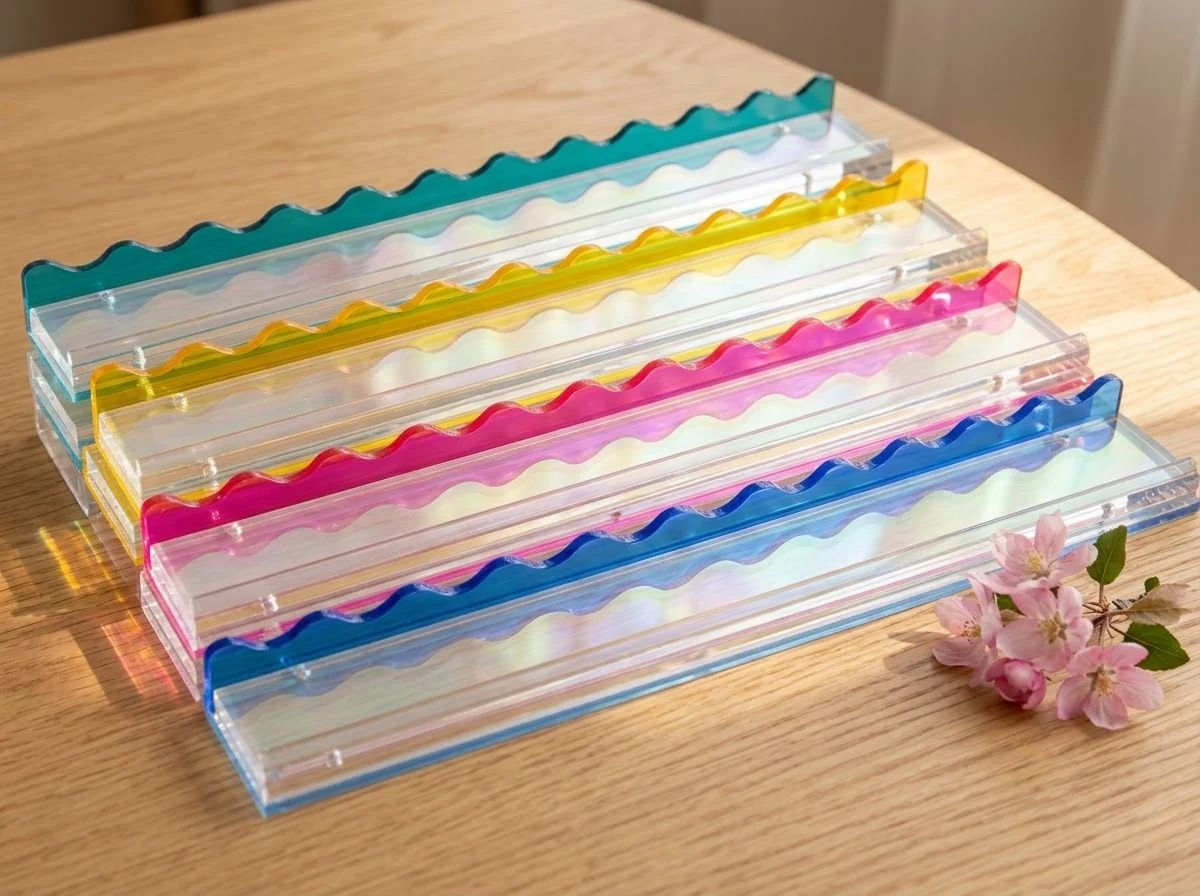
A mahjong rack with pushers is a stand that holds your 13 tiles upright and displays your hand in one organized row; the pusher is a flat blade that helps you manage tiles without disturbing neighbors' hands. American players use racks primarily for comfort and grip control—especially critical during long games or for players with arthritis or hand fatigue. You need one per player (four total for a standard game), so a full setup requires a matched set of four. Quality matters: poor grip surfaces let tiles slip during the draw phase, weak joints crack after a season of weekly play, and cheap pushers bend or split. Mahstead's mahjong racks with pushers come in acrylic designs with durable joints and smooth pusher blades; prices vary by style and material. Before buying, check the tile-grip surface texture, pusher blade thickness, joint construction, and whether the design suits your table aesthetic—racks last years when chosen right.
What's the actual difference between rack styles?
Racks vary in material (wood, bamboo, acrylic, plastic), grip surface (ridged, smooth, rubberized), pusher style (flat, angled, detachable), and height. Acrylic racks offer clarity, durability, and modern look; wood racks feel traditional but absorb moisture over time and can warp. The pusher blade matters most: a thin plastic pusher bends under tile weight and becomes unusable; a thick acrylic or wood blade holds shape for years. Ridged grip surfaces (small carved lines) prevent tile slipping better than smooth surfaces, especially during fast play or when hands are wet. Joint construction—how the pusher connects to the main rack—determines lifespan; riveted joints outlast glued ones in weekly games.
Should you buy a set of four matching racks or mix styles?
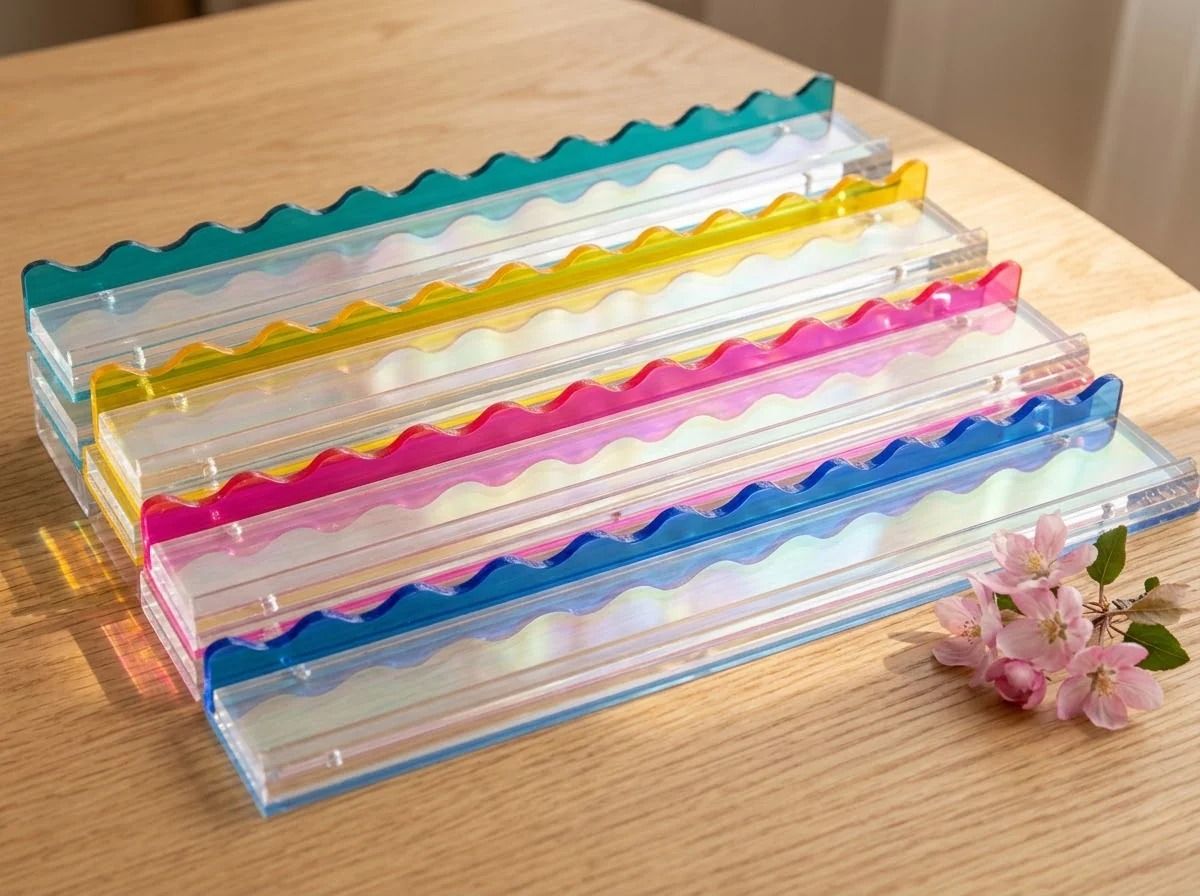
We recommend four matching racks for consistency and professional table setup. Mixed racks create visual discord and can confuse players about whose hand is whose during quick exchanges. A matched set also simplifies replacement: if one breaks after two years, you can order the same model rather than hunt for a retired design. For casual home games, mismatched racks work fine. For league play, hosting regular groups, or gifting a complete setup, matched racks keep the table feeling unified. Check whether the rack you love is available as a four-pack or singles; some designs sell only as pairs or individual units, which adds shipping cost.
🀄 Shop best-selling mahjong sets →
How do you prevent tiles from slipping during play?
Tile slip happens when the grip surface is too smooth or when the rack is tilted. Test the rack's surface texture before buying: run your fingertip across the interior walls where tiles rest—you should feel slight ridges or texture, not a polished smooth finish. Ridged or micro-textured surfaces grip acrylic tiles reliably even when hands are warm or slightly damp. The rack's angle also matters; it should lean back about 15 degrees (not vertical) so gravity helps hold tiles in place. When you draw a tile, push from below rather than pulling from above; a good pusher blade keeps the row stable while you extract one tile. Avoid racks that are too wide for your hand span—if you can't reach the back tiles comfortably, you'll grip too hard or knock the row, causing slip. Mahstead's best-selling mahjong sets include racks engineered with ridged surfaces and proper lean angles, paired with tiles sized for reliable grip.
What's the right height and width for your hands?
A rack's interior height (the space between pusher and top rail) should accommodate your tallest tile comfortably without rubbing the top edge; typically 1.5 to 2 inches works for standard American 160-tile sets. Interior width determines how many tiles fit and influences grip difficulty. A 10-inch rack holds 13 tiles with some space; an 8-inch rack feels cramped if you have larger hands. Before ordering, measure your hand span from thumb to pinky with fingers slightly spread—that's roughly the width you need to comfortably manipulate tiles without reaching. Taller players or those with arthritis benefit from racks positioned higher on the arm, so a deeper rack (more height) reduces shoulder strain. Shorter players or those playing at low tables may prefer shallower racks. If ordering online, check the product dimensions in inches or centimeters; compare against your hand size or a ruler held to the screen.
How does pusher blade quality affect long-term use?
A pusher blade works dozens of times per game and must survive thousands of draws over weeks and months. Thin plastic pushers (under 0.15 inches thick) bend visibly after 20 games and eventually split or crack. Acrylic blades (0.25+ inches) and wood blades resist bending and maintain sharp edges for years. The blade's connection to the rack is equally critical: glued joints fail after repeated flex; riveted or screwed joints hold firm. Watch for pushers with blunt edges—they snag tiles and make draws rough. A quality pusher blade should slide smoothly under 13 tiles with one-finger pressure and not wobble side-to-side. If you play weekly, expect to use your pusher 600+ times per year; cheap pushers fail within the first season, while mid-grade racks outlast three years of heavy use.
🎁 See our most-loved mahjong sets & accessories →

Comparison: Rack Types for Different Players
Rack Type | Best For | Durability | Grip Feel | Price Basis | Why It Works |
Acrylic with ridges | Weekly league players | 5+ years | Excellent, textured | Mid-range | Durable joints, smooth pusher, modern aesthetic |
Wood traditional | Casual home players | 3–4 years | Good, natural | Varies widely | Feels authentic; requires occasional care |
Plastic budget | First-time buyers, kids | 1–2 years | Fair, smooth | Lower | Lightweight, affordable; pusher bends easily |
High-gloss acrylic | Display/gift sets | 5+ years | Good, smooth | Mid to higher | Elegant design; can feel slippery if hands warm |
Bamboo hybrid | Experienced players | 4–5 years | Good, textured | Mid-range | Eco-conscious; less prone to warping than wood |
Choose acrylic with a ridged grip surface if you play weekly or host; choose plastic if you're testing the hobby; choose traditional wood or bamboo if aesthetics matter as much as function.
What to check before you buy
Grip surface texture: Run your finger across product photos or ask the seller for close-up images. Smooth = slippery; ridged = reliable. A good rack should have visible lines or texture carved into the interior walls.
Pusher blade thickness: If stated, confirm it's 0.25 inches or thicker. If not stated, email the seller for specs before ordering.
Joint construction: Look for riveted, screwed, or mortise-and-tenon joints rather than glued-only construction. These outlast flex stress.
Interior dimensions: Measure your hand span and compare to the rack's width. Request height and width in inches from the product page.
Matching sets: If you need four, confirm the design is available as a four-pack or that singles are in stock. Don't assume availability.
Shipping: Racks ship flat or boxed; confirm the product arrives without cracks. Mahstead includes free US shipping on all racks.
Return policy: Check the seller's return window (typically 14–30 days) in case the rack doesn't fit your hand or tiles.
✨ Find your Mahstead set — free US shipping →
Why acrylic racks dominate weekly game groups
Acrylic racks have become standard in serious American mahjong circles because they combine clarity, durability, and a professional appearance. You can see the tiles clearly through the acrylic, which speeds up hand verification during scoring disputes. The material doesn't absorb humidity like wood, so it won't warp or swell if stored in a basement or garage between games. Acrylic racks also accept engraving or custom designs—many groups and families have personalized racks made for memorable games or tournaments. The pusher blade in acrylic racks is typically also acrylic or metal, making it resistant to splitting. Mahstead's mahjong racks with pushers use precision-molded acrylic with ridged interiors and durable pusher blades, designed specifically for American mahjong tile dimensions and weekly play schedules.
Pairing racks with the right mats and storage
Your rack choice influences how you transport and store the full setup. If you host weekly games, a matching mat and set of four racks create a cohesive table. Mahstead's mahjong mats pair visually with modern acrylic racks. If you travel with your game, choose racks that fit into a mahjong bag or case without excess bulk; deep racks may not compress easily. Flat-design racks are more travel-friendly than tall ones. For storage at home, stack racks vertically or lay them flat in a dry closet; moisture and direct sun fade acrylic over time. If you play frequently, consider keeping racks on the table between games rather than repeatedly packing and unpacking, which stresses joints. A mahjong bag or case designed for four racks plus tiles and mat keeps everything organized and protected.

FAQ
Can you use a rack with non-American mahjong tiles?
Yes, if the interior width accommodates your tiles. Chinese and Hong Kong tiles are sometimes slightly larger; measure your tiles and compare to the rack's interior space. Most American-sized racks work with standard-sized tiles from any variant.
Do professional league players use racks?
Yes, American mahjong league play typically allows and encourages racks. They keep hands organized and prevent accidental exposure of tiles. Some casual players skip racks for speed, but serious games and tournaments always use them.
How often do you need to replace a rack?
A quality acrylic rack lasts 5+ years of weekly play. Plastic racks wear out in 1–2 years; wood racks last 3–4 years if stored in stable humidity. The pusher blade is the first part to fail if quality is poor.
Can you buy just one or two racks instead of a full set of four?
Yes, but consistency matters. One player with a premium rack and three with cheap racks looks awkward and can affect hand stability unevenly. For a full game, buy four matching racks; for casual play or testing, one or two is fine.
What's the difference between a pusher and a pull-out rack?
A pusher is a flat blade that stays attached and slides under tiles to separate one from the row. A pull-out rack (less common in American mahjong) allows you to remove individual tiles by extracting them upward. Pushers are standard and more reliable for American play.
Are engraved racks worth the extra cost?
If you host regularly or want a family keepsake, yes. Engraving adds 5–10% to the price but makes your set unique and memorable. For casual play or beginners, plain racks are just as functional.


View More
View More
View More
