
Hong Kong vs American Mahjong: Key Rule Differences
Last updated: Nov 23, 2026
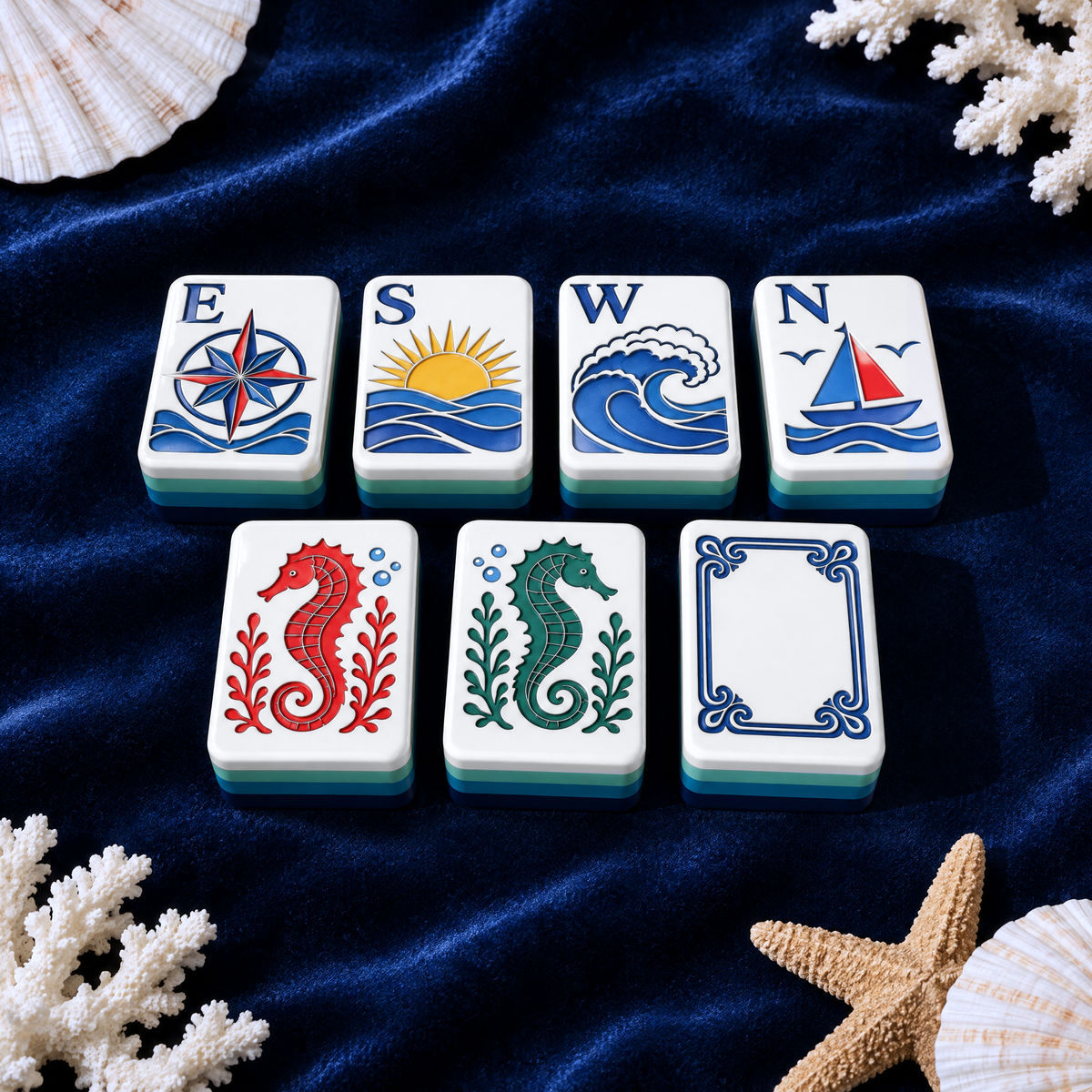
Hong Kong mahjong uses 136 tiles (four each of three suits 1–9, four winds, three dragons, eight flowers and seasons) and permits chows (sequences like 1-2-3) as callable or exposed sets. American mahjong uses 152 tiles (three suits 1–9, sixteen winds, twelve dragons, eight flowers, eight jokers) and forbids chows entirely—only pungs (three identical), kongs (four), quints and sextets are exposed. Hong Kong hands are drawn from a living wall and discard pile; American hands come only from the current year's National Mah Jongg League card. American hands are fixed patterns, not combinations you invent. Hong Kong scoring sums points per hand type; American scoring awards units based on the card, with multipliers for concealed sets. If you're hosting American mahjong weekly, you need American-specific sets with jokers, not 136-tile Hong Kong sets.
Hong Kong mahjong and American mahjong are distinct games with different tile counts, hand patterns, and gameplay mechanics. We'll break down what separates them so you know which variant you're playing and what equipment you'll need.
Why does Hong Kong mahjong use only 136 tiles?
Hong Kong mahjong uses 136 tiles—four each of three numbered suits (Bam, Crak, Dot: 1–9), plus sixteen wind tiles (four each of North, East, South, West), twelve dragon tiles (four Red, four Green, four White), eight flower tiles, and no jokers or blanks. This is the original Cantonese tile set. The smaller tile count reflects a closed system where every tile in play is accounted for; the game moves faster and hand patterns are simpler to memorize. Because no jokers exist in Hong Kong play, you can use a White dragon as a zero or blank if a pattern calls for it—a tile you'll never see in American sets where the White dragon has a specific rank and jokers fill the wildcard role.

How do chows work differently in Hong Kong vs American mahjong?
In Hong Kong mahjong, a chow is a sequence of three consecutive numbered tiles in the same suit—like 4, 5, 6 Bams. You can call a chow if the previous player discards the tile you need to complete it, and once you claim it, you lay all three tiles face-up on the table. You can also play chows from your hidden hand (a concealed chow scores more points). American mahjong forbids chows entirely. You cannot play sequences. American hands use only pungs (three identical tiles like three 5 Dots), kongs (four identical), quints (five identical) and sextets (six identical). This is the single biggest rule difference: if you've learned Hong Kong and sit down to American mahjong, you will be confused the moment you try to play a 1-2-3 sequence. American hands are rigid patterns from the League card, not flexible combinations you build.
🀄 Shop best-selling mahjong sets →
What's the difference in how you draw and discard tiles?
Hong Kong mahjong uses a live wall: players draw one tile at a time from a wall of stacked dominoes and discard into the center. If another player can use your discard to complete a chow, pung, or win, they call it and take it. If no one calls, it stays in the discard pile and the next player draws. American mahjong uses a drawing mechanism but not a wall—you draw from a face-down pile (often shuffled tiles in a bowl or rack), and discarding works the same, but the hand patterns are pre-set on the card, so you're matching specific combinations, not improvising sets from any three matching tiles.
How do hands differ: fixed card vs. flexible combinations?
In Hong Kong mahjong, you win by building fourteen tiles into four melds (sets of three) plus a pair. A meld can be a pung, kong, or chow. You invent the hand yourself—any valid combination of these sets wins. In American mahjong, hands are only valid if they match a pattern printed on the current year's National Mah Jongg League card. You do not win by combining four random sets and a pair; you win only if your tiles exactly match a section and hand number on the card. This means American players must have the card in front of them during play, while Hong Kong players rely on memory and rules. American hands change every spring when a new card is issued; Hong Kong hands follow timeless principles.

How does scoring differ between the two games?
Hong Kong mahjong scoring is point-based and flexible. Each hand type has a base score (a pung of dragons is worth more than a pung of low numbers); winning concealed earns a multiplier, and winning off a discard earns less. You add points each hand. American mahjong scoring awards units—a fixed number for each valid hand on the card. For example, a hand might be worth 30 units or 60 units depending on difficulty and how you exposed your sets. Jokers, concealed sets, and self-draw multiply the unit value. American players keep running totals and settle in chips or cash at the end of the session. Hong Kong often plays to a target score (like 2,000 points) and stops. American play is structured around the card and a fixed number of hands per round; Hong Kong is more fluid.
Feature | Hong Kong | American |
Tile count | 136 | 152 |
Sequences (chows) | Yes, callable and exposed | None—forbidden |
Jokers | None | 8 (built into set) |
Hand source | Player-invented per rules | League card, fixed patterns only |
Scoring | Points per hand type | Units per card hand |
Hand memory | Memorized | Card required at table |
Winning rule | Four sets + pair | Match card pattern exactly |
Gameplay pace | Moderate | Faster (patterns locked) |
What equipment do you actually need for each variant?
If you're playing Hong Kong mahjong, you need a 136-tile set (often with racks and pushers). There's no official league card, so any standard Hong Kong set works. You'll also want a mat to organize tiles and a bag for transport. If you're playing American mahjong, you must use a 152-tile set with 8 jokers—and you must have that year's National Mah Jongg League card. American sets are only valid if they include jokers; a 136-tile Hong Kong set will not work for American play. When you order from Mahstead, our best-selling American sets ship with 160 tiles (152 playing tiles plus spare jokers and blanks) and are pre-sorted for easy setup. If you're new to American mahjong, make sure your set box shows "8 jokers" or confirms it's 152 tiles—this is non-negotiable.
🎁 See our most-loved mahjong sets & accessories →
Common mistakes when switching between variants
The biggest mistake: bringing a Hong Kong set to an American game or vice versa. American sets include jokers; Hong Kong sets do not. If you sit down with a 136-tile set to play American, you cannot form legal hands—you'll be four jokers short and games will grind to a halt. The second mistake: forgetting that American hands must match the card exactly. New players try to win with four sets and a pair that don't match any hand on that year's card and are shocked they cannot win. The third: assuming chows exist in American mahjong. They don't. Many players who learned Hong Kong first spend the first hour of an American game trying to call or play 1-2-3 sequences and must be reminded each time.
What to check before you buy
Before you buy a mahjong set, confirm which game your group plays. Ask: "Do you use a National Mah Jongg League card?" (American) or "Do you build hands by combining any sets and a pair?" (Hong Kong or other variant). Check the set's tile count—152 for American, 136 for Hong Kong. For American play, confirm the set includes 8 jokers; if the box says "144 tiles" or "166 tiles," clarify what those numbers mean (Mahstead's 160-tile sets include 152 playing tiles plus spares). If you're hosting regular American mahjong games, choose a mat and racks that suit your table—a good mat prevents tiles from sliding and speeds up setup. If you travel to play, a protective case or bag keeps tiles safe between games.
✨ Find your Mahstead set — free US shipping →

FAQ
Can I use a Hong Kong mahjong set to play American mahjong?
No. Hong Kong sets have 136 tiles and no jokers; American sets must have 152 tiles and 8 jokers. Jokers are essential to American hands. You need an American set.
Do I need to memorize Hong Kong rules to play American mahjong?
No. American mahjong is simpler in one way—hands are printed on the card, so you don't invent patterns. But you must learn to read the card and understand that chows don't exist. It's a different rule set entirely.
What's the National Mah Jongg League card?
It's the official hand guide issued every spring by the NMJL (National Mah Jongg League). American players must have that year's card at the table to play legally. Hong Kong mahjong does not use a league card.
How long does an American game take vs. a Hong Kong game?
American games typically take 45–90 minutes for four players (usually 8 hands); Hong Kong games vary more widely because play is flexible. American's fixed hands and card reference make games more predictable in length.
If I know how to play one variant, can I learn the other quickly?
Yes, but expect 2–4 sessions to internalize the differences, especially losing chows (Hong Kong) or gaining jokers and card-locked hands (American). The bone structure is familiar, but the rules diverge sharply.


View More
View More
View More
